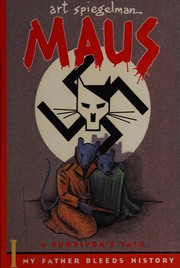
Paper Girls Reading Order: Where to Start and What Order to Read It In
Paper Girls is thirty issues, complete, with no spin-offs and no crossovers — one of the few modern comics you can read start to finish without a chart. This path reads the six collected volumes in order, then works outward through Brian K. Vaughan's other series, which is the only real question a Paper Girls reader is left with at the end.
The first half
BeginnerStart at the beginning of the only reading order that exists, and get through the opening time-travel setup to the point where the series' real shape shows.
▸ Study plan for this stage
Pace: A week, or a single weekend if the first volume takes. Paper Girls Vol. 1 is 144 pages, Vol. 2 is 128 and Vol. 3 is 128 - about 400 pages covering issues 1 to 15, which is half the series. Read them in order and close together; the plot moves fast enough that a month between volumes will cost you na
- The opening premise: four twelve-year-old newspaper deliverers in suburban Cleveland on the morning of 1 November 1988, and how much of the series' emotional weight is loaded into that one specific morning
- The mystery-box opening and the deliberate decision, around volume two, to stop withholding and start being about the four girls
- Cliff Chiang's figure drawing and Matt Wilson's colour as narrative rather than decoration - the palette changes with the era and does much of the work of telling you when you are
- 1988 as a reconstructed period rather than a nostalgia setting: the specific technology, language and adult behaviour of the year, and how the series uses it against itself
- Time travel used as a device for meeting yourself - what the older and younger versions of a character are for
- The five-issue volume as a unit, and how Vaughan structures each to end on a hard turn rather than a resolution
- Female friendship under pressure as the actual subject, with the science fiction as the mechanism for testing it
- What do you actually know about the war the girls have stumbled into by the end of volume three, and how much of it has been shown rather than asserted?
- Which of the four girls is established most fully in volume one, and by what means - dialogue, action, or how the others treat her?
- Where does the series stop being a mystery box? Point to the specific scene.
- How does the colour change between the 1988 sequences and the later ones, and what is that doing that the script does not have to?
- What is the prehistoric detour in volume three for? Give a structural answer and a thematic one.
- Read volume one twice - once for plot and once looking only at the colour. Wilson's palette is doing era, time of day and emotional register simultaneously, and the second pass is where it becomes visible.
- Keep a one-line log per issue of what the girls learn about their situation. By issue fifteen the log will show you exactly how much Vaughan has actually explained versus how much you have filled in yourself, which is the series' central trick.
- Take the first five pages of volume one and note how each of the four girls is introduced - the panel, the line, the action. Four characters established in five pages is hard, and reverse-engineering how it was done is the best available lesson in comics economy.
- Pick one page in the prehistoric sequence and describe what Chiang does with panel shape and layout there that he does not do in the 1988 pages. The artist changes register with the era and it is easiest to catch in this volume.
Next up: The premise has been abandoned in favour of the characters, which is the series committing itself; the second half has to pay for that commitment with an actual explanation and an ending.

Issues 1-5, the morning after Hallowe'en 1988 in suburban Cleveland. This is the start; there is no alternative entry point and no prequel. Note that the same material is also collected in Paper Girls Deluxe Edition Book One and in the compendium — pick one edition line and stay in it, because the volume numbers do not correspond.

Issues 6-10. The 2016 sequence, where the premise stops being a mystery box and starts being about who these four girls become. Read straight on from Vol. 1.

Issues 11-15, the prehistoric detour and the point at which Cliff Chiang and Matt Wilson's colour work is doing as much narrative work as the script.
The second half
BeginnerFinish the run and see how a story built on time travel closes without cheating.
▸ Study plan for this stage
Pace: A week. Paper Girls Vol. 4 is 128 pages, Vol. 5 is 128 and Vol. 6 is 144 - issues 16 to 30, and the end. Read them consecutively, and if you can manage it read volume six in one sitting, because its last chapter reframes the whole series as being about the 1988 morning rather than about time travel,
- The far-future sequence in volume four and the series' decision to commit to a real explanation rather than leave the war ambiguous
- Convergence: how Vaughan brings every timeline the series has visited into contact in the final third, and what he has to sacrifice to do it
- The older selves as the emotional payload - the series' actual question is what these four girls become, and the time travel exists to let them find out
- Endings in serialised comics, and the specific problem of closing a thirty-issue story that has been generating new mysteries throughout
- The last chapter's reframing, and how much of it was set up in the first issue
- Chiang and Wilson's visual convergence in the final volume, where the era-coded palettes stop being separable
- Why a finite, self-contained series is a different reading experience from an open-ended one, and what it lets a writer do with an ending
- What is the war actually about, once volume four explains it? Is the explanation satisfying, and does it need to be?
- Which threads from the first half does the ending deliberately leave unresolved, and does leaving them cost anything?
- How does the final chapter change what you think the series was about? Point to the specific page where it turns.
- What does each of the four girls get from the ending, and are the four resolutions equal in weight?
- Reading the last page, what was set up in the first issue that you did not notice at the time?
- After finishing volume six, immediately reread issue one. It takes fifteen minutes and it is the single best thing you can do with this series - the ending is planted there in plain sight, and finding it is the payoff for having read a complete story.
- Take the per-issue log you kept in the first stage and finish it through issue thirty. Then mark which entries were paid off, which were dropped, and which were answered in a way you did not expect. Thirty issues is short enough for this to be a complete accounting, which is rarely possible with comics.
- Compare the last page of each of the six volumes. Vaughan ends every volume on the same kind of beat except one - find the exception and say why that volume needed a different ending.
- Write two paragraphs on what the series is about, one using only the events of the plot and one using only the 1988 sequences. The gap between them is the last chapter's argument.
Next up: The series is complete and there is nothing more of it, which leaves the only real question a Paper Girls reader has at the end: what else has this writer done.
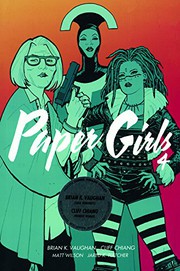
Issues 16-20. The far future, and the volume that commits to an actual explanation of the war the girls have been caught inside.

Issues 21-25, moving toward the convergence of every timeline the series has visited.
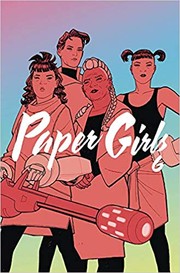
Issues 26-30 and the ending. Read it in one sitting if you can; the last chapter reframes the whole series as being about the 1988 morning rather than about time travel.
What Vaughan wrote before it
BeginnerPlace Paper Girls in its author's career and find the earlier series that does the same thing at greater length.
▸ Study plan for this stage
Pace: Three to four weeks, and the volumes here vary far more in size than the Paper Girls collections did. Y: The Last Man Vol. 1 is 128 pages and is the first of sixty issues - the obvious next read, and the long version of what Paper Girls does quickly, so start here if you want to commit to something
- The Vaughan premise: a high-concept situation stated in one sentence, established in one issue, and then abandoned in favour of the people inside it
- Small group crossing a broken world, which is the same structure as Paper Girls at four times the length in Y: The Last Man
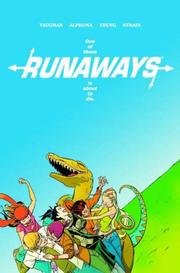
- The adults-are-lying plot in Runaways, and how differently it plays with a superhero apparatus attached
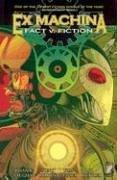
- Ex Machina's use of a superhero premise to write about municipal government, and what a political comic can do that a political essay cannot
- A single-volume book with one ending: what Pride of Baghdad has to do differently when there is no next issue
- Collaboration as a constant - each of these is with a different artist, and the register changes with the collaborator more than with the writer
- Vaughan's habit of ending arcs on a hard turn, visible across four different series and therefore a method rather than an accident
- What does Y: The Last Man do with sixty issues that Paper Girls could not do with thirty?
- In Runaways, what is the adult conspiracy actually a metaphor for, and does the book need it to be one?
- What does the superhero apparatus in Ex Machina let Vaughan say about city government that a straight political story could not?
- Pride of Baghdad has one volume to establish, develop and end. Which of the three does it do best, and what does it skimp?
- Across these four books and Paper Girls, name the thing Vaughan always does with a first issue.
- Read the first issue of each of these four alongside Paper Girls issue one - five first issues in one sitting - and write down for each what has been established by the last page: premise, cast, threat, and the hook. The pattern is unmistakable after five examples and it is the most transferable thing on this path.
- Take Pride of Baghdad and diagram its structure against a single Paper Girls volume of similar length. One is a complete story and one is a fifth of one, and comparing them shows exactly what a self-contained book has to compress.
- Pick one page from each book and note the artist's approach to panel layout. Same writer, four collaborators; the exercise is separating what is script from what is drawing, which is much harder than it sounds and is the main thing reading widely in one writer's work teaches you.
- Write a one-paragraph pitch for each of these four in the form Vaughan seems to use - one sentence of premise, one of complication. If your pitches all sound alike, you have found the formula; if they do not, you have found where he varies it.
Next up: The earlier work shows where the method came from; the last stage is what he did with it afterwards, including the book he is now best known for.

Sixty issues, and the obvious next read: the same interest in a small group crossing a broken world, at four times the length. Start here if you want the long version of what Paper Girls does quickly.
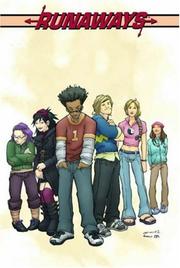
Vaughan's first major book, and the closest in feel to Paper Girls — a group of teenagers who discover the adult world is not what it claims. Short, and the earliest thing on this list.

Catalogued under the bare title 'Ex Machina'. A superhero who becomes mayor of New York; the most political thing Vaughan has written and the least like Paper Girls, which is the reason to read it.
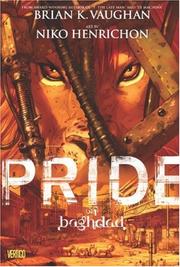
A single hardcover about four lions loose in Baghdad in 2003. It is the shortest thing here and shows what Vaughan does with an ending when he has only one book to do it in.
What he wrote after it
IntermediateFollow the same creative team dynamic into the ongoing work, and decide whether you want to commit to another long-running series.
▸ Study plan for this stage
Pace: Two weeks. Saga Vol. 1 is 160 pages and collects issues 1 to 6 - Open Library's cleanest record for this volume is a library-binding edition, so the display title carries a binding note, but the contents are the standard first collection. It is the book Vaughan is best known for, drawn by Fiona Stap
- Saga's opening as the most efficient thing Vaughan has written - a war, a family and a narrator established in a single issue
- The unfinished-series problem: what you are committing to with Saga, which is an ongoing work with a publication history that has included long gaps
- Staples's design work as the book's engine, and the fact that Saga is a case where the artist's invention is doing at least half the writing
- The Private Eye's landscape format: a comic drawn for a screen rather than a page, and what the horizontal panel does to pacing
- Direct digital distribution as a formal choice as much as a commercial one - the format only exists because the book skipped the print pipeline
- We Stand on Guard as a deliberate register shift: no ambiguity, no charm, and a complete six-issue story with an ending
- The full range now visible - thirty-issue finite series, sixty-issue epic, ongoing space opera, formal experiment, single-volume war book - and what stays constant across all of them
- What does Saga's first issue establish, and how does its economy compare to Paper Girls issue one?
- What does the landscape format in The Private Eye change about how you read a page - not what it looks like, but what it does to the rhythm?
- We Stand on Guard is the least characteristic thing here. What is missing from it that is present in everything else?
- Saga is unfinished and Paper Girls is not. What does that difference do to the reading experience, honestly?
- Having read everything on this path: what is the single constant across all nine books?
- Read The Private Eye in its intended landscape format on a screen rather than reflowed to a page. It is the whole point of the book and the experience does not survive the wrong container.
- Compare the first issue of Saga and the first issue of Paper Girls page for page, counting how many pages each spends before the inciting event. Vaughan's openings are his most consistent technical signature and this is the clearest pairing.
- Read We Stand on Guard in one sitting and then write a paragraph on what Vaughan gives up by removing the humour. It is a deliberate subtraction and the exercise is naming what it cost and what it bought.
- Finish by writing the recommendation this path was built to let you give: someone has just finished Paper Girls and asks what to read next. Answer in one paragraph, name one book, and say what it depends on - whether they want length, formal invention, politics, or another ending as good as the one they just had.
Next up: This is the last stage, and it ends deliberately on the book least like the one you started with - the full range of a writer whose finite, thirty-issue, self-contained series turns out to be the exception in his own catalogue.

The book Vaughan is best known for, running alongside Paper Girls with Fiona Staples. Open Library's cleanest record for this volume is a library-binding edition, so the display title carries a binding note; the content is the standard first collection, issues 1-6.

With Marcos Martin, originally sold direct as a pay-what-you-want digital comic. A future with no internet, drawn in landscape format — the most formally interesting thing in Vaughan's catalogue.

With Steve Skroce. Catalogued as the Deluxe Edition, which is the complete six-issue series in one book, so there is no volume-numbering trap here. A short, blunt war comic; read it last because it is the least like Paper Girls.
Discussion
Keep reading
Paths that share books, cover the same subject, or open a related topic.