Saga Reading Order and Reading Guide
Saga is one continuous story collected into trade volumes, so the reading order is simply volume order — there are no side series, no crossovers and nothing to read out of sequence. The only real decision is format: the collected volumes are the standard way in, and the compendium editions gather the same material in larger blocks. This path splits the run into the first act, the long middle, and the volumes published after the series' multi-year hiatus, because the tone shifts noticeably at each break.
Start Here
BeginnerRead the opening volume and decide whether the mix of space opera, family comedy and explicit content is yours.
▸ Study plan for this stage
Pace: One or two sittings. A Saga trade collects six issues and reads in about an hour if you rush it, which you should not - Fiona Staples's pages carry as much of the storytelling as the script, and skimming the art is the single most common way to under-read this series. Read it once for the story and
- Two soldiers from opposite sides of a galactic war have a child together and run, which is the entire premise and the entire engine
- The narrator is their daughter, telling the story retrospectively from an unspecified later point - which means she survives, and the tension is about everyone else
- Wings and horns: the two warring species are drawn in a visual shorthand you learn in the first pages and never need explained again
- The war is fought by proxy across other people's planets, which is the series' most sustained political idea
- Vaughan and Staples establish the tonal mix immediately - space opera, family comedy, and frankness about bodies and sex all in the same scene
- The first volume is a completely honest sample of the whole run; nothing about it is a soft opening
- Reading order is simply volume order - no side series, no crossovers, nothing to read out of sequence
- What does the narrator's retrospective voice do to the tension, given what it tells you about her survival?
- How quickly does the series establish its rules about sex and violence, and what is that frankness for?
- Who is hunting the family, and what does each pursuer want that the others do not?
- What does the proxy-war setting let Vaughan say that a two-sided war would not?
- Is the tonal mix of comedy and brutality working for you, and would you want 150 more issues of it?
- Read the volume twice - once for plot, once for art. Staples plants character information in expressions and colour that the script never states.
- Note which characters get a chapter opening from Staples. The visual introductions are a reliable signal of who matters.
- Decide explicitly whether the content is acceptable to you before continuing. This series does not become milder and a decision made now saves eleven volumes of discomfort.
- Avoid synopses and discussion threads from here on. Saga kills major characters without warning and the run is heavily spoiled online.
Next up: The premise and the visual language are now established, and the next three volumes are where the supporting cast that makes the series work gets assembled around them.

Two soldiers from opposite sides of a galactic war have a baby and run. It establishes the narrator, the art language and the frankness about sex and violence within a few pages, so it is a completely honest sample of the whole series.
The First Act
BeginnerFollow the pursuit storyline through its first arc, where the supporting cast that makes the series work is assembled.
▸ Study plan for this stage
Pace: 2-3 weeks, roughly one volume a week for about 450 pages of comics across the volumes listed here. Same discipline as before - an hour to read, another to look. One practical note on buying: the volume numbering in listings is inconsistent, and the fourth volume in this stage appears under the bare
- The frame widens from the couple to the in-laws, the bounty hunters and the journalists, and the supporting cast is where the series' best material lives
- The backstory of how the parents met is delivered in flashback, and the romance is genuinely the load-bearing part of the book
- Bounty hunters as a set of competing employees rather than a single villain, which keeps the pursuit from going stale
- The romance-novelist planet and the journalist subplot bring the series' argument about how war stories get told into the main plot
- The fourth volume is a deliberate slowdown into uneasy domestic normality, and it proves the series can do quiet as well as chase
- Vaughan kills characters you have invested in, and the first genuinely devastating beat of the run lands in this stretch
- Staples's designs do enormous exposition work - a species' appearance tells you its politics before anyone speaks
- Which supporting character introduced in this stretch has the most complete arc, and how much of it is delivered visually?
- What does the flashback romance change about how you read the couple in the present?
- How does the series keep multiple pursuers distinct rather than interchangeable?
- What is the journalist subplot actually arguing about war reporting?
- The domestic volume slows almost to a stop. What is it buying, and does the next volume spend it well?
- Keep a cast list with one line per character on what they want. Saga's ensemble grows fast and the list is genuinely useful by the end of this stage.
- Pick one page you moved past quickly and spend five minutes on it. There is nearly always information in the background that the script never says.
- Note where each volume ends. Vaughan is writing to a six-issue rhythm and the trade breaks are engineered cliffhangers.
- Check cover numbers when buying. The listings for this series are unreliable and it is easy to buy the same volume twice or skip one.
Next up: The cast is now large enough that the war can start costing the family real people, which is what the middle of the run is for.

Widens the frame to the in-laws, the bounty hunters and the backstory of how the parents met. The first volume introduces the premise; this one builds the world around it.

Brings the journalist subplot and the romance novelist's planet into the main story, and lands the first genuinely devastating beat of the run.
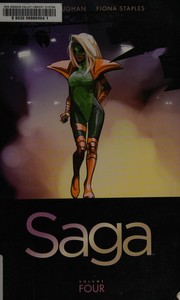
A time jump into an uneasy domestic normality, which is where the series proves it can do quiet as well as chase. It depends on knowing exactly what these characters ran from.
The Long Middle
IntermediateRead the volumes where the war, the politics and the cost to the family all get harder, up to the hiatus.
▸ Study plan for this stage
Pace: 3-4 weeks. This stage lists the sixth volume and the ninth; the two volumes between them are not in this list, and you must read them in order rather than jumping - the plot is continuous and the ninth volume's ending depends entirely on what happens in between. Roughly a volume a week remains the r
- The child is now old enough to have her own point of view, which is a structural turn the earlier volumes were setting up
- The war's civilian cost moves to the foreground and the series' politics become considerably more explicit
- This is the run's most argumentative stretch, using space opera to take direct positions on real subjects rather than gesturing at them
- Vaughan escalates by taking things away: the middle volumes are where the losses become permanent and the tone darkens for good
- The ninth volume ends the first half of the series and put it on hiatus for years, on the strength of one notorious final page
- Do not read a synopsis of that volume beforehand under any circumstances - it is the most spoiled page in modern comics
- The hiatus after this point is real and long, and the run resumes with a noticeably changed tone
- How does the child's point of view change what the series can show you?
- Where does Saga stop being allegorical about the war and start being direct? Does the change strengthen it?
- What does the series risk by arguing openly about contemporary issues inside a space opera?
- Which loss in this stretch does the most structural damage to the story, as opposed to the most emotional damage?
- After the ninth volume, would you have waited years for the continuation? What does that tell you about what the series is doing right?
- Read the ninth volume in one sitting, alone, with nothing scheduled after it. It is built as a single blow and it does not survive being read in fragments.
- Before starting it, take a break from anything Saga-adjacent online. This is the point in the run where accidental spoiler exposure is most damaging and most likely.
- Note which characters are still alive at the end of this stage compared with the end of the first act. The attrition rate is the series' honest signature.
- Write down what you expect the post-hiatus volumes to do. The actual answer is one of the more interesting creative decisions in recent comics.
Next up: The series stopped here for years, and the volumes that follow were written by a creative team returning to a story they had deliberately broken.

Hazel at school and a jailbreak plot, with the child finally old enough to have her own point of view. A structural turn the earlier volumes were setting up.
The volume that ended the first half of the series and put it on hiatus for years, on the strength of one notorious final page. Do not read a synopsis first.
After The Hiatus
IntermediatePick the series back up where it resumed, with an older Hazel and a changed tone.
▸ Study plan for this stage
Pace: 1-2 weeks for two volumes. Read the return volume slowly - it jumps forward in time, it is deliberately slower and sadder than anything before it, and readers who come to it expecting momentum tend to misjudge it. The final volume in this stage rebuilds pace and puts the surviving cast back in motio
- The return volume opens after a substantial in-story time jump, with an older child and a permanently altered family
- Grief rather than pursuit drives the first post-hiatus volume, which is why its pace is so different
- The creative team returned after years away, and the change in tone is deliberate rather than a loss of control
- The second volume in this stage rebuilds momentum and reassembles the surviving cast into something that can move again
- Saga's structure is a long arc told in six-issue blocks, and the hiatus makes that architecture visible in a way it was not before
- The story is unfinished; this stage leaves you mid-run, which is the honest state of the series rather than a gap in the path
- Reading the whole run in order in a few months is a very different experience from having read it monthly across a decade, and it is worth knowing which one you have had
- What does the time jump let the series skip, and what does it cost?
- How has the narrator's voice changed now that she is older, and does the retrospective framing still work the same way?
- Is the slower post-hiatus volume a weakness or a deliberate recovery period? Argue it either way.
- What has the war become by this point, and has the series' political argument shifted?
- Having caught up, what do you want the remaining run to do - and what would count as a satisfying ending for a story told from the far side by a surviving narrator?
- Reread the first few pages of volume one immediately after finishing. The narrator's opening lines read completely differently with the whole run behind them.
- List the surviving cast. It is shorter than you expect and writing it out is the clearest measure of what the series has done.
- Look back at the visual design of a character introduced early and compare it to their most recent appearance. Staples ages and marks people across a decade of pages and it is easy to miss cumulatively.
- Decide whether you will follow the remaining volumes as they appear or wait for the run to finish. Given how heavily this series is spoiled, that is a practical decision rather than a preference.
Next up: This is the current end of the published run; from here the natural step is Vaughan's other completed series, where you can see the same long-arc construction with an ending already in place.
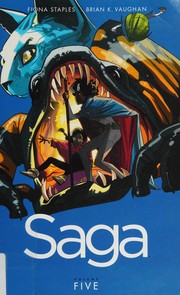
The return after the long gap, jumping forward and dealing with the aftermath of Volume 9. Deliberately slower and sadder; that is the point.

Rebuilds momentum and puts the surviving cast back in motion. The most recent point in the ongoing story, so this is where a current reader catches up and waits.
Discussion
Keep reading
Paths that share books, cover the same subject, or open a related topic.