Writing Short Stories: The Best Books to Learn the Craft, in Order
This curriculum is built for an intermediate writer who already understands basic prose but wants to master the short story form — from the inside out. The four stages move from internalizing craft principles, through structural and stylistic deepening, into the demanding work of revision, and finally into the professional world of submission and publication. Each book sharpens a specific lens so that by the end, the reader can write, revise, and place polished short fiction.
Craft Foundations
IntermediateInternalize the core principles of short story craft — compression, tension, character, and the demands of the form — and develop a working vocabulary for analyzing and writing short fiction.
▸ Study plan for this stage
Pace: 8–10 weeks, ~40–50 pages/day (mix of primary text and story examples)
- Compression as the defining constraint of short fiction: how to maximize impact within limited space
- Tension and conflict as the engine of short stories: the distinction between plot-driven and character-driven tension
- The role of precise, economical language in creating atmosphere and revealing character
- Story structure in miniature: how exposition, rising action, climax, and resolution function differently in short vs. long form
- The short story as a distinct literary form with its own aesthetic demands, not simply a 'short novel'
- Close reading and analysis as tools for understanding craft choices in published stories
- Character development through action, dialogue, and implication rather than exposition
- The relationship between form and meaning: how structural choices serve thematic purpose
- What does compression mean in the context of short fiction, and how does it differ from the structural demands of a novel?
- How do successful short stories create and sustain tension without relying on lengthy plot development?
- What techniques does Charters identify in her story selections for revealing character economically?
- According to Gardner, what are the key differences between showing and telling, and why does this distinction matter more acutely in short fiction?
- How does Baxter define 'burning down the house' as a metaphor for short story construction, and what does he mean by emotional intensity in compression?
- Can you identify and analyze a specific craft choice (dialogue, imagery, pacing, point of view) in a published story and explain how it serves the story's larger purpose?
- Read 3–4 stories from Charters' anthology and annotate them for compression techniques: mark where exposition is withheld, where dialogue reveals character, and where implication replaces explanation
- Write a 500-word analysis of a single story from the anthology, focusing on one craft element (e.g., how the opening creates tension, how the ending achieves closure through implication)
- Practice Gardner's 'showing vs. telling' principle by taking a passage of your own writing and rewriting it to show rather than tell; compare the emotional impact
- Identify the moment of highest tension in three different stories and map how the author builds to it—what comes before, what triggers it, how it's resolved
- Write a short story (1,500–2,000 words) that deliberately uses compression: establish a character and conflict in the first 300 words, escalate tension without subplot, and resolve in under 500 words
- Create a 'craft journal' where you record one specific technique from each book (e.g., a dialogue strategy from Charters, a sensory detail from Gardner, an emotional escalation from Baxter) and apply it to a new story draft
Next up: This stage equips you with the analytical vocabulary and structural awareness to recognize what makes a short story work, preparing you to move into the next stage where you'll focus on developing your distinctive voice and experimenting with form within these foundational constraints.

This anthology pairs canonical short stories with their authors' own craft essays, immediately grounding the learner in how masters think about the form before any prescriptive rules are introduced.
Gardner's rigorous, demanding treatment of fictional dream, character, and prose rhythm gives intermediate writers the precise critical language they need; read second so Charters' examples make his abstractions concrete.

Baxter's essays on staging, defamiliarization, and the 'fiction of witness' push beyond basics into the subtler decisions that separate competent stories from memorable ones.
Structure & the Shape of a Story
IntermediateUnderstand how short stories are architecturally built — how scene, time, point of view, and the story's controlling image create meaning — and apply structural thinking to drafts.
▸ Study plan for this stage
Pace: 8–10 weeks, ~25–30 pages/day, with 1–2 days per week for reflection and exercises
- Scene as the fundamental unit of short story structure—how dialogue, action, and sensory detail create immediacy and reveal character
- The architecture of compression: how short stories use time, summary, and ellipsis differently than novels to create impact
- Point of view as a structural choice that controls what the reader knows and when, shaping the story's meaning and emotional effect
- The controlling image or central symbol: how a recurring concrete detail or motif unifies a story and carries thematic weight
- Narrative structure in short fiction: exposition, inciting incident, rising action, climax, and denouement adapted for brevity and intensity
- How dialogue functions structurally to advance plot, reveal character, and create rhythm without authorial explanation
- The role of the opening and closing in short stories: how first and last lines anchor meaning and create resonance
- What is a scene in short fiction, and how does it differ from summary or exposition? How do you decide when to dramatize a moment versus compress it?
- How does point of view shape what a reader understands about the story's events and characters? What are the structural advantages and limitations of first-person versus third-person narration in short stories?
- What is a controlling image, and how does it function structurally to unify a short story? Can you identify one in a published story and trace its recurrence?
- How do the opening and closing lines of a short story work together to create meaning? Why do short stories often rely on subtlety and implication rather than explicit resolution?
- How does dialogue advance a short story structurally? What can dialogue accomplish that narration cannot, and when should you use one over the other?
- What is the difference between a short story's structure and a novel's structure? How does compression change the way you handle exposition, pacing, and climax?
- Read and annotate one complete short story from each author discussed in the books (e.g., a Flannery O'Connor story, a Chekhov story, and a contemporary story). Map the structure: mark where scenes begin and end, identify the controlling image, and note point-of-view shifts.
- Write a 500-word scene that relies entirely on dialogue and action to reveal character and advance plot—no authorial commentary. Then rewrite it with summary and exposition added; compare the two versions and reflect on what each approach gains and loses.
- Take a draft of your own short story (or write a new one) and identify its controlling image or central symbol. If it doesn't have one, add one and revise the story to weave it throughout. Write a brief reflection on how this image changed the story's coherence.
- Analyze the opening and closing lines of five published short stories. For each pair, write a paragraph explaining how the ending echoes, subverts, or completes the opening—and what effect this creates.
- Rewrite a scene from one of your drafts three times: once in first-person limited, once in third-person limited, and once in omniscient narration. Note how each point-of-view choice changes what the reader knows, when they know it, and how they feel about the protagonist.
- Create a structural outline of a short story you admire, breaking it into scene and summary blocks. Identify the inciting incident, turning points, and climax. Then outline one of your own drafts the same way and compare—where is your structure loose or unclear?
Next up: This stage equips you with the architectural vocabulary and analytical tools to recognize and build strong structures; the next stage will focus on the sentence-level and stylistic choices that bring those structures to life and create the emotional resonance readers feel.

Gioia's editorial apparatus and author notes make explicit the structural choices behind 50 canonical stories, training the eye to see architecture rather than just surface.
The field's most widely used craft textbook, it walks through scene, summary, POV, and plot with exercises; placed here so structural concepts are practiced immediately after being observed in Gioia.
O'Connor's theory of the short story as the form of 'submerged population groups' reframes structure as an ethical and emotional choice, deepening the writer's sense of why a story is shaped the way it is.
Style, Voice & Revision
ExpertDevelop a distinctive voice, learn to read drafts diagnostically, and acquire a systematic revision process that transforms raw material into polished, publishable work.
▸ Study plan for this stage
Pace: 8–10 weeks, ~25–30 pages/day, with 2–3 days per week dedicated to revision exercises and draft analysis
- Voice as the authentic expression of your worldview and sensibility—developed through reading widely and writing consistently (King)
- The distinction between situation (what happens) and story (what it means)—the emotional and thematic core that transforms narrative into resonant fiction (Gornick)
- Diagnostic reading: learning to identify structural weaknesses, pacing problems, and emotional flatness in your own drafts before revising (Bell)
- Systematic revision as a multi-pass process: macro-level structural fixes before micro-level line editing and copyediting
- The role of specificity and concrete detail in establishing voice and deepening reader connection (King and Gornick)
- Self-editing techniques: cutting excess, tightening dialogue, eliminating telling in favor of showing (Bell)
- Revision as rewriting, not just proofreading—willingness to restructure scenes, reframe conflicts, and reshape character arcs for clarity and impact
- How does Stephen King define voice, and what does he identify as the primary method for developing it?
- What is the difference between situation and story according to Vivian Gornick, and why does this distinction matter for revision?
- How can you diagnose emotional flatness or structural weakness in your own draft, and what revision strategies does Bell recommend for fixing these problems?
- What is the relationship between specificity and voice, and how do you use concrete detail to strengthen both?
- Describe a systematic revision process that moves from macro-level concerns to micro-level polish. What should you prioritize first, and why?
- How do you distinguish between revising for story (meaning and structure) versus editing for style (sentence clarity and word choice)?
- Read and annotate one chapter from 'On Writing' per session, then write 500 words of new fiction deliberately experimenting with voice—varying sentence length, diction, and perspective to match King's principles.
- Identify the situation and story in three published short stories (outside this curriculum), then analyze how the author uses revision-level choices (structure, pacing, detail) to make the story resonate beyond the situation.
- Take a completed short story draft of your own and perform a diagnostic read: mark every instance of telling, summarizing, or emotional flatness without making changes. Write a one-page diagnostic report identifying the three biggest structural or emotional problems.
- Revise one scene from your draft using Bell's multi-pass method: first pass for structure and pacing, second pass for dialogue clarity, third pass for unnecessary exposition and weak verbs.
- Rewrite the opening paragraph of one of your stories five different ways, each emphasizing a different aspect of voice (tone, rhythm, specificity, perspective). Reflect on which version best serves the story's emotional core.
- Conduct a line-editing exercise on a 1,000-word passage: cut 20% of the words without losing meaning, tighten dialogue tags, replace passive constructions, and strengthen weak verbs. Track what you cut and why.
Next up: This stage equips you with the critical eye and revision discipline needed to move into the next phase—whether that's mastering genre-specific craft, learning advanced narrative techniques, or developing a submission-ready portfolio—because you can now transform raw drafts into polished, publishable stories that reflect both technical skill and distinctive voice.
King's memoir-as-craft-book is unusually honest about the drafting and revision process; its directness and momentum make it the ideal entry point into this stage before more technical revision guides.
Gornick's distinction between 'situation' (the raw material) and 'story' (the narrator's transforming perspective) is the single most useful diagnostic tool for revision — it reveals why a draft isn't working yet.
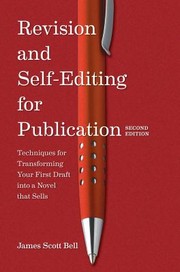
Bell provides a concrete, checklist-driven revision methodology for prose, dialogue, and pacing — the practical complement to Gornick's conceptual framework, turning insight into actionable edits.
Getting Published
ExpertUnderstand the short story publishing ecosystem — literary magazines, contests, agents, and collections — and develop a professional submission strategy to place finished work.
▸ Study plan for this stage
Pace: 4–5 weeks, ~25–30 pages/day. Week 1–2: Read "The Best American Short Stories 1967" (anthology review, ~300 pages). Week 3–5: Study "Writer's Market" (reference guide, ~500+ pages) with focused sections on short story markets, contests, and submission guidelines.
- The editorial vision and aesthetic standards of established literary magazines through close reading of published stories
- How to identify and categorize short story markets (literary magazines, commercial publications, genre-specific outlets, anthologies) using Writer's Market
- Submission mechanics: formatting, cover letters, simultaneous submissions, rights, and response timelines across different market types
- The role of literary contests in building credentials and reaching new audiences
- How to match your story's genre, length, tone, and audience to appropriate markets using market research
- The difference between agent representation and direct submission to publishers/magazines
- Building a submission tracking system and developing a long-term placement strategy
- How published stories in The Best American Short Stories exemplify what editors are actually buying
- What are the key differences between literary magazines, commercial publications, and genre-specific markets, and how would you choose which to target for your work?
- Using Writer's Market, how would you identify 5–10 appropriate markets for a specific short story you've written, and what criteria would you use to rank them?
- What are the standard submission guidelines and formatting requirements across different types of short story markets, and why do editors enforce them?
- How do literary contests function as a publishing pathway, and what are the pros and cons compared to direct magazine submissions?
- After reading The Best American Short Stories 1967, what patterns do you notice about story length, style, and subject matter—and how would this inform your market selection?
- What is a realistic submission timeline and rejection rate for short story writers, and how should you structure your submissions to maximize placement chances?
- Read 8–10 stories from The Best American Short Stories 1967 and for each, identify: (1) the story's genre/category, (2) likely target markets from Writer's Market, (3) estimated word count, (4) tone and audience. Document your reasoning.
- Select one of your completed short stories. Using Writer's Market, research and create a ranked list of 15 potential markets, noting submission fees, response times, rights purchased, and acceptance rates. Justify your ranking.
- Write 3 different cover letters for the same story tailored to 3 different market types (literary magazine, genre publication, contest). Study Writer's Market's submission guidelines for each to ensure accuracy.
- Create a submission tracking spreadsheet with columns for: market name, submission date, story title, word count, response deadline, status, and notes. Submit to at least 5 markets over the course of this stage.
- Analyze 5 stories from The Best American Short Stories 1967 and write a 1–2 page reflection on: What makes these stories publishable? What editorial values do they reflect? How would you pitch a similar story to an editor?
- Research and enter 10 literary contests from Writer's Market into your tracking system, noting entry fees, deadlines, prize amounts, and publication terms. Identify which 2–3 align best with your work.
Next up: This stage equips you with the knowledge and systems to navigate the publishing landscape and begin building a track record of publications, which will prepare you for the next stage: developing a longer-term career strategy, potentially pursuing collection publication, or advancing toward novel-length work with agent representation.
Reading the current and recent annual editions benchmarks the writer against what is actually being published today; the guest editors' forewords are themselves a masterclass in what editors seek.

The definitive annual directory of literary magazines, contests, and publishers with submission guidelines; essential for building a real, targeted submission list for short fiction.
Discussion
Keep reading
Paths that share books, cover the same subject, or open a related topic.