Writing a novel: the best craft books, in the order that gets it finished
This four-stage curriculum takes a beginner novelist from first principles to a polished, submission-ready manuscript. Each stage builds directly on the last: you first absorb the mindset and raw mechanics of storytelling, then master structure and character at a deeper level, then learn to draft with momentum, and finally develop the editorial eye needed to revise your own work into its best possible form.
Foundations: Mindset & the Basics of Story
BeginnerUnderstand what storytelling is, silence the inner critic, and grasp the essential building blocks — scene, conflict, and narrative momentum — before writing a single chapter.
▸ Study plan for this stage
Pace: 4–5 weeks, ~25–30 pages/day. Read "On Writing" (first 2 weeks), "Bird by Bird" (second week and into third), then "Story" (final 2–3 weeks, as it's denser). Allow 3–4 days between books to reflect and consolidate.
- Writing as a craft that can be learned and improved through deliberate practice, not just innate talent (King's core thesis)
- The writer's permission to write badly in first drafts and the importance of silencing self-judgment (Lamott's 'shitty first drafts')
- Scene as the fundamental unit of storytelling—where characters act, conflict emerges, and readers experience the story in real time
- Conflict as the engine of narrative momentum: without opposition or obstacles, there is no story worth telling
- Story structure as a system of interconnected elements (character, desire, obstacles, stakes) that create emotional resonance, not arbitrary rules
- The distinction between plot (what happens) and story (why it matters and how it changes the protagonist)
- Authentic voice and personal truth as the foundation for compelling fiction, not imitation or formula
- According to King, what is the relationship between reading widely and becoming a better writer, and why does he emphasize this so strongly?
- What does Lamott mean by 'shitty first drafts,' and how does this concept help overcome the inner critic?
- Define a scene in narrative terms: what must happen in a scene for it to function as a storytelling unit?
- In McKee's framework, what is the difference between a plot and a story, and why does this distinction matter for novelists?
- How do character desire, obstacles, and stakes work together to create narrative momentum according to the three authors?
- What does King mean by 'the truth' in fiction, and how does Lamott's emphasis on authenticity support this idea?
- Write a 500-word 'shitty first draft' on any topic without editing or self-judgment; the goal is to silence the inner critic and prove to yourself that permission to be imperfect is liberating (Lamott's method).
- Analyze a scene from a novel you admire using McKee's scene analysis: identify the character's desire, the obstacle, the conflict, and how the scene advances the story. Write a 1-page breakdown.
- Read one short story or novel chapter per week (in addition to the three books) and identify the scene structure, conflict, and narrative momentum. Note where tension rises and why.
- Create a one-page character sketch with a clear desire and at least three obstacles that will prevent them from achieving it; this is the seed of story conflict.
- Rewrite a scene from your own writing (or a published scene) three times, each time raising the stakes or deepening the conflict; observe how the scene becomes more compelling.
- Keep a 'voice journal' for 2 weeks: write 200–300 words daily on topics that matter to you personally, without worrying about plot or structure. This builds authentic voice (King + Lamott).
Next up: This stage equips you with the psychological permission to write, the foundational understanding of how stories work at the scene and conflict level, and the confidence that storytelling is learnable—preparing you to move into the next stage where you'll apply these principles to outline, develop characters deeply, and structure a full novel.
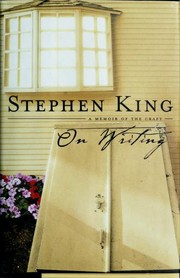
The perfect first book: half memoir, half craft manual, it demystifies the writing life and establishes core habits (daily writing, reading widely, trusting your instincts) that underpin everything that follows.
Directly addresses beginner anxiety and perfectionism; introduces the liberating concept of the 'shitty first draft,' which prepares you to actually start writing without freezing up.
Establishes a rigorous, universal vocabulary for how stories work — scene, act, climax, value change — giving you the conceptual framework that all later craft books assume you already have.
Structure & Plot: Architecting Your Novel
BeginnerLearn how to map a novel-length narrative from beginning to end, understand the major structural models, and be able to outline or plan your own story with confidence.
▸ Study plan for this stage
Pace: 4–5 weeks, ~25–30 pages/day. Read "Save the Cat! Writes a Novel" (weeks 1–2, ~300 pages), then "Story Genius" (weeks 3–5, ~350 pages). Allocate 2–3 days per book for review and integration exercises.
- The Save the Cat beat sheet: 15 story beats that structure a novel from opening image to final image
- The hero's emotional journey and internal change arc alongside the external plot
- How to identify and develop your protagonist's core wound and desire vs. need
- The role of the catalyst/inciting incident in disrupting the status quo
- Midpoint turning points and the importance of raising stakes at the 50% mark
- The difference between plot structure and the deeper emotional/psychological architecture of character transformation
- How sensory details and memory shape character motivation and story authenticity
- Outlining and planning techniques: beat sheets, scene lists, and character-driven narrative mapping
- What are the 15 Save the Cat beats, and how do they function in a three-act structure?
- How does a protagonist's internal wound connect to their external plot goal, and why must they change by the novel's end?
- What is the difference between what a character wants (desire) and what they actually need, and how does this tension drive plot?
- How does Story Genius's concept of 'brain science' and sensory memory help you construct authentic character motivation and backstory?
- What is a midpoint turning point, and why is it critical to raising stakes and deepening character transformation?
- How would you outline your own novel using both the Save the Cat beat sheet and Story Genius's character-driven approach?
- Create a beat sheet for a novel you've read or a film you know well, identifying all 15 Save the Cat beats and noting where they occur
- Write a one-page character profile for your protagonist, including their core wound, desire, need, and how these will evolve across your novel
- Develop a sensory memory exercise: choose a formative moment from your protagonist's past and write 2–3 pages exploring it through sensory detail (sight, sound, smell, touch, taste)
- Outline the first 10 scenes of your novel using a scene list, noting the beat each scene serves and what emotional/plot progress it advances
- Create a 'before and after' character arc document showing your protagonist at the opening image vs. the final image, detailing the specific transformation
- Write a 2–3 page synopsis of your novel's plot using the Save the Cat structure, then annotate it with the emotional/psychological shifts from Story Genius
- Map your novel's midpoint: identify the turning point at 50%, write the scene, and explain how it raises stakes and deepens the protagonist's internal conflict
Next up: This stage equips you with both a macro structural blueprint (Save the Cat beats) and a micro understanding of character psychology (Story Genius), preparing you to move into the next stage where you'll develop scene-level craft, dialogue, and prose techniques that bring your outlined story to vivid life.
Translates Blake Snyder's proven beat-sheet structure directly into novel terms; its concrete, numbered beats give beginners a clear scaffold to hang their story on before drafting.

Argues that plot must grow from an internal character struggle, not the other way around; reading this after Save the Cat! corrects the trap of hollow, mechanical plotting and deepens your outline.
Character & Voice: Making People Come Alive
IntermediateBuild psychologically complex, believable characters and develop a distinctive narrative voice — the two elements readers remember long after they forget the plot.
▸ Study plan for this stage
Pace: 4–5 weeks, ~40–50 pages/day. Start with Gardner's foundational chapters on character and dialogue (weeks 1–2), then move to Burroway's practical sections on characterization and voice (weeks 2–3), with the final week dedicated to integration exercises and revision work.
- Psychologically complex characters emerge from specific sensory details, contradictions, and authentic motivation—not from backstory dumps or external description alone
- Dialogue reveals character through speech patterns, subtext, and what characters *don't* say; it must do multiple jobs at once (advance plot, reveal personality, show conflict)
- Narrative voice is the personality of the telling itself—distinct from the narrator's voice—and includes diction, syntax, rhythm, and the author's implied attitude toward the material
- The 'fictional dream' requires consistent point of view and sensory immersion; breaking it damages reader investment in characters
- Character development happens through action and choice under pressure, not through introspection or author commentary
- Distinctive voice emerges from constraint and specificity: the more particular your character's perspective, the more universal the resonance
- Show vs. tell applies to character: readers must *experience* a character's psychology through behavior, dialogue, and sensory detail rather than being told about it
- What is the difference between a character's voice and the narrator's voice, and how do they work together to create a distinctive narrative voice?
- How does Gardner define the 'fictional dream,' and what specific techniques maintain or break it when developing character?
- What makes dialogue psychologically revealing, and how can you use subtext and speech patterns to show character rather than tell about it?
- How do you create psychological complexity in a character without relying on backstory exposition or authorial explanation?
- What role does sensory detail and physical action play in making characters believable and memorable?
- How does constraint (in perspective, vocabulary, or situation) help you develop a more distinctive voice?
- Write a 2–3 page scene showing a character's emotional state entirely through dialogue and physical action—no internal monologue or description of feelings allowed
- Rewrite the same scene three times in three different narrative voices (first-person, third-person limited, and third-person omniscient); note how voice changes what the reader knows and feels about the character
- Create a character sketch using only sensory details and contradictions (e.g., 'She wore expensive shoes but bit her nails'; 'He spoke softly but dominated every room')—no direct description of personality
- Write a dialogue-only scene between two characters where their speech patterns, word choice, and what they avoid saying reveals their relationship and internal conflict
- Revise a passage from your own work where you've explained a character's motivation; rewrite it to show the same motivation through action, dialogue, or sensory detail
- Analyze a passage from Gardner or Burroway where a character is revealed through voice; identify the specific diction, syntax, and rhythm choices that create that character's distinctiveness
Next up: Mastering psychologically complex characters and a distinctive voice equips you to construct compelling plots where character choices feel inevitable and earned—the foundation for the next stage's focus on structure and narrative momentum.
A rigorous, literary examination of how fiction creates a 'vivid and continuous dream'; its treatment of point of view, tone, and character interiority raises the craft bar significantly.
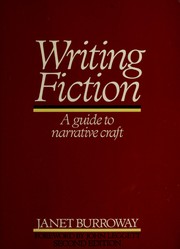
The most widely used university-level fiction craft textbook; its chapters on character, dialogue, and showing vs. telling provide structured exercises that cement the concepts Gardner introduces.
Drafting to Revision: From Messy Draft to Polished Manuscript
ExpertDraft a complete novel with sustained momentum, then systematically revise it at the macro (structure, character arc) and micro (sentence, word) levels until it is ready to share with the world.
▸ Study plan for this stage
Pace: 8–10 weeks, ~40–50 pages/day (with 2–3 days per week dedicated to drafting and revision exercises)
- Momentum-driven drafting: prioritizing completion over perfection, embracing the 'messy middle' of novel writing
- Macro-level revision: identifying and fixing structural problems, character arc inconsistencies, and plot holes
- Micro-level revision: refining prose at the sentence and word level for clarity, rhythm, and impact
- Self-editing techniques: developing a systematic approach to critique your own work objectively
- Sentence craft and clarity: understanding how word choice, syntax, and rhythm shape reader experience
- The revision mindset: viewing revision not as fixing failure but as the essential work of making your novel sing
- What strategies from 'No Plot? No Problem!' help you maintain drafting momentum, and how do you overcome the internal critic?
- How do you conduct a macro-level revision pass, and what are the key structural and character elements to evaluate?
- What is the difference between developmental editing and line editing, and when should each be applied?
- How does Klinkenborg's approach to sentence-level writing inform your revision of individual sentences and word choices?
- What self-editing checklists or frameworks can you use to systematically move through your manuscript without getting overwhelmed?
- How do you know when your manuscript is 'ready' to share, and what final polish should it receive?
- Complete a full novel draft (50,000+ words) using Baty's momentum-based techniques from 'No Plot? No Problem!', setting daily word-count goals and resisting the urge to edit as you go
- Conduct a macro-level revision pass: create a scene-by-scene outline of your draft, identify structural gaps or pacing issues, and map character arcs to ensure consistency and growth
- Perform a developmental edit focusing on plot, character, and theme: rewrite or restructure 2–3 scenes that don't serve the story, using Bell's framework for identifying weak spots
- Complete a line-editing pass on 3–5 chapters using Bell's micro-level techniques: tighten prose, eliminate redundancy, vary sentence structure, and strengthen word choice
- Apply Klinkenborg's sentence-craft principles to a single chapter: rewrite 10–15 sentences, paying attention to rhythm, clarity, and the music of language
- Create a personal revision checklist combining Bell's self-editing strategies and Klinkenborg's attention to craft; use it to do a final polish pass on your entire manuscript
Next up: This stage transforms you from a writer with an idea into one with a complete, polished manuscript—preparing you to move into the next stage of feedback, agent querying, or publication, where you'll learn to position and share your work with the publishing world.
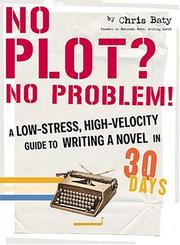
Written by the founder of NaNoWriMo, this book is the definitive guide to generating a full rough draft quickly and without self-censorship — the essential first step of the revision process.
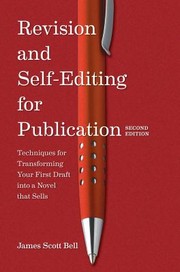
Provides a systematic, checklist-driven approach to macro revision — plot, character arcs, pacing, scenes — giving you a repeatable process to diagnose and fix your draft's structural problems.
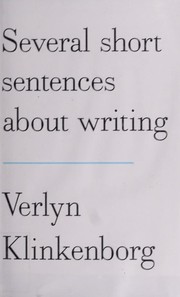
The final book in the path: a radical, sentence-level guide to prose clarity and rhythm that trains you to hear and refine every line, producing the polished, distinctive prose of a finished manuscript.
Discussion
Keep reading
Paths that share books, cover the same subject, or open a related topic.