Best Books on Writing Poetry, in Reading Order
This curriculum moves from the joy and instinct of poetry toward the rigorous craft of form, image, line, and revision. Each stage builds on the last: first you fall in love with the art and learn its basic vocabulary, then you master the technical tools of meter and image, and finally you develop the editorial eye needed to take a raw draft all the way to a finished, resonant poem.
Falling In & First Foundations
BeginnerDevelop a feel for what poetry is, why it matters, and how to begin writing without fear — building basic vocabulary around image, voice, and the poetic impulse.
▸ Study plan for this stage
Pace: 4–5 weeks, ~20–25 pages/day. Start with Kooser (3 weeks, ~15 pages/day), then move to Hugo (2 weeks, ~20 pages/day). Build in time for weekly reflection and writing practice.
- Poetry as accessible craft, not mystical talent—Kooser's demystification of the writing process
- The importance of concrete, sensory images as the foundation of poetic language
- Voice as the authentic sound of the poet—finding and trusting your own perspective
- The 'triggering town' concept: how place, memory, and specific detail spark poems
- Revision and honest self-assessment as essential to developing as a poet
- The poetic impulse as rooted in observation, emotion, and the desire to communicate
- Permission to write badly at first—embracing the messy beginning as necessary
- What does Kooser mean by poetry being a 'home repair' rather than a grand architectural project, and how does this philosophy reduce fear for beginning poets?
- How does Hugo's concept of the 'triggering town' work, and what role does specific place and memory play in generating poem ideas?
- What is 'voice' in poetry according to these texts, and how do you begin to recognize and develop your own?
- Why do both Kooser and Hugo emphasize the importance of concrete, sensory details over abstract ideas?
- What is the relationship between revision and authenticity in these authors' approaches to poetry?
- How do Kooser's practical exercises and Hugo's emphasis on personal truth work together to build confidence as a beginning poet?
- Write 5 short poems (4–8 lines each) using Kooser's 'close observation' technique: pick an ordinary object or moment and describe it with precise sensory detail
- Identify your 'triggering town': write a detailed map or list of a place that holds emotional significance for you, then generate 3 poem ideas from specific memories or details in that place
- Write a poem in your natural speaking voice about something you care about; then read it aloud and mark any lines that feel false or forced—revise those lines to sound more like you
- Complete Kooser's exercise on metaphor and simile: write 10 comparisons for an emotion (e.g., anger is like...), then build one into a short poem
- Revise one of your earlier poems using Hugo's principle of 'specificity over generality'—replace vague words with concrete details that show rather than tell
- Keep a 'triggering journal' for one week: record specific moments, overheard phrases, or vivid details that catch your attention, then draft a poem from one entry
Next up: This stage establishes that poetry is learnable, grounded in observation and voice, and rooted in specific detail—preparing you to deepen your craft through studying form, technique, and the work of accomplished poets in the next stage.
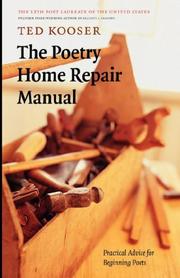
A former U.S. Poet Laureate writes with warmth and zero intimidation about how poems work and how to start writing them — the perfect first book for any beginner.
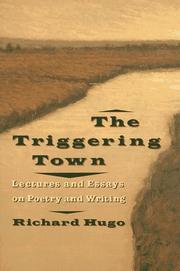
Hugo's short, electrifying essays on obsession, subject, and the 'triggering subject' give beginners a genuine poet's mindset and introduce the idea that a poem has its own internal logic.
Image, Line & the Poem's Body
BeginnerUnderstand how the image is the basic unit of poetry, how the line functions as a unit of breath and meaning, and how these two elements shape every poem you write.
▸ Study plan for this stage
Pace: 4–5 weeks, ~20–25 pages/day, with 2–3 days per week dedicated to writing exercises
- The image as the fundamental unit of poetry—concrete, sensory details that carry emotional and intellectual weight
- The poetic line as a unit of breath, syntax, and meaning that operates independently from grammatical sentences
- How line breaks create rhythm, emphasis, and multiple layers of meaning through enjambment and end-stopped lines
- The relationship between the poem's visual appearance on the page and how it is read aloud
- How white space, silence, and the poem's physical form contribute to meaning
- The distinction between free verse and formal verse in how they use the line
- How to revise poems by attending to individual images and line choices rather than abstract ideas
- What is an image in poetry, and why does Longenbach argue it is more fundamental than metaphor or symbolism?
- How does the poetic line differ from a sentence, and what does it mean for a line to be a 'unit of breath'?
- What is enjambment, and how does it change the way a reader experiences meaning compared to an end-stopped line?
- How do Mary Oliver's exercises help you understand the relationship between looking closely at the world and writing precise images?
- What role does white space and the poem's physical form play in shaping how a reader receives the poem?
- How can you use line breaks strategically in your own writing to control pacing, emphasis, and ambiguity?
- Complete Longenbach's close reading exercises on line breaks in poems by poets like Louise Glück and Anne Carson—annotate how each line break shifts meaning or emphasis
- Write 5–7 image studies (200–300 words each) based on Oliver's 'attention' exercises: spend 20 minutes observing a single object or scene, then write down precise sensory details without judgment
- Take a prose passage (your own or from another source) and break it into poetic lines in three different ways, noting how each version changes the rhythm and meaning
- Revise one of your own poems by examining every image: remove abstractions, replace vague words with specific ones, and ensure each image earns its place
- Practice enjambment: write 3–4 short poems where you deliberately use line breaks to create double meanings or unexpected pauses
- Transcribe a poem you admire by hand, then rewrite it with different line breaks and compare how the new version reads aloud
Next up: Mastering the image and the line gives you the foundational tools to build more complex poetic structures; the next stage will build on this embodied understanding of how form and content work together by exploring meter, stanza, and larger architectural patterns in the poem.
The definitive short study of how the poetic line works — end-stopped, enjambed, and everything in between — read here so line decisions become conscious craft choices.
Oliver's clear, authoritative handbook covers sound, rhythm, free verse, and formal elements in plain language; it bridges the image-and-line stage into the world of meter and form.
Form, Meter & the Music of Poetry
IntermediateGain a working command of prosody — meter, stress, rhyme, and received forms — so that formal and free-verse choices are equally available and fully understood.
▸ Study plan for this stage
Pace: 8–10 weeks, ~25–30 pages/day, with 2–3 days per week dedicated to hands-on practice and revision
- Metrical feet (iamb, trochee, dactyl, anapest, spondee) and how to identify stress patterns in English verse
- Scansion: the practice of marking stressed and unstressed syllables to reveal a poem's underlying metrical structure
- The relationship between natural speech rhythm and imposed metrical patterns—how tension between the two creates meaning and musicality
- Rhyme schemes, end rhyme, internal rhyme, and near-rhyme as structural and sonic devices that shape a poem's architecture
- Received forms (sonnets, villanelles, sestinas, terza rima, blank verse) and their historical conventions, constraints, and expressive possibilities
- The distinction between formal verse and free verse: why formal constraints matter and how to make deliberate choices about form
- Prosody as the audible dimension of poetry—how meter, stress, and sound work together to create the 'music' that carries meaning
- What are the five basic metrical feet in English verse, and how do you distinguish an iamb from a trochee or a dactyl from an anapest?
- How do you scan a line of poetry, and what does the scansion reveal about how the poem sounds when read aloud?
- What is the relationship between a poem's metrical pattern and its natural speech rhythm, and why does tension between the two matter?
- What are the major received forms (sonnets, villanelles, sestinas, terza rima, blank verse), and what are the defining constraints and possibilities of each?
- How do rhyme, meter, and line length work together to create the sonic and structural architecture of a poem?
- What are the advantages and limitations of formal verse versus free verse, and how do you make an informed choice about which to use?
- Scan 10–15 lines from poems in Steele's book, marking stressed and unstressed syllables, then read them aloud to hear how the scansion maps to actual speech
- Listen to Stephen Fry's CD recordings while following the text, paying attention to how his performance brings out the metrical patterns and sonic qualities Steele describes
- Identify and analyze the metrical foot and overall meter (iambic pentameter, trochaic tetrameter, etc.) in 5–6 poems from different periods and styles
- Study the rhyme scheme and structural logic of at least one example each of a Shakespearean sonnet, Petrarchan sonnet, villanelle, and sestina; diagram how the constraints shape the argument or emotion
- Write your own 14-line poem in iambic pentameter with a clear rhyme scheme (Shakespearean or Petrarchan), then revise it to ensure the meter serves the meaning
- Compose a villanelle or other received form, paying close attention to how the repeated lines and formal constraints force you to develop your idea in unexpected ways
- Compare a passage of blank verse (e.g., from Shakespeare or Milton) with a passage of free verse on a similar theme, analyzing how the presence or absence of meter affects pacing, emphasis, and emotional weight
- Create a scansion chart for a poem you admire, then write a brief reflection on how the metrical variations (substitutions, inversions, spondees) create emphasis or meaning at key moments
Next up: Mastery of prosody equips you to read formal poetry with full understanding and to write in any form—or to break form deliberately—with complete command of what you're doing, preparing you to explore how individual voice, imagery, and argument emerge through and against formal structures.

The clearest modern introduction to meter and prosody in English; Steele builds from the ground up with abundant scanned examples, making the technical approachable.
Fry's witty, enthusiastic guide to poetic forms — sonnets, villanelles, odes, and more — makes formal poetry feel like play rather than constraint, with exercises throughout.
The canonical academic treatment of English prosody and form; read after Steele and Fry, it deepens and systematizes what you've learned and is essential for serious study.
Deep Craft: The Great Poet-Teachers
IntermediateAbsorb the hard-won wisdom of master poets on what makes a poem truly alive — diction, compression, surprise, risk, and the relationship between form and feeling.
▸ Study plan for this stage
Pace: 8–10 weeks, ~25–30 pages/day, with 2–3 days per week reserved for reflection and writing exercises
- Sound as meaning: how rhythm, meter, and phonetic texture carry emotional and intellectual weight in poetry
- Compression and economy: the deliberate exclusion of the unnecessary to intensify impact and create resonance
- Diction as moral choice: how word selection reveals the poet's stance, values, and relationship to their subject
- The productive tension between form and feeling: how formal constraints generate rather than limit emotional authenticity
- Surprise and risk in poetry: the necessity of the unexpected turn, the dangerous image, the vulnerable admission
- Reading like a poet: developing the attentive ear and eye to perceive what makes a poem 'alive' versus inert
- The poet's obsessions and constraints: how self-imposed limitations and recurring concerns deepen a body of work
- Madness as creative resource: the relationship between psychological intensity, emotional truth, and poetic power
- How does Pinsky's analysis of sound in poetry challenge the idea that meaning comes primarily from words' definitions rather than their sonic properties?
- What does Ruefle mean by 'madness' in her essays, and how does she argue it functions as a tool for poetic authenticity rather than a liability?
- How can compression—the deliberate removal of explanation and connective tissue—paradoxically make a poem more emotionally powerful?
- What is the relationship between formal constraint (meter, rhyme, stanza form) and emotional truth, according to these poets?
- How do diction choices reveal a poet's ethical stance toward their subject matter?
- Why is 'surprise' or 'risk' essential to poetry, and what does it mean for a poem to take a genuine risk?
- Sound study: Select 5 poems from the texts discussed by Pinsky and read them aloud multiple times. Annotate where sound patterns (alliteration, assonance, consonance) create meaning independent of denotation. Write a 1-page analysis of how one poem's sound architecture supports its emotional arc.
- Compression exercise: Take a poem you've written or admire, and remove 25% of the words without changing the core meaning. Repeat with another 15%. Reflect on what was lost and what became more potent.
- Diction audit: Choose a poem and replace 5–7 key words with synonyms. Read both versions aloud. Write about how the original diction choices reveal the poet's implicit values and stance toward the subject.
- Form and feeling dialogue: Write two versions of the same poem—one in free verse, one in a formal constraint (sonnet, villanelle, or strict meter). Reflect on how the formal version changed what you could say and how you felt while writing it.
- Madness and authenticity: Identify a moment in Ruefle's essays where she discusses emotional or psychological intensity in poetry. Find a poem (by her or another) that exemplifies this intensity, and write about the specific choices (word, image, syntax) that make it feel genuinely dangerous or unguarded.
- Listening journal: Over 2–3 weeks, keep a notebook where you record moments of surprise or risk in poems you read. Note the specific line or image, why it startled you, and what formal or linguistic choice created that effect.
Next up: This stage equips you with the internalized wisdom of master practitioners—the craft principles that distinguish alive poetry from competent verse—preparing you to apply these insights to your own sustained poetic project and to develop a distinctive voice grounded in both formal understanding and emotional authenticity.
The former Poet Laureate's compact masterwork on how sound — stress, duration, syntax — creates meaning; essential reading once you have a grounding in meter.
Ruefle's luminous collected lectures push craft into the realm of mystery, obsession, and the unconscious — the book that teaches what no handbook can, and best read after the technical foundations are solid.
Revision: Making the Poem Finished
ExpertDevelop a rigorous, patient revision practice — learning to read your own drafts coldly, cut ruthlessly, and work a poem until every word earns its place.
▸ Study plan for this stage
Pace: 4–5 weeks, ~20–25 pages/day, with 2–3 days per week dedicated to revision exercises on your own drafts
- Reading your own work with detachment: techniques for seeing your poem as a reader would, not as its creator
- The principle of earned language: every word, line break, and image must justify its presence and advance the poem's meaning or music
- Cutting ruthlessly: identifying and removing redundancy, cliché, weak verbs, and self-indulgent passages that serve the writer, not the poem
- Revision as re-seeing: understanding that revision is not mere editing but a fundamental reimagining of the poem's structure, voice, and emotional core
- The music of language in revision: tuning rhythm, sound patterns, and line breaks to strengthen the poem's sonic and emotional impact
- Knowing when a poem is finished: developing judgment about when revision becomes obsession and when to release a poem as complete
- What are the key strategies Addonizio recommends for reading your own drafts with critical distance, and how can you apply them to overcome your attachment to your own language?
- How do you identify weak or unearned language in a poem, and what criteria should guide your decisions about what to cut?
- What is the relationship between revision and re-seeing, and how does this perspective change the way you approach working on a draft?
- How do sound, rhythm, and line breaks function in revision, and how can you use them to deepen a poem's emotional or thematic resonance?
- What are the signs that a poem is finished versus over-revised, and how do you develop the judgment to know the difference?
- How can you apply Addonizio's revision principles to poems you've already drafted, and what specific changes emerge from this practice?
- Read a completed draft aloud multiple times over several days, marking every moment where language feels forced, clichéd, or unclear—then revise ruthlessly, cutting at least 10–15% of the original text
- Take one poem and rewrite it three times with different line breaks, paying attention to how each choice changes the rhythm, emphasis, and meaning—then choose the version that best serves the poem
- Identify the five strongest images or lines in a draft, then rebuild the poem around them, cutting everything that doesn't directly support or enhance those moments
- Practice 'cold reading': set a draft aside for at least one week, then read it as if someone else wrote it—note every moment of confusion, redundancy, or emotional flatness
- Select a poem with weak verbs or passive constructions and revise it by replacing every weak verb with a precise, active alternative—notice how this single change transforms the poem's energy
- Revise a draft by removing all adjectives and adverbs, then selectively restore only those that are truly essential and earned—compare the stripped and restored versions
Next up: By mastering the discipline of rigorous revision and learning to trust your own critical judgment, you'll be prepared to move beyond individual poems and develop a sustainable, professional practice—understanding how revision fits into a larger creative life and how to maintain momentum across multiple projects.

Covers the full arc from first impulse to finished draft, with an especially strong section on revision strategies; a practical companion for the working poet at any stage.
Discussion
Keep reading
Paths that share books, cover the same subject, or open a related topic.