How to learn Poetry
This curriculum takes a complete beginner from the pure joy of reading poems all the way to writing, analyzing, and situating poetry within its historical and formal traditions. Each stage builds on the last: you first develop an ear and a love for the art, then learn its craft vocabulary, then study its forms and movements in depth, and finally engage with the most challenging and rewarding works in the canon.
Falling in Love with Poetry
BeginnerDevelop an ear for poetic language, rhythm, and image — and discover that poetry can be immediate, emotional, and fun — before worrying about any technical vocabulary.
▸ Study plan for this stage
Pace: 2–3 weeks total. Week 1: Read all of "Where the Sidewalk Ends" at a leisurely pace — dip in and out, ~10–15 poems per sitting, savoring rather than rushing. Week 2: Read "the sun and her flowers" in 2–3 longer sittings, following its five-part emotional arc (wilting → falling → rooting → rising → bl
- The sound and music of poetry: how poems feel when read aloud, including rhythm, beat, and rhyme — experienced through Silverstein's bouncy, sing-song verses like 'Sarah Cynthia Sylvia Stout' and 'The Unicorn Song'
- The power of the image: how a single vivid picture or comparison can carry enormous emotion — seen in Kaur's spare, lowercase lines that pair a few words with a single feeling or scene
- Voice and tone: recognizing that a poet has a distinct personality on the page — Silverstein's playful, mischievous humor versus Kaur's raw, intimate vulnerability
- Brevity and white space: understanding that what a poem leaves out is as important as what it includes — Kaur's minimalist style shows how silence on the page creates weight
- Emotional honesty: poetry as a direct channel to feeling — Kaur's five-chapter arc (wilting, falling, rooting, rising, blooming) maps grief, loss, healing, and growth without apology
- Accessibility: dismantling the myth that poetry is difficult or elitist — Silverstein's humor and Kaur's conversational plainness both prove poetry can speak to anyone immediately
- Narrative and character in short form: how Silverstein packs a full story, twist, or joke into a few lines, showing that poems can tell tales
- Personal resonance: learning to notice which poems 'land' for you personally and beginning to articulate why
- After reading 'Where the Sidewalk Ends,' can you describe what Silverstein's 'voice' feels like — and name two or three specific poems that best capture it?
- How does reading a Silverstein poem aloud change the experience compared to reading it silently? What do you notice about its beat or sound?
- Kaur structures 'the sun and her flowers' in five named sections. What emotional journey do those five titles map out, and did the arc feel complete or satisfying to you?
- Pick one poem from Kaur that moved you and one that left you cold. What made the difference — the subject, the images, the length, the tone?
- Both books are wildly popular but look and sound almost nothing alike. What does that tell you about what poetry is allowed to be?
- Can you describe one moment in either book where a very simple image or comparison made you feel something unexpected? What was the image, and why did it work?
- Read-aloud ritual: Choose five Silverstein poems and read them aloud — alone, to a friend, or recorded on your phone. Notice where your voice naturally speeds up, slows down, or wants to be louder. Jot one sentence about what you heard.
- Imitation poem (Silverstein): Write a short, silly rhyming poem of 8–16 lines in Silverstein's style — pick an absurd subject (a homework-eating dog, a cloud that sneezes). Don't worry about quality; focus on making it fun to say aloud.
- Imitation poem (Kaur): Write a Kaur-style micro-poem of 4–8 lines, lowercase, no punctuation except perhaps a period at the end. Choose one emotion you felt this week and reduce it to its simplest image.
- Emotional mapping: As you finish 'the sun and her flowers,' draw or write a simple five-box chart — one box per chapter (wilting, falling, rooting, rising, blooming). In each box, write the one poem that felt most central to that chapter's mood and one word describing how it made you feel.
- Personal anthology: By the end of Stage 1, collect your 10 favorite poems across both books. Write one sentence next to each explaining why it made the list. This becomes your personal taste baseline to return to later.
- Contrast journal entry: Write a paragraph (no more than half a page) comparing how the two books made you feel as a reader — not which is 'better,' but which felt more like home, and what that might say about your own poetic sensibility.
Next up: Having built an instinctive feel for poetic sound, image, and emotional range through two very different but equally accessible voices, the reader is now ready to begin naming and understanding the craft techniques — like meter, metaphor, and form — that create those effects, moving from pure feeling into informed appreciation.
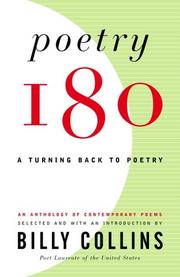
Collins curated 180 accessible, contemporary poems specifically to re-introduce reluctant readers to poetry. Starting here removes intimidation and proves that poems can be clear, surprising, and deeply pleasurable.
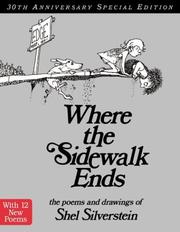
Silverstein's playful verse trains the ear for rhyme, rhythm, and wordplay in the most joyful way possible — a reminder that poetry is rooted in sound and delight before it is anything else.

A modern bestseller that uses spare, image-driven free verse to explore emotion and identity — ideal for building the habit of reading poems slowly and sitting with feeling.
Learning the Craft Vocabulary
BeginnerAcquire the essential technical language of poetry — meter, line, image, voice, tone, form — so you can read and discuss any poem with precision.
▸ Study plan for this stage
Pace: 6–8 weeks total: Weeks 1–3 on "The Triggering Town" (~20–25 pages/day, reading each essay twice — once for pleasure, once with annotations); Weeks 4–7 on "The Poet's Companion" (~15–20 pages/day, pausing after each craft chapter to attempt the included writing prompts); Week 8 reserved for review, c
- The triggering subject vs. the generated subject (Hugo): the difference between what starts a poem and what the poem discovers it is actually about
- Obsessive words and private vocabulary (Hugo): how a poet's recurring language creates a distinctive voice and why you must 'own' your words before you can use them honestly
- The relationship between freedom and obligation in the poetic line — when to break, when to run on, and how line length shapes rhythm and emphasis
- Meter and its variations (The Poet's Companion): understanding stressed/unstressed syllables, the major feet (iamb, trochee, dactyl, anapest, spondee), and how metrical substitution creates expressive tension
- Image as the primary unit of poetic meaning (The Poet's Companion): concrete sensory detail vs. abstraction, and why images carry emotional weight that statements cannot
- Tone and voice (both books): how word choice, syntax, and persona combine to create the speaker's attitude toward subject and reader
- Fixed and open forms (The Poet's Companion): the sonnet, villanelle, and free verse as contrasting containers that shape meaning differently
- Close reading as a craft practice: annotating a poem for all of the above elements simultaneously rather than in isolation
- According to Hugo in 'The Triggering Town,' why is the triggering subject ultimately less important than the generated subject, and what does this imply about how a poet should treat their initial inspiration?
- How does Hugo's concept of 'your' words versus 'other people's' words relate to the idea of poetic voice as discussed in 'The Poet's Companion'?
- Using the terminology from 'The Poet's Companion,' scan a quatrain of your choice: identify each foot, name the dominant meter, and locate at least one substitution — then explain what effect that substitution creates.
- What is the difference between a simile and a metaphor as defined in 'The Poet's Companion,' and how does each affect the distance between the reader and the image?
- How do tone and subject interact? Choose one poem discussed or prompted in either book and describe how its tone would change if a single key word were replaced with a near-synonym.
- What does 'The Poet's Companion' argue are the trade-offs between writing in a fixed form (e.g., the sonnet) versus free verse, and how does Hugo's essay on freedom and necessity speak to the same tension?
- Hugo's Triggering Town Map: Choose a real or invented town, street, or building you know well. List 15 concrete nouns associated with it. Write a 12–16 line poem that starts with that place (the trigger) but must arrive somewhere emotionally or thematically unexpected by the final line — practicing the triggering-vs.-generated distinction.
- Obsessive Word Inventory: Following Hugo's lead, keep a two-week log of every word you find yourself reaching for repeatedly in drafts or journal entries. Circle the five most recurring. Write a short poem in which all five appear, then reflect: do these words reveal something about your private concerns as a writer?
- Scansion Drill (The Poet's Companion method): Select three short poems of different eras — one clearly metrical, one loosely metrical, one free verse. Mark every syllable as stressed (/) or unstressed (u), identify the dominant foot, and write a one-paragraph analysis of how the rhythm reinforces (or undercuts) the poem's meaning.
- Image Audit: Take a draft poem or a poem you admire and highlight every image in yellow and every abstraction or generalization in pink. Rewrite the pink sections as concrete sensory images. Compare the two versions and write a paragraph on what changed emotionally.
- Form Imitation Exercise (The Poet's Companion): Write the same 14-line poem twice — once as a Shakespearean sonnet following the rhyme scheme and iambic pentameter guidelines in 'The Poet's Companion,' and once as a free-verse poem on the identical subject. Write a reflection comparing how the form shaped what you could and couldn't say.
- Tone Swap Workshop: Find a poem with a clearly identifiable tone (ironic, elegiac, celebratory, etc.) from the examples or prompts in either book. Rewrite it in a completely opposite tone while keeping the subject and most of the images intact. Present both versions to a peer or writing group and discuss which craft elements (diction, syntax, line breaks) carry the most tonal weight.
Next up: Mastering this technical vocabulary — meter, image, voice, tone, form, and the triggering subject — gives you the precise analytical language needed to move into deeper study of poetic traditions, movements, and individual masters, where you will apply these terms not just to your own drafts but to the full historical range of poetry.
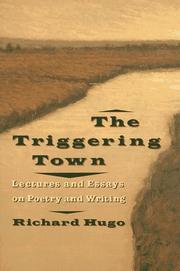
Hugo's short, conversational essays on how poems get made give beginners an insider's view of the creative process and introduce key craft concepts through a poet's own voice.

A practical, warm guide to writing and reading poetry that covers every major element — image, music, line breaks, form — with exercises that cement understanding through doing.
Reading the Masters
IntermediateEncounter the landmark voices of the English-language canon and see how great poets put craft to work across wildly different styles, eras, and subjects.
▸ Study plan for this stage
Pace: 10–12 weeks total, reading roughly 20–30 pages per day: ~3 weeks for Selected Poems and Letters of Emily Dickinson (read poems slowly, 5–10 per sitting, paired with her letters); ~4 weeks for The Collected Poems of Langston Hughes (broader volume, group by thematic clusters — blues poems, Harlem por
- Compression and Slant: Dickinson's dashes, off-rhyme, and syntactic inversions as tools for creating ambiguity and emotional pressure in a tiny space
- The Lyric 'I' vs. the Persona: how Dickinson's unnamed speaker, Hughes's blues narrator, and Plath's confessional 'I' each construct a different relationship between poet and reader
- Form as Meaning: Dickinson's hymn-meter subversions, Hughes's blues stanza and jazz rhythms, and Plath's loose tercets — how inherited or invented forms carry ideological weight
- Voice and Vernacular: Hughes's deliberate use of African American vernacular English and musical idiom as both aesthetic choice and political act
- The Poem as Cultural Document: reading Hughes's Harlem Renaissance context, Dickinson's 19th-century New England Puritanism, and Plath's mid-century confessional movement as forces that shape the poems
- Imagery and the Unconscious: Plath's surrealist, visceral imagery in Ariel (bees, fire, rebirth) versus Dickinson's domestic and natural symbols (flies, slant light, circumference) — how image systems create a poet's signature world
- Tone and Irony: Dickinson's wit and dark humor, Hughes's blues irony ('laughing to keep from crying'), and Plath's savage sarcasm as distinct tonal registers
- Revision and the Letter as Craft Document: using Dickinson's letters to see how her prose thinking feeds her poetic compression — understanding the workshop behind the finished poem
- In Dickinson's poems, what work do the dashes and slant rhymes actually perform — what would be lost if you 'corrected' them into standard punctuation and full rhyme?
- Hughes draws on the blues as both a musical form and a philosophical stance toward suffering. Choose three poems from The Collected Poems and explain how the blues structure (call-and-response, repetition, the 'turn') shapes both the sound and the meaning.
- Plath's Ariel was arranged posthumously by Ted Hughes in a different order than Plath intended. Based on the arc of poems you read, what emotional or thematic journey does the collection trace, and how does the opening poem relate to the closing one?
- All three poets use a strong, distinctive speaker — yet none of those speakers is simply the biographical poet. How does each poet construct distance or intimacy between the speaker and the reader, and to what effect?
- Compare how Dickinson and Plath each handle the subject of death. What does the difference in imagery, tone, and form reveal about the gap between their historical moments and personal aesthetics?
- Hughes's vernacular and Dickinson's syntactic strangeness are both departures from 'standard' literary English. What does each poet gain by breaking from the dominant linguistic norm of their time?
- Close-Reading Log: For each book, keep a dedicated notebook. Copy out one poem per sitting by hand — the physical act of transcription forces attention to line breaks and punctuation. Then write 3–5 sentences on what a single formal choice (a dash, a repeated word, a line break) is doing to meaning.
- Imitation Drafts: Write one short poem (8–16 lines) in deliberate imitation of each poet's signature technique — a Dickinson-style hymn-meter lyric with off-rhyme and dashes; a Hughes blues stanza on a contemporary subject using vernacular and repetition; a Plath-style dramatic monologue built around a single, extended image system (e.g., machines, weather, food).
- Letters-to-Poems Bridge (Dickinson): Select two of Dickinson's letters and identify any images, phrases, or ideas that reappear in her poems. Write a one-page analysis of how the letter illuminates the poem — or complicates it.
- Playlist and Poem Pairing (Hughes): Find recordings of actual blues or jazz songs from the 1920s–1940s and pair each with a Hughes poem that shares its emotional register. Write a paragraph for each pair explaining what the musical form adds to your reading of the poem on the page.
- Comparative Essay (500–700 words): Choose a single theme — death, identity, or the body — and trace how all three poets approach it across at least two poems each from their respective books. Focus on how form, imagery, and voice produce different meanings from the same raw material.
- Reorder and Reflect (Plath): Read the note on Plath's original intended ordering of Ariel (available in the restored edition's introduction or scholarly sources). Rearrange five poems into your own sequence and write a brief artist's statement explaining what emotional logic your ordering creates — then compare it to Plath's own.
Next up: Mastering how Dickinson, Hughes, and Plath each bend form, voice, and image to their singular vision gives the reader the analytical vocabulary and aesthetic confidence needed to engage with more experimental, contemporary, or cross-cultural poetry — where those same tools are pushed even further from convention.

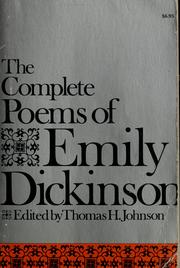
Dickinson's compressed, slant-rhymed lyrics are the ideal first canonical encounter — short enough to study closely, yet endlessly deep in their formal invention and philosophical range.

Hughes brings jazz rhythms, vernacular speech, and urgent social vision into poetry, expanding the reader's sense of what poetic music can sound like and who poetry is for.
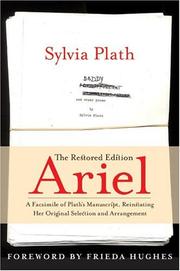
Plath's confessional masterpiece demonstrates how formal control and raw psychological intensity can coexist — a crucial step toward understanding modern and contemporary poetry.
Understanding Form and Tradition
IntermediateUnderstand the major formal traditions — the sonnet, the ode, free verse, the lyric sequence — and how poets work within and against inherited structures.
▸ Study plan for this stage
Pace: 1–2 weeks; The Waste Land is a short but dense poem (~434 lines), so plan 3–4 slow, annotated readings spread across the week — one rapid first read for impressions, one close read section-by-section (~80–90 lines/day), one structural read mapping form and allusion, and a final integrative read with
- The lyric sequence as a form: how a poem can be built from discontinuous, juxtaposed sections rather than a single continuous argument
- Free verse vs. formal verse: recognizing how Eliot moves fluidly between metered passages, song fragments, prose-like lines, and strict rhyme — and why
- Working within tradition to subvert it: how Eliot invokes inherited forms (the ode, the dramatic monologue, the elegy) only to fracture and ironize them
- Allusion as structural device: how embedded quotations from Dante, Shakespeare, Ovid, and others function as formal building blocks, not mere decoration
- Voice and persona: the shifting, unstable speakers of The Waste Land and how the absence of a single lyric 'I' challenges the conventions of the lyric poem
- Myth and archetype as organizing scaffolding: the Fisher King, the Grail quest, Tiresias, and how mythic frameworks substitute for traditional stanzaic or narrative structure
- The role of the notes: Eliot's own footnotes as a paratextual formal element — what it means when a poem requires its own apparatus
- Fragmentation as aesthetic choice: how the poem's broken syntax and collage technique are themselves a formal argument about modernity and tradition
- How does The Waste Land function as a lyric sequence — what holds its five sections together, and what deliberately keeps them apart?
- Identify at least three moments where Eliot invokes a recognizable poetic form (e.g., a song, a dramatic monologue, a hymn) and then breaks or undercuts it — what is the effect of each disruption?
- How does Eliot's use of free verse differ across the five sections? Are there sections that are more formally regular, and what does that regularity signal?
- What role do the allusions and quotations play as formal elements — how do they create structure in the absence of traditional stanzas or a single narrative voice?
- How does the figure of Tiresias, as described in Eliot's notes, function as a formal solution to the problem of multiple, fragmented voices?
- In what ways does The Waste Land both inherit and reject the tradition of the elegy or the ode — can it be read as a failed, ironic, or transformed version of either?
- Structural mapping: After your first close read, draw a visual map of the poem's five sections — label the dominant form or genre of each passage (dramatic monologue, song, free verse meditation, rhymed quatrain, etc.) and note every shift. Count how many distinct 'modes' you can identify.
- Imitation exercise: Choose one short passage (10–15 lines) that uses a recognizable inherited form (e.g., the pub dialogue in 'A Game of Chess,' or the Thames-daughters' song in 'The Fire Sermon') and write your own 10–15 line passage that imitates its formal strategy but transplants it to a contemporary setting.
- Allusion audit: Go through the poem with Eliot's notes and a copy of at least one source text (e.g., a few cantos of Dante's Inferno, or the relevant Shakespeare passage). For one allusion of your choice, write a paragraph explaining how the original form or genre of the source text interacts with — or clashes with — the form of the passage in The Waste Land.
- Voice tracking: Read through the poem and mark every shift in speaker or persona. Write a one-sentence characterization of each distinct voice. Then write a short reflection: what would be lost if Eliot had unified all these voices into a single first-person lyric speaker?
- Free verse analysis: Select one passage of 15–20 lines in free verse and perform a rhythmic scansion — mark stressed and unstressed syllables, identify any ghost meters or near-iambic lines, and note line-break effects. Write a paragraph arguing whether the passage is 'truly' free or covertly metrical.
- Tradition comparison: Find and read one canonical ode (e.g., Keats's 'Ode to Autumn') and one Shakespearean sonnet. Write a one-page comparison: how do those poems use form to create unity and resolution? Then explain specifically how The Waste Land refuses or complicates those same formal moves.
Next up: Mastering how Eliot works within and against inherited forms in The Waste Land gives the reader a sophisticated baseline for recognizing formal tradition as a living, contestable force — essential preparation for studying how later poets consciously choose, adapt, or dismantle specific inherited structures like the sonnet or the ode in their own work.
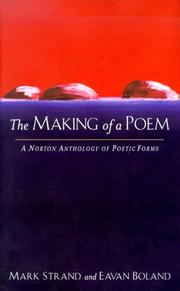
Strand and Boland pair clear explanations of every major poetic form with canonical examples, making this the definitive guide to understanding how structure shapes meaning.
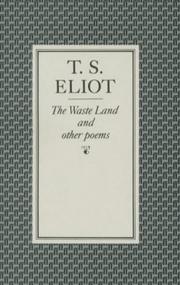
The defining modernist poem — a collage of voices, allusions, and fragmented forms — rewards the reader who now has enough craft vocabulary to navigate its difficulty and see its architecture.
Deep Reading and Critical Thinking
ExpertRead poetry with a critic's eye — understanding historical movements, close-reading techniques, and the philosophical stakes of the art form — and situate individual poems within the larger conversation of literary history.
▸ Study plan for this stage
Pace: 12–16 weeks total. Weeks 1–4: Read Aristotle's "Poetics" in full (it is short but dense — read each chapter twice, ~5–8 pages/day with annotation time built in). Weeks 5–16: Work through the Princeton Encyclopedia of Poetry and Poetics thematically, not cover-to-cover — select 8–12 major entries per
- Mimesis and the nature of poetic imitation (Aristotle): poetry as a structured representation of human action, not mere decoration
- Catharsis and the affective purpose of poetry: what poetry is supposed to do to a reader emotionally and morally
- Aristotle's six elements of tragedy (plot, character, diction, thought, spectacle, song) and their applicability to lyric and narrative poetry
- Unity of action as a formal principle: how coherence and necessity govern the best poems
- The distinction between poetry and history (Aristotle): poetry as the universal, history as the particular — the philosophical stakes of fiction
- Close-reading as a critical method: how to move from surface language (diction, syntax, sound) to deeper argument and worldview
- Literary-historical movements and periodization (as mapped in the Princeton Encyclopedia): Romanticism, Modernism, Confessionalism, Language Poetry, etc., and how poems belong to and resist their moment
- Intertextuality and the 'conversation of literary history': how any single poem responds to, borrows from, and transforms prior poems and poetic traditions
- According to Aristotle's Poetics, why is plot (mythos) the 'soul' of tragedy, and how does this claim challenge the common assumption that poetry is primarily about beautiful language or personal feeling?
- How does Aristotle's concept of mimesis complicate a naive view of poetry as 'self-expression'? What does it mean to say poetry imitates action rather than simply recording experience?
- Using at least two entries from the Princeton Encyclopedia, explain how a specific formal feature (e.g., the sonnet, the ode, free verse) carries historical and ideological meaning — how form is never neutral.
- How do the Princeton Encyclopedia's entries on major literary movements (e.g., Romanticism, Modernism) reveal the way poets define themselves against or in dialogue with predecessors? What does this tell us about poetic influence?
- What is the difference between a 'reading' and a 'close reading'? Drawing on both Aristotle's analytical categories and the Princeton Encyclopedia's entries on rhetoric and prosody, describe what a rigorous close reading actually examines.
- How does situating a poem within its literary-historical moment (as the Princeton Encyclopedia enables) change or deepen what a purely formalist reading (in the Aristotelian tradition) might yield?
- Aristotle's Six-Element Audit: Choose three poems from different eras and apply Aristotle's six elements (plot/action, character, diction, thought, spectacle, song/melody) as an analytical grid. Write a one-page analysis for each, noting which elements dominate and what that reveals about the poem's priorities.
- Mimesis Mapping: Select a poem that appears to be purely autobiographical or confessional. Write a 500-word argument — using Aristotle's distinction between poetry and history — for why it should still be read as mimesis (a representation of the universal) rather than mere personal record.
- Princeton Encyclopedia Thematic Deep-Dives: After reading each major thematic cluster of entries (e.g., prosody, rhetoric, a national tradition), write a one-paragraph 'field note' synthesizing what you learned and identifying one question the entries left unanswered. Accumulate these into a personal critical glossary.
- Movement Placement Exercise: Pick one poem you love. Using the Princeton Encyclopedia's entries on literary movements and periods, write a 600-word essay placing it precisely within literary history — identifying which movement it belongs to, which it reacts against, and which later movements it anticipates.
- Close-Reading Workshop (Layered Draft): Perform a close reading of a single short poem in three successive drafts — Draft 1: only sound and prosody (using Princeton Encyclopedia entries on meter, rhyme, etc.); Draft 2: add rhetoric and imagery; Draft 3: add historical/philosophical context (Aristotle + Princeton Encyclopedia movement entries). Compare the three drafts and write a reflection on wha
- Critical Conversation Synthesis: Choose one entry from the Princeton Encyclopedia that directly addresses a concept Aristotle introduced (e.g., 'mimesis,' 'catharsis,' 'unity'). Write a 700-word comparative analysis tracing how the concept evolved from Aristotle's original formulation to its current critical usage, citing both texts specifically.
Next up: Mastering Aristotle's philosophical framework and the Princeton Encyclopedia's panoramic map of poetic history gives the reader the critical vocabulary and historical orientation needed to engage primary poetic texts at the highest level — turning the next stage's reading of actual poems into a fully informed, analytically rigorous encounter rather than an impressionistic one.
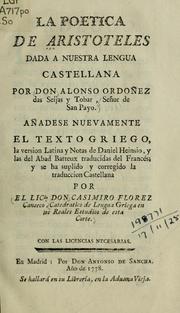
The foundational Western text on what poetry is and does — reading it at this stage, after building real experience with poems, transforms it from abstract theory into a living set of questions.

The authoritative reference work on every movement, term, tradition, and form in world poetry — used here not cover-to-cover but as a deep-dive companion that rewards the advanced reader's curiosity.
Discussion
Keep reading
Paths that share books, cover the same subject, or open a related topic.