Mary Oliver Reading Order: Where to Start
Mary Oliver published more than twenty collections over fifty years, and because the late books are the ones on every gift table, most readers meet her through the weakest and gentlest work. The better route is to start with the two 1980s collections that won her the prizes and the reputation, then read the major middle books, then the late devotional ones with the earlier work behind you, and finish with the prose — including the two small craft books that show how carefully the plainness was made.
Start here
BeginnerRead the two collections that made her, and hear the harder, stranger Oliver underneath the reputation for consolation.
▸ Study plan for this stage
Pace: Three to four weeks for two short books — American Primitive is about 88 pages and Dream Work about 93. That is deliberately slow. Poetry is not read at prose speed: three or four poems in a sitting, read aloud, is the right dose, and a collection this size properly takes a fortnight. Reading either
- The way to read Oliver is the same as the way to read any poet and it is worth stating because her plainness invites the opposite: slowly, aloud, a few poems at a time, with rereading built in
- Most readers meet her through the late gift-table books and the poems that circulate online, which means they meet the gentlest and weakest work first — starting with the 1980s collections corrects that
- American Primitive won the Pulitzer Prize in 1984 and is wilder and more physical than her reputation suggests: bodies, blood, bears, decay, appetite
- Dream Work is her most emotionally direct book and contains several of the poems everyone quotes; reading them inside the collection that shaped them is a very different experience from reading them on their own
- Oliver is frequently dismissed as sentimental, and the charge deserves an honest answer rather than either agreement or offence. The case against her is real: the poems are formally uniform, the moves repeat, and the late work resolves toward consolation with some regularity
- The case for her is also real and is best made from exactly these two books, where the observation is exact, the natural world is predatory rather than comforting, and the darkness — including her own childhood — is present and unresolved
- Her actual technical signature is the line break: she writes in short free-verse lines and uses the turn at the end of a line to hold or release a sentence, and this is invisible unless you read aloud
- Judge the sentimentality question after this stage rather than before it, because these are the books that make the argument answerable either way
- Where in American Primitive is the natural world violent rather than consoling? Find three poems and describe what they do.
- Take one poem from Dream Work that you already knew and reread it in the context of the poems around it. What changes?
- How does Oliver use the line break? Pick a poem, read it aloud, and mark where the break holds a sentence in suspension.
- State the case that Oliver is sentimental, using her own poems as evidence. Then state the case against it from these two books.
- What is the recurring shape of an Oliver poem — observation, turn, address? Test your description against five poems.
- Read every poem aloud. This is not optional advice with Oliver; the plainness is auditory and vanishes on a silent reading.
- Read no more than four poems in a sitting. Then reread the one that stayed with you the following day.
- Copy out one poem by hand. It is the fastest way to see the line breaks as decisions rather than as layout.
- Write one paragraph on the sentimentality charge now, and date it. You will want to compare it with your view after the late work.
Next up: You have the harder, stranger Oliver as your baseline, which is exactly what the middle books refine and the late books simplify.

The Pulitzer winner and the right first book — wilder and more physical than the poems that circulate on the internet. Start here, not with the anthologies.
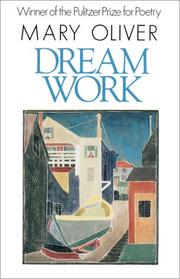
The collection containing the poem everyone quotes, and her most emotionally direct book. Read it second, so you meet the famous poems inside the book that shaped them.
The major middle books
BeginnerFollow the run through the 1990s, when the voice is fully formed and the attention widens beyond New England.
▸ Study plan for this stage
Pace: Four to five weeks for the three. House of Light is 80 pages, White Pine around 55, and the selected volume about 185 — the selected is the one to spread out, since a career-spanning book read straight through blurs into a single tone. Continue at three or four poems a sitting, aloud, and give House
- This is the 1990s run, where the voice is fully formed, the attention widens beyond New England, and the craft is at its most reliable
- House of Light follows Dream Work and refines it, and it holds several of her most anthologised poems — it is the single best collection to read in one sitting because its poems are in conversation with one another
- The selected volume in this stage is New and Selected Poems, Volume Two, published in 2005 — it is worth knowing that the National Book Award went to the first volume in 1992, and this is the later companion covering the following decade
- A selected is not a substitute for the individual collections, because Oliver's books have shapes: poems are arranged to answer one another, and extraction loses that
- White Pine puts poems and prose poems together and is the collection where she experiments most with the line — a useful counterweight to the claim that her form never changed
- The prose poems are the strongest evidence against the uniformity charge: the same attention working without line breaks reads noticeably differently
- Across this stage the recurring move becomes very visible — close observation of an animal or plant, a turn, and a direct address to the reader — and seeing it clearly is necessary before judging the late work
- The widening subject matter here also answers a common complaint: it is not all Provincetown ponds, and the geographical range grows through the decade
- Read House of Light straight through. What does the arrangement do that the individual poems do not?
- Compare a poem in the selected volume with the same poem in its original collection if you can. What has the new context changed?
- What do the prose poems in White Pine do that her lineated poems cannot?
- By now you can predict the shape of an Oliver poem. Does predictability weaken the poems, or is it the form working?
- Which single poem from this stage is the best, and what makes it better than the ones beside it?
- Has the sentimentality charge grown stronger or weaker across these three books?
- Read House of Light in one sitting once, then reread it over a week. Both readings are worth having and they are different books.
- Take one prose poem from White Pine and break it into lines yourself. Then compare with a lineated poem beside it — you will learn more about her craft in twenty minutes than from any amount of commentary.
- Note the settings across all three books and mark how many are not Cape Cod. The count is higher than her reputation suggests.
- Keep a list of the animals. Oliver's bestiary is large and repetitive in a way that is either a limitation or a discipline; the list lets you decide.
Next up: The mature voice is fixed and fully characterised, which is the only fair position from which to read the late books everyone starts with.
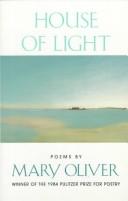
The book that follows Dream Work and refines it, with several of her most anthologised poems. The best single collection to read in one sitting.

The National Book Award winner and the only career-spanning volume worth reading in place of individual collections, because the new poems in it are strong. Best read after the three books above, not instead of them.

Poems and prose poems together, and the collection where she experiments most with the line. A useful counterweight to the idea that her form never changed.
The late work
IntermediateRead the twenty-first-century collections, where the poems get shorter and more openly religious, and decide for yourself where you stand on them.
▸ Study plan for this stage
Pace: Four to five weeks for four short collections of 70–95 pages each. These read faster than the earlier books because the poems are shorter and plainer, which is precisely why you should hold the pace: three or four a sitting, aloud. Read Thirst slowly and by itself; it is the most personal book she p
- The twenty-first-century collections are shorter, plainer and more openly religious, and they are the books most readers already know — reading them last means you can see what changed rather than mistaking them for the whole
- Why I Wake Early is the best of the later collections and the most continuous with the 1980s books, which makes it the natural bridge into the late work
- Thirst was written after the death of Molly Malone Cook, her partner of more than forty years, and in it grief and faith are inseparable; it is the most personal thing she published and the least like a gift book
- The explicit Christian language that enters here is genuinely new, and readers who came for the nature poems often find it a departure — it is worth deciding whether it is a change of subject or a change of vocabulary
- A Thousand Mornings is late, short and plain: it is the register most people mean when they say Mary Oliver, and read at this point it reads as distillation rather than as thinness
- Felicity is her love poems and the slightest of the collections — included honestly, because it is where the late manner reaches its limit and knowing that limit is part of knowing the work
- This is where the sentimentality argument is properly settled, in either direction: the late poems are shorter, more consoling and more directly instructive, and either that is a poet arriving at plainness or it is a poet coasting
- Check the edition when buying A Thousand Mornings — our catalogue's record lists a Spanish translator, so bilingual and translated editions are in circulation alongside the English original
- What does Why I Wake Early keep from the 1980s books, and what has it already lost?
- In Thirst, how are grief and faith connected? Does one produce the other, or are they the same movement?
- Is the religious language in the late work a new subject or a new vocabulary for an old one? Argue from specific poems.
- Read a poem from A Thousand Mornings beside one from American Primitive. What has been removed, and was the removal a gain?
- Where does Felicity fail? Be specific — the failure is instructive about what the good poems were doing.
- Now answer the sentimentality question for yourself, with the whole arc in view.
- Read Thirst in one sitting and alone. It is a book about one death and it does not survive being dipped into.
- Pick your favourite poem from the earlier stages and your favourite from this one, and write a paragraph on what changed between them.
- Take one late poem you find too easy and one you find earned, and identify the technical difference. There usually is one.
- Reread the paragraph you wrote on sentimentality in the first stage and revise it. The revision is the real output of this path.
Next up: With the whole arc read, the prose books can show how deliberately the plainness was constructed rather than merely asserting it.
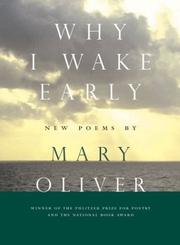
The best of the later collections and the most continuous with the 1980s books. A good bridge into the late work.
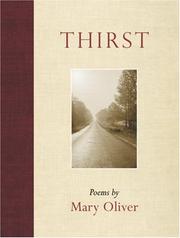
Written after the death of her partner of forty years, and the book where the grief and the faith are inseparable. The most personal thing she published.

Late, short, plain poems — the register most people mean when they say Mary Oliver. Read here, it reads as distillation rather than thinness.

Her love poems, and the slightest of the collections. Included honestly: it is where the late manner reaches its limit, which is worth knowing.
The prose and the craft books
IntermediateSee how deliberately the simplicity was constructed, and read the essays that stand beside the poems.
▸ Study plan for this stage
Pace: Three to four weeks for around 140, 185 and 120 pages. A Poetry Handbook is a short technical book and should be read a chapter at a time with poems to hand — a fortnight of short sessions. Upstream and Blue Pastures are essay collections and read faster; three or four essays a sitting is comfortabl
- A Poetry Handbook is a short, exacting guide to meter, line, sound and diction, and it is startling from a poet routinely described as artless
- It is the strongest evidence in the whole path that the simplicity was constructed: she can scan, she teaches prosody without apology, and she is severe about the difference between feeling and craft
- Read it after the collections and her technique becomes visible in retrospect; read it first and you would have nothing to apply it to
- Upstream is her best essay collection — on Whitman, Wordsworth, Provincetown, and the discipline of paying attention — and is the clearest statement of what she believed she was doing
- The essays on attention are the interpretive key to the poems: her subject is a practice rather than a landscape, which reframes the nature-poet label
- Blue Pastures is the earlier prose, more fragmentary and more personal than Upstream, and works as a last stop for a reader who has come to like her voice on its own terms
- Oliver gave very few interviews and wrote almost no criticism of her contemporaries, so these three books are effectively the entire record of what she thought about poetry
- Having read the collections first, you can test her stated principles against her actual practice — and the places where they diverge are the most interesting pages in the path
- What does A Poetry Handbook insist on that Oliver's own poems appear to ignore? Find at least one genuine divergence.
- How does she define attention in Upstream, and how is it different from observation?
- Which poets does she claim as ancestors, and can you see the debts in her poems?
- Does A Poetry Handbook change your judgement of the late collections? It should, in one direction or the other.
- What is the argument of Upstream stated in one sentence, and do the poems make it?
- Work through the exercises in A Poetry Handbook using her own poems as the specimens. She never does this herself and it is the best use of the book.
- Scan one poem from American Primitive after reading the chapter on sound. Free verse is not unmetred, and this is where you hear it.
- Read one Whitman poem alongside the Upstream essay on him. The debt is large and Oliver is open about it.
- Write your own hundred-word statement of what Oliver was doing, using the whole path as evidence. If it differs from hers in Upstream, say where and why.
Next up: You have read the poems in the order that shows their development and then the prose that explains the technique behind the plainness.
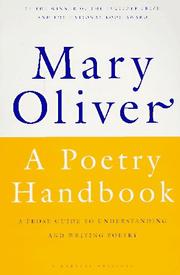
A short, exacting guide to meter, line and sound, and startling from a poet people call artless. Read it after the collections and her technique becomes visible in retrospect.
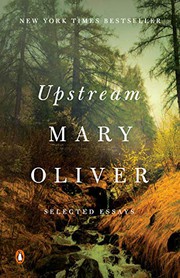
Her best essay collection, on Whitman, Wordsworth, Provincetown and the discipline of paying attention. The clearest statement of what she thought she was doing.

The earlier prose, more fragmentary and more personal than Upstream. A good last stop for a reader who has come to like her voice on its own terms.
Discussion
Keep reading
Paths that share books, cover the same subject, or open a related topic.