Worldbuilding: The Best Books for Fiction Writers, in Order
This curriculum takes intermediate fiction writers from structured worldbuilding principles through the specialized crafts of geography/maps, magic systems, and culture-building, culminating in synthesis-level mastery. Each stage builds a new layer of the world: first the conceptual skeleton, then the physical landscape, then the invisible rules of power and belief, and finally the living, breathing societies that make a world feel real.
Worldbuilding Foundations
IntermediateEstablish a shared vocabulary and systematic framework for worldbuilding — understanding what a world needs, how its parts interconnect, and how to avoid common pitfalls before diving into specialties.
▸ Study plan for this stage
Pace: 4–5 weeks, ~25–30 pages/day. Week 1–2: "The Tough Guide to Fantasyland" (approx. 250 pages). Week 3–5: "Wonderbook" (approx. 400 pages), with 1–2 days for integration and review.
- Recognizing and avoiding fantasy tropes and clichés through Jones's satirical taxonomy of Fantasyland conventions
- Understanding how world systems (geography, magic, politics, culture) interconnect and influence each other
- Distinguishing between surface-level worldbuilding details and the deeper structural logic that makes a world coherent
- Using systematic frameworks (like VanderMeer's layered approach) to audit and develop your world's foundational elements
- Identifying the purpose and function of each worldbuilding choice—avoiding arbitrary details that don't serve story or character
- Recognizing how reader expectations and genre conventions shape what a world must deliver
- Balancing specificity and mystery: knowing what to detail versus what to leave ambiguous
- What are the major recurring tropes in fantasy worldbuilding that Jones satirizes, and why do they become problems for readers and writers?
- How does VanderMeer's framework for worldbuilding differ from a simple checklist approach, and why does that distinction matter?
- What is the relationship between a world's internal logic and the reader's suspension of disbelief?
- How do geography, magic systems, and social structures interact in a believable world, and what happens when they conflict?
- What questions should you ask about each worldbuilding element to determine whether it's necessary or arbitrary?
- How can you use Jones's critique of clichés to make deliberate, informed choices rather than defaulting to convention?
- Read through Jones's entries on 3–4 major fantasy tropes (e.g., 'Dwarves,' 'Elves,' 'The Dark Lord') and write a 1-page analysis of why each convention exists and what problems it creates for writers who use it uncritically.
- Create a 'world audit' for a fictional world (yours or one you admire) using VanderMeer's framework: map its magic system, geography, culture, and politics, then identify one point where these systems conflict or fail to interconnect.
- Write a short scene (500–750 words) set in a fantasy world, then revise it by removing one clichéd element Jones identifies and replacing it with a deliberate alternative that serves your story better.
- Choose one worldbuilding element from your own project (magic, government, religion, etc.) and write a 2-page 'systems document' explaining how it connects to at least two other elements in your world.
- Reread a passage from a published fantasy novel you admire, then annotate it to identify: (a) what worldbuilding details are present, (b) which ones are necessary for the plot/character, and (c) which ones are there because of genre convention.
- Create a 'constraint list' for your world: 5–7 non-negotiable rules that define how your world works, then write a short paragraph explaining why each rule exists and what it prevents or enables in your story.
Next up: This stage equips you with a critical vocabulary and systematic thinking process that prepares you to dive into specialized worldbuilding domains—whether magic systems, geography, cultures, or technology—knowing which conventions to honor, which to subvert, and how each specialty must integrate with the whole.

A wickedly sharp deconstruction of fantasy clichés that immediately trains the intermediate writer to see lazy worldbuilding for what it is — the perfect critical lens to open with before building anything new.
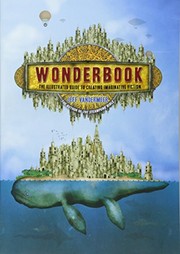
A richly illustrated, systems-level guide to imaginative fiction that frames worldbuilding as an organic, interconnected craft; reading it second gives you a generative counterweight to Jones's critique.
Geography, Maps & the Physical World
IntermediateLearn to design geographically coherent worlds — how terrain, climate, and cartography shape story, culture, and conflict, and how to draw maps that feel earned rather than decorative.

A practical, step-by-step guide to hand-drawing fantasy maps; starting here gives writers a concrete visual language for geography before theorizing about it.
Covers real-world geography, climate, ecology, and their cultural consequences in a reference format — the ideal companion after you can draw a map, helping you make it scientifically and historically plausible.
Magic Systems & the Rules of Power
IntermediateUnderstand the principles behind designing internally consistent, narratively purposeful magic systems — from hard to soft magic — and learn how the rules of power shape plot, character, and stakes.
▸ Study plan for this stage
Pace: 4–5 weeks, ~25–30 pages/day. Start with "Kobold Guide to Magic" (weeks 1–2, ~200 pages), then "The Anatomy of Story" (weeks 2–5, ~400 pages), with 2–3 days between books for integration exercises.
- Hard vs. soft magic systems: how constraint and mystery affect narrative tension and reader investment
- Magic as a tool for plot: how magical rules create obstacles, enable solutions, and raise stakes
- Cost and consequence: designing what magic takes from characters (energy, resources, morality, relationships) to maintain dramatic weight
- Internal consistency: establishing and honoring magic system rules so readers trust the world and its limitations
- Magic and character motivation: how a character's relationship to power reveals their values and drives their arc
- The 22 building blocks of story structure (from Truby): how magic systems integrate into theme, character desire, and moral argument
- Worldbuilding through magic: using magical rules to define culture, history, and social hierarchies
- Narrative purpose: every magical rule should serve plot, character development, or thematic resonance—not just spectacle
- What is the difference between hard and soft magic systems, and what narrative advantages and challenges does each present?
- How can you design a magic system's costs and consequences to maintain dramatic stakes and prevent magic from solving all problems?
- How do the rules of a magic system shape character motivation, conflict, and moral choices throughout a story?
- What is internal consistency in magic, and why does it matter more than realism?
- How can you use Truby's 22 building blocks (especially desire, moral argument, and theme) to ensure your magic system serves your story's deeper purpose?
- How do magic system rules reflect and reinforce the culture, history, and power structures of your fictional world?
- Design a magic system with explicit hard rules (3–5 core limitations) and test it against a plot outline: identify 2–3 moments where the rules create genuine obstacles and 2–3 where they enable solutions.
- Write a 500-word scene where a character attempts magic and fails or pays a cost; analyze how the failure/cost reveals character motivation and advances plot.
- Map your magic system's costs across three categories (energy, resources, moral/relational) and justify each: why does magic demand this price?
- Identify your story's central moral argument (using Truby's framework) and trace how your magic system either supports or complicates that argument in 3–4 key scenes.
- Create a 'magic rules document' (1–2 pages) as if explaining your system to a reader: write it clearly enough that someone could predict how magic will behave in an unfamiliar scenario.
- Analyze a published fantasy novel's magic system (not in your reading list): categorize it as hard or soft, identify its costs, and explain how it serves the plot and theme.
Next up: This stage equips you with the structural and narrative foundations to build magic systems that feel inevitable rather than arbitrary—preparing you to integrate magic seamlessly into larger worldbuilding systems (geography, politics, history) and to deploy it strategically across a full narrative arc in the next stage.

A multi-essay anthology by working fantasy authors and game designers that covers magic theory, cost, and consequence from multiple angles — the best survey-level entry into magic system design.

Though a broader craft book, Truby's framework for how a story's 'world' expresses theme is essential here: it teaches writers to tie their magic system's rules directly to the moral argument of the narrative.
Cultures, Societies & Believable Peoples
ExpertBuild fully realized cultures — religions, economies, social hierarchies, languages, and histories — that feel lived-in and avoid monoculture tropes, drawing on real anthropology and history.
▸ Study plan for this stage
Pace: 8–10 weeks, ~40–50 pages/day. Guns, Germs, and Steel (~500 pages) takes 2–3 weeks; The Language Construction Kit (~300 pages) takes 1–2 weeks; remaining time for integration exercises and cultural synthesis projects.
- Geographic and environmental determinism: how geography shapes technology, agriculture, disease, and military advantage (Diamond's framework for understanding why some civilizations dominated others)
- The role of domesticable plants and animals in cultural development: how access to certain species determined population density, specialization, and societal complexity
- Disease as a civilizational force: how epidemic diseases emerged from animal domestication and shaped conquest and cultural contact
- Language as cultural DNA: how linguistic structure reflects and reinforces a culture's values, history, and worldview
- Phonology, grammar, and vocabulary design: practical tools for constructing languages that feel authentic and culturally coherent
- Avoiding monoculture: using Diamond's comparative approach to understand why real cultures diverge radically based on geography and resources
- The interconnection between material culture and belief systems: how economy, technology, and environment drive religion, social hierarchy, and language evolution
- How does Jared Diamond explain the rise of complex societies, and what role do geography, domesticable species, and disease play in his model?
- Why did some regions (Eurasia, Africa) develop writing, metallurgy, and centralized states while others did not, according to Diamond's evidence?
- How can you use Diamond's framework to justify why your fictional cultures have the technologies, social structures, and military capabilities they do?
- What are the key components of a constructed language (phonology, grammar, vocabulary), and how do you design each to reflect your culture's history and environment?
- How can linguistic features (word order, case systems, sound inventories) reveal something about a culture's values, contact history, or environment?
- How do you avoid creating a 'monoculture' by ensuring your fictional societies diverge in believable ways based on their geographic and resource constraints?
- Create a comparative geography chart for two of your fictional cultures: map their climate, flora, fauna, and domesticable species. Then explain how these differences would lead to different technologies, population densities, and social structures using Diamond's framework.
- Design a constructed language for one culture, including: a phoneme inventory (10–20 sounds), basic grammar rules (word order, case system or lack thereof), and 50–100 core vocabulary words. Document how each choice reflects the culture's environment or history.
- Write a 2–3 page 'cultural origin story' for one society that traces how geography and available resources shaped its development from hunter-gatherer to its current state, using Diamond's causal logic.
- Analyze a real-world language (e.g., Finnish, Mandarin, Swahili) using Rosenfelder's framework: identify its phonology, grammar structure, and vocabulary patterns. Then write a brief explanation of what this language reveals about its speakers' history and environment.
- Create a 'disease and conquest' scenario for your world: identify which of your cultures would have epidemic diseases (based on animal domestication), how those diseases would spread, and how they would reshape contact between cultures.
- Construct a 500-word dialogue between characters from two different cultures in your world, incorporating linguistic differences (word order, formality levels, untranslatable concepts) that reflect their different geographies and histories.
Next up: This stage equips you with the deep anthropological and linguistic foundations to create cultures that feel inevitable rather than arbitrary—setting the stage for the next level, where you'll layer in specific worldbuilding systems (magic, technology, politics, conflict) that grow organically from these culturally grounded societies.
Diamond's landmark explanation of why civilizations develop differently gives fiction writers a rigorous, non-Eurocentric toolkit for designing cultures whose power dynamics emerge from geography and ecology rather than authorial convenience.

Read last in this stage: once culture and history are in place, Rosenfelder's guide to building conlangs and naming conventions adds the linguistic texture that makes a culture feel genuinely distinct.
Synthesis: Building the Complete Fantasy World
ExpertIntegrate all prior layers — geography, magic, culture, language — into a cohesive, living world, and learn from master practitioners how they made their own iconic worlds feel inevitable.
▸ Study plan for this stage
Pace: 4–5 weeks, ~40–50 pages/day (approximately 280–350 pages total, with time for annotation and reflection)
- Layered world-building: how geography, climate, and resources shape political power, cultural identity, and historical conflict
- The inevitability principle: how constraints (physical, magical, cultural) make world events feel predetermined rather than arbitrary
- Interconnected systems: trade routes, bloodlines, religious institutions, and magic as forces that bind disparate regions into a single coherent world
- Historical depth as foundation: how centuries of backstory (wars, migrations, magical events) justify current political alignments and cultural tensions
- Asymmetrical magic systems: how magic operates differently across regions and cultures, creating distinct advantages and vulnerabilities
- Cultural specificity through detail: how naming conventions, heraldry, customs, and architecture make each region unmistakably distinct
- The unreliable narrator in world-building: recognizing how Martin uses in-world sources (maester accounts, legends, disputed histories) to create ambiguity and realism
- Scaling and scope: managing multiple continents, timelines, and power centers without losing narrative coherence
- How does the geography of Westeros (climate zones, mountain ranges, river systems) directly determine the political power of each Great House, and what would change if the map were different?
- Explain the relationship between the Others/White Walkers and the broader magical and historical systems of the world—why do they feel inevitable rather than like a plot device?
- What role does the history of Valyria play in justifying the current power imbalances, cultural hierarchies, and magical capabilities across the known world?
- How do the different cultures (Stark, Lannister, Targaryen, Dornish, etc.) reflect their geographic and historical origins, and how would their values change if their origins were different?
- Identify three examples where Martin uses unreliable or limited historical sources to create ambiguity about 'what really happened'—and why this makes the world feel more real
- How does the magic system (dragons, the Others, prophecy, the Lord of Light) operate asymmetrically across different regions, and what conflicts does this asymmetry create?
- Create a detailed 'world systems map' for one region (e.g., the Vale, the Reach, Dorne): identify how geography determines resources, which determines power, which determines culture and values. Then trace how this region's power would shift if one geographic constraint changed.
- Write a 500-word 'unreliable history' of a critical event in your own fictional world (e.g., a war, a magical cataclysm, a dynasty's rise). Include conflicting accounts from different in-world sources, and note what the reader can and cannot know for certain.
- Analyze the Targaryen dynasty across three time periods (Conquest, Dance of the Dragons, current era): document how their power, cultural status, and magical capabilities shifted with each historical event. Identify what made their fall feel inevitable rather than tragic accident.
- Design a magic system for your world that operates asymmetrically across at least three distinct regions or cultures. Write 300 words explaining why each region's magic works differently, rooted in their history and geography.
- Build a 'cultural identity matrix' for three distinct cultures in your world: for each, define naming conventions, heraldry/symbols, religious beliefs, architectural style, and one unique custom. Ensure each detail traces back to geography or history.
- Trace a single trade route (real or fictional) across your world and document: what goods move, which regions benefit, which regions are exploited, which alliances form around this route, and what conflicts it creates. Rewrite one scene from your world showing how this trade route shapes character motivations.
Next up: This stage teaches you to see your world as a system of interconnected constraints and consequences; the next stage will challenge you to stress-test these systems by writing scenes where characters navigate the world's logic and discover its hidden contradictions.
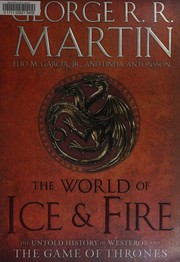
Studied as a craft object rather than casual reading, this in-world history reveals how Martin layers unreliable narration, competing cultures, and deep history to create a world that feels larger than any single story — a masterclass in what synthesis looks like at the highest level.
Discussion
Keep reading
Paths that share books, cover the same subject, or open a related topic.