Writing fantasy and science fiction: the craft books to read in order
This curriculum takes you from the universal craft fundamentals of fiction writing through the specialized demands of speculative storytelling — worldbuilding, magic and technology systems, and genre-specific plotting. Each stage builds on the last: you first internalize story craft, then learn to construct believable invented worlds, and finally study how master practitioners of fantasy and science fiction synthesize it all into immersive, resonant narratives.
Foundations of Story Craft
BeginnerInternalize the universal principles of fiction — character, conflict, structure, and prose — so that every speculative technique you learn later has a solid narrative foundation to rest on.
▸ Study plan for this stage
Pace: 8–10 weeks, ~40–50 pages/day (McKee first: 4–5 weeks; King second: 3–4 weeks). Allocate 1–2 days per week for reflection and exercises.
- The four-act structure and how inciting incidents, rising action, climax, and resolution create narrative momentum across all genres
- Character as the engine of story: how desire, need, and internal conflict drive authentic character arcs
- The principle of 'show, don't tell': using concrete sensory detail and action to reveal character and emotion rather than exposition
- Conflict as the soul of narrative: external plot conflict, internal psychological conflict, and how they interweave to create tension
- Prose rhythm and voice: how sentence structure, pacing, and word choice create mood and immerse readers in your fictional world
- The writer's process: discipline, habit, and the craft of revision as essential to producing publishable work
- Universal story principles that transcend genre: what makes a story resonate regardless of whether it's fantasy, sci-fi, or literary fiction
- What are the key turning points in a three- or four-act structure, and how do they function to escalate conflict and raise stakes?
- How do character desire and character need differ, and why is the gap between them essential to creating meaningful character arcs?
- What is the difference between showing and telling, and how can you use sensory detail and action to reveal character without exposition?
- How do external conflict and internal conflict interact, and why is internal conflict often more compelling than plot alone?
- What role does prose rhythm play in pacing and mood, and how can you use sentence length and structure to control reader experience?
- What daily writing habits and revision practices does King advocate, and how can you adapt them to your own workflow?
- Map the three- or four-act structure of a published fantasy or sci-fi novel you admire, identifying the inciting incident, midpoint, climax, and resolution. Write a one-page analysis of how each turning point raises stakes.
- Write a character profile for an original character that explicitly separates their surface desire from their deeper need. Then write a 500-word scene showing (not telling) how this gap creates internal conflict.
- Take a passage from your own writing or a published work and rewrite it using 'show, don't tell' principles: replace exposition with sensory detail, action, and dialogue that reveal the same information.
- Outline a short story (1,000–2,000 words) with clear external and internal conflicts that are interdependent—the external plot must force the character to confront their internal wound.
- Write three versions of the same scene using different prose rhythms: one with short, punchy sentences; one with longer, flowing sentences; one with varied rhythm. Reflect on how each affects mood and pacing.
- Commit to a daily writing habit for two weeks (even 15–30 minutes) and keep a log. After two weeks, review King's advice on discipline and write a reflection on what worked and what you'd adjust.
Next up: With a solid grasp of universal story craft—character, conflict, structure, and prose—you're now ready to layer speculative worldbuilding and genre-specific techniques onto this narrative foundation, ensuring that every fantastical element or sci-fi concept serves character and story rather than overwhelming them.
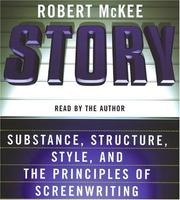
McKee's rigorous breakdown of structure, scene, and dramatic principle gives beginners a shared vocabulary for storytelling that applies to every genre, including speculative fiction. Read first to understand what a story actually is before adding fantastical elements.
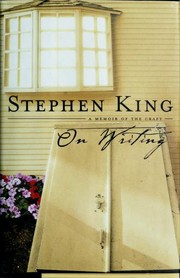
King's memoir-meets-craft-manual demystifies the daily practice of writing and teaches instinct for character and voice. It belongs early because King writes from the speculative tradition and makes the craft feel achievable.
Worldbuilding Essentials
BeginnerLearn how to construct a believable, internally consistent invented world — its geography, history, culture, and societies — and understand how the world itself becomes a storytelling tool.
▸ Study plan for this stage
Pace: 4–5 weeks, ~40–50 pages/day. Start with "Cultures and Beyond" (weeks 1–2), then "Wonderbook" (weeks 3–5), allowing time for reflection and exercises between books.
- Geography as narrative: how terrain, climate, and resources shape culture and conflict in your world
- Cultural systems: developing believable religions, languages, social hierarchies, and customs that interact logically
- Historical depth: creating a world's past to inform its present and make it feel lived-in
- Internal consistency: establishing and tracking world rules so nothing contradicts itself
- The world as character: how setting actively influences plot, character decisions, and theme rather than serving as mere backdrop
- Systematic worldbuilding: using frameworks and checklists to ensure no crucial element is overlooked
- Visual and sensory worldbuilding: bringing worlds to life through concrete details in prose
- How do geography and climate directly influence the culture, economy, and conflicts of your invented world?
- What are the core belief systems, social structures, and customs of your world's main culture, and how do they logically connect to its history and environment?
- How does your world's history—its major events, migrations, wars, and discoveries—shape the present-day conflicts and character motivations in your story?
- What are the 'rules' of your world (magic systems, technology levels, physical laws), and how do you ensure they remain consistent throughout your narrative?
- In what specific ways does your world actively drive the plot forward and constrain or enable your characters' choices, rather than simply existing around them?
- What sensory and concrete details bring your world to life on the page, and how do you avoid info-dumping while still establishing its uniqueness?
- Create a detailed map of your invented world, marking geography, climate zones, resources, and major settlements; then write a 1-page analysis of how three geographical features directly create conflict or opportunity for your story
- Develop one complete culture for your world using Ellefson's framework: define its religion, language (or linguistic quirks), social hierarchy, food, clothing, and one major taboo; write a 2-page scene showing these elements in action
- Write a 3–5 page alternate history: describe a pivotal moment in your world's past and trace how it cascades into the present-day situation of your story
- Build a 'world bible' document listing 20–30 core rules and facts about your world (magic costs, technology limits, geography constants, cultural norms); test it by identifying three potential contradictions and resolving them
- Rewrite a key scene from your story three times, each time emphasizing how the world actively constrains or enables the character's choices differently
- Create a sensory inventory: for three distinct locations in your world, write 5–7 concrete sensory details (sights, sounds, smells, textures) without exposition; then weave these into a 1-page descriptive passage
Next up: Mastering worldbuilding fundamentals prepares you to populate your world with compelling characters whose goals, conflicts, and growth are shaped by—and in turn shape—the worlds you've constructed, moving from static setting to dynamic story ecosystem.

A comprehensive, practical guide to building every layer of a fictional world from scratch. Start here because it provides a systematic checklist-style approach that prevents beginners from overlooking critical details.
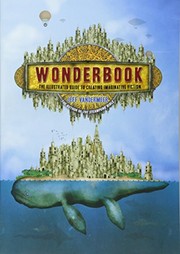
VanderMeer's visually rich guide to imaginative fiction pushes worldbuilding beyond logistics into atmosphere, strangeness, and ecological thinking. Read after Ellefson to add depth and artistic ambition to your constructed world.
Magic Systems & Technology Systems
IntermediateDesign magic and technology systems that feel logical, wondrous, and narratively purposeful — understanding both the 'hard' rules-based approach and the 'soft' mysterious approach, and when to use each.
▸ Study plan for this stage
Pace: 4–5 weeks, ~40–50 pages/day. Start with "Alchemy & Academe" (2 weeks), then "Writing Magic" (2–3 weeks), with overlap time for exercises and system design work.
- Hard magic systems: establishing explicit, consistent rules that constrain what magic can do and what it costs (McCaffrey's structured approach to magical academies and training)
- Soft magic systems: using mystery and wonder to create emotional resonance without rigid mechanics (Levine's emphasis on magic as metaphor and narrative tool)
- Cost and consequence: every magical or technological ability must have a price—energy, time, sacrifice, or limitation—that drives plot and character
- World-building through systems: how magic/technology shapes society, economy, class structures, and available careers (McCaffrey's Pern universe as case study)
- Narrative purpose: choosing system rules based on story needs, not just internal logic; magic should solve some problems while creating others
- The spectrum between hard and soft: recognizing when readers need clarity versus mystery, and how to blend both approaches within a single work
- Magic as character: how a character's relationship to magic/technology reveals personality, growth, and agency
- Avoiding magic as plot convenience: using system constraints to prevent deus ex machina solutions
- What are the key differences between McCaffrey's hard magic system in 'Alchemy & Academe' and Levine's softer approach in 'Writing Magic,' and when would you use each in your own work?
- How do the costs and limitations of magic/technology in these books drive character decisions and plot complications rather than solve them?
- How does the magic or technology system in each book reflect and shape the society, hierarchy, and available opportunities for characters?
- Can you identify a moment in each book where the author chose to reveal system rules explicitly versus leaving something mysterious—and what effect did that choice have on the reader?
- How would you redesign a magic or technology system from one of these books to shift from hard to soft (or vice versa), and what story consequences would follow?
- What is one way magic/technology in these books prevents a character from taking the easy path, and how does that constraint strengthen the narrative?
- Create a 'magic/technology charter' for a fictional system: write out 5–7 explicit rules (what it can do, what it cannot, what it costs), then identify 3 plot complications that arise directly from those constraints.
- Read a scene from 'Alchemy & Academe' and a scene from 'Writing Magic' side-by-side; annotate where each author reveals system information and where they withhold it. Write a paragraph on the effect of each choice.
- Design a magic or technology system for a society you invent: map how it shapes class structure, available professions, and wealth distribution. Sketch a brief scene showing a character navigating this system.
- Take a 'soft magic' moment from Levine and rewrite it with hard rules; then take a hard-magic moment from McCaffrey and rewrite it with mystery. Reflect on which version serves your story better.
- Write a short scene (500–750 words) where a character's magic/technology fails or is limited in an unexpected way, forcing them to solve a problem differently. Ensure the limitation comes from your system's rules, not authorial whim.
- Analyze a secondary character from each book whose role is defined by their relationship to the magic/technology system. Write a character sketch showing how their abilities (or lack thereof) shape their arc and agency.
Next up: This stage equips you with both the structural rigor and narrative flexibility to design systems that feel inevitable rather than arbitrary—preparing you to move forward into character-driven storytelling where magic and technology become extensions of who your characters are and what they want.
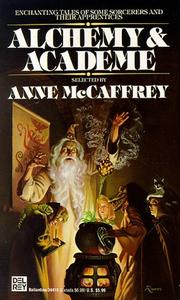
This anthology of speculative stories centered on invented systems shows by example how magic and science can be woven into plot and character rather than existing as background decoration — ideal before studying theory.
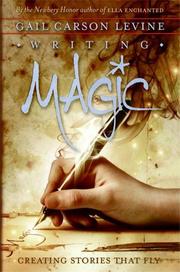
Levine's focused, exercise-driven guide to crafting magic systems is accessible yet substantive, teaching writers to think about rules, costs, and consequences — the core architecture of any compelling system.
Plotting & Structure for Speculative Fiction
IntermediateMaster the plotting techniques specific to fantasy and science fiction — managing large casts, multi-book arcs, pacing around exposition, and using speculative premises as engines of plot.
▸ Study plan for this stage
Pace: 6–7 weeks, ~40–50 pages/day (approximately 280–350 pages total across three books)
- The Save the Cat beat sheet adapted for novels: how to structure story arcs with clear turning points (Catalyst, B Story, Midpoint, Break into Three, etc.)
- Managing exposition in speculative fiction: weaving worldbuilding and magic system rules into plot without info-dumping
- Multi-character POV management: tracking parallel storylines and ensuring each character's arc serves the larger plot
- Pacing techniques for long narratives: controlling reader momentum through acts, using subplot escalation to maintain tension
- The speculative premise as plot engine: how fantasy/SF worldbuilding constraints and rules generate conflict and plot complications
- Series structure and multi-book arcs: planting seeds, escalating stakes across books, and managing cliffhangers vs. closure
- The fantasy fiction formula: archetypal character roles, quest structure, and how to subvert or honor genre expectations
- How does the Save the Cat beat sheet apply to a fantasy or SF novel, and where do you typically plant worldbuilding exposition within that structure?
- Describe a method for managing multiple POV characters across a long narrative without losing reader clarity or pacing momentum.
- What is the relationship between your speculative premise (magic system, technology, world rule) and your plot? How can you use it as a source of conflict rather than just background?
- How do you structure a multi-book arc so that each book feels complete while setting up the next installment?
- What are the key archetypal roles in fantasy fiction (from Chester's framework), and how do they differ from or overlap with contemporary fiction character types?
- How would you revise a plot outline that has exposition-heavy scenes to integrate worldbuilding more organically into character action and dialogue?
- Map a fantasy or SF novel you admire (or your own draft) onto the Save the Cat beat sheet: identify the Catalyst, B Story, Midpoint, and Break into Three. Note where exposition occurs relative to these beats.
- Write a 2–3 page scene that introduces a magic system or technology rule through character conflict or dialogue rather than explanation—practice showing worldbuilding through action.
- Create a multi-POV outline for a 3-chapter sequence: write one chapter from each of three different characters' perspectives, ensuring their goals intersect and escalate tension.
- Outline a 3-book series arc: define the central question/conflict for each book, identify what escalates from book to book, and mark what resolves in each installment vs. what carries forward.
- Using Deborah Chester's character archetypes, cast a fantasy story you're developing: assign archetypal roles to your main characters and note how their interactions drive plot.
- Revise a plot outline or synopsis you've written: identify any scene that feels like pure exposition, then rewrite it as a scene where a character *wants* something and the worldbuilding emerges from that want.
Next up: This stage equips you with structural frameworks and multi-layered plotting techniques; the next stage will likely focus on deepening character voice, dialogue, and prose style to bring those complex plots to life on the page.
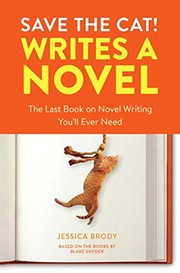
Brody's adaptation of Blake Snyder's beat-sheet method for novelists is the clearest structural roadmap available, and her genre breakdowns include fantasy and science fiction specifically. Read first in this stage to get a reliable plot skeleton.

Ingermanson's Snowflake Method — expanding a story from a single sentence outward — is especially powerful for the complex, layered plots of speculative fiction. It bridges structure and worldbuilding in a practical way.

Chester's genre-specific plotting guide addresses the unique challenges of fantasy — exposition, magic reveals, quest structure, and villain design — making it the ideal capstone for this stage.
Mastering the Speculative Voice
ExpertStudy how the greatest practitioners of fantasy and science fiction synthesize all craft elements — prose, world, system, and plot — into a unified, immersive vision, and develop your own speculative storytelling philosophy.
▸ Study plan for this stage
Pace: 8–10 weeks, ~40–50 pages/day. Begin with "Steering the Craft" (2–3 weeks), move to "Billion Year Spree" (3–4 weeks), then "The Language of the Night" (2–3 weeks). Allow overlap for reflection and integration.
- Prose as the foundation of speculative immersion: Le Guin's principles of rhythm, clarity, and precision in service of world-building and wonder
- The historical evolution of SF/fantasy as a genre: understanding how SF emerged from scientific romance and fantasy from myth, and how this lineage shapes contemporary practice
- The marriage of language and vision: how word choice, syntax, and voice create believability in impossible worlds
- Authorial philosophy in speculative fiction: developing a personal stance on the relationship between imagination, ethics, and storytelling
- Craft as a tool for deepening theme: how technical mastery of prose, world systems, and plot structure serve the emotional and philosophical core of speculative narratives
- The reader's contract in fantasy and SF: understanding how genre conventions create implicit promises that shape audience expectations and immersion
- Voice as a unifying element: synthesizing all craft elements—description, dialogue, pacing, world logic—into a coherent authorial presence
- How does Le Guin define the relationship between precise, clear prose and the reader's ability to enter and trust a speculative world?
- What does Aldiss identify as the key historical moment(s) when science fiction crystallized as a distinct genre, and how does understanding this history inform contemporary SF practice?
- According to 'The Language of the Night,' what is the function of fantasy and myth in human consciousness, and how should this understanding shape the writer's approach to speculative storytelling?
- How can a writer synthesize Le Guin's prose principles with the historical awareness Aldiss provides to create a unified speculative voice?
- What does Le Guin mean by 'the voice' in fiction, and how does this concept connect to the broader question of authorial philosophy in speculative work?
- How do the three books collectively argue for a particular relationship between craft mastery and imaginative vision in fantasy and science fiction?
- Close-read a passage from a contemporary SF or fantasy novel (not in the curriculum) using Le Guin's prose principles from 'Steering the Craft.' Annotate how rhythm, word choice, and syntax create immersion, and rewrite one paragraph applying her techniques more deliberately.
- Create a 'speculative lineage map' for your own writing: identify 3–4 SF or fantasy works that have shaped your imagination, trace them back using Aldiss's historical framework in 'Billion Year Spree,' and write a one-page reflection on how this genealogy influences your authorial voice.
- Write a 500-word personal manifesto on the function of fantasy or SF in your own work, drawing explicitly on Le Guin's essays in 'The Language of the Night.' Address: What truth are you trying to tell? What does the speculative mode allow you to explore that realism cannot?
- Revise a scene from your own speculative fiction (500–1000 words) focusing on unifying voice across three elements: (1) prose rhythm and word choice (Le Guin), (2) world-logic consistency (informed by Aldiss's understanding of SF's scientific grounding), and (3) thematic resonance (Le Guin's philosophy of language).
- Conduct a comparative analysis: select one essay from 'The Language of the Night' and one chapter from 'Billion Year Spree' that address similar themes (e.g., the relationship between realism and imagination, or the writer's responsibility to the reader). Write 750 words synthesizing their arguments and identifying points of agreement and tension.
- Write the opening 1000 words of a new speculative story deliberately applying all three books: use Le Guin's prose principles, embed a subtle historical awareness of your genre's lineage (Aldiss), and ensure the opening embodies a clear philosophical stance on why this story matters (Le Guin's 'Language of the Night').
Next up: This stage equips you with both the technical mastery and philosophical grounding to execute complex speculative narratives, preparing you to tackle the final stage: applying these unified principles to complete, polished works of your own.
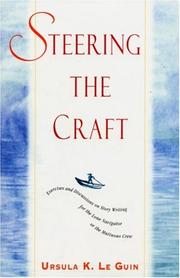
Le Guin's slim, precise guide to the elements of narrative prose — written by one of the greatest speculative authors ever — elevates your sentence-level craft to match the ambition of your worlds. Read first here to refine your voice.

Aldiss's landmark history of science fiction reveals the philosophical and literary traditions behind the genre, giving advanced writers the context to write with intention and originality rather than repeating inherited tropes.

Le Guin's collected essays on fantasy and science fiction articulate a mature artistic philosophy for speculative writing — why it matters, what it can do that realism cannot, and how to pursue it with integrity. The perfect culminating text.
Discussion
Keep reading
Paths that share books, cover the same subject, or open a related topic.