Learn Russian: the best books in order, from Cyrillic to fluent reading
This curriculum takes a complete beginner from zero knowledge of Russian all the way to genuine reading comprehension, moving through four carefully sequenced stages. Each stage builds directly on the last: script and sounds first, then grammar and core vocabulary, then structured reading practice, and finally authentic literary texts that reward everything learned along the way.
Cracking the Code: Cyrillic & Sounds
BeginnerRead and write every Cyrillic letter with correct pronunciation, understand basic sound-spelling rules, and feel comfortable sounding out unfamiliar words without hesitation.
▸ Study plan for this stage
Pace: 2–3 weeks, ~15–20 pages/day (focus on Lessons 1–4 of The New Penguin Russian Course, which cover the Cyrillic alphabet and foundational pronunciation)
- The 33 Cyrillic letters: uppercase and lowercase forms, and how they differ from Latin equivalents
- Pronunciation rules for consonants, vowels, and consonant pairs (hard vs. soft consonants)
- Stress patterns in Russian words and how they affect vowel pronunciation
- Sound-spelling correspondences: when letters represent different sounds in different contexts
- Palatalization: how soft consonants (ь-marked) change pronunciation compared to hard consonants
- Common letter combinations and digraphs (ж, ш, ч, щ, ц) and their consistent sounds
- Sounding out unfamiliar words using phonetic rules without relying on memorization
- Can you identify and write all 33 Cyrillic letters in both uppercase and lowercase, and pronounce each one correctly?
- What is the difference between hard and soft consonants in Russian, and how does the soft sign (ь) affect pronunciation?
- How does stress placement in a Russian word affect vowel pronunciation, and can you identify stress marks in written text?
- Given an unfamiliar Russian word, can you sound it out using pronunciation rules without prior exposure to that word?
- What are the consistent sounds for the 'sibilant' letters (ж, ш, ч, щ, ц), and why do they not follow standard palatalization rules?
- Can you explain the pronunciation differences between paired consonants (e.g., п/п', т/т') and apply these rules to new words?
- Daily alphabet drills: write out all 33 Cyrillic letters (uppercase and lowercase) from memory, then compare with the textbook; repeat until you can do this in under 3 minutes
- Pronunciation practice: read aloud every example word in Lessons 1–4 of The New Penguin Russian Course at least twice daily, focusing on stress and consonant softness
- Transcription exercises: listen to native speaker audio (if available with the course) and write out Cyrillic words phonetically, then check against the book's transcriptions
- Sound-out challenges: take 10–15 unfamiliar Russian words from the lesson vocabulary and sound them out using the rules you've learned, before checking the pronunciation guide
- Minimal pair drills: practice words that differ only in hard/soft consonants (e.g., ты vs. ти, if such pairs appear) to train your ear and mouth
- Write short phrases: copy out example sentences from Lessons 1–4 by hand, focusing on letter formation and spacing, then read them aloud with correct stress
- Create a personal reference sheet: compile all pronunciation rules, exceptions, and tricky letter combinations from the course into a one-page cheat sheet you can review daily
Next up: This stage equips you with the mechanical ability to decode any Russian text and pronounce it intelligently, preparing you to move into the next stage where you'll learn basic grammar and vocabulary to understand what those sounds actually mean.
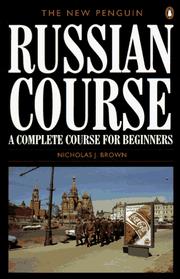
A legendary self-study classic that opens with a thorough, phonetically grounded introduction to the Cyrillic alphabet before moving into structured lessons — the ideal first book to own and work through from page one.
Grammar Foundations & Core Vocabulary
BeginnerUnderstand Russia's six-case system, verb conjugation, noun gender, and aspect, and command roughly 1,000–1,500 high-frequency words needed for basic reading.
▸ Study plan for this stage
Pace: 8–10 weeks, ~20–25 pages/day (with 2–3 days/week for review and exercises)
- The six Russian cases (nominative, genitive, dative, accusative, instrumental, prepositional) and their primary functions in sentences
- Noun gender (masculine, feminine, neuter) and how it determines adjective and verb agreement
- Regular and irregular verb conjugation patterns across present, past, and future tenses
- Perfective vs. imperfective aspect and how aspect choice affects meaning and usage
- High-frequency vocabulary (1,000–1,500 words) organized by semantic fields (family, daily actions, common objects, basic adjectives)
- Agreement rules: how gender, number, and case cascade through adjectives, pronouns, and verbs
- Prepositional phrases and case government (which prepositions require which cases)
- Can you identify the case of a noun in a Russian sentence and explain why that case is used (e.g., genitive for possession, dative for indirect objects)?
- How do you determine the gender of a Russian noun and apply the correct adjective and verb agreement?
- What is the difference between perfective and imperfective aspect, and how does aspect choice change the meaning of a sentence?
- Can you conjugate regular verbs in present, past, and future tenses, and recognize common irregular patterns?
- Given a Russian sentence with prepositional phrases, can you identify which case follows each preposition and explain the rule?
- Can you recognize and use 1,000–1,500 high-frequency Russian words in context, including nouns, verbs, adjectives, and common expressions?
- Complete all case-system drills in Schaum's outline: work through nominative through prepositional cases systematically, filling in blanks and converting nouns between cases
- Create a personal reference table for the six cases, listing the endings for masculine, feminine, and neuter nouns, plus example sentences for each case function
- Conjugate 20–30 high-frequency verbs (both regular and irregular) across all tenses covered in the outline; write out full conjugation tables and use each form in a sample sentence
- Build a vocabulary flashcard deck (physical or digital) of 1,000–1,500 high-frequency words organized by semantic field; review 50–100 cards daily with active recall
- Practice aspect pairs: for 15–20 common verb pairs (perfective/imperfective), write sentences showing the difference in meaning and usage
- Complete the prepositional phrase exercises in Schaum's outline, identifying the case required after each preposition and explaining why
- Write 10–15 short paragraphs (3–5 sentences each) using a mix of cases, genders, tenses, and aspects; have them reviewed for accuracy or self-check against a grammar guide
- Take the chapter quizzes and end-of-chapter tests in Schaum's outline; retake any section where you score below 80%
Next up: This stage equips you with the grammatical scaffolding and essential vocabulary needed to read authentic Russian texts with confidence; the next stage will apply these foundations to real-world reading materials (news, literature, everyday texts) and accelerate vocabulary acquisition in context.
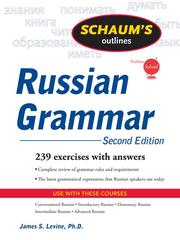
A clear, reference-style grammar with hundreds of exercises covering all six cases and verb aspects — works perfectly alongside Brown's course as a dedicated grammar drill book.
Graded Reading: Building Fluency
IntermediateRead continuous Russian prose with decreasing reliance on a dictionary, develop reading speed and intuition for sentence structure, and encounter authentic grammar in natural context.
▸ Study plan for this stage
Pace: 8–10 weeks, ~40–50 pages/day (alternating between the two books; approximately 4–5 weeks per book)
- Reading for meaning without translating every word—developing inference skills from context clues and cognates
- Recognizing case endings and their grammatical functions in continuous prose rather than isolated sentences
- Building automaticity with common Russian sentence patterns and word order variations
- Identifying and understanding authentic Russian idioms, colloquialisms, and stylistic features in natural texts
- Increasing reading speed through repeated exposure to high-frequency vocabulary and structures
- Distinguishing between formal and informal register in written Russian prose
- Developing active recall of grammar rules through encounter in authentic narrative context
- Can you read a 2–3 page passage from either book and identify the main idea without consulting a dictionary for every unknown word?
- How do case endings signal grammatical relationships in a sentence, and can you spot them while reading at natural pace?
- What strategies do you use to infer the meaning of unfamiliar words from surrounding context in Russian prose?
- Can you identify and explain the difference between formal and informal Russian as it appears in the texts?
- What are 5–10 common Russian idioms or expressions you encountered in the books, and how do they differ from literal translation?
- How has your reading speed changed from the beginning of 'Basic Russian' to the end of 'Intermediate Russian'? Can you measure it (words per minute)?
- Daily sustained reading: Complete 40–50 pages per day across both books, tracking pages and time to monitor reading speed progression
- Vocabulary journal: Record 10–15 new words per day encountered in context, noting the sentence they appeared in and your inferred meaning before checking a dictionary
- Timed reading sprints: Once per week, read a 5–page section from either book without stopping to look up words; afterward, write a 1–2 paragraph summary in English
- Sentence structure analysis: Select 5 complex sentences per week from the texts and diagram the case endings, identifying subject/object/prepositional relationships
- Idiom collection: Maintain a running list of Russian idioms and colloquialisms found in the books with their literal vs. actual meanings and example sentences
- Retelling practice: After finishing each chapter or section, retell the main events or ideas aloud in English or simple Russian without referring back to the text
- Speed benchmarking: Test your reading speed (words per minute) at the start of 'Basic Russian,' midway through, and at the end of 'Intermediate Russian' using a consistent passage length
Next up: This stage transitions you from controlled, grammar-focused study to authentic, ungraded Russian literature and media—you now have the fluency foundation and confidence to tackle more challenging contemporary texts, news articles, and literary works without heavy scaffolding.
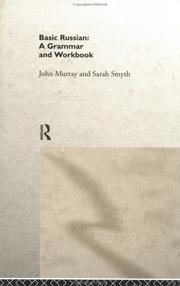
Bridges the gap between grammar study and real reading by presenting grammar points inside short, meaningful Russian texts — the ideal transition into reading-focused study.

Continues directly from its companion volume with longer, more complex texts and subtler grammar points, pushing the learner into genuine intermediate reading territory.
Authentic Literature & Deep Comprehension
ExpertRead unabridged Russian literary prose with genuine comprehension, appreciate stylistic nuance, and develop the independent reading skills needed for lifelong self-directed study.
▸ Study plan for this stage
Pace: 12–14 weeks, ~40–50 pages/day (alternating between both texts; ~3–4 weeks per book with overlap)
- Narrative structure and unreliable narration: recognizing how Bulgakov's frame narrative and Pushkin's first-person retrospective shape meaning and reader interpretation
- Stylistic register and voice: distinguishing between authorial tone, character speech, and embedded narratives across different historical and social contexts
- Symbolism and allegory in Russian literature: decoding the political, spiritual, and philosophical layers in *The Master and Margarita* and the historical-moral dimensions of *The Captain's Daughter*
- Dialogue as characterization and plot: understanding how Russian authors use speech patterns, formality levels, and linguistic choices to reveal character psychology and social position
- Intertextuality and cultural allusion: recognizing references to Russian literary tradition, folklore, and historical events that enrich meaning
- Thematic complexity: engaging with ambiguity, moral relativism, and unresolved tensions rather than seeking single interpretations
- Sentence-level syntax and rhythm: appreciating how Bulgakov's baroque complexity and Pushkin's classical precision create aesthetic and emotional effects
- How does Bulgakov's use of multiple narrators (the narrator, the Master, Margarita, Woland) create ambiguity about what is 'real' in *The Master and Margarita*, and what is the effect of this unreliability on your reading experience?
- What is the relationship between the Moscow plot and the Pontius Pilate plot in *The Master and Margarita*, and what does each narrative reveal about the other?
- In *The Captain's Daughter*, how does Grinev's retrospective narration shape your understanding of his growth, and what events does his older self interpret differently than his younger self experienced them?
- How do Pushkin's use of historical fact and literary convention in *The Captain's Daughter* create tension between historical realism and romantic narrative?
- What symbolic or allegorical meanings can you identify in the supernatural elements of *The Master and Margarita*, and how do they comment on Soviet society and human nature?
- How do the minor characters in both novels (Bulgakov's Behemoth and Korovyev; Pushkin's Savelich and Shvabrin) function as foils or mirrors to the protagonists, and what do they reveal about the central conflicts?
- Close-read a passage from *The Master and Margarita* (e.g., the opening chapter or a Pontius Pilate scene) and annotate shifts in narrative voice, tense, and perspective; write a 1-page analysis of how these shifts affect tone and meaning
- Create a detailed character map for *The Master and Margarita* showing relationships, allegiances, and symbolic associations; use it to trace how characters' interactions reveal the novel's thematic concerns
- Rewrite a scene from *The Captain's Daughter* from Shvabrin's or Savelich's perspective, then compare your version to Pushkin's original to understand how Grinev's narration shapes the reader's judgment
- Compile a glossary of Russian cultural, historical, and literary references in both texts (e.g., Dostoevsky echoes in *The Master and Margarita*, the Pugachev Rebellion in *The Captain's Daughter*); research 5–10 key allusions and write brief explanations of their significance
- Analyze the dialogue in one scene from each novel (e.g., Woland's conversation with the Editor in *The Master and Margarita*; Grinev's conversation with Pugachev in *The Captain's Daughter*), noting formality, interruptions, subtext, and what speech reveals about power dynamics
- Write a comparative essay (2,000–2,500 words) on how both novels treat the theme of integrity or moral choice under pressure, using specific textual evidence from both works
Next up: Mastery of these two canonical works—one modernist and allegorical, one historical and formally classical—equips you to independently navigate Russian literature's full spectrum of styles, historical periods, and philosophical depths, preparing you to select and read advanced texts autonomously based on your interests.
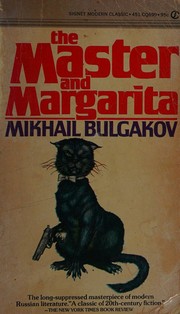
One of the most celebrated and widely read Russian novels, with vivid, relatively accessible prose that rewards the learner's accumulated grammar and vocabulary while delivering an unforgettable literary experience.
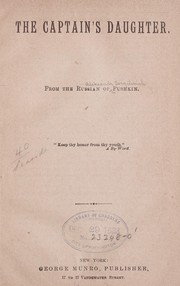
Pushkin's prose is famously clear and precise — a canonical short novel that serves as the perfect first encounter with 19th-century Russian literature without the density of Tolstoy or Dostoevsky.
Discussion
Keep reading
Paths that share books, cover the same subject, or open a related topic.