Playwriting for beginners: books to write your first play
This curriculum takes a beginner from the first principles of dramatic writing all the way to crafting a full, stageable play. Each stage builds on the last: you'll first absorb how plays work as a form, then master the core craft elements of structure, dialogue, and character, and finally develop the professional habits and advanced sensibility needed to revise and complete polished, producible work.
Foundations: How Plays Work
BeginnerUnderstand what makes a play different from other forms of writing, grasp the basic vocabulary of dramatic action, and write your first scenes with confidence.
▸ Study plan for this stage
Pace: 4–5 weeks, ~25–30 pages/day. Start with "The Playwright's Guidebook" (2 weeks), then move to "Backwards and Forwards" (2–3 weeks). This pacing allows time for reflection and scene-writing practice between readings.
- Dramatic action as the engine of plays—how plays differ fundamentally from narrative prose in showing character through action rather than description
- The concept of beats and how they structure dramatic moments within scenes
- Intention, obstacle, and action as the core triangle that drives character behavior on stage
- How to read a play backwards (Ball's method) to understand its construction and reverse-engineer dramatic choices
- The difference between plot and story, and why plays compress and heighten rather than explain
- Dialogue as action—how what characters say reveals who they are and what they want
- The role of conflict and stakes in every scene, and how to identify what's at risk
- Subtext and the gap between what characters say and what they mean
- What are the key differences between how a play communicates meaning versus a novel or short story?
- How do intention, obstacle, and action work together to create a dramatic moment, and can you identify these elements in a scene you've read?
- What is a beat, and how do beats function within a larger scene structure?
- Why does David Ball advocate reading plays backwards, and what does this method reveal about dramatic construction?
- In a scene you've analyzed, what is the subtext—what do the characters really want beneath their dialogue?
- How do you identify the stakes in a scene, and why are stakes essential to dramatic action?
- What makes dialogue 'active' rather than merely informational, and how can you write dialogue that reveals character?
- Read a short published scene (1–2 pages) from a contemporary play and identify the intention, obstacle, and action for each character. Write a one-paragraph analysis.
- Write your own 1–2 page scene with two characters where the conflict is clear and the stakes are high. Focus on making dialogue reveal character rather than explain plot.
- Take a scene you've written or read and break it down into beats—mark where the emotional or tactical energy shifts. Write a brief note on what changes at each beat.
- Practice Ball's backwards-reading method: choose a 3–5 page scene and read it backwards (from end to beginning), noting what you discover about how the playwright constructed the ending.
- Write a scene where the subtext differs significantly from the text—characters say one thing but mean another. Underline the lines where subtext is strongest.
- Analyze a scene from 'The Playwright's Guidebook' or another play in your reading, identifying how the playwright uses obstacle to create dramatic tension.
- Write a short scene (1 page) focused on a single beat—one moment of conflict or decision. Revise it twice, tightening the language and sharpening the action.
- Record yourself or a friend reading one of your scenes aloud. Listen for where dialogue feels natural and where it sounds expository. Rewrite the expository lines to be more active.
Next up: This stage equips you with the foundational vocabulary and instincts to recognize how plays work structurally and dramatically, preparing you to move into the next stage where you'll apply these principles to longer forms—developing full scenes into acts, and understanding how multiple scenes build a complete play.
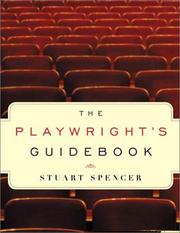
The single best starting point for beginners — Spencer breaks down dramatic action, want, and obstacle into clear, practical exercises that immediately get you writing scenes rather than just theorizing.
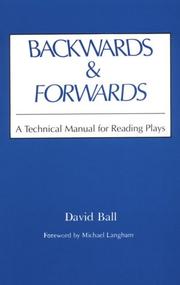
This slim, essential book teaches you to read plays like a playwright by analyzing how dramatic action moves forward and backward in time; reading it second gives you an analytical lens to apply to everything you write and read from here on.
Dramatic Structure: Building the Architecture
BeginnerLearn how to shape a full play from first scene to final curtain, understanding acts, turning points, and the through-line of action.
▸ Study plan for this stage
Pace: 4–5 weeks, ~25–30 pages/day. Week 1: Aristotle's Poetics (dense, ~50 pages); Weeks 2–5: Hatcher's The Art and Craft of Playwriting (~250 pages), with overlap and review days built in.
- Aristotle's concept of plot as the soul of drama and the primacy of action over character
- The three-act structure and the role of beginning, middle, and end in creating dramatic coherence
- Turning points, reversals (peripeteia), and recognition (anagnorisis) as engines of dramatic momentum
- The through-line of action: how each scene connects to and propels the central dramatic question
- Hatcher's practical framework for identifying and shaping the spine of a play
- The relationship between dramatic structure and emotional/thematic resonance for the audience
- Common structural pitfalls (sagging middles, weak climaxes, false endings) and how to diagnose and fix them
- How does Aristotle define plot, and why does he argue it is more important than character in drama?
- What are the key functions of the beginning, middle, and end of a play, and how do they work together to create dramatic unity?
- What is a turning point, and how do reversals and recognitions differ in their effect on the audience?
- How do you identify and articulate the through-line of action in a play, and what role does it play in structural coherence?
- Using Hatcher's framework, how would you diagnose a structural problem in a draft (e.g., a sagging second act) and propose a revision?
- How do the principles from Aristotle's Poetics manifest in the practical playwriting advice Hatcher offers?
- Read Aristotle's Poetics and annotate the sections on plot, action, and unity; then write a one-page summary of his core argument about dramatic structure.
- Analyze the structure of a published play (e.g., a one-act or short play) using Aristotle's framework: identify the beginning, middle, end, turning points, and reversals.
- Using Hatcher's method, outline the through-line of action for the same play, identifying the central dramatic question and how each scene advances it.
- Write a 5–10 page scene that includes a clear turning point or reversal; then revise it using Hatcher's diagnostic questions about structural clarity.
- Create a detailed outline for an original short play (10–15 pages) that incorporates a three-act structure, at least one major turning point, and a clear through-line of action.
- Peer-review or self-review a draft scene or short play using both Aristotelian principles (unity of action, primacy of plot) and Hatcher's practical checklist for structural soundness.
Next up: This stage equips you with the foundational architecture of dramatic structure, preparing you to move into the next stage—character development, dialogue, and scene work—where you'll learn how to populate and animate that structure with compelling voices and interactions.
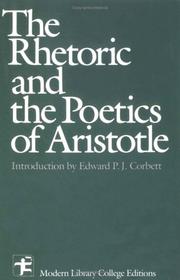
The original source of dramatic theory — plot, character, reversal, recognition — and every other craft book references it, so reading it now gives you the foundation to understand all subsequent discussions of structure.

Hatcher translates classical structural principles into modern, hands-on playwriting craft, covering acts, scenes, and beats with clarity; it builds directly on the Aristotelian vocabulary you just acquired.
Character and Dialogue: The Living Voices
IntermediateDevelop psychologically complex characters and write dialogue that crackles with subtext, conflict, and individuality — the elements that make audiences lean forward.
▸ Study plan for this stage
Pace: 4–5 weeks, ~25–30 pages/day. Week 1: "Writing the Broadway Musical" (Frankel's chapters on character and song integration). Week 2–3: Complete Frankel, focusing on dialogue in musical context. Week 4: "The Empty Space" (Brook's exploration of actor-character presence and theatrical truth). Week 5: I
- Character as the engine of musical storytelling: how Frankel demonstrates that songs emerge organically from character need and conflict, not plot convenience
- Dialogue that serves dual purposes: advancing plot while revealing character psychology and emotional stakes
- Subtext in musical theatre: the gap between what characters sing/say and what they truly feel or want
- The actor's relationship to character: Brook's concept of the actor as a conduit for authentic human behavior, not a vehicle for predetermined emotions
- Presence and vulnerability on stage: how Brook's 'empty space' philosophy demands characters exist with psychological truth rather than theatrical artifice
- Conflict as character revelation: using disagreement and tension in dialogue to expose who characters really are beneath their surface
- Individuality of voice: creating distinct speech patterns, rhythms, and word choices that make each character unmistakably themselves
- According to Frankel, what is the relationship between character motivation and song placement in a musical, and how does this differ from dialogue-only scenes?
- How does Brook define the 'empty space' and what does he argue actors must bring to it to create psychological authenticity?
- What is subtext, and how can you identify moments in dialogue where what a character says contradicts what they actually want or feel?
- How can you use conflict and disagreement in dialogue to reveal character rather than simply move the plot forward?
- What techniques does Frankel suggest for writing dialogue that feels natural while still serving the musical's dramatic structure?
- According to Brook, what prevents actors (and by extension, characters) from achieving genuine presence, and how can a playwright write scenes that demand authenticity?
- Write a scene with two characters in conflict where neither character explicitly states their true objective—the audience must infer it from subtext. Then annotate the scene marking what each character 'really wants' versus what they say.
- Take a scene from Frankel's examples and rewrite it as pure dialogue (no song), then as a song moment. Reflect on what emotional truth the song captures that dialogue alone cannot.
- Create a character biography for an original character, then write three different versions of the same dialogue moment showing how that character's psychology, background, and emotional state shape their word choice and rhythm.
- Analyze a scene from a Broadway musical (referenced in Frankel) and identify: (a) the character's stated goal, (b) their hidden need, (c) how dialogue reveals the gap between them.
- Direct a partner through a simple scene twice: once with 'theatrical' emotions (big, obvious), once with Brook's 'empty space' approach (minimal, truthful). Record or observe the difference in believability.
- Write a monologue for a character in crisis, then strip it down using Brook's principle of economy—remove every unnecessary word until only the essential psychological truth remains.
Next up: This stage equips you with the tools to create characters whose inner lives drive every word they speak and every action they take, preparing you to tackle the next stage's focus on structure and dramatic architecture—because complex characters demand equally sophisticated dramatic frameworks to contain and propel them.
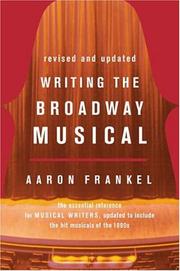
Though focused on musical theatre, Frankel's deep analysis of how character desire shapes every line of dialogue is directly applicable to all playwriting and sharpens your ear for purposeful, active speech.

Director Brook's visionary meditation on what theatre is and what it demands of the writer trains your imagination to think in terms of live performance, space, and the actor's body — essential for writing dialogue that truly lives on stage.
Revision and Completion: From Draft to Stage
IntermediateDevelop a rigorous revision process, learn to collaborate with directors and actors, and bring a full play to a stageable, producible final draft.
▸ Study plan for this stage
Pace: 4–5 weeks, ~25–30 pages/day. Begin with Jensen's concise framework (1 week), then move into Sweet's deeper toolkit (2–3 weeks), with final week dedicated to integration and full-play revision work.
- The revision process as a distinct creative phase separate from initial drafting, with specific techniques for identifying structural and character problems
- How to receive and act on feedback from directors, actors, and dramaturgs without losing authorial voice
- Practical tools for diagnosing weak scenes, exposition, dialogue, and pacing—and concrete methods to fix them
- The relationship between script and stage: how to write with production constraints and actor needs in mind
- Collaboration as a creative tool: how playwrights work with directors and performers to discover what the script can become
- Techniques for testing and refining a play through staged readings, workshops, and iterative rewrites
- How to achieve a 'stageable' final draft that serves both the playwright's vision and the practical realities of production
- What are the key differences between revising a play and revising a novel or short story, and why does a play require attention to its performability?
- How do you identify whether a scene problem is structural, a character problem, or a dialogue problem—and what revision strategies does each require?
- What is the role of a director and actors in the revision process, and how do you collaborate with them while maintaining your vision as a playwright?
- What specific techniques can you use to test your play before final submission (e.g., staged readings, workshops), and what should you listen for during these tests?
- How do you balance theatrical convention with originality, and when should you break the rules versus follow them during revision?
- What makes a draft 'stageable' and 'producible,' and what practical considerations (casting, set, budget) should inform your revision decisions?
- Take a scene from your own draft play and apply Jensen's revision checklist: identify one structural issue, one character issue, and one dialogue issue. Write a revision plan for each.
- Conduct a staged reading of a 10–15 page section of your play with actors and a director. Record notes on what surprised you, what fell flat, and what the performers discovered that you didn't intend.
- Using Sweet's toolkit, diagnose a weak scene in your draft by working through his diagnostic questions (Is the scene necessary? Does it advance the plot? Is the conflict clear?). Rewrite the scene twice: once making minimal changes, once with a major structural shift.
- Write a one-page 'production note' for a hypothetical director of your play, addressing: casting needs, set/technical requirements, and any non-standard staging your script requires.
- Revise a page of dialogue using Sweet's techniques for making exposition feel natural and earned. Compare your original to your revision and identify what changed.
- Attend or watch a recorded staged reading or workshop production of a play (ideally one available online). Note what the playwright might have learned from seeing it performed, and apply one insight to your own revision.
Next up: This stage equips you with the collaborative mindset and technical revision skills needed to move into advanced playwriting work—whether that's developing a signature voice, tackling complex forms (non-linear, experimental, musical), or preparing a play for professional submission and production.

Jensen's concise, no-nonsense guide is ideal at the revision stage — her exercises push you to interrogate every scene for dramatic necessity and help you cut, sharpen, and complete a full draft.
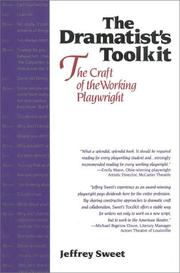
Sweet focuses on the practical mechanics of conflict, negotiation, and scene-building that emerge in workshop and rehearsal, giving you the vocabulary to revise intelligently in response to actor and director feedback.
Advanced Craft: Voice, Vision, and the Modern Stage
ExpertExpand your artistic ambition by studying how master playwrights have pushed the form, and develop a distinctive personal voice capable of writing original, fully realized work.
▸ Study plan for this stage
Pace: 8–10 weeks, ~40–50 pages/day, with 1–2 weeks between books for integration and writing
- How master playwrights articulate their creative philosophy and process (Cole's interviews reveal the thinking behind the work)
- The relationship between a playwright's vision and formal innovation—how structure, language, and staging choices serve thematic intent
- Distinctive voice as a synthesis of influences, constraints, and personal obsessions—what makes a playwright's work immediately recognizable
- The evolution of American playwriting from realism toward fragmentation, non-linearity, and multimedia integration in contemporary work
- How playwrights respond to and reshape theatrical conventions to address contemporary social, political, and existential concerns
- The role of collaboration (director, designer, actor) in realizing a playwright's vision on the modern stage
- Risk-taking and formal experimentation as essential to artistic maturity and relevance
- What are the core principles that define a master playwright's approach to their craft, based on the interviews in Cole's anthology?
- How do contemporary American playwrights use form and structure differently from traditional realist drama, and what artistic purposes do these innovations serve?
- What specific techniques or formal choices do the playwrights studied use to create a distinctive, recognizable voice?
- How do modern playwrights balance accessibility with artistic ambition, and what risks do they take in pushing theatrical conventions?
- What patterns emerge across multiple playwrights in how they approach character, dialogue, time, and space on the contemporary stage?
- How does understanding a playwright's stated vision and process change your interpretation of their actual plays?
- Read and annotate 2–3 interviews from Cole's collection, then write a 1-page synthesis of each playwright's stated creative philosophy and how it differs from their peers
- Select one contemporary American playwright from Middeke's guide and read a full play by them; compare the playwright's formal choices against Middeke's critical analysis to identify how form serves vision
- Write a 3–5 page analytical essay on one formal innovation (non-linear structure, fragmented dialogue, multimedia staging, etc.) used by a contemporary playwright and explain why it serves their thematic concerns
- Conduct a comparative analysis: choose two playwrights from the books and write a 2–3 page essay on how their distinctive voices differ in approach to dialogue, character development, and stage language
- Rewrite a scene from a contemporary play studied (10–15 pages) in a radically different theatrical form (e.g., convert a fragmented scene into strict realism, or vice versa) and reflect on what is gained and lost
- Write a 2–3 page personal manifesto for your own playwriting voice, grounded in specific examples from the master playwrights studied—articulate your artistic obsessions, formal preferences, and what risks you want to take
Next up: This stage equips you with both the theoretical framework and practical models to understand how master playwrights have built distinctive voices and pushed theatrical form; the next stage will focus on applying these insights to complete your own full-length original play with confidence and artistic clarity.
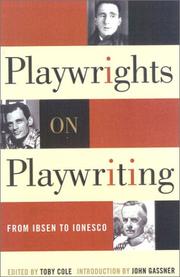
This anthology of essays and interviews by Ibsen, Chekhov, Brecht, O'Neill, Miller, and others lets you hear masters articulate their own craft philosophies — essential reading for developing an informed, individual artistic voice.
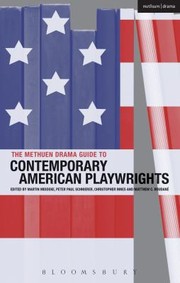
A rigorous critical survey of contemporary playwrights and their techniques that challenges you to situate your own work within the living tradition of American drama and identify where your voice fits and pushes against the form.
Discussion
Keep reading
Paths that share books, cover the same subject, or open a related topic.