Ancient Greek from scratch: a reading path to the classics
This curriculum takes you from zero knowledge of Ancient Greek all the way to reading Homer and Plato in the original, building in four carefully sequenced stages. Each stage consolidates grammar and vocabulary before introducing more demanding texts, so that by the end you are reading authentic Greek prose and poetry with confidence.
The Alphabet & First Grammar
BeginnerMaster the Greek alphabet, pronunciation, and the core grammar system (nouns, verbs, basic syntax) needed to form and read simple sentences.
▸ Study plan for this stage
Pace: 4–5 weeks, ~20–25 pages/day, with 2–3 days per week dedicated to grammar drills and alphabet practice
- The Greek alphabet: uppercase and lowercase letters, pronunciation, and diacritical marks (accents, breathing marks, diaeresis)
- Phonetic principles: how Greek letters combine into sounds and syllables; vowel length distinctions (short vs. long)
- Noun morphology: the three genders (masculine, feminine, neuter), five cases (nominative, genitive, dative, accusative, vocative), and the three declension patterns
- Verb morphology: person, number, tense (present, imperfect, future, aorist), mood (indicative, subjunctive, optative, imperative), and voice (active, middle, passive)
- Verb conjugation patterns: regular -ω verbs and their principal parts; present and imperfect tense formation
- Basic syntax: word order conventions, agreement rules (subject-verb, noun-adjective), and how cases signal grammatical relationships
- Sentence construction: forming simple declarative, interrogative, and imperative sentences using nouns, verbs, and adjectives
- Vocabulary foundation: the ~200–300 most common words needed for basic sentence comprehension and production
- Can you write out the entire Greek alphabet (uppercase and lowercase) and pronounce each letter correctly?
- What are the five cases in Greek, and what grammatical function does each typically signal (e.g., nominative for subjects)?
- How do you identify the gender and declension of a Greek noun, and how does this affect its form across different cases?
- What are the principal parts of a regular -ω verb, and how do you form the present and imperfect indicative active?
- Given a simple Greek sentence, can you identify the subject, verb, object, and explain how case endings and word order work together to convey meaning?
- What are breathing marks and accents, and how do they affect pronunciation and meaning in Greek?
- Daily alphabet drills: write out the Greek alphabet from memory (both uppercase and lowercase) and practice pronunciation aloud for 10–15 minutes each day
- Noun declension tables: complete and memorize declension paradigms for at least one noun from each of the three declensions (e.g., ἄνθρωπος, κόρη, δῶρον)
- Verb conjugation practice: conjugate regular -ω verbs (e.g., λύω) across all persons and numbers in the present and imperfect indicative active tense
- Sentence parsing: take 20–30 simple sentences from Hansen's exercises and identify the subject, verb, object, and case function of each noun
- Vocabulary flashcards: create and review flashcards for the ~250 most frequent words introduced in Hansen, focusing on nouns, verbs, and adjectives
- Translation exercises: translate short, controlled sentences from Greek to English and vice versa, focusing on correct case usage and verb tense selection
Next up: Mastery of the alphabet, core noun and verb morphology, and basic syntax in this stage equips you to move into reading connected Greek prose and poetry, where you will encounter more complex tense systems, mood usage, and the subjunctive and optative moods in authentic contexts.
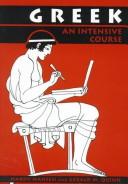
A rigorous but learner-friendly grammar primer that covers all essential morphology and syntax systematically. Read this alongside or immediately after Major to solidify and deepen your grammatical foundation before moving to readers.
Building Fluency with Graded Readers
BeginnerDevelop reading fluency and vocabulary by working through controlled, progressively harder Greek sentences and short passages adapted for learners.
▸ Study plan for this stage
Pace: 8–10 weeks, ~15–20 pages/day (alternating between Reading Greek and Athenaze), with 2–3 review days per week
- Recognition and automatic recall of common Greek vocabulary (core 500–800 words) through repeated exposure in graded contexts
- Mastery of fundamental grammatical patterns: present and aorist tense forms, nominative/accusative/genitive cases, and agreement rules in controlled sentences
- Syntactic fluency with simple narrative structures, direct speech, and basic subordinate clauses as presented in adapted passages
- Contextual reading strategies: using word order, case endings, and surrounding words to infer meaning without constant dictionary lookup
- Confidence building through successful comprehension of progressively longer passages with minimal glossing
- Transition from word-by-word decoding to phrase-level and sentence-level chunking
- Can you read a 50–100 word passage from Reading Greek or Athenaze and identify the main action, key participants, and basic narrative sequence without consulting a dictionary for every word?
- What are the primary uses of the nominative, accusative, and genitive cases, and can you recognize them in context and explain their function in a sentence?
- How do you distinguish between present and aorist tense forms in Greek, and what does each tense typically convey about the action?
- Can you recognize and parse common verb forms (including contracted verbs and irregular patterns) as they appear in graded passages?
- What strategies do you use to infer the meaning of an unfamiliar word from context, word formation, or grammatical role?
- Can you read a short narrative passage aloud with reasonable pacing and fluency, demonstrating that you are processing meaning rather than decoding word-by-word?
- Daily vocabulary drills: use flashcards or spaced repetition software (Anki) to learn and review the core vocabulary lists provided in Reading Greek and Athenaze; aim for 10–15 new words per day with daily review of older cards
- Timed reading: set a timer and read 1–2 pages of graded text without stopping to look up words; afterward, review what you understood and check glosses only for words that truly blocked comprehension
- Parsing practice: select 5–10 sentences from your daily reading, identify every verb form and noun case, and write out the grammatical function of each word
- Oral reading: read passages aloud (or listen to audio versions if available) to develop fluency and internalize sentence rhythm; record yourself weekly to track improvement
- Comprehension summaries: after each reading session, write a 3–5 sentence summary in English of what you read, without consulting the text
- Comparative analysis: read the same short passage in Reading Greek and then in Athenaze (or similar material at the same level) to notice how vocabulary and structures are reinforced across texts
Next up: By completing this stage with fluent recognition of core vocabulary and automatic parsing of simple grammatical structures, you will be ready to move beyond graded readers into authentic ancient Greek texts, where you can apply these foundational skills to unsimplified prose and poetry with greater independence.
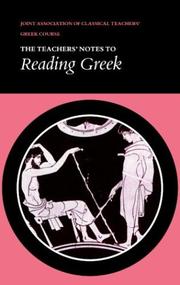
The gold-standard British graded reader, purpose-built to move learners from simple adapted sentences to real Greek. Its companion grammar reference makes it a self-contained learning system for this stage.
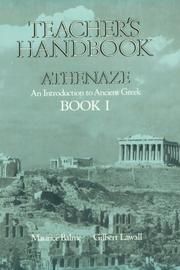
A beloved story-based reader that teaches grammar inductively through a continuous narrative set in classical Athens. Its engaging context accelerates vocabulary acquisition and keeps motivation high.
Crossing into Real Greek — Prose
IntermediateRead authentic, unadapted Ancient Greek prose for the first time, starting with the most accessible authors, and build the vocabulary and syntactic stamina for Plato.
▸ Study plan for this stage
Pace: 8–10 weeks, ~15–20 pages/day of Greek text with commentary (Xenophon: 4–5 weeks; Plato: 4–5 weeks)
- Xenophon's narrative prose style: parataxis, historical aorist, and straightforward syntax as a bridge from textbooks to real Greek
- Military and historical vocabulary from the Anabasis: camp, march, battle, and command terminology essential for recognizing recurring patterns
- Plato's dialogue form and philosophical vocabulary: the elenchus, definitions, and the interplay between Socrates and his interlocutors in Ion and Meno
- Indirect statement and infinitive constructions: mastering these in Xenophon prepares you for Plato's reported speech and philosophical argument
- Participle chains and temporal sequencing: how Xenophon uses participles to create narrative momentum, and how Plato uses them in philosophical exposition
- Attic dialect features: contraction, aspiration, and vowel lengthening as they appear in both authors
- Building active vocabulary through repetition: recognizing that Xenophon and Plato reuse core vocabulary, allowing you to internalize high-frequency words naturally
- Syntactic stamina: reading longer, more complex sentences without constant dictionary lookups, trusting grammatical patterns to guide meaning
- How does Xenophon's use of parataxis and the historical aorist differ from the subordinating style you might encounter in later Greek prose, and why does this make the Anabasis an ideal entry point?
- What are the main military and logistical challenges described in the Fifth Book of the Anabasis, and how does Xenophon's vocabulary choices reinforce the narrative of retreat and survival?
- In Plato's Ion, what is the elenchus, and how does Socrates use it to challenge Ion's claims about his expertise in Homer?
- What is the central question of the Meno, and how does Plato's treatment of definition and virtue in this dialogue differ from the Ion?
- How do indirect statements and infinitive constructions function in both Xenophon's narrative and Plato's dialogue, and why are they crucial for understanding philosophical argument?
- After reading both texts, what patterns of vocabulary and syntax have you internalized well enough to recognize without constant reference to a lexicon?
- Daily vocabulary mining: maintain a running list of the 50–100 most frequent words in Xenophon's Fifth Book; review and use them in written Greek sentences daily
- Parataxis practice: select a passage of 5–10 lines from Xenophon and rewrite it with explicit subordinating conjunctions, then compare your version to the original to understand how parataxis creates pace
- Participle parsing drills: identify all participles in a given page of Xenophon, noting their tense, voice, and grammatical function; explain how each participle relates to the main verb
- Elenchus reconstruction: read a section of Plato's Ion (e.g., the opening exchange), then outline the logical structure of Socrates' questions and Ion's responses in modern English
- Indirect statement translation: find 3–5 instances of indirect statement in Xenophon (verbs like λέγει, φησί, νομίζει + infinitive) and translate them carefully, noting how the infinitive preserves the original speaker's meaning
- Comparative vocabulary study: create a two-column chart of words that appear in both Xenophon and Plato (e.g., λόγος, ἀρετή, σοφία); note how their usage differs between narrative and dialogue
- Timed reading sprints: set a timer and read 1–2 pages of Greek without stopping to look up words; afterward, review the passage and note which words you could infer from context
- Dialogue dramatization: read aloud a passage from Ion or Meno with a partner, taking different roles; this reinforces the rhythm of Platonic dialogue and helps internalize syntax through speech
Next up: This stage equips you with the syntactic flexibility and vocabulary foundation to tackle more philosophically dense Platonic dialogues and the complex subordination of later Greek prose, moving from Xenophon's accessible narrative clarity toward the argumentative intricacy of the Republic and beyond.

Xenophon's prose is famously clear and direct, making the Anabasis the traditional first 'real' Greek text for learners. Use an annotated edition (e.g., Brownson/Loeb or a learner's edition) to bridge from graded readers to unadapted text.

The Meno is one of Plato's most approachable dialogues in terms of vocabulary and sentence length, and its philosophical content is deeply rewarding. Reading it here consolidates Attic prose grammar before tackling more complex works.
The Summit — Homer and Plato
ExpertRead Homer's epic Greek (a distinct dialect and register) and more demanding Platonic dialogue, achieving the ability to engage with the canonical texts of the Western tradition in the original.
▸ Study plan for this stage
Pace: 8–10 weeks, ~40–50 pages/day (alternating between dictionary reference work and primary text reading)
- Homeric Greek as a distinct dialect: Ionic forms, archaic morphology, and metrical conventions that differ from Classical Attic
- The formulaic language system in Homer: recurring epithets, formulaic phrases, and their role in oral composition and meter
- Navigating Autenrieth's dictionary: understanding how Homeric vocabulary, inflections, and grammatical variants are organized for efficient reference
- Platonic dialogue as a philosophical genre: the elenchus method, Socratic irony, and how dialogue structure conveys philosophical argument
- The register and style of Platonic prose: periodic sentences, rhetorical questions, and the interplay between dramatic setting and philosophical content
- Canonical texts as foundational to Western thought: recognizing how Homer and Plato establish enduring questions about virtue, knowledge, justice, and the good life
- Code-switching between Homeric and Attic Greek: recognizing when and why texts shift registers and how to parse unfamiliar forms using morphological principles
- What are the major phonological and morphological differences between Homeric Greek and Classical Attic Greek, and how do you recognize them in a text?
- How does Autenrieth's dictionary organize Homeric vocabulary, and what strategies allow you to find a word when you encounter an unfamiliar form or variant?
- What is a formulaic epithet, and how do recurring phrases serve both metrical and compositional functions in Homeric epic?
- What is the elenchus, and how does Plato use dialogue structure to enact this method in the Apology and Crito?
- How does Socratic irony function as a rhetorical and philosophical device in the Apology, and what does it reveal about Socrates' claim to wisdom?
- What are the key arguments about justice, duty, and the examined life in the Crito and Apology, and how do they connect to broader Platonic concerns?
- Compile a personal Homeric reference sheet: select 20–30 high-frequency Homeric words and their variants (e.g., forms of εἰμί, common epithets like ῥοδοδάκτυλος), noting how Autenrieth lists them and practicing rapid lookup
- Scan a passage of Homer (e.g., the opening of the Iliad) and identify all formulaic epithets and repeated phrases; note their metrical function and how they support the dactylic hexameter
- Translate a short Homeric passage (50–100 lines) using Autenrieth as your primary resource, noting which forms required dictionary consultation and why
- Read the Apology aloud in Greek (or listen to a recording while reading), marking instances of Socratic irony and noting how Plato's dialogue form enacts the elenchus
- Write a one-page analysis comparing the rhetorical strategies in Socrates' defense speech (Apology) with the logical arguments in the Crito, identifying how dialogue structure differs between the two
- Create a thematic map of the Apology, Crito, and the Phaedo/Symposium extracts, tracing how the concept of virtue (ἀρετή) and the examined life recur across texts
Next up: This stage equips you to read the most canonical and philosophically demanding texts of ancient Greece in the original language, preparing you to engage independently with complete Platonic dialogues and Homeric epic in subsequent study, and to recognize how these foundational works shape all later Western intellectual tradition.
Before diving into Homer, you need a reference tool for his distinctive Ionic/Epic dialect. Autenrieth's dictionary is the classic learner's companion specifically designed for Homeric vocabulary and forms.
Book I of the Iliad is the traditional entry point into Homeric epic. Use an annotated learner's edition (such as Pharr's Homeric Greek) to navigate the dialect differences and formulaic language; the rewards are immense.
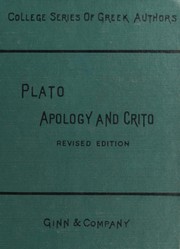
With solid prose experience behind you, the Symposium's richer vocabulary and longer periodic sentences are now manageable. It represents a high-water mark of Attic prose style and a fitting capstone to the curriculum.
Discussion
Keep reading
Paths that share books, cover the same subject, or open a related topic.