Start with Runaway. Munro published for more than forty years and got steadily better, so beginning at the beginning means spending your first two books watching a very good writer become a great one. Runaway is her at full command: eight stories, three of them linked, each covering decades in thirty pages through the time-jumps and withheld revelations that are her signature technique.
The other common recommendation is Lives of Girls and Women, and it has a real argument behind it — it is her most novel-like book, a linked sequence following one girl in small-town Ontario, and it is the easiest Munro to read straight through. If you find short story collections hard to settle into, start there instead. But it is early work, and it does not prepare you for what she could do thirty years later.
Publication order versus best-first
This is a genuine disagreement among her readers, unlike with most novelists.
The case for chronological: her development is one of the most interesting in modern fiction. You can watch the stories get longer, looser and more temporally daring, and reading in order makes that visible.
The case for best-first: short story collections do not build on each other. There is no plot to follow, no characters carried forward, nothing you miss by skipping. And a reader who starts with 1968 work and finds it merely good may never reach the work that is extraordinary.
Our recommendation is best-first. Read Runaway, then go back. If Munro grips you, chronological order becomes a pleasure rather than a chore, and you will have earned it.
The sequence, once you are committed
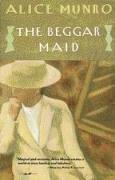
Lives of Girls and Women (1971) is the origin point and the closest thing she wrote to a novel. Who do you think you are? (1978), published outside Canada as The Beggar Maid, follows Rose from a poor childhood to an academic and broadcasting career, and it is the first book where the mature Munro is fully present.
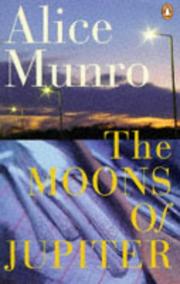
Then the strong middle run: The moons of Jupiter, The progress of love and Friend of my youth. The progress of love is the one many critics single out from this stretch, and Friend of my youth contains some of her most formally adventurous stories. Any of the three is an excellent book; you do not need all of them before moving on.
The outlier and the ending
The View from Castle Rock is the book to be careful with. It is not a normal collection — it reworks Munro's own family history, from Scotland to Ontario, in something between memoir and fiction, and she said as much in the foreword. It is fascinating on a second or third encounter with her work and thoroughly misleading as a first, so save it.
Dear Life (2012) is the last book she published. The final four pieces are labelled as not-quite-stories and are openly autobiographical, and they read as a deliberate close to a career. Reading it last is the right instinct.
Honest warnings
Munro rewards slow reading and punishes fast reading more than almost any writer. Her stories routinely withhold the decisive fact until the last page, then recontextualise everything, which means skimming produces the sensation that nothing happened. Read one story per sitting. People who report finding her flat are almost always people who read four in a row.
Her range is also narrow by design — small-town and rural Ontario, women's lives, the twentieth century — and that is either the source of her depth or a limitation, depending on the reader. Both views are honestly held.
More literary reading paths are on Discover.
Follow the full ordered path here: Alice Munro Reading Order: Where to Start.