Best Books to Become a Wildlife Biologist
This curriculum is built for someone already familiar with basic biology who wants to move purposefully into a wildlife biology career. It begins with the professional landscape and field craft, advances into rigorous population survey and statistical methods, then culminates in conservation practice and the practical career strategies — degrees, seasonal work, and the hiring process — that turn knowledge into employment.
Field Craft & Professional Foundations
IntermediateUnderstand what wildlife biologists actually do in the field, build core field-skills vocabulary, and get an honest picture of the profession before committing deeper.
▸ Study plan for this stage
Pace: 4–5 weeks, ~40–50 pages/day (focusing on field methods chapters and case studies)
- Field identification and morphological assessment of mammals in their natural context
- Capture, handling, and ethical restraint techniques used in mammalian fieldwork
- Data collection protocols: tracking, sign interpretation, population sampling methods
- Ecological and behavioral observation in the field—how to document animal activity and interactions
- Specimen preparation and museum curation as professional documentation practices
- Career pathways in mammalogy and the day-to-day reality of field-based wildlife work
- How mammalian biology informs conservation and management decisions
- What are the main field identification features you would use to distinguish between similar mammal species in the field, and why does morphology matter for accurate data collection?
- Describe the ethical and practical considerations involved in capturing and handling a wild mammal for research purposes.
- What are three different methods for surveying mammal populations, and when would you use each one?
- How do you interpret mammalian sign (tracks, scat, burrows, etc.) to infer behavior, population presence, and ecological role?
- What is the role of specimen collection and museum curation in modern wildlife biology, and what are the trade-offs?
- Based on Feldhamer's treatment of mammalian diversity and ecology, what are two realistic career scenarios for a field mammalogist, and what skills does each require?
- Create a field identification guide for 5–8 mammal species in your region, including morphological features, habitat, sign, and behavior—use Feldhamer's descriptions as your reference template.
- Practice sketching and describing mammalian tracks, scat, and other sign from photographs or field guides; compare your interpretations with published keys.
- Design a hypothetical mammal survey protocol for a specific habitat (e.g., forest, grassland, wetland), specifying methods, sampling effort, and data to be collected.
- Watch 2–3 wildlife documentary clips or field footage showing mammal capture/handling and annotate the ethical and technical decisions being made.
- Conduct a literature search (using Feldhamer as a starting point) on one mammal group of interest and summarize how field observations have shaped our understanding of their ecology or behavior.
- Interview or shadow a local wildlife biologist, park ranger, or museum curator working with mammals; ask about their typical field day, challenges, and career trajectory.
Next up: This stage grounds you in the practical, hands-on reality of mammalian fieldwork and equips you with the vocabulary and observational skills needed to move into specialized topics—whether that's advanced population ecology, conservation genetics, or a specific mammal group—with confidence that you understand what field biologists actually do.
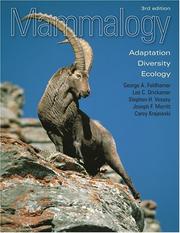
Establishes the taxonomic and ecological literacy that underlies every field method and survey protocol you will encounter later in the curriculum.
Field Methods & Population Survey Techniques
IntermediateMaster the standard field protocols — mark-recapture, distance sampling, telemetry, habitat assessment — and understand when and why each method is chosen.
▸ Study plan for this stage
Pace: 8–10 weeks, ~40–50 pages/day (mix of dense technical content and practical examples). Buckland's distance sampling book (~200 pages) over 4–5 weeks; Silvy's Wildlife Techniques Manual Vol. 1 (~400–500 pages) over 4–5 weeks, with 1–2 weeks for overlap and integration.
- Distance sampling theory and design: how perpendicular distances from transects yield density estimates without assuming detection of all animals
- Mark-recapture fundamentals: capture probability, closed vs. open populations, and how recapture data estimate population size
- Telemetry methods (radio, GPS, satellite): deployment, data collection, location accuracy, and movement/home range estimation
- Habitat assessment protocols: vegetation sampling, microhabitat characterization, and linking habitat variables to species presence/abundance
- Choosing the right method: matching survey design to species biology, habitat type, research question, and logistical constraints
- Field safety, ethics, and permits: legal and welfare considerations when capturing, marking, or tracking wildlife
- Data quality and bias: sources of error in field surveys (observer bias, detection heterogeneity, tag loss) and mitigation strategies
- Analytical workflow: from raw field data to population estimates and inference using distance sampling and mark-recapture models
- Explain the core principle of distance sampling and why it does not require detecting every animal in a survey area.
- What are the key differences between closed and open mark-recapture models, and when would you use each?
- Describe the steps involved in deploying and retrieving data from a GPS collar on a large mammal, and what biases might arise.
- How would you design a habitat assessment protocol for a ground-nesting bird species, and what variables would you measure?
- Given a research question about a cryptic forest ungulate, justify your choice of survey method (distance sampling, mark-recapture, or telemetry) over alternatives.
- What are the main sources of detection bias in distance sampling, and how do study design choices (transect length, observer training) mitigate them?
- Work through Buckland's distance sampling examples (Chapters 2–3): calculate detection functions and density estimates from provided field data using the book's methodology.
- Design a mark-recapture study for a hypothetical small mammal population: specify capture method, marking scheme, recapture schedule, and expected capture probabilities; estimate required sample size.
- Conduct a mock distance sampling transect walk in a local park or campus: record perpendicular distances to birds or other visible animals; calculate a rough density estimate and compare to published values for the area.
- Review a published telemetry study (referenced in Silvy): extract the GPS collar deployment protocol, data filtering steps, and home range estimation method; critique the approach for potential biases.
- Create a habitat assessment field sheet for a species of interest: list 8–12 variables (e.g., canopy cover, understory density, downed wood), define measurement units and precision, and pilot-test it on a small plot.
- Compare three survey methods (distance sampling, mark-recapture, telemetry) for a focal species using a decision matrix: score each on cost, precision, animal welfare, and suitability to habitat; justify your recommendation.
Next up: This stage equips you with the technical toolkit and decision-making framework to collect robust population and movement data in the field; the next stage will apply these methods to real-world conservation problems, data analysis, and adaptive management scenarios.

Distance sampling is the dominant abundance-estimation method in wildlife biology; reading it here, after study-design basics, lets you apply the math with real understanding.

The definitive, encyclopedic reference for field methods — trapping, telemetry, population estimation, habitat surveys — and the single most-cited practical guide in the profession.
Population Ecology & Quantitative Analysis
ExpertMove from collecting data to analyzing it rigorously: population modeling, occupancy analysis, and the quantitative reasoning expected of a professional wildlife biologist.
▸ Study plan for this stage
Pace: 8–10 weeks, ~40–50 pages/day (mix of dense theory and worked examples; allow extra time for mathematical concepts and practice problems)
- Population growth models (exponential, logistic, and stage-structured) and their assumptions, parameters, and real-world applications
- Life tables, survivorship curves, and age/stage-specific vital rates as the foundation for population projection matrices
- Density-dependent and density-independent regulation mechanisms and their role in population dynamics
- Occupancy modeling framework: the distinction between detection probability and true occupancy, and why ignoring imperfect detection biases inference
- Maximum likelihood estimation (MLE) and model selection (AIC) as the statistical backbone of modern wildlife analysis
- Multi-season and multi-state occupancy models for tracking species persistence, colonization, and extinction across landscapes
- Practical survey design: balancing replication, spatial coverage, and temporal sampling to meet occupancy analysis assumptions
- Interpretation and communication of uncertainty: confidence intervals, model-averaged predictions, and effect sizes in population and occupancy contexts
- How do exponential and logistic population models differ in their assumptions and predictions, and when is each appropriate for a real species?
- What is the relationship between vital rates (survival, fecundity, recruitment) and population growth rate (λ), and how do you extract λ from a population projection matrix?
- Why does ignoring imperfect detection in occupancy surveys lead to biased estimates, and how does the occupancy model framework correct this?
- What are the key differences between single-season and multi-season occupancy models, and what biological processes can multi-season models capture?
- How do you choose between competing occupancy models using AIC, and what does model averaging tell you about parameter uncertainty?
- Design a field survey protocol for a cryptic species: specify replication, detection covariates, and temporal structure to meet occupancy analysis assumptions.
- Build and parameterize an age-structured population projection matrix for a real species (e.g., using published vital rates); calculate λ and interpret what it means for population viability.
- Simulate population trajectories under different growth scenarios (density-dependent vs. independent regulation) and compare to field data; identify which mechanism best explains observed dynamics.
- Work through a complete occupancy analysis workflow using provided data: fit single-season and multi-season models, compare AIC values, extract occupancy and detection estimates with confidence intervals.
- Design a field survey for a target species: specify number of sites, visits per site, timing, and detection covariates; justify choices based on occupancy model assumptions and power analysis.
- Analyze how detection probability varies with environmental covariates (e.g., weather, observer, habitat) using occupancy model output; discuss implications for inference.
- Conduct a sensitivity analysis on a population model: vary vital rates within realistic ranges and quantify how changes in survival vs. fecundity affect population growth rate.
Next up: This stage equips you with the quantitative tools to rigorously estimate population parameters and species distributions from imperfect field data—the foundation for the next stage, which will apply these methods to conservation decision-making, landscape-scale inference, and integrating multiple data sources into adaptive management frameworks.

Bridges descriptive ecology and mathematical modeling at an accessible level, building the population-dynamics intuition needed before tackling more advanced modeling texts.

Occupancy models are now standard in wildlife monitoring and conservation planning; this is the authoritative text and a must-read for anyone doing survey work professionally.
Conservation Practice & Applied Management
ExpertUnderstand how biological data translates into real conservation decisions, policy, and on-the-ground management — the applied end of the career.
▸ Study plan for this stage
Pace: 4–5 weeks, ~40–50 pages/day with reflection breaks
- Biodiversity hotspots and conservation prioritization frameworks
- Landscape-scale ecosystem management and habitat connectivity
- Reserve design principles (size, shape, representation, redundancy)
- Integration of ecological science with policy and land-use planning
- Adaptive management and monitoring as feedback loops for conservation decisions
- Stakeholder engagement and social dimensions of conservation implementation
- Translating species and ecosystem data into actionable management protocols
- How do conservation biologists identify and prioritize which areas to protect, and what data informs these decisions?
- What are the key principles of reserve design, and how do they address the limitations of isolated protected areas?
- How does Noss's framework connect ecological science to real-world policy and management decisions?
- What role does adaptive management play in refining conservation strategies over time?
- How do landscape connectivity and corridor design improve conservation outcomes beyond single reserves?
- What are the practical challenges in implementing conservation plans, and how can stakeholder involvement improve success?
- Create a conservation prioritization map for a real region using publicly available biodiversity data (e.g., species richness, endemism, threat levels); justify your choices using Noss's framework
- Design a hypothetical reserve system for a landscape, applying reserve design principles (minimum viable population, connectivity, representation); document trade-offs and reasoning
- Analyze a published conservation plan or management document from a government or NGO; identify where ecological data directly shaped policy decisions and where gaps exist
- Conduct a stakeholder analysis for a real conservation project; map competing interests and propose how to integrate them into a management strategy
- Review a case study of adaptive management in action (e.g., a restoration project or species recovery program); trace how monitoring data led to strategy adjustments
- Write a brief policy brief translating a conservation science finding into actionable management recommendations for a specific landscape or species
Next up: This stage grounds you in how conservation science becomes practice; the next stage will likely deepen your understanding of either specialized management techniques (e.g., restoration ecology, captive breeding, invasive species control) or the institutional and political systems that enable or constrain conservation implementation at scale.

A landmark text on landscape-scale conservation and biodiversity protection, essential for understanding the strategic context in which wildlife biologists operate.
Career Strategy: Degrees, Seasonal Work & Getting Hired
IntermediateBuild a concrete, actionable career plan — choosing the right degree path, landing seasonal technician jobs, networking effectively, and converting field experience into a permanent wildlife biology position.
▸ Study plan for this stage
Pace: 4–5 weeks, ~25–30 pages/day, with 2–3 days per week dedicated to exercises and networking activities
- Funding mechanisms in conservation (grants, donations, endowments, impact investing) and how they shape job availability and career stability
- How conservation organizations' financial health directly impacts hiring, project duration, and career advancement opportunities
- Identifying and evaluating conservation employers by their financial model and sustainability
- Building a personal funding/sponsorship strategy to support seasonal work transitions and credential-building
- Networking within conservation finance circles to uncover unadvertised positions and funding-backed projects
- Translating field experience into demonstrable conservation outcomes that attract funders and employers
- Strategic degree selection aligned with conservation finance roles (e.g., conservation biology, environmental economics, nonprofit management)
- How do different funding sources (grants vs. donations vs. impact investing) affect job security and career trajectory in wildlife biology?
- What financial red flags should you look for when evaluating a conservation organization as a potential employer?
- How can understanding conservation finance help you identify which seasonal positions are most likely to convert into permanent roles?
- What is your personal funding/sponsorship strategy for bridging gaps between seasonal contracts and building toward a permanent position?
- How do you translate field experience and project outcomes into language that resonates with conservation funders and hiring managers?
- Which degree path (conservation biology, environmental economics, nonprofit management, etc.) best aligns with your target career trajectory and the organizations you want to work for?
- Audit 5–8 conservation organizations you're interested in: research their funding sources (annual reports, 990 forms, grant databases), assess financial stability, and identify which ones are actively hiring or likely to expand.
- Create a 'funding landscape map' for your target geographic region or conservation focus area—identify major funders, grant cycles, and which organizations they support.
- Write a 2–3 page career strategy document that includes: (1) your target degree path and why, (2) 3–5 seasonal positions that build toward your goal, (3) key skills/credentials you need to acquire, and (4) a 3–5 year timeline.
- Conduct informational interviews with 3–4 wildlife biologists or conservation professionals working in your target field; specifically ask how they navigated funding, seasonal work, and the transition to permanent roles.
- Develop a personal 'funding pitch' (1 page) that articulates your conservation goals, field experience, and why you're worth investing in—practice pitching it to mentors or peers.
- Identify and apply for 2–3 scholarships, fellowships, or sponsorships that support wildlife biology careers or seasonal field work (e.g., The Nature Conservancy internships, Audubon fellowships).
- Build a spreadsheet of 10–15 potential employers, their funding sources, recent projects, and hiring timelines; use this as your job-search roadmap for the next 12–18 months.
Next up: This stage equips you with the financial literacy and strategic networking foundation to identify which employers and positions will actually lead to permanent wildlife biology careers; the next stage will focus on tactical job-search execution, interview preparation, and converting seasonal field experience into a competitive offer.
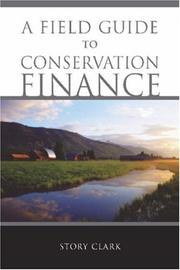
Understanding how conservation projects are funded is a career differentiator; this book demystifies grants, land trusts, and agency budgets so you can position yourself where the jobs actually are.
Discussion
Keep reading
Paths that share books, cover the same subject, or open a related topic.