Rainer Maria Rilke Reading Order: Where to Start
Rilke is a poet most people meet through his prose, and that is the right way in — the letters teach you what he thought poetry was for before the poems ask anything difficult of you. From there the reading order roughly follows his own development: the incantatory early books, the hard-looking object poems of his Paris years, and finally the two late sequences written in a single burst that everything else was preparation for. Because he wrote in German, edition choice matters more than usual; pick one translator and stay with them across a book rather than mixing versions line by line.
Start With The Prose
BeginnerLearn what Rilke believed art required of a life, in the two prose books that state it directly.
▸ Study plan for this stage
Pace: 3-4 weeks for about 310 pages. Letters to a Young Poet is 101 pages and can be read in an afternoon, but should not be: read one letter a sitting, ten sittings, because they are answers to a correspondence you never see and they blur together if you take them in a run. The Notebooks of Malte Laurids
- Rilke's central demand: that art is not a career choice but a test of whether you could live without making it, stated plainly in the first of the Letters
- Solitude as a working condition rather than a mood, and his insistence that difficulty is a sign you are in the right place
- The advice to live the questions rather than chase answers, which is the position every later poem is written from
- The Notebooks is a poet's notebook wearing a novel's clothes: it has a narrator, a Paris, and almost no story
- Learning to see is the Notebooks' actual subject, and the seeing it teaches is what the Paris-era poems will perform
- Rilke's Paris is hostile, poor and full of the dying, and his response to it is attention rather than pity
- These two books are the argument; the poems are the practice, which is why the prose comes first
- What does Rilke tell the young cadet to do, and what does he conspicuously refuse to tell him?
- Why is solitude a technique for Rilke rather than a hardship, and where does that reasoning become hard to accept?
- The Notebooks has no plot. What holds it together instead, and does it hold?
- What has Malte learned to see by the end that he could not see at the start?
- How does the advice in the Letters look different once you have watched Malte try to live by it?
- Read one letter a day and write a single sentence in reply, as if you were the cadet. It surfaces immediately which parts of the advice you actually believe.
- Pick three Notebooks fragments and read them aloud. Rilke's prose was written by an ear trained on verse and the sentence rhythms only show up out loud.
- Copy out the two or three passages from the Letters that people quote most, then find two passages nobody quotes. The gap between the famous Rilke and the actual Rilke starts here.
- Note every object Malte looks at closely. You will meet the same habit of attention in the poems two stages from now, and it will be recognisable.
Next up: You now know what Rilke thought poetry was for, which means the early poems can be read as an attempt at something rather than as decoration.

Ten letters to a cadet who asked whether he should keep writing. It is short, it is famous for good reason, and it gives you Rilke's whole argument about solitude and patience before you meet a single elegy.

His only novel, and really a poet's notebook about learning to see in a hostile city. Read second: it dramatizes the seeing that the Paris-era poems then perform.
The Early Poems
BeginnerHear the incantatory young Rilke, so you can measure how far the late work travels from it.
▸ Study plan for this stage
Pace: 4-5 weeks for about 440 pages of verse, which is far slower going than the same page count of prose. Read aloud, roughly ten to fifteen pages a sitting, and reread each poem at least twice before moving on: once for the sound and once for the sense. The Book of Hours is chanted, incantatory poetry a
- Rilke wrote in German, and every English Rilke is a strong interpretation; comparing a single page across editions is the cheapest way to find out what you are getting
- The Book of Hours addresses a God who is unfinished and being built by the person praying, which inverts the usual direction of devotional poetry
- The early voice is incantatory and cumulative: poems work by accretion and repetition rather than by argument
- These are the most immediately pleasurable poems he wrote, and the pleasure is a fair reason to start here
- The Book of Images is the transitional book, where the chanting loosens and individual poems begin standing on their own
- Watching a poet's voice change across two books is only possible if you read them as books rather than as anthology selections
- Poetry read at prose speed does not register; the slowness is the method, not a lack of fluency
- What kind of God is being addressed in The Book of Hours, and what does the speaker claim to be doing for him?
- Where does the incantatory rhythm carry you and where does it start to feel like a trick?
- In The Book of Images, which poems could stand alone in an anthology, and what makes them separable when the earlier ones are not?
- Having compared two translations of the same poem, what specifically differed - diction, line length, register - and which choice do you prefer?
- What in these two books already anticipates the late sequences, and what will have to be abandoned to get there?
- Before committing to an edition, read the same poem in two different translations aloud, back to back. Do this once and you will never again treat translated poetry as a single fixed text.
- Read The Book of Hours aloud at the pace of speech, not of reading. It was built for the mouth and collapses on the page when skimmed.
- Keep a list of the images Rilke reuses across the two books. The recurrence is the point and it is invisible unless you write them down.
- Pick one poem from The Book of Images and copy it out by hand. Transcription forces the line breaks on you and line breaks are where the meaning sits.
- Mark any poem you did not understand at all and come back to it after the next stage rather than forcing it now.
Next up: The loosening you can hear across these two books is exactly what Rodin and Paris are about to accelerate into something much harder and more disciplined.
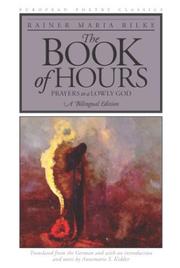
Poems addressed to a God who is unfinished and being built by the person praying. The most immediately pleasurable Rilke, and the clearest picture of his starting position.

The transitional book, where the chanting loosens and individual poems start standing on their own. It sits exactly between the devotional early voice and the sculptural one that follows.
The Thing-Poems
IntermediateMeet the disciplined middle Rilke who learned from sculpture to look at one object until it looks back.
▸ Study plan for this stage
Pace: 3-4 weeks for about 250 pages. The verse selection here runs 149 pages and includes the poems Rilke is most anthologised for; read no more than five or six poems a sitting, aloud, twice each. Letters on Cezanne is 98 pages of short letters to his wife and can be read a few at a time alongside the po
- The thing-poem is Rilke's central technical invention: look at one object until it looks back, and let the poem be the looking
- Rodin taught him to treat a poem as a made object with surfaces, which is a sculptural rather than musical idea of what a poem is
- The famous poems of this period - the panther in its cage, the archaic torso that ends by giving an instruction - are arguments about attention disguised as descriptions
- The self almost vanishes from these poems, which is the sharpest possible contrast with the praying speaker of The Book of Hours
- Letters on Cezanne shows Rilke watching a painter solve the same problem in another medium, and is the best available gloss on his own method
- Colour in the Cezanne letters is treated as a structural fact rather than a decorative one, and the same is true of image in the poems
- This stage is the apprenticeship that makes the late sequences possible, so it is worth slowing down for even if you find it colder than the early work
- What does the panther poem do that a description of a panther would not?
- Where has the speaker gone in these poems, and what has replaced the first person?
- What exactly does Rilke admire in Cezanne, and how does he translate a painter's problem into a writer's?
- How does an object poem end, given that it has no narrative to resolve?
- Is the discipline of this period a gain or a loss compared with the early books? Argue both sides before choosing.
- Sit with one object for twenty minutes and write eight lines about it without using the word I. This is the whole exercise the New Poems set themselves.
- Read the archaic torso poem aloud three times, then write down where its final turn comes from. Nothing in the description prepares for it, which is the craft question worth chasing.
- Read the Cezanne letters with a few of the paintings open in front of you. Rilke is describing specific canvases and the letters double in value when you can see what he saw.
- Compare one thing-poem with one poem from The Book of Hours on the page. Line length, sentence shape and pronoun use will all have changed, and naming the change is more useful than feeling it.
Next up: Rilke now has the technique and the vocabulary the two late sequences assume from their first line, and you have watched him build both.
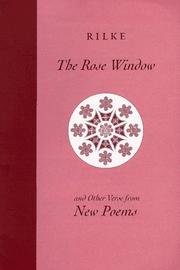
The Paris book, written under Rodin's influence, containing 'The Panther' and 'Archaic Torso of Apollo'. This is the technical apprenticeship that made the Elegies possible, so read it before them.
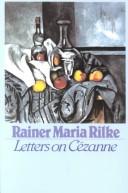
Letters to his wife from the Cezanne retrospective, watching a painter solve the exact problem the New Poems are solving. Short, and the best gloss on that book you will find.
The Late Sequences
IntermediateRead the two works Rilke's whole career was building toward, in the order he finished them.
▸ Study plan for this stage
Pace: 5-6 weeks, and expect this to be the hardest reading in the path. The Duino Elegies are ten long poems begun in 1912 and finished in a rush a decade later; read one elegy per sitting, aloud, then reread it immediately before doing anything else. The 146-page Sonnets to Orpheus are fifty-five short p
- The angel of the Elegies is not consoling and not Christian; it is a figure for a consciousness that does not need us, and misreading it as comfort wrecks the whole sequence
- The Elegies are difficult on purpose, and the difficulty is about the limits of what praise can do in the face of death
- Lovers, animals, children and the dead recur as figures for kinds of being we have lost or never had
- The Sonnets to Orpheus are the affirmative half of the same burst: song as transformation, written at speed and in strict form
- Orpheus is the poet who can go into death and sing, which is the answer the Elegies keep circling
- Both sequences arrived after a decade of near-silence and were finished within weeks of each other, which is why reading them apart makes both harder
- Translation choice matters most here of anywhere in Rilke; abstract nouns and compound coinages are where English versions diverge furthest
- Understanding on a first pass is not the goal; the goal is to have read them once so that the second reading has somewhere to stand
- What is the angel, and what would it mean to be heard by one?
- Why does the first elegy open with a cry and a refusal in the same sentence?
- What work do the animals do in the Elegies, and how is their kind of being different from ours?
- How do the Sonnets answer the Elegies rather than merely following them?
- What does Orpheus offer that the angel refuses, and is Rilke persuaded by his own answer?
- Which passages changed most between the two translations you compared, and what did each translator have to give up?
- Read the first elegy aloud on three separate days without reading any commentary in between. Almost everything readers report as revelation on a second pass comes from doing exactly this.
- Keep a single sheet listing every appearance of the angel, and note what it is doing each time. The figure is more consistent than it feels on a first read.
- Read a handful of the sonnets aloud without stopping to interpret. They were written at speed and lose more than the Elegies do when parsed line by line.
- After finishing both, go back to the archaic torso poem from the previous stage. The instruction it ends with reads completely differently once the late sequences are behind you.
- Write one paragraph on what you think Rilke means by praise. It is the load-bearing word in both sequences and pinning it down is the real work of this stage.
Next up: With the major poems read, the remaining books stop being obstacles and become context: you can now see what the Rodin monograph produced and what the early tales were reaching for.

Begun in 1912, finished in a rush ten years later: ten long poems on angels, lovers, animals and death. Difficult on purpose, and far more penetrable once the earlier books have taught you his vocabulary.
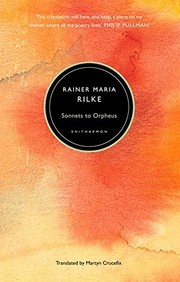
Fifty-five sonnets written in a matter of days alongside the Elegies, and the lighter, more affirmative half of that final burst. Read immediately after the Elegies, as they were written.
The Deeper Cuts
IntermediateFill in the surrounding work once the major poems are behind you.
▸ Study plan for this stage
Pace: 2-3 weeks for about 430 pages, and the pace can finally relax. Auguste Rodin is 143 pages of art criticism and reads quickly. Stories of God is 284 pages of short tales that go down easily a couple at a time. Neither book needs the reread-aloud discipline the verse demanded; these are supporting doc
- The Rodin monograph was written while Rilke was working as the sculptor's secretary, and is the plainest statement of the craft ethic behind the thing-poems
- Rilke's claim that a work of art must be a thing among things, complete and self-sufficient, is set out here as criticism before it appears in verse
- Stories of God returns to the devotional register of the early poems in prose, which makes the continuity of his obsessions unusually visible
- This is minor Rilke by his own scale, and reading it as minor is what makes it enjoyable rather than disappointing
- Read last, these two books work backwards: the Rodin explains the middle period and the tales explain the beginning
- Rilke was a professional writer working in prose for money and access, and seeing that side of him is useful correction to the mystic reputation
- What does Rilke praise Rodin for, and how much of it is a description of what Rilke wanted his own poems to do?
- Where does the Rodin book stop being criticism and start being a manifesto?
- How do the Stories of God relate to The Book of Hours, and which came first in his development?
- What does Rilke gain and lose by telling these tales in prose rather than verse?
- Having finished the whole path, what is the single largest change between the earliest and the latest work?
- Read the Rodin book with the thing-poems beside you and mark every sentence that reads as a description of one of them.
- Pick one of the Stories of God and identify what would have to change to make it a poem from The Book of Hours. The answer is usually less than you expect.
- Write a one-page reading order of your own for someone starting Rilke tomorrow, and defend the first book you would give them.
- Return to the translation comparison you made in the early stages and repeat it on a passage from the Elegies. Having read the whole career, your ear will make a different choice than it did at the start, and knowing why is the most durable thing this path can leave you with.
Next up: The path ends here, and the natural next move is not another Rilke book but a second, slower pass through the Duino Elegies with everything else in place.

The monograph he wrote while working as Rodin's secretary, and the plainest statement of the craft ethic behind New Poems. Best last, when you already know what it produced.
Early tales told in the same devotional register as The Book of Hours. Minor Rilke, worth reading only once the major books have earned your interest in his beginnings.
Discussion
Keep reading
Paths that share books, cover the same subject, or open a related topic.