Virginia Woolf Reading Order: Where to Start
This curriculum guides an intermediate reader through Virginia Woolf's work in four carefully sequenced stages: beginning with her most accessible novel, moving through the great modernist experiments, then deepening understanding through her essays and critical prose, and finally entering the intimate world of her diaries and letters. Each stage builds the interpretive vocabulary needed for the next, so that by the end the reader experiences Woolf not just as a novelist but as a thinker, critic, and diarist of extraordinary range.
The Accessible Entry Point
IntermediateGet a confident foothold in Woolf's voice and themes — consciousness, time, memory, and the inner life — without yet confronting her most formally demanding prose.
▸ Study plan for this stage
Pace: 4–5 weeks total: Weeks 1–3 for Mrs. Dalloway (~25–30 pages/day, re-reading key passages in Week 3); Weeks 4–5 for A Room of One's Own (~20–25 pages/day, with journaling time built in). Plan for slower, ruminative reading — Woolf rewards pausing more than rushing.
- Stream of consciousness: how Woolf renders the unbroken, associative flow of a character's inner thoughts in real time, particularly through Clarissa Dalloway's and Septimus Smith's contrasting minds
- The permeable self: Woolf's idea that individual identity is not fixed but bleeds into other people, places, and moments — seen in Clarissa's uncanny connection to Septimus, a man she never meets
- Compression of time vs. expansion of interiority: Mrs. Dalloway spans a single June day in London, yet through memory and association it contains entire lifetimes — Woolf stretches subjective time while compressing clock time
- Memory as living presence: the past is not 'over' for Woolf's characters; it resurfaces involuntarily and shapes the present moment, anticipating Proustian resonance throughout both books
- The 'angel in the house' and women's creative suppression: in A Room of One's Own, Woolf personifies the internalized social pressure on women to be selfless and pleasing, arguing it must be 'killed' for authentic writing to occur
- Material conditions for creativity: Woolf's central argument that financial independence (£500 a year) and private space (a room of one's own) are prerequisites for women's intellectual and artistic freedom
- The fictional essay form: A Room of One's Own blurs genres — it is part lecture, part fiction, part polemic — and Woolf uses the invented narrator 'Mary Beton' to make abstract arguments vivid and embodied
- Androgyny of the creative mind: Woolf's concept, drawn from Coleridge, that the greatest writers possess a mind that is neither purely masculine nor purely feminine but holds both in fertile balance
- In Mrs. Dalloway, how does Woolf use the chiming of Big Ben and other clock sounds to structure the novel, and what tension does this create between external, public time and the internal, subjective time of her characters?
- What is the thematic and structural function of Septimus Warren Smith in Mrs. Dalloway? Why does Woolf insist on his parallel story, and what does his fate reveal about Clarissa's own choices and survival?
- In A Room of One's Own, Woolf imagines Shakespeare's fictional sister, Judith. What is the purpose of this thought experiment, and what does Judith's story argue about the relationship between genius and social circumstance?
- How does Woolf's prose style in Mrs. Dalloway itself enact her themes — that is, in what ways does the *form* of the sentences mirror the content about consciousness, fluidity, and the self?
- Woolf argues in A Room of One's Own that women writers have lacked 'a tradition' behind them. What does she mean by this, and how does the absence of a literary tradition affect the woman writer differently from the male writer?
- Across both books, how does Woolf treat the relationship between the private inner life and the public social world? Is withdrawal into interiority presented as escape, resistance, or something more complicated?
- Consciousness mapping: Choose any two-page passage from Mrs. Dalloway and draw a diagram tracing every shift in perspective, memory, or time. Label what triggers each shift (a sound, an object, a word). This makes Woolf's associative logic visible and trains the eye for her technique.
- Parallel-life timeline: Create a side-by-side timeline for Clarissa Dalloway and Septimus Smith, marking where their days intersect spatially or thematically even though they never meet. Then write a short paragraph arguing what Woolf gains by keeping them apart.
- Rewrite a passage in 'flat' prose: Take a rich interior monologue from Mrs. Dalloway (e.g., Clarissa's opening walk through London) and rewrite it in plain, reportorial third-person. Compare the two versions and write a reflection on what is lost — this concretely demonstrates what stream of consciousness *does*.
- The Judith Shakespeare exercise: After reading Woolf's account of Shakespeare's imaginary sister in A Room of One's Own, write your own 1–2 page version updating the thought experiment to the present day. What obstacles remain? What has changed? This tests comprehension and extends Woolf's argument.
- Room audit and reflection: Woolf's argument is grounded in material reality. Write a one-page personal reflection honestly assessing your own conditions for intellectual work — space, time, money, freedom from interruption. Where do you meet Woolf's conditions, and where do you fall short? How does this change how you read her argument?
- Annotated re-read of the opening pages: Re-read the first three pages of Mrs. Dalloway after finishing the whole novel. Annotate every detail that now carries more weight knowing the full story. This builds the habit of layered, recursive reading essential for Woolf's later, denser works.
Next up: Mastering Woolf's stream of consciousness and her argument for the creative inner life in these two accessible works gives the reader the conceptual vocabulary and stylistic stamina needed to tackle her more formally radical and philosophically demanding prose — such as To the Lighthouse or The Waves — where those same themes are pushed to their structural and linguistic limits.
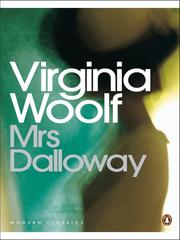
The ideal starting novel: a single day in London, two interweaving consciousnesses, and Woolf's stream-of-consciousness technique at its most controlled and welcoming. It introduces her core concerns — time, shell-shock, society, and the texture of a moment — without the structural complexity of her later work.
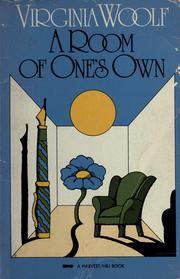
Reading this essay-lecture immediately after Mrs Dalloway reveals the intellectual architecture behind the fiction. It is Woolf's most famous critical work, and its argument about women, money, and creative freedom will reframe everything else in the curriculum.
The Modernist Masterworks
IntermediateExperience Woolf's formal experimentation at full power — lyric time, elegy, and the dissolution of the conventional novel — and understand why she is central to literary modernism.
▸ Study plan for this stage
Pace: 8–10 weeks total: ~3 weeks for To the Lighthouse (~30 pages/day, savoring the lyric passages slowly), ~2 weeks for Orlando (~35 pages/day, a lighter pace suits its playful tone), and ~3–4 weeks for The Waves (~15–20 pages/day — dense soliloquies demand slow, rereading-heavy engagement).
- Stream of consciousness and interior monologue: how Woolf renders thought, perception, and feeling as continuous, overlapping flow rather than sequential event
- Lyric time vs. clock time: the radical compression of years into a single bracket section ('Time Passes' in To the Lighthouse) versus the expansion of a single moment into pages of reflection
- Elegy and loss as structural forces: how grief for Mrs. Ramsay, for youth, for a stable self shapes the architecture of To the Lighthouse and The Waves
- The dissolution of plot and character: Woolf's deliberate dismantling of the conventional novel's reliance on action, causality, and fixed identity
- Gender fluidity and the constructed self: Orlando's centuries-long gender transformation as a sustained argument that identity — gendered, historical, authorial — is performative and unstable
- The soliloquy as form: in The Waves, six voices speak in pure, stylized monologue with no dialogue tags or narrative scaffolding, pushing the novel toward lyric poetry
- Woolf's prose rhythm and the sentence as unit of meaning: how syntax, imagery, and cadence carry emotional and philosophical weight
- Modernism's relationship to history and trauma: how World War I haunts all three books as an off-stage catastrophe that reshapes consciousness and form
- In To the Lighthouse, how does the 'Time Passes' section function structurally and emotionally — what does Woolf achieve by dispatching major deaths in parenthetical asides, and what does this say about the relationship between human life and indifferent time?
- How does Lily Briscoe's painting in To the Lighthouse serve as a meta-commentary on Woolf's own artistic project, and what does the novel's final line — 'I have had my vision' — resolve or leave open?
- Orlando spans four centuries and a spontaneous sex change: what is Woolf arguing about the nature of identity, gender, and literary history, and how does the mock-biography form support or satirize those arguments?
- In The Waves, each of the six characters speaks in a similarly elevated, poetic register rather than a naturalistic voice — what is gained and what is lost by this choice, and how do the italicized 'wave' interludes relate to the human soliloquies?
- How does Woolf use the figure of Percival in The Waves — a character who never speaks — to explore elegy, masculine idealism, and the limits of language?
- Across all three books, how does Woolf treat the problem of 'the moment': the attempt to arrest, preserve, or fully inhabit a single instant of experience?
- Close-reading journal: For each book, select one passage of roughly one page and write a 300–500 word analysis of Woolf's sentence-level craft — track verb tenses, imagery clusters, shifts in free indirect discourse, and rhythm. Compare the three passages at the end of the stage to chart her evolving style.
- Time-mapping exercise (To the Lighthouse): Draw a simple timeline of 'external' chronological events alongside a second track of 'interior' time as experienced by the characters. Note where the two tracks diverge most dramatically, especially in 'Time Passes', and write a paragraph explaining what that divergence reveals.
- Gender and identity log (Orlando): Each time Orlando's gender, age, or sense of self shifts or is commented upon, note the page and the narrative strategy Woolf uses (irony, mock-scholarly footnote, direct address, etc.). At the end, write a one-page synthesis: what pattern emerges in how identity is constructed and destabilized?
- Voice differentiation exercise (The Waves): Choose two of the six characters — ideally one you find distinct and one you find hard to tell apart — and compile 8–10 short quotations from each. Write a character sketch for both based solely on diction, imagery, and preoccupation, then reflect on whether Woolf succeeds in making them individuals or deliberately blurs them.
- Imitation writing: Write a 200–300 word passage in Woolf's stream-of-consciousness style, set in an ordinary moment (a meal, a walk, waiting for someone). Then annotate your own draft: where did you use free indirect discourse? Where did you compress or expand time? What was hardest to imitate?
- Comparative essay (500–700 words): Argue which of the three books most radically departs from the conventions of the Victorian novel, using specific formal evidence — plot structure, characterization, narrative voice, and treatment of time — drawn from all three works.
Next up: Mastering Woolf's formal innovations — lyric interiority, unstable identity, and the novel pushed toward poetry — equips the reader to encounter her critical and essayistic thinking, where she theorizes in prose the very experiments she enacted in fiction.

Widely considered her greatest novel, it deepens the techniques of Mrs Dalloway into a three-part structure that meditates on loss, art, and the passage of time. Reading it second means the reader already trusts her interior method and can focus on its architectural beauty.
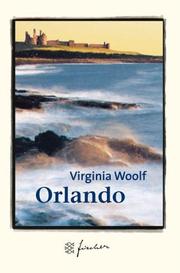
A playful, genre-bending counterpoint to the gravity of To the Lighthouse — a mock-biography spanning four centuries and two genders. It shows Woolf's wit and her radical thinking about identity, history, and literary tradition, and is essential before tackling The Waves.
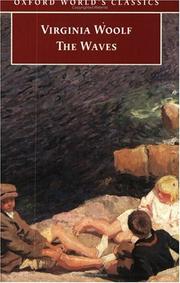
Her most formally radical novel: six voices rendered entirely as interior monologue, with no conventional narrative. Having read the previous three works, the reader now has the vocabulary to appreciate this as the summit of her artistic project rather than an impenetrable experiment.
The Critic and the Essayist
ExpertUnderstand Woolf as one of the twentieth century's finest literary critics and essayists, and see how her critical thinking directly shaped her fiction.
▸ Study plan for this stage
Pace: 6–8 weeks total: Weeks 1–3 on The Second Common Reader (~20–25 pages/day, reading essays in the order presented and pausing after each to take notes); Weeks 4–7 on Three Guineas (~15–18 pages/day, given its density of argument, footnotes, and documentary evidence); Week 8 reserved for comparative re
- The 'common reader' as a democratic critical ideal — Woolf's deliberate positioning of the engaged, non-academic reader as the proper judge of literature, and what that stance implies about literary authority
- Essay as art form — how Woolf treats the personal essay not as mere opinion-giving but as a literary genre with rhythm, imagery, and emotional arc, blurring the boundary between criticism and fiction
- Reading as a creative act — Woolf's argument in The Second Common Reader that the reader must collaborate with the author, actively imagining and reconstructing the text's world
- Canon formation and the recovery of marginalised voices — Woolf's championing of neglected writers (women, Elizabethan minor figures, Romantic letter-writers) and the political implications of deciding who counts as literature
- The essay as political instrument — Three Guineas as a demonstration that the discursive, digressive essay form can carry a sustained, evidence-based political argument about gender, war, and institutional power
- Patriarchy, education, and the professions — Woolf's structural analysis in Three Guineas of how male-dominated institutions (the church, the bar, the university, the military) perpetuate war and the oppression of women
- The use of documentary evidence and photographs — Woolf's incorporation of newspaper photographs, letters, and public records in Three Guineas as a rhetorical and epistemological strategy, making the essay hybrid and proto-journalistic
- Continuity between criticism and fiction — how the critical values Woolf articulates (attention to the ordinary, scepticism of authority, the centrality of women's inner lives) are the same values that drive her novels
- In The Second Common Reader, what does Woolf mean by the 'common reader,' and how does invoking this figure function as both a critical and a political gesture?
- How does Woolf's prose style in her essays — her use of metaphor, digression, and the first person — itself enact the critical principles she is arguing for?
- Which writers does Woolf recover or re-evaluate in The Second Common Reader, and what criteria — stated or implied — does she use to judge their value? How do those criteria reflect her own priorities as a novelist?
- In Three Guineas, how does Woolf connect the question of women's access to education and the professions with the broader question of how to prevent war? Is the logical chain persuasive?
- How does the form of Three Guineas — the extended letter, the footnotes, the photographs — reinforce or complicate its feminist argument?
- Where do the critical values on display in The Second Common Reader reappear, transformed, in the political argument of Three Guineas? What does this continuity reveal about Woolf's unified intellectual project?
- Close-reading journal: After each essay in The Second Common Reader, write a 150-word note identifying (a) the central critical claim, (b) one stylistic technique Woolf uses to make the argument feel experiential rather than academic, and (c) one connection to a technique or theme in her fiction you have previously read.
- Imitation essay: Choose any writer not discussed by Woolf and write a 500-word critical appreciation in her style — personal, imagistic, grounded in the act of reading — consciously adopting her 'common reader' persona. Then annotate your own draft to identify where you succeeded or failed to capture her method.
- Argument mapping for Three Guineas: Draw a visual diagram of Woolf's three-part argument — the three guineas, the three correspondents, the three institutions — tracing how each strand of evidence (letters, photographs, historical data) supports each claim. Identify at least two places where you find the logic strained and write a paragraph explaining why.
- Documentary evidence audit: Compile a list of every external source Woolf cites in Three Guineas (newspaper articles, biographies, legal documents). For two or three of them, attempt to verify or contextualise the source using a library database. Reflect in writing on how this exercise changes your reading of her rhetorical authority.
- Comparative close-reading: Select one paragraph from any essay in The Second Common Reader and one paragraph from Three Guineas that seem to share a preoccupation (e.g., women's exclusion, the value of the outsider, the danger of institutions). Write a 400-word analysis of how the same idea is handled differently by the two forms — the appreciative essay versus the polemical letter.
- Synthesis essay (800–1,000 words): Argue for or against the following proposition — 'Woolf's literary criticism and her political writing are expressions of a single feminist epistemology.' Use specific textual evidence from both The Second Common Reader and Three Guineas to build your case.
Next up: By establishing Woolf's critical vocabulary — the common reader, the outsider's perspective, the essay as a form of resistance — this stage equips the reader to return to her fiction with a fully theorised framework, ready to see her novels not just as aesthetic achievements but as arguments about consciousness, gender, and society.
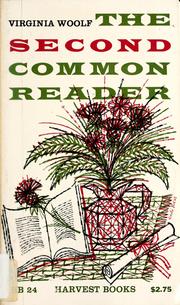
Her first collected volume of literary essays covers Chaucer, the Elizabethans, the Russian novelists, and more. It reveals the vast reading life behind the novels and establishes her critical voice — personal, digressive, and brilliantly precise.
Her most politically urgent work, written in 1938 on the eve of war, linking fascism, patriarchy, and the exclusion of women from public life. It is the radical extension of A Room of One's Own and rewards a reader who now knows her fiction and earlier essays well.
The Private Voice: Diaries and Letters
ExpertEnter Woolf's most intimate register — the workshop of her mind — and see how daily life, friendship, self-doubt, and literary ambition fed directly into the published work.
▸ Study plan for this stage
Pace: 8–10 weeks total: Weeks 1–5 on "A Writer's Diary" (~20–25 pages/day, reading slowly and annotating), Weeks 6–10 on "Moments of Being" (~15–20 pages/day, given its denser memoir-essay texture). Allow 2–3 re-reading sessions per book for key passages.
- The diary as literary laboratory: how Woolf uses daily entries in 'A Writer's Diary' to draft, test, and revise ideas that surface in her novels and essays
- Self-doubt and creative resilience: the recurring cycle of despair, paralysis, and renewal that Woolf records around each major work, and what it reveals about her artistic process
- The 'moment of being' vs. 'non-being': Woolf's distinction in 'Moments of Being' between lived experience that breaks through into consciousness and the cotton-wool of ordinary existence
- Memory, trauma, and self-construction: how the autobiographical sketches in 'Moments of Being' show Woolf processing childhood loss, abuse, and family dynamics as raw material for fiction
- The private voice vs. the public voice: the stylistic and tonal differences between Woolf writing for herself (diary) and Woolf writing memoir for a potential reader, and what each mode reveals
- Friendship and intellectual community: the role of the Bloomsbury circle, Leonard Woolf, and other correspondents as sounding boards visible in both books
- Time, perception, and the 'shock-receiving capacity': Woolf's theory that artists are distinguished by their ability to make meaning from shocks, articulated in 'Moments of Being'
- The workshop behind the masterworks: tracing specific anxieties and breakthroughs in 'A Writer's Diary' to their counterparts in Mrs Dalloway, To the Lighthouse, The Waves, and other published texts
- In 'A Writer's Diary', how does Woolf's tone and self-assessment shift across the entries written during the composition of different novels — and what does this pattern suggest about her relationship to her own creative process?
- What does Woolf mean by a 'moment of being' in 'Moments of Being', and how does this philosophical concept connect to the narrative techniques (stream of consciousness, epiphany, lyric interruption) she employs in her fiction?
- How does Woolf use the diary form in 'A Writer's Diary' not merely to record events but to actively think through aesthetic problems — and can you identify at least two specific entries where this is most visible?
- In the autobiographical sketches of 'Moments of Being', how does Woolf represent her childhood relationship with her parents, and in what ways do these representations illuminate the parent-child dynamics in her novels?
- Both books deal with the tension between vulnerability and ambition. How does each book's form (diary vs. retrospective memoir-sketch) shape the way that tension is expressed and managed?
- What theory of artistic identity emerges across both books when read together — that is, what does Woolf, in her most private register, believe a writer fundamentally is and must do?
- Parallel-entry journaling: After each reading session, write a 200-word diary entry in Woolf's manner — recording not events but your own thinking process about what you just read. At the end of the stage, compare your entries to hers for tone, self-interrogation, and rhythm.
- Trace a single novel through 'A Writer's Diary': Choose one of the novels Woolf mentions most frequently (e.g., The Waves or To the Lighthouse) and extract every diary entry that references it. Arrange them chronologically and write a one-page narrative of the novel's gestation as Woolf experienced it.
- Close-reading comparison: Select one 'moment of being' passage from 'Moments of Being' and find a thematically or imagistically related passage in 'A Writer's Diary'. Write a 400-word analysis of how the same underlying experience or idea is rendered differently in each context.
- Concept mapping: Draw a visual map connecting Woolf's stated aesthetic anxieties in 'A Writer's Diary' (e.g., fear of sentimentality, desire for a new sentence rhythm) to the specific formal solutions she describes arriving at. Label each node with a direct quotation from the text.
- The 'shock' exercise: Woolf argues in 'Moments of Being' that shocks become 'valuable' when the mind finds a pattern behind them. Identify three 'shocks' Woolf describes in 'Moments of Being', then write a paragraph for each explaining what 'pattern' or meaning she constructs from it — and whether you find her interpretation convincing.
- Dialogue between the books: Write a 500-word imagined dialogue in which the Woolf of 'A Writer's Diary' (mid-career, anxious, working) speaks directly to the Woolf of 'Moments of Being' (retrospective, theorizing selfhood). Use only ideas, phrases, and concerns drawn from the actual texts to keep it grounded.
Next up: By internalizing Woolf's own account of her intentions, doubts, and aesthetic theories in these private writings, the reader is now equipped to return to the published fiction and essays with a far richer interpretive lens — ready to see the finished works not as monuments but as hard-won solutions to the very problems she wrestled with on the page.

Edited by Leonard Woolf from the full five-volume diary, this selection focuses specifically on her reflections on writing, reading, and the creative process. It is the perfect companion to the novels already read, showing exactly how each book was conceived, struggled with, and completed.
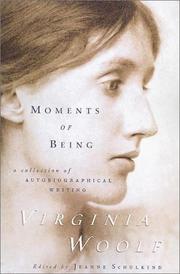
A collection of her autobiographical writings and memoir sketches, including the famous 'Sketch of the Past.' It provides the biographical and psychological depth that illuminates everything else in the curriculum, and is best saved for last when the reader can hear all its echoes.
Discussion
Keep reading
Paths that share books, cover the same subject, or open a related topic.