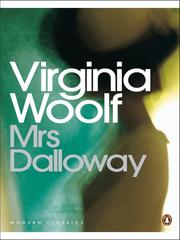
Start with Mrs. Dalloway. It covers a single June day in London, it runs a little over two hundred pages, and its method — consciousness passing from one person to another as they cross paths in the street — is introduced gently enough that you learn to read it while reading it. By the time the narrative slips from Clarissa buying flowers to Septimus Smith on a park bench, you already know how the book moves.
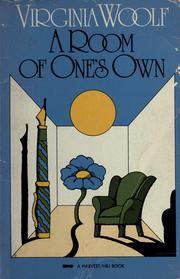
The obvious alternative is To the Lighthouse, which most readers end up calling her best, and the reason not to start there is small but real: its middle section, Time Passes, is ten pages of an empty house with deaths reported in square brackets, and it is far more affecting once you already trust her. The other tempting entry is A Room of One's Own, and that is a legitimate choice if you would rather meet Woolf as an arguer than as a novelist — it is lucid, funny and completely accessible.
The novels, in the order that works
Mrs. Dalloway, then To the Lighthouse, then Orlando, then The Waves. That is publication order and it is also difficulty order, which is a rare piece of luck.
To the Lighthouse is the centre of the work: a family at a summer house, a painting that will not come right, a decade passing in a corridor. If you read nothing else, read this. Orlando is the holiday — a mock-biography of a poet who lives four hundred years and changes sex halfway through, written fast and for fun, and the least demanding thing she published. It is a good palate cleanser after the intensity of the two before it.
The Waves is the wall. Six voices speak in formal interior monologue, there is no plot in any ordinary sense, and the interludes describing the sun crossing the sky are prose poems. A minority of readers consider it the greatest novel in English; a large majority put it down by page sixty. Do not attempt it as your first or second Woolf, and do not treat bouncing off it as a verdict on you.
Several novels are absent from our catalogue and are worth naming: The Voyage Out and Night and Day, the two conventional early novels that show almost nothing of what she became; Jacob's Room, the first genuinely experimental one; The Years, her bestseller in her lifetime and least read now; and Between the Acts, the last, finished shortly before her death.
The essays and criticism
A Room of One's Own is the one everybody reads, and deservedly — the argument about money, privacy and Shakespeare's imagined sister is still the clearest statement of its case. Three guineas, its angrier sequel connecting patriarchy at home to fascism abroad, is far less loved and much more argumentative; read it only if the first left you wanting the full case. The Second Common Reader collects her literary journalism, and it is the best evidence that she was a great critic as well as a great novelist — plainer sentences than the fiction, and very funny about bad books.
The diaries and memoir
A Writer's Diary, assembled by Leonard Woolf from the full journals, is the working record: doubt, revision, envy, the daily arithmetic of getting a novel done. Writers tend to find it the most useful book here. Moments of being collects the autobiographical pieces, including the childhood memoir that underlies To the Lighthouse. Read both after the novels, not before, or you will spend the fiction hunting for biography.
Where to stop
After To the Lighthouse and A Room of One's Own you have the essential Woolf, and stopping there is entirely defensible. The Waves is for readers who finished the first two and wanted her to go further, not for readers who found them hard.
Follow the full ordered path here: Virginia Woolf Reading Order: Where to Start.