Best Books on Vintage Cameras and Collecting
This curriculum takes a beginner from zero knowledge of vintage cameras all the way through confident collecting, film shooting, and basic repair — building vocabulary and historical context first, then diving into specific classic systems, hands-on film craft, and finally the technical world of cleaning, lubricating, and adjusting old bodies. Each stage assumes the knowledge from the one before it, so reading in order matters.
Foundations: History, Vocabulary & the Collector's Eye
BeginnerUnderstand the sweep of camera history, learn the essential vocabulary (rangefinder, SLR, TLR, leaf shutter, focal-plane shutter, CLA, etc.), and develop a feel for what makes a camera collectible and desirable.
▸ Study plan for this stage
Pace: 3–4 weeks, ~25–30 pages/day, with 2–3 days per week for reflection and exercises
- The evolution of Leica rangefinder cameras from the Ur-Leica (1925) through the M-series, and how design innovations solved real photographic problems
- Rangefinder focusing mechanism: how coupled rangefinders work, why they enable fast, accurate focusing without mirror slap, and their advantages over SLR design
- Leicaflex as the bridge between rangefinder and SLR philosophy—understanding the technical and historical reasons Leica entered the SLR market
- Essential vocabulary: focal-plane vs. leaf shutters, shutter speeds, aperture, lens mounts (L39, M39, M-mount), and how these specifications affect collectibility
- The concept of CLA (Clean, Lubricate, Adjust) and why mechanical condition, not just cosmetics, determines a camera's value and usability
- Leica's manufacturing evolution: how pre-war German production, post-war Canadian and Japanese variants, and West German resumption created distinct collector categories
- What makes a Leica desirable: rarity, condition, historical significance, and the relationship between original specifications and market value
- Explain the key difference between how a rangefinder camera achieves focus versus an SLR, and why Leica's rangefinder design remained competitive even after SLRs became dominant
- What is the purpose of a CLA, and why is a well-serviced camera with cosmetic wear often more valuable than a pristine-looking camera with sluggish mechanics?
- Describe the evolution of Leica's shutter technology (focal-plane vs. leaf shutters) and how these choices influenced the cameras' design and use cases
- How did Leica's manufacturing shift from pre-war Germany to post-war production (Canada, Japan, West Germany) affect the types and desirability of cameras in the collector's market?
- What are the main lens mount standards used by Leica cameras, and why does mount compatibility matter to collectors?
- Why did Leica introduce the Leicaflex, and what does this camera reveal about the tension between rangefinder and SLR design philosophies in the 1960s?
- Create a visual timeline of major Leica rangefinder models (Ur-Leica, I, II, III, IIIf, M3, M4, M5, etc.) with key specifications (shutter type, top speed, viewfinder magnification) and note how each addressed limitations of its predecessor
- Disassemble and reassemble a non-functioning Leica (or study detailed photos of one) to understand the rangefinder coupling mechanism; document how the focusing wheel connects to the lens helicoid
- Examine 5–10 Leica cameras (in person or via detailed online listings) and score each on condition, rarity, and historical significance; explain why one might command 2–3× the price of another despite similar age
- Write a 500-word comparison of a rangefinder Leica M3 and the Leicaflex SL, explaining the design trade-offs and which type of photographer each serves best
- Research and document the serial number ranges and production dates for three different Leica models; cross-reference with Matheson's text to identify which variants are rarest and most sought-after
- Photograph or sketch the shutter mechanism (focal-plane or leaf) of a Leica you have access to, labeling key components and explaining how it controls exposure time
Next up: This stage establishes the historical and technical foundation needed to evaluate individual cameras; the next stage will likely focus on hands-on assessment skills—learning to inspect, test, and authenticate specific models so you can confidently build a collection.
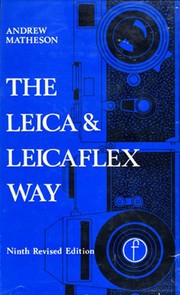
Leica is the cornerstone of vintage camera collecting; this classic text introduces the rangefinder world and the language of collectable 35mm cameras in an accessible, historically grounded way.
Classic Makes & Models: The Canon, Nikon, and Leica Universe
BeginnerGain deep knowledge of the most collected camera systems — their key models, variants, lenses, and what separates a bargain from a treasure — so you can shop, identify, and evaluate with confidence.
▸ Study plan for this stage
Pace: 8–10 weeks, ~40–50 pages/day (approximately 3 books × 300–400 pages total). Allocate 2–3 weeks per book to allow time for research, note-taking, and hands-on evaluation between sections.
- Nikon rangefinder evolution: from early 1930s models through the S-series, understanding how mechanical refinements and optical improvements define each generation
- Canon rangefinder system architecture: the distinction between early models, the L-series, and post-war designs, plus how Canon's lens ecosystem shaped its competitive position
- Leica's influence on rangefinder design and the technical/historical reasons Leica commanded premium pricing and collector devotion
- Optical and mechanical specifications that determine functionality and value: shutter speeds, viewfinder types, rangefinder coupling mechanisms, and lens mount compatibility
- Variant identification and rarity factors: production runs, serial number dating, regional differences, and how to spot sought-after models versus common variants
- Condition assessment and pricing logic: how wear patterns, mechanical function, and cosmetic state translate to collector value across different price tiers
- Zeiss Ikon's dual heritage (East and West production) and how Cold War division created distinct product lines with different technical and market trajectories
- What are the major evolutionary stages of the Nikon rangefinder system (as covered in Rotoloni), and what specific mechanical or optical innovations define the transition between them?
- How did Canon's rangefinder lens mount strategy and production philosophy differ from Nikon's, and what impact did this have on the secondhand market and collector preference?
- Explain the relationship between Leica's design principles and the rangefinder systems developed by Canon and Nikon—where did they diverge, and why?
- Given a camera's serial number, production year, and condition, how would you estimate its collector value and desirability using the frameworks presented in these three books?
- What are the key differences between East German and West German Zeiss Ikon production, and how do these differences affect identification and valuation?
- Describe the technical function and significance of rangefinder coupling, shutter design, and viewfinder optics in determining a camera's usability and appeal to modern collectors.
- Create a detailed timeline chart mapping Nikon rangefinder models (from Rotoloni) against Canon models (from Dechert) and Zeiss Ikon models (from Small), noting key innovations and production dates to visualize the competitive landscape.
- Examine 5–10 real cameras (in person or via detailed online listings with specifications) and practice identifying the model, production year, and variant using only the information in these three books; verify your conclusions against seller descriptions.
- Build a personal reference sheet for each major system (Nikon, Canon, Zeiss Ikon) listing the 8–12 most collected models, their typical price ranges, common wear patterns, and what makes each desirable or problematic.
- Select one model from each book (e.g., Nikon S2, Canon L39, Zeiss Ikon Kiev) and write a 500-word comparative analysis of their optical and mechanical design, explaining why collectors might prefer one over another.
- Visit a camera shop or online marketplace and evaluate 3–5 rangefinder cameras for sale; use the condition assessment and pricing logic from all three books to justify whether each listing represents fair value, a bargain, or an overpriced example.
- Create a visual identification guide (photos, sketches, or annotated screenshots) showing how to distinguish between similar models within one system—for example, Nikon S, S2, and S3, or early vs. late Canon L39 variants—using details from Rotoloni and Dechert.
Next up: This stage equips you with the technical literacy and market knowledge to confidently evaluate the three most influential rangefinder systems; the next stage will likely expand into other collecting categories (SLRs, folding cameras, or specialized systems) or deepen your expertise into advanced topics like lens evaluation, repair assessment, or investment strategy.
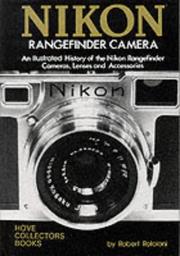
The definitive reference on Nikon's legendary rangefinder line; reading it after Leica context lets you immediately compare systems and understand why these bodies are so prized.

Covers Canon's pre-SLR era in authoritative detail, rounding out the 'big three' Japanese rangefinder picture and teaching you how to spot variants and fakes.
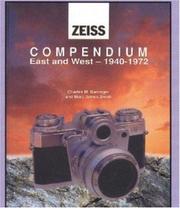
Zeiss glass and bodies (Contax, Contarex, Hasselblad lenses) appear constantly in collecting circles; this compendium gives you the reference knowledge to navigate that world.
Shooting Film: Making Old Bodies Work for You
IntermediateMove from knowing about cameras to actually shooting with them — understanding film stocks, exposure without modern metering, zone focusing, and getting great results from vintage glass.
▸ Study plan for this stage
Pace: 6–8 weeks, ~25–30 pages/day. Start with "Film Is Not Dead" (2–3 weeks) to build practical shooting confidence, then move to "The Negative" (3–4 weeks) for deeper technical mastery of exposure and development.
- Film stock selection and characteristics (speed, grain, color vs. black & white) as covered in Canlas's practical guide
- Exposure metering without built-in light meters—understanding the Zone System foundation and manual exposure techniques
- Zone focusing and manual focus techniques for vintage lenses to ensure sharp results in the field
- The relationship between exposure, development, and final image quality as explained in Adams's The Negative
- How vintage glass renders images differently than modern lenses—understanding optical characteristics and working within their limitations
- Pushing and pulling film in development to expand your creative and technical range
- The critical feedback loop: shooting, reviewing, and adjusting technique based on actual results
- What are the key differences between common film stocks (ISO, grain structure, color rendition), and how do you choose the right one for a specific shooting scenario?
- Explain the Zone System and how it helps you meter exposure manually without a light meter—what does placing a subject on a specific zone mean for your final image?
- How does zone focusing work with vintage lenses, and why is it essential for getting consistently sharp images with manual focus cameras?
- What is the relationship between exposure and development, and how can you use this relationship (pushing/pulling) to expand your creative options?
- How do you read and interpret a light meter (or use incident light metering) to set exposure on a manual camera?
- What are the optical characteristics of vintage glass, and how do you work with (rather than against) their quirks to create compelling images?
- Shoot at least one full roll (24–36 exposures) with each of three different film stocks at the same location and lighting conditions; develop and compare the grain, contrast, and color rendition to internalize stock differences
- Practice manual exposure metering: meter the same scene using both incident light and reflected light methods, then shoot the same frame at different exposures to see how each zone placement affects the final negative
- Spend one full shooting session using only zone focusing—pick a vintage manual focus lens and practice estimating distance and depth of field to achieve sharp results without autofocus
- Shoot a series of intentional push/pull tests: expose one roll normally, one at +1 stop, and one at -1 stop, then develop each differently to see how development time affects contrast and shadow detail
- Create a personal film stock reference sheet: document your favorite stocks with sample negatives, prints, and notes on when and why you'd choose each one
- Photograph the same subject with two different vintage lenses (different focal lengths or optical designs) and compare how the glass influences rendering, contrast, and character
- Keep a detailed shooting log for at least 20 rolls: record film stock, camera, lens, metering method, exposure settings, and your assessment of results—identify patterns in what works
Next up: This stage transforms you from a camera enthusiast into a confident film shooter who understands the technical and creative tools available in vintage systems; the next stage will likely deepen your mastery of specific camera systems, advanced darkroom technique, or specialized genres (landscape, street, portraiture) where these fundamentals become your foundation for artistic expression.

A visually inspiring, practical guide to shooting film today; it bridges the gap between collector and active shooter and motivates the hands-on work that follows.

Adams's foundational text on exposure and the Zone System gives you the technical fluency to expose correctly on any vintage body, with or without a working meter.
Repair, CLA & Keeping Old Cameras Alive
IntermediateUnderstand what a CLA (clean, lubricate, adjust) involves, learn to diagnose common faults, perform basic maintenance yourself, and know when to hand a camera to a professional technician.
▸ Study plan for this stage
Pace: 4–5 weeks, ~25–30 pages/day, with 2–3 days per week dedicated to hands-on practice and camera inspection
- The anatomy of mechanical and film camera systems: shutters, apertures, viewfinders, film advance mechanisms, and how they interact
- What a CLA (clean, lubricate, adjust) entails and why each step matters for camera longevity and performance
- How to diagnose common mechanical faults: stuck shutters, sluggish film advance, mirror bounce, rangefinder misalignment, and lens fungus
- Basic maintenance you can safely perform yourself: external cleaning, removing dust from viewfinders, checking seals, and identifying wear patterns
- The limits of DIY repair: when to stop and refer a camera to a professional technician to avoid causing irreversible damage
- How to evaluate a camera's condition and restoration potential before committing time or money to repair
- Practical documentation and record-keeping: logging maintenance history, noting serial numbers, and tracking parts sourcing
- What are the three main components of a CLA, and why is the order of execution important?
- How do you safely diagnose a stuck shutter without forcing it, and what does this tell you about the camera's condition?
- What is the difference between a problem you can fix yourself and one that requires a professional technician, and how do you make that judgment call?
- Describe the process for cleaning the exterior of a vintage camera and removing dust from the viewfinder without damaging coatings or seals.
- How do you check whether a rangefinder is accurate, and what does misalignment indicate about the camera's usability?
- What role does lubrication play in camera maintenance, and why is using the wrong lubricant dangerous?
- Obtain a non-working or partially working vintage camera (a 'parts camera' or one you don't mind experimenting on) and perform a full external inspection: document its condition with photos, note any visible damage, test the shutter and film advance, and write a diagnostic report identifying what is and isn't working.
- Practice safe external cleaning on 2–3 cameras: use appropriate tools (soft brushes, lens cleaning solution, microfiber cloths) to remove dust and grime from the body, viewfinder, and lens surfaces, then compare before/after photos and note any issues you uncover.
- Disassemble and reassemble a simple mechanical component (such as a camera back or viewfinder cover) to understand how parts fit together; photograph each step to create your own reference guide.
- Research and source replacement parts (seals, light seals, viewfinder screens) for a specific camera model; document where you found them, cost, and whether they are original or aftermarket.
- Interview or correspond with a professional camera technician (in person, email, or forum) about a specific repair problem; ask what they would charge, how long it would take, and what risks exist if attempted at home.
- Create a maintenance log for one camera in your collection: record its serial number, current condition, any work performed, date of service, and next steps for preservation or repair.
Next up: Mastering the diagnosis and basic maintenance of individual cameras prepares you to understand how to source, evaluate, and restore cameras at scale—moving from keeping one camera alive to building a thoughtful, curated collection with a long-term preservation strategy.
Read after the repair book, this companion volume ties together collecting strategy, model-by-model buying advice, and practical use — cementing everything learned so far into a coherent practice.
Advanced Collecting: Valuation, Rarity & Building a Collection
ExpertThink like a serious collector — understand market valuation, condition grading, rarity tiers, provenance, and how to build a focused, meaningful collection rather than an accumulation of gear.
▸ Study plan for this stage
Pace: 4–5 weeks, ~40–50 pages/day (with breaks for reference checking and market research)
- Price guide structure and how to interpret baseline valuations across camera categories and eras
- Condition grading standards (Mint, Excellent, Good, Fair, Poor) and their direct impact on resale value
- Rarity tiers: production volume, geographic distribution, and scarcity factors that drive collector demand
- Provenance documentation and authentication as value multipliers in the vintage camera market
- Market segmentation: understanding which cameras hold value, which are commoditized, and why
- Building a thesis-driven collection: defining focus areas (brand, era, format, mechanical innovation) rather than collecting indiscriminately
- Comparative valuation: using McKeown's as a baseline while recognizing regional variation and collector specialization premiums
- How do you use McKeown's Price Guide to establish a realistic baseline valuation for a camera, and what adjustments do you make for condition or provenance?
- What are the five condition grades used in vintage camera pricing, and how does moving from one grade to the next typically affect market value?
- How do you identify whether a camera is genuinely rare (low production, limited distribution) versus simply uncommon, and why does this distinction matter to a serious collector?
- What role does provenance play in valuation, and how would you document or verify the history of a camera you're considering acquiring?
- How would you define a focused collection thesis, and what criteria would you use to decide whether a potential acquisition fits your collection goals?
- Using McKeown's data, how would you compare the long-term value stability of different camera categories or brands, and what does that tell you about collecting strategy?
- Select three cameras from different eras/categories in McKeown's and create a detailed valuation worksheet: list the baseline price, condition factors, rarity notes, and comparable sales you can find online to test McKeown's accuracy in your local market
- Grade the condition of 5–10 cameras you own or have access to (in person) using McKeown's condition standards; photograph them and estimate their value range, then compare your assessment to actual listings
- Research the production history of one camera model using McKeown's and supplementary sources; create a rarity profile showing production years, variants, and geographic distribution to understand why certain versions command premiums
- Document the provenance of one camera in your collection or a target acquisition: trace its history, verify authenticity markers, and write a one-page provenance statement that would support its valuation
- Define your personal collection thesis in writing (e.g., 'Japanese rangefinders from 1950–1965' or 'mechanical SLR innovations'), then use McKeown's to identify 10–15 priority acquisitions that fit that thesis and rank them by rarity and value stability
- Conduct a market reality check: find 5–10 cameras listed for sale online in your target collecting area, compare their asking prices to McKeown's baseline valuations, and analyze the gaps (condition, provenance, demand factors)
Next up: Mastering McKeown's valuation framework and condition grading gives you the analytical tools to recognize value and avoid overpaying, preparing you to move into deeper specialization—whether that's advanced authentication techniques, investment-grade collecting strategies, or building a collection narrative around a specific mechanical or historical innovation.

The canonical price and identification reference used by dealers and serious collectors worldwide; at this stage you have the knowledge to use it critically rather than just as a price list.
Discussion
Keep reading
Paths that share books, cover the same subject, or open a related topic.