Camera collecting is one of the few hobbies where the reference literature is genuinely load-bearing. Serial-number blocks, body variants, lens coatings, factory rebuilds, wartime and post-war production splits — these are the details that separate a two-hundred-dollar body from a two-thousand-dollar one, and no amount of squinting at auction photos will teach them to you. The books exist because the differences are that fine.
The other reason order matters: the marque monographs assume you already know what a rangefinder is, how a focal-plane shutter fails, and why a clean lens on a rough body is still a bad buy. This path front-loads those monographs, which is fine if you already have a marque in mind. If you do not, skip ahead to Matanle first and come back — that is the honest sequence for a beginner.
The marque monographs
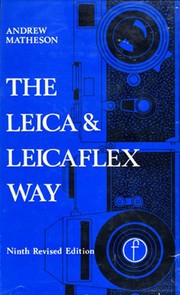
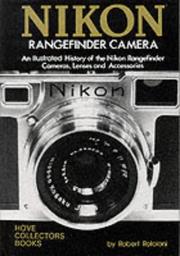
The Leica and Leicaflex way is Andrew Matheson's operating manual for the system, closer to a handbook than a catalogue, and it teaches you what Leica bodies and lenses actually do rather than just what they are worth. Robert Rotoloni's The Nikon rangefinder camera is the reference work on the pre-F Nikon system, the book collectors cite when arguing about variants and production runs. Peter Dechert's Canon rangefinder cameras, 1933-68 covers the Japanese maker that spent three decades chasing Leica, and it is the standard text on a system that is still comparatively affordable.
For the German side, the Zeiss Ikon compendium East and West handles the messiest story in camera history: a company split by the postwar division of Germany, producing overlapping names on both sides of the border. Marc James Small's compendium is where you go when a Contax turns up and you need to know which Contax.
Learn to use what you buy
A collection you never shoot is a shelf. Film Is not dead is Jonathan Canlas's argument for actually loading film, with practical guidance on stocks, metering habits and getting usable results without a digital safety net. Then Ansel Adams's The negative gives you the exposure and development theory underneath — the zone system, tonal placement, and why the negative is the decision point. It is old, technical and still the clearest explanation of the relationship between what you meter and what you get.
The generalist and the price guide
Ivor Matanle's Collecting and using classic cameras is the book most people should read first: it surveys the field, tells you which classic cameras are genuinely usable, and is candid about which famous names are a nuisance to live with. Read it before you commit to a marque, not after.
Finally, McKeown's Price Guide to Antique & Classic Cameras is the pricing reference — thousands of models with condition-graded values. Treat it as a relative-value map, not a live price feed: the edition on this path is from the mid-1990s, and the market has moved a great deal since, especially for film-usable bodies. What it still tells you accurately is which models are common and which are genuinely scarce, and that ratio changes far more slowly than the dollar figure.
Buy a clean, cheap, working example of one system, shoot a few rolls, and read the monograph for that system properly. Then widen out. If you want to build your own list of variants and references as you go, the list builder is a reasonable place to keep it. Follow the full path to read these in a sequence that will not leave you overpaying for a body with a stiff shutter.
Follow the full ordered path here: Vintage Camera Collecting: The Best Books to Read First.
Ready to learn something deeply?
Build a reading path — free