Best Books on Lacrosse, in Reading Order
This curriculum takes a beginner from the cultural and historical roots of lacrosse through the technical fundamentals of stick work, into team offensive and defensive systems, and finally into the strategic mind of a coach. Each stage builds the vocabulary, context, and skill understanding needed to absorb the next, creating a well-rounded and deeply informed lacrosse education.
Roots & Origins
BeginnerUnderstand where lacrosse comes from — its Indigenous creators, its spiritual and cultural meaning, and how it evolved into the modern game — providing essential context before touching a stick.
▸ Study plan for this stage
Pace: 2–3 weeks, ~40–50 pages/day. "Creator's Game" is approximately 300–350 pages; reading at this pace allows time for reflection, note-taking, and engagement with Downey's detailed historical and cultural arguments.
- Lacrosse as a sacred game created by Indigenous peoples (primarily Haudenosaunee/Iroquois Confederacy) with spiritual and ceremonial significance, not merely a sport
- The role of lacrosse in Indigenous diplomacy, conflict resolution, and nation-building before European contact
- How colonization, forced assimilation, and government policies nearly destroyed the game and its cultural meaning
- The evolution from traditional Indigenous lacrosse (varied rules, large-scale games, spiritual context) to the codified modern sport (standardized rules, smaller fields, secular focus)
- Key figures and communities who preserved and revitalized lacrosse during periods of suppression
- The distinction between lacrosse as played by Indigenous nations today versus the sport adopted and commercialized by non-Indigenous populations
- How understanding lacrosse's origins is essential to respecting the game and its creators
- What spiritual and cultural purposes did lacrosse serve in Indigenous societies before European contact?
- How did colonization and government policies threaten the survival of lacrosse, and which communities resisted these pressures?
- What are the major differences between traditional Indigenous lacrosse and the modern codified sport?
- Who were key figures in preserving and revitalizing lacrosse within Indigenous communities?
- How did non-Indigenous adoption of lacrosse change the game's rules, structure, and cultural meaning?
- Why is understanding lacrosse's Indigenous origins important to playing and appreciating the game today?
- Create a timeline mapping lacrosse's evolution from pre-contact Indigenous practice through colonization to modern sport, noting key turning points and figures mentioned in Downey's work
- Write a 1–2 page reflection comparing what lacrosse meant to Indigenous nations (spiritually, diplomatically, socially) versus what it means in contemporary mainstream culture
- Research and document one specific Indigenous nation's relationship with lacrosse (e.g., Haudenosaunee, Mohawk, Onondaga) using Downey's framework, then find one contemporary example of that nation's lacrosse program or team
- Create an annotated map or visual showing the geographic distribution of lacrosse-playing Indigenous nations and how the game spread or was suppressed in different regions
- Interview or find recorded testimony from an Indigenous lacrosse player or elder about what the game means to their community, and analyze it through the lens of Downey's historical arguments
- Develop a 'myth vs. reality' chart debunking common misconceptions about lacrosse's origins and cultural significance based on Downey's evidence
Next up: With a grounded understanding of lacrosse's sacred origins and the historical forces that shaped it, you are now prepared to learn the technical fundamentals of the game—its rules, positions, and mechanics—while maintaining respect for its cultural roots and the communities who created it.

A rigorous, accessible history of lacrosse as a sacred Indigenous practice and tool of cultural survival. Reading this first grounds everything that follows in respect and proper context.
Fundamentals & Stick Work
BeginnerBuild core individual skills — cradling, passing, catching, shooting, and ground balls — so the learner has a concrete physical and conceptual foundation for team systems.
▸ Study plan for this stage
Pace: 4–5 weeks, ~20–25 pages/day, with 2–3 practice sessions per week
- Proper stick grip and hand positioning for control and power transfer
- Cradling mechanics: rhythm, wrist motion, and body positioning to protect the ball
- Catching technique: soft hands, eye contact with the ball, and follow-through
- Passing fundamentals: release point, arm angle, and accuracy at varying distances
- Shooting form: footwork, hip rotation, follow-through, and shot selection
- Ground ball technique: scooping mechanics, body positioning, and transition to cradling
- Stick work drills that build muscle memory and coordination under pressure
- What are the key hand positions in the grip, and how do they differ between cradling and shooting?
- Describe the cradling motion and explain why rhythm and wrist action are critical to ball security.
- What does 'soft hands' mean in catching, and why is it essential for receiving passes at game speed?
- How do footwork and hip rotation contribute to shot power and accuracy?
- What is the correct body position and scooping motion for ground balls, and why is the transition to cradling important?
- How do the fundamentals of passing (release, angle, distance) change based on game situation?
- Daily cradling drills: 10 minutes of stationary cradling, then cradling while walking/jogging to build rhythm and muscle memory
- Wall pass-and-catch: 15 minutes of passing against a wall at varying distances and angles to develop accuracy and hand-eye coordination
- Shooting form practice: 20 repetitions of shooting with focus on footwork, hip rotation, and follow-through; film yourself to check form
- Ground ball pickups: 10–15 ground ball repetitions with emphasis on proper scoop technique and immediate transition to cradling
- Catch-and-cradle sequences: Partner drills where you receive a pass, cradle for 3–5 seconds, then pass back—repeat 20 times
- Shooting accuracy challenge: Set targets (corners, high/low) and track successful shots out of 10 attempts from different spots
Next up: Mastery of these individual fundamentals—cradling, passing, catching, shooting, and ground balls—provides the technical foundation needed to understand and execute team systems, positioning, and game strategy in the next stage.
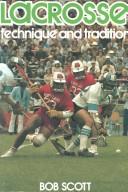
A classic, widely respected primer on individual lacrosse skills written by a legendary Johns Hopkins coach. Its clear, methodical breakdown of stick work makes it the ideal first technical read.
Coaching the Game
ExpertThink like a head coach — developing practice plans, building team culture, managing players, and integrating all systems into a coherent program philosophy.
▸ Study plan for this stage
Pace: 8–10 weeks, ~40–50 pages/day (mix of reading and note-taking on coaching frameworks)
- Gender-specific coaching approaches: adapting communication, motivation, and team dynamics for female athletes
- Practice design and periodization: structuring drills, skill progressions, and conditioning cycles aligned with competitive seasons
- Box lacrosse systems and tactics: transition play, fast-break execution, defensive pressure, and spatial awareness in confined spaces
- Player development pathways: identifying talent, assigning positions, managing playing time, and building depth across all levels
- Team culture and leadership: establishing team values, managing conflict, building trust, and creating accountability structures
- Program philosophy integration: aligning recruiting, training, game strategy, and player management into a coherent coaching vision
- In-game management: reading opponents, adjusting tactics mid-game, and making substitution/timeout decisions under pressure
- What are the key differences in coaching female lacrosse players versus male players, and how should your communication and motivation strategies adapt accordingly?
- How do you structure a weekly practice plan that balances skill development, tactical work, conditioning, and team culture building?
- What are the core principles of box lacrosse transition play, and how do you drill these principles so they become automatic in games?
- How do you identify player strengths, assign positions strategically, and manage playing time in a way that develops talent while maintaining team chemistry?
- What does a coherent program philosophy look like, and how do you ensure your recruiting, practice design, and game strategy all reinforce it?
- How do you build and maintain team culture under pressure, especially when managing difficult personalities or performance slumps?
- Design a 2-week practice plan for a women's lacrosse team in pre-season, incorporating skill work, tactical concepts, conditioning, and team-building activities; annotate each session with your coaching rationale
- Create a box lacrosse transition drill sequence (3–4 progressions) that teaches fast-break execution and decision-making; run it with a team or training group and document what works and what needs adjustment
- Write a 1–2 page coaching philosophy statement that articulates your values, approach to player development, and how you'll build culture; cross-reference it with specific practices from Tucker and Hinkson
- Analyze a game film (your own team or a recorded match) and create a scouting report identifying opponent tendencies, then design 3–4 defensive adjustments and practice drills to counter them
- Conduct a player evaluation exercise: assess 8–10 athletes across multiple dimensions (skill, athleticism, coachability, leadership), assign positions, and justify your decisions in writing
- Lead a team meeting or small-group session focused on culture-building (conflict resolution, goal-setting, or accountability); reflect on what worked and how you'd refine your approach next time
Next up: This stage equips you with the integrated coaching toolkit—from gender-aware communication to box lacrosse tactics to culture management—preparing you to lead a complete program; the next stage will likely focus on advanced competitive strategy, recruiting and retention, or scaling your program across multiple levels.

A practical, well-structured guide to coaching at every level, covering practice design, player development, and game management. Synthesizes the technical and tactical knowledge built in prior stages into a coaching framework.

Box lacrosse is the crucible where many elite players and coaches sharpen their craft. Reading this last expands the learner's tactical imagination by showing how the confined box game — with its Indigenous Canadian roots — pushes stick skills and offensive creativity to their limits.
Discussion
Keep reading
Paths that share books, cover the same subject, or open a related topic.