You cannot understand what a vaccine does until you have some picture of what an immune system is, and most reading on this subject skips straight to the controversy. That is why people come away able to argue about vaccines without being able to explain one. The order below spends its first stage on the biology, and everything afterwards is easier for it.
A plain note before the list: these are books about science, history and public policy. None of them is medical advice, none of them can tell you what is appropriate for a particular person, and decisions about immunisation belong with a qualified clinician who knows the individual case. That said once, without hedging everything that follows.
How immunity works
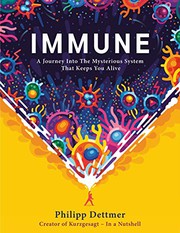
Immune by Philipp Dettmer is the best popular explanation of the immune system in print — heavily illustrated, genuinely accurate, and written by someone whose whole craft is making complicated systems legible. Start here even if you have a science background. An Elegant Defense : The Extraordinary New Science of the Immune System by Matt Richtel does the same territory through four patients' stories, and covers autoimmunity and immunotherapy, which the first book treats more lightly.
What vaccines actually did
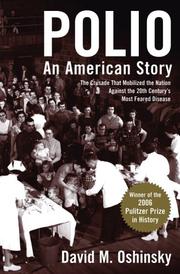
Polio by David M. Oshinsky is the outstanding history in this path: the American epidemic, the race between Salk and Sabin, and the institutional mess around both. It won a Pulitzer and it earns it. Vaccinated by Paul A. Offit is the biography of Maurice Hilleman, who developed more of the vaccines in routine use than anyone else and is largely unknown outside the field.
The vaccine race by Meredith Wadman is the harder book and the more interesting one — the development of the WI-38 cell line, the rubella vaccine, and the unresolved ethical questions about the fetal tissue it came from and about the researchers' conduct. It does not tidy any of that up. Vaxxers by Sarah Gilbert is the insider account of the Oxford coronavirus vaccine, written by one of its developers, so read it as a participant's account rather than an independent assessment.
Pox by Michael Willrich goes back to the American smallpox outbreaks at the turn of the twentieth century and the compulsory vaccination campaigns that followed, including the resistance to them and the litigation that reached the Supreme Court. It is the historical answer to the assumption that vaccine refusal is a modern phenomenon.
Hesitancy, trust and the argument
Deadly Choices by Paul A. Offit is the direct account of the anti-vaccination movement, written by an immunologist who has been a target of it; our catalogue records his name in inverted form on this title, which is a quirk of the record rather than a second author. The panic virus by Seth Mnookin reconstructs how the claim of a link between the MMR vaccine and autism spread. On the underlying fact there is no live scientific dispute: the 1998 paper was retracted by the journal, its lead author was struck off the UK medical register, and the association has not been found in the large studies since.
On immunity by Eula Biss is something else entirely — an essay by a writer thinking through her own fears as a new parent, drawing on metaphor and cultural history rather than data. Some readers find it the most persuasive book in the path precisely because it does not argue. Stuck by Heidi J. Larson approaches hesitancy as a problem of trust and rumour rather than of ignorance, which is where the research has moved.
The professional reference
Vaccines, the Plotkin volume, is the field's standard textbook. It is enormous, expensive, and intended for clinicians and researchers. It is listed here for completeness rather than as an expectation; most readers should stop before it and lose nothing.
Read in this order you get the biology, then the history, then the sociology of refusal — which is the order in which the subject actually makes sense. The full path has the study plan for each stage.
Follow the full ordered path here: Vaccines and Immunization: The Best Books to Read, in Order.