Polio: The Best Books on the Epidemic and the Vaccine, in Order
Polio is one of the few diseases whose whole arc can be read in books: the summer epidemics that emptied American swimming pools, the crash programme that produced two rival vaccines and a bitter feud between the men who made them, the manufacturing disaster that killed children and rewrote drug regulation, and a global eradication campaign that has spent decades stuck a few hundred cases short of zero. This path is history and public health, not medical advice, and it deliberately reads the disaster and the dissent alongside the triumph. It moves from what the epidemics felt like, to how the vaccines were made and tested, to what survivors lived with afterwards, and finally to why the last mile of eradication has proved so much harder than the first.
What the Epidemics Were Like
BeginnerUnderstand what polio actually did to American communities in the first half of the twentieth century, and why it produced a level of public fear out of proportion to its case numbers.
▸ Study plan for this stage
Pace: Three to four weeks for roughly 1,060 pages. Oshinsky's Polio (368 pages) is the anchor and deserves two weeks at 30-40 pages a sitting, because it is doing double duty as narrative and as the reference frame for everything later. Gould's A Summer Plague (375 pages) reads faster because much of it i
- Polio was never a large killer by the standards of the diseases it displaced, and the fear it produced was out of proportion to its case numbers. Oshinsky's explanation of that gap — it struck children, in summer, unpredictably, in the cleanest neighbourhoods — is the single idea the rest of the pat
- Paralytic polio is the minority outcome of a common infection. Improved sanitation delayed first exposure past the age when maternal antibodies protected infants, which is why an epidemic disease of the twentieth century emerged in the countries with the best plumbing.
- The March of Dimes as an institutional invention: a charity that raised money from very small donations at enormous scale, funded research directly rather than through government, and in doing so created the model of disease-specific philanthropy that Oshinsky treats as one of polio's real legacies.
- Franklin Roosevelt's role is structural rather than sentimental — his patronage, Warm Springs, and the deliberate management of his own visible disability shaped both the funding and the public image of the disease.
- The iron lung is the era's defining object and the one most misunderstood. Black's account shows it as a domestic and financial fact for a family, not a hospital curiosity: what it cost, who operated it, and what it meant that a mother lived inside one.
- Gould's comparative frame matters because polio was not an American disease. Britain and Australia had their own epidemics, their own institutions and, as later stages show, their own therapeutic quarrels.
- Survivor testimony and institutional history answer different questions, and the two books here are chosen to make the difference visible: Oshinsky can tell you why a field trial happened, and only Gould's interviewees can tell you what a ward sounded like.
- Why did polio become epidemic in wealthy, sanitary countries rather than poor ones, and what does that reverse relationship do to the intuition that infectious disease is a problem of dirt?
- Oshinsky argues the public fear of polio outran its statistics. What produced that fear, and which of those factors were features of the disease and which were features of how it was publicised?
- What did the March of Dimes actually change about how medical research got funded in the United States, and why did that model prove so hard for other diseases to copy?
- After Gould and Black, describe what happened to a family in the year following a child's or parent's diagnosis — hospitalisation, rehabilitation, cost, and what came home with them.
- Where do Oshinsky and Gould disagree in emphasis, and how much of that is a difference between an American and a transatlantic vantage point?
- While reading Oshinsky, keep a running timeline of the epidemic years, the institutional milestones and the research milestones in three parallel columns. You will use it in every later stage, and the gaps between the columns are the argument of the book.
- List the specific public behaviours the epidemics produced — pool closures, quarantines, cancelled schooling, travel restrictions — and note for each whether the evidence available at the time supported it.
- Write a one-page account of the same 1950s epidemic year twice: once from Oshinsky's institutional vantage point, once from a survivor account in Gould. The difference in what counts as an event is the point.
- From Black, itemise the practical demands an iron lung placed on a household — space, electricity, nursing, money, and who did the work. Compare it to what the historical accounts say about hospital provision.
Next up: With the disease and the fear established, the next stage can treat the vaccine race as what it was — an emergency response to the pressure you have just spent three books feeling.
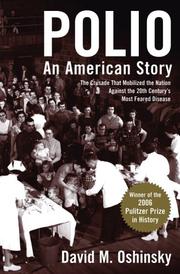
The Pulitzer-winning single-volume history and the right first book: the epidemics, the March of Dimes, Salk and Sabin, all in one narrative. Open Library files it under the bare title Polio, so the record you land on will show that shorter form.
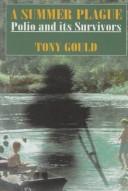
Read second because it does the thing Oshinsky's institutional narrative cannot: it hands large stretches of the story to survivors in their own words, and it takes in Britain and Australia rather than only the United States.
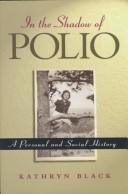
A memoir of a mother paralysed in the 1954 epidemic, written by her daughter, and the shortest route to what an iron lung meant for a household rather than for a hospital ward. Placed here so the human scale is fixed before the science starts.
Making the Vaccine
BeginnerFollow the killed-virus and live-virus programmes from laboratory to mass field trial, and understand the Salk-Sabin rivalry as a genuine scientific disagreement rather than only a personality clash.
▸ Study plan for this stage
Pace: Three weeks for about 1,035 pages. Kluger's Splendid Solution (384 pages) and Smith's Patenting the Sun (413 pages) are narrative and move quickly; a week each is comfortable. Offit's The Cutter Incident (238 pages) is shorter but denser, mixing science, law and regulation — give it a week and read
- The killed-virus and live-virus approaches were a genuine scientific disagreement, not just a feud. Salk's inactivated vaccine was safer to manufacture in principle and required boosters; Sabin's attenuated oral vaccine gave gut immunity and spread protection through contacts, at the cost of a rare
- The 1954 field trial is the methodological centre of this stage: roughly two million children, a placebo-controlled design in some areas and an observed-control design in others, and the parental consent problem that came with asking families to enrol a child in a study of a paralytic disease.
- Smith's real subject is infrastructure — the recruitment, the record-keeping, the manufacturing scale-up and the funding — which is why the trial is legible as an organisational achievement as much as a scientific one.
- The Cutter incident: batches from one manufacturer contained live virus, children were paralysed and killed, and the cause lay in the gap between a laboratory protocol and industrial production under time pressure.
- Cutter reshaped American vaccine liability law by establishing a route to manufacturer liability without proof of negligence, which changed the economics of vaccine production for decades afterwards.
- Author standpoint is load-bearing in this stage. Kluger writes sympathetically about Salk, and knowing that lets you read his account against Oshinsky's more even-handed one. Offit is a paediatrician and vaccine developer who argues the liability consequences swung too far; that is a position within
- Manufacturing is the recurring lesson: the science of a vaccine and the industrial reproduction of it are different problems, and most of this stage's drama sits in the second.
- State the case for the killed-virus vaccine and the case for the live-virus vaccine in their strongest forms, using only what the books give you. Which advantages turned out to matter most, and in which settings?
- How was the 1954 field trial designed, why did it use two different control arrangements, and what would a modern trial do differently?
- What exactly went wrong at Cutter Laboratories — at the level of process, not blame — and which of those failures were specific to that firm and which were latent in the protocol everyone was using?
- Offit argues that the legal aftermath of Cutter overcorrected. What is his evidence, what would count as evidence against him, and where does his professional position sit in relation to the claim?
- Kluger is sympathetic to Salk. Identify two places where you can see that sympathy shaping the narrative, and check them against Oshinsky's treatment of the same episode.
- Draw the production chain for the Salk vaccine from virus culture to sealed vial, and mark every point where the Cutter failure could have been caught. This is the fastest way to understand why the incident was a systems failure.
- Write a one-paragraph summary of the 1954 trial as a parent would have received it, then a second as a statistician would specify it. The distance between the two is the consent problem.
- Build a two-column comparison of the killed and live vaccines across manufacture, administration, duration of immunity, community effects and risk profile. Keep it — the eradication stage turns on the bottom row.
- Read the same week of the Salk-Sabin quarrel in Kluger and in Oshinsky and note every difference in emphasis, then decide which account you would cite and why.
Next up: You now know how the vaccine was made and what it cost to get wrong, which is the right preparation for the people who had already contracted polio and for whom no vaccine was ever going to help.
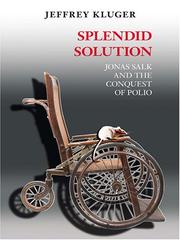
A journalist's close account of Jonas Salk and the killed-virus vaccine, sympathetic to Salk and best read knowing that — it is the pro-Salk telling of a story Oshinsky handles more even-handedly.
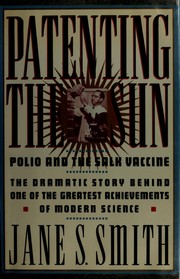
The book on the 1954 field trial itself: how you enrol nearly two million children, what a placebo control meant to parents, and how the March of Dimes turned a charity into a research funder. Read after Kluger, because it explains the machinery behind the story he tells.
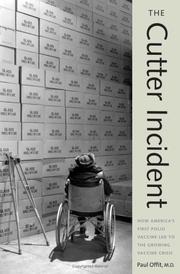
The 1955 batches from Cutter Laboratories that contained live virus, paralysed children and reshaped American vaccine liability law. Offit is a paediatrician and vaccine developer who argues the regulatory consequences went too far in one direction; that standpoint is worth holding in mind as you read.
Aftermath, Rehabilitation and Dissent
IntermediateSee polio from the point of view of the people who survived it, and understand the contested history of how paralysis was treated before a vaccine existed.
▸ Study plan for this stage
Pace: Three weeks. Wilson's Living with Polio (312 pages) is a synthesis of survivor accounts and reads steadily — a week to ten days. Rogers's Polio Wars is an academic monograph and the most demanding book in this stage; allow a week and a half and expect to slow down in the chapters on medical politics
- Rehabilitation was a contested medical practice, not a settled one. The orthodox regime of immobilisation and splinting was defended on anatomical grounds and challenged by Sister Elizabeth Kenny's hot packs and early movement — and Rogers shows the dispute was fought over professional authority as
- Rogers is broadly sympathetic to Kenny and critical of the medical establishment that resisted her. Hold that standpoint while you read, because the book is also usable as a case study in how a profession handles an outsider with clinical results and no credentials.
- Wilson's method is worth noticing in its own right: a historian who had polio himself assembles hundreds of first-person accounts into a history of the experience rather than of the disease. That is a different kind of evidence from the institutional record, with different strengths.
- The arc of a survivor's life had stages that the epidemic histories compress into a sentence: acute illness, the ward, months or years of rehabilitation, a return to a world with no accommodations, and post-polio syndrome decades later.
- Post-polio syndrome is the reason this stage is not merely retrospective. Survivors who had adapted successfully experienced new weakness and fatigue much later, and the medical system that had declared them cured was largely unprepared.
- Polio survivors were central to the early American disability rights movement, and Wilson's material lets you see why: a large cohort of people with acquired physical impairment, organised experience of institutions, and no intention of accepting exclusion.
- Roth's Nemesis is fiction and proves nothing. It is included because it captures the moral atmosphere of an epidemic without a vaccine — contagion, blame and the search for a carrier — better than the histories can, and because reading it after them makes the invention visible.
- What was actually at issue between Kenny and the orthodox rehabilitation establishment, and how much of the conflict was clinical evidence versus professional standing?
- Rogers is sympathetic to Kenny. Where in the book would a critic push back hardest, and what evidence would settle the therapeutic question either way?
- Using Wilson, describe the trajectory of a typical survivor across four decades. At which points did the medical system, the family and the state each carry the burden?
- Why did post-polio syndrome take so long to be recognised, and what does that delay reveal about how chronic sequelae of infectious disease get studied?
- Roth's protagonist cannot establish whether he is a carrier. What does the novel show about epidemic guilt that the survivor testimony in Wilson and Gould does not?
- Summarise the Kenny controversy on one page as an evidence dispute, stripped of personalities, then add a second page on the professional and institutional interests involved. Both are true; the second is why it lasted.
- From Wilson, extract five survivor accounts that disagree with each other about rehabilitation and write out what each one establishes and what it cannot.
- Trace the line from polio survivor organising to disability rights claims, listing the specific demands — access, education, employment, independent living — and where they first appear in the material.
- After finishing Nemesis, write 300 words on which of its details are historically grounded and which are novelistic invention, checking against Oshinsky and Gould. Do this once, then stop; the exercise is about reading fiction as fiction.
Next up: Having seen what polio did to the people it did not kill, you are in a position to ask why a disease with two working vaccines is still not gone.

A historian who had polio himself assembles hundreds of survivor accounts into a history of the experience — diagnosis, the ward, rehabilitation, and post-polio syndrome decades later. The natural sequel to the first stage.

An academic history of Sister Elizabeth Kenny, the Australian nurse whose hot-pack and movement therapy challenged orthodox immobilisation. Rogers is broadly sympathetic to Kenny and critical of the medical establishment that fought her; read it as a case study in how professional authority handles an outsider.

A novel, included deliberately and last in this stage: a 1944 Newark epidemic through a playground director who cannot work out whether he is a carrier. Fiction, so it proves nothing, but it captures the moral atmosphere of an epidemic with no vaccine better than any history here.
The Unfinished Eradication
IntermediateUnderstand why a disease that vanished from wealthy countries in the 1960s is still not eradicated, and what the campaign's last decades reveal about global health delivery.
▸ Study plan for this stage
Pace: Four weeks for roughly 1,000 pages plus Offit. Abraham's Polio (252 pages) is the framework and takes under a week. Closser's Chasing Polio in Pakistan (232 pages) is ethnography and rewards slow reading — a week and a half, with time spent on the fieldwork chapters. Allen's Vaccine (523 pages) is t
- The Global Polio Eradication Initiative committed to a target date and has missed a series of them. Abraham's account explains why the last cases are structurally harder than the first: the campaign is fighting access, conflict and trust rather than biology.
- The oral vaccine's central trade-off is the whole story of the endgame. Its advantages — cheap, needle-free, transmissible protection — are why it made mass eradication feasible, and its rare reversion to a circulating vaccine-derived form is why the endgame requires switching away from it.
- Closser's finding is the sharpest thing on this path: the barrier in Pakistan is not ignorance. It is exhausted and underpaid health workers, target-driven metrics that reward reported coverage over actual immunity, and communities repeatedly asked to accept polio drops while lacking clean water and
- Vertical disease-specific campaigns and horizontal health-system building pull against each other. A campaign that can deliver drops to every child in a district and nothing else is a legible political achievement and a poor foundation.
- The two books titled Polio on this path are different books by different authors, and the catalogue displays them identically. Oshinsky's is the American history; Abraham's is the eradication account.
- Allen situates polio inside the longer history of vaccination from Jenner onward, which is what lets you see recurring patterns — resistance, compulsion, injury, compensation — rather than treating each controversy as unprecedented. He writes broadly in favour of vaccination while taking historical
- Offit's Deadly Choices is advocacy, not a survey of the debate. It is the most openly argumentative book on the path and is useful as evidence of how one prominent vaccine developer frames the opposition — which is itself part of why eradication campaigns lose public trust in some settings.
- Trust is the operative variable in the endgame, and it is built and lost locally. Read the Cutter chapter from stage two against Closser's fieldwork and the pattern is visible across seventy years and two continents.
- Why has eradication stalled a few hundred cases short of zero, and how many of the reasons are epidemiological rather than political or logistical?
- Explain circulating vaccine-derived poliovirus in a paragraph a non-specialist would follow, and then explain why it complicates the decision about when to stop using the oral vaccine.
- Closser argues the problem is not community ignorance. What is her evidence, and what would a critic who disagreed have to show?
- What does a target-driven metric do to the behaviour of a health worker under quota, and where in Closser's fieldwork can you see the effect directly?
- Offit writes as an advocate against the anti-vaccine movement. What does his book explain well, and which questions about public distrust does its framing make harder to ask?
- Compare the loss of public trust after Cutter with the refusals Closser documents. What is genuinely similar and what is a false parallel?
- Build a timeline of eradication target dates against actual case counts, and annotate each miss with the reason the campaign gave at the time.
- Write a one-page brief for a district health officer setting out the case for continuing polio-specific campaigning and the case for redirecting the same resources into general primary care. Do not resolve it.
- Take one refusal episode from Closser and rewrite it three times: as campaign reporting, as the household would describe it, and as Offit's framing would treat it. The gaps are the trust problem.
- List every actor in the eradication effort — international agencies, national governments, donors, local health workers, families — with what each one is measured on. Misaligned incentives become obvious immediately.
- Read Deadly Choices with a two-column note: claims supported by evidence presented in the book, and claims asserted as advocacy. Finish the path by comparing the two columns.
Next up: That closes the path: the epidemics, the vaccines, the survivors and the unfinished last mile — and the recurring lesson that the hard part of public health has usually been delivery and trust rather than discovery.

The best general account of the Global Polio Eradication Initiative — the decision to try, the oral vaccine's advantages and its rare vaccine-derived cases, and the repeated missed deadlines. Also filed under the bare title Polio, which is a different book from Oshinsky's despite the identical display name.

An anthropologist embedded with vaccination campaigns in Pakistan, and the sharpest available answer to why the last cases are the hardest: not ignorance, but exhausted health workers, target-driven metrics and communities asked for polio drops while lacking clean water.
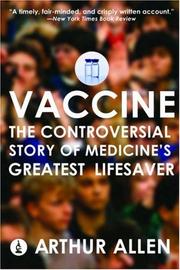
Steps back to the wider history of vaccination, from Jenner to the modern schedule, so polio sits in its context. Allen is a journalist writing broadly in favour of vaccination while taking historical injuries and controversies seriously.
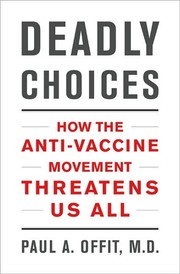
The most openly argumentative book on this path: Offit's account of the modern anti-vaccine movement, written as advocacy rather than neutral history. Read last, and read it as one side of a live public argument — it is useful for understanding how eradication campaigns lose public trust, not as a survey of the debate.
Discussion
Keep reading
Paths that share books, cover the same subject, or open a related topic.