The immune system, actually explained
This curriculum takes a beginner from intuitive, story-driven introductions to the immune system all the way through graduate-level immunology, building vocabulary and conceptual frameworks at each stage before adding mechanistic and clinical depth. Each stage assumes mastery of the previous one, so reading in order is essential — early books supply the mental models that make later, denser texts genuinely comprehensible rather than overwhelming.
Foundations — How the Body Fights Back
BeginnerBuild an intuitive, jargon-light mental model of what the immune system is, why it exists, and how its major players (cells, antibodies, inflammation) cooperate to defend the body.
▸ Study plan for this stage
Pace: 8–10 weeks total: Weeks 1–6 for "Immune" by Philipp Dettmer (~25–30 pages/day, 4–5 days/week — the book is richly illustrated so allow time to study visuals); Weeks 7–10 for "The Beautiful Cure" by Daniel M. Davis (~20–25 pages/day, 4–5 days/week — more narrative-driven, but pause to reflect on the
- The two-layer defense system: innate immunity (fast, non-specific first responders) vs. adaptive immunity (slow, precise, memory-forming specialists) — introduced vividly in 'Immune' and contextualized historically in 'The Beautiful Cure'.
- Self vs. non-self recognition: how immune cells distinguish the body's own healthy cells from pathogens or damaged tissue, and why getting this wrong causes autoimmunity or cancer escape.
- The cast of cellular characters: neutrophils, macrophages, dendritic cells, T cells (helper and killer), and B cells — their individual roles and how 'Immune' uses visual metaphor to make each memorable.
- Antibodies: what they are (Y-shaped proteins made by B cells), how they neutralize or tag threats, and the concept of antigen-antibody specificity.
- Inflammation as a coordinated alarm system — not just a symptom but a purposeful recruitment signal, as explained in 'Immune'; understanding when it helps and when it harms.
- The adaptive immune response timeline: antigen presentation by dendritic cells → T cell activation → B cell stimulation → antibody production → memory cell formation.
- Immunological memory: why a second exposure to the same pathogen is defeated faster, and how this principle underpins vaccination — a theme that bridges both books.
- The role of scientific curiosity and serendipity in discovering immune mechanisms, as narrated in 'The Beautiful Cure' through researchers like Ralph Steinman and others, showing that our understanding is still evolving.
- In your own words, what is the difference between the innate and adaptive immune systems, and why does the body need both rather than just one?
- Walk through what happens — step by step — from the moment a bacterium enters a cut in your skin to the moment it is destroyed. Which cells act first, and which arrive later?
- What is an antibody, how is it produced, and how does its shape relate to its function? Why can one antibody not neutralize every pathogen?
- Why is inflammation sometimes beneficial and sometimes dangerous? Give one example of each scenario drawn from 'Immune'.
- How does immunological memory work, and why does it mean you rarely get chickenpox twice? How does 'The Beautiful Cure' connect this concept to the history of vaccine development?
- 'The Beautiful Cure' argues that understanding the immune system required both lab science and unexpected human stories. Name one discovery from the book and explain how it changed our picture of immunity.
- Draw your own 'immune system map' from memory after finishing 'Immune': sketch the major cell types, label their roles, and draw arrows showing how they communicate. Compare it to Dettmer's illustrations and fill in gaps.
- Keep a two-column reading journal — one column for 'mechanisms' (what the immune system does) and one for 'why it matters' (disease, health, medicine). Update it after every reading session across both books.
- After finishing 'Immune', write a one-page plain-English explanation of the adaptive immune response as if writing to a curious 12-year-old. Use no jargon without immediately defining it.
- Pick one immune cell (e.g., the dendritic cell or the macrophage) and research one real disease where that cell malfunctions (e.g., dendritic cell dysfunction in some cancers). Write a short paragraph connecting what 'Immune' taught you to that real-world case.
- After finishing 'The Beautiful Cure', create a simple timeline of 4–5 key immune discoveries Davis describes, noting what question each discovery answered and what new question it opened up.
- Self-quiz: without looking at either book, answer all six 'questions' above in writing, then re-read the relevant sections to check and correct yourself. Highlight any concept that still feels fuzzy as a priority for the next stage.
Next up: By the end of this stage you will have a solid intuitive map of how healthy immunity works — making you ready to explore what happens when that system breaks down or is deliberately manipulated, whether through autoimmune disease, cancer immunotherapy, or advanced vaccine science.
A richly illustrated, narrative-first tour of the entire immune system written for complete beginners. Reading this first gives you a vivid mental map — characters, locations, and story arcs — that every subsequent book will deepen.
Tells the human story of how immunology became a modern science, introducing key discoveries (cytokines, T cells, checkpoints) through the scientists who made them. It adds historical context and 'why it matters' motivation right after Dettmer's overview.
Vaccines, Germs & the Immune Response in Practice
BeginnerUnderstand how pathogens exploit the body, how vaccines train immunity, and what happens when public-health and immune science intersect — translating foundation knowledge into real-world application.
▸ Study plan for this stage
Pace: 8–10 weeks total: ~5 weeks on "Spillover" (Quammen is dense with case studies — aim for ~25–30 pages/day, 5 days/week), followed by ~3–4 weeks on "On Immunity" (shorter and more essayistic — ~20–25 pages/day, 4–5 days/week). Reserve the final 3–4 days for cross-book reflection and exercises.
- Zoonotic spillover: how pathogens jump from animal reservoirs to humans (Quammen's central thesis), and why ecological disruption accelerates this
- The concept of the 'reservoir host' vs. the 'amplifier host' vs. the accidental human host — and why the distinction matters for outbreak control
- Viral evolution and adaptation: how pathogens like Ebola, SARS, Nipah, and HIV mutate and exploit host immune vulnerabilities to establish infection
- Herd immunity as a community-level shield: Biss unpacks the mathematical and ethical logic of why individual vaccination protects the most vulnerable who cannot be vaccinated
- Vaccine hesitancy as a cultural and historical phenomenon: Biss traces fears about vaccine ingredients, purity, and bodily autonomy through literature, mythology, and personal experience
- The immune system as a social contract: Biss's core metaphor — immunity is not purely personal but is shared, borrowed, and collectively maintained
- Public-health infrastructure and its fragility: both books show how surveillance gaps, political will, and public trust determine whether an outbreak becomes a pandemic
- Risk perception vs. actual risk: how cognitive biases (seen in both Quammen's outbreak communities and Biss's vaccine-hesitant parents) distort responses to infectious disease
- According to Quammen, what ecological and behavioral conditions make a zoonotic spillover event more likely, and which case studies in 'Spillover' best illustrate these conditions?
- How does Quammen use the stories of Ebola, Nipah, and SARS to show that the immune system alone is insufficient protection against novel pathogens — and what does that imply for public health?
- What is Biss's central argument about the relationship between individual vaccination decisions and community immunity, and how does she use the metaphor of 'immunity as a commons'?
- How does Biss connect historical and cultural anxieties (purity, contamination, bodily autonomy) to modern vaccine hesitancy, and do you find her argument persuasive?
- Taken together, what do both books suggest about the gap between how the immune system works in biology and how it is understood (or misunderstood) by the public?
- What responsibilities do Quammen and Biss each imply that individuals, scientists, and governments bear in preventing infectious disease — and where do their views align or diverge?
- Spillover case-study map: For 4–5 of Quammen's outbreak stories (e.g., Ebola, Nipah, SARS, HIV), create a one-page diagram for each showing: the reservoir host → transmission pathway → human immune response → public-health outcome. Note what broke down at each step.
- Vocabulary anchor list: As you read both books, maintain a running glossary of 20+ terms (zoonosis, R0, herd immunity threshold, antigen, adjuvant, etc.). For each term, write the textbook definition AND a one-sentence explanation in your own words using a scene or example from the book.
- Biss reflection journal: After every 2–3 chapters of 'On Immunity,' write a short paragraph (5–8 sentences) responding to this prompt: 'What fear or misconception is Biss addressing here, and what does immunological science actually say about it?' This forces you to connect her humanistic argument to the biology you've been building.
- Debate prep — two sides: Write a 1-page argument FOR and a 1-page argument AGAINST mandatory vaccination, drawing evidence exclusively from 'On Immunity' and 'Spillover.' Then write a short paragraph on which side you find more scientifically and ethically sound, and why.
- Outbreak timeline: Choose one pathogen from 'Spillover' and build a detailed timeline of its known spillover history, marking key moments where better immune knowledge or public-health action could have changed the outcome. Present it as an annotated infographic or structured outline.
- Cross-book synthesis essay (400–600 words): Answer the question — 'If Quammen and Biss were co-authoring a public-health pamphlet on why vaccines matter, what would their three main arguments be?' Use at least two specific passages or examples from each book.
Next up: By grounding immune science in real outbreaks (Quammen) and lived social experience (Biss), this stage equips the reader to move from 'how immunity works in principle' to asking deeper mechanistic questions — making the next stage's exploration of immunology at the cellular and molecular level feel urgent and personally relevant rather than abstract.
Grounds immune concepts in real outbreaks (Ebola, SARS, HIV), showing how pathogens evade or overwhelm defenses. Reading it here makes the 'enemy side' of immunity concrete before you study the mechanistic details.
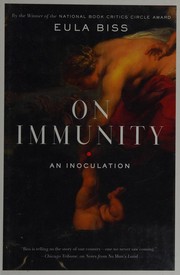
A thoughtful, evidence-based examination of vaccine hesitancy and the social meaning of herd immunity. It reinforces why vaccines work immunologically while adding the cultural dimension that pure science books omit.
Going Deeper — Cells, Signals & Disease
IntermediateGain a mechanistic understanding of innate vs. adaptive immunity, T and B cell biology, antibody diversity, and how immune dysfunction drives autoimmunity, allergies, and cancer.
▸ Study plan for this stage
Pace: 10–12 weeks total, reading ~25–35 pages per day on weekdays with weekends reserved for review and exercises. Suggested pacing: "The Compatibility Gene" — weeks 1–3 (~220 pages); "An Elegant Defense" — weeks 4–7 (~380 pages); "The Autoimmune Connection" — weeks 8–11 (~300 pages); week 12 is a full in
- MHC/HLA genes and their role in self vs. non-self recognition, as explored in Davis's 'The Compatibility Gene' — understanding why these molecules are the molecular passport of identity
- Innate immunity as the fast, non-specific first line of defense vs. adaptive immunity as the slow, precise, memory-forming second line — a distinction woven throughout Richtel's 'An Elegant Defense'
- T cell biology: how T cells are educated in the thymus, the difference between cytotoxic (CD8+) and helper (CD4+) T cells, and how they are activated by antigen-presenting cells displaying MHC-bound peptides (Davis & Richtel)
- B cell biology and antibody diversity: V(D)J recombination, somatic hypermutation, and affinity maturation as mechanisms for generating a near-infinite antibody repertoire (Richtel)
- The concept of immune tolerance — central and peripheral — and what happens when it breaks down, setting the stage for Baron-Faust's 'The Autoimmune Connection'
- Autoimmunity as misdirected adaptive immunity: how molecular mimicry, loss of regulatory T cells, and genetic HLA risk factors (from Davis) converge to produce diseases like lupus, MS, rheumatoid arthritis, and thyroid disorders (Baron-Faust)
- Allergies and hypersensitivity: the role of IgE antibodies, mast cells, and the Th2 immune skew in allergic disease, as contextualized in Baron-Faust
- Cancer immunology and immune evasion: how tumors exploit immune checkpoints and suppress T cell activity, and the emerging logic of immunotherapy (Richtel's later chapters)
- After reading 'The Compatibility Gene,' can you explain in plain language why HLA genes are the most variable in the human genome, and what evolutionary pressure drives that diversity?
- Using the narrative of 'An Elegant Defense,' trace the journey of a pathogen from first contact with innate immune sentinels through to the activation of a specific adaptive immune response — who are the key cellular 'characters' at each step?
- How does V(D)J recombination (covered in Richtel) allow a finite genome to encode a virtually unlimited antibody repertoire, and what is the role of somatic hypermutation after an immune response begins?
- Drawing on both Davis and Baron-Faust, explain at least two ways in which HLA/MHC genetics increase an individual's risk for a specific autoimmune disease.
- From 'The Autoimmune Connection,' compare and contrast the immune mechanisms underlying at least two different autoimmune conditions (e.g., Type 1 diabetes vs. multiple sclerosis) — what do they share and where do they diverge?
- How does Richtel's account of immune checkpoint inhibitors illustrate the double-edged nature of immune regulation — and why can cancer immunotherapy sometimes trigger autoimmune-like side effects?
- Concept-mapping session after each book: draw a hand-written diagram linking the key cell types (dendritic cells, T cells, B cells, NK cells, macrophages) with arrows showing how they communicate via cytokines and direct contact. Revise and expand the map with each new book.
- HLA self-quiz: after finishing 'The Compatibility Gene,' look up your own ancestry's most common HLA alleles and research which autoimmune diseases they are associated with — then write a one-page reflection connecting Davis's argument to your findings.
- Patient case studies from 'The Autoimmune Connection': for each major disease chapter (lupus, MS, RA, thyroid), write a 150-word mechanistic summary explaining the disease using the cellular vocabulary built from Davis and Richtel.
- Teach-back exercise: after finishing 'An Elegant Defense,' explain the innate vs. adaptive immunity distinction out loud (or in writing) to a friend or in a personal journal, using only analogies — no jargon. Then translate each analogy back into the correct scientific term.
- Antibody diversity worksheet: sketch the V, D, and J gene segment recombination process from memory, label the CDR3 region, and write a short explanation of why this region is the primary determinant of antigen specificity.
- Comparative disease table: create a reference table with columns for Disease, Immune Cell/Molecule Gone Wrong, HLA Risk Gene (if known), Target Tissue, and Key Symptom — populate it with at least six conditions drawn from all three books.
Next up: By mastering the cellular mechanics of immune activation, tolerance, and dysfunction across these three books, the reader has built the conceptual scaffolding needed to engage with more specialized or clinical literature — such as immunotherapy, vaccinology, or microbiome-immune interactions — at the advanced stage.

Focuses on MHC/HLA molecules — the molecular passport system that lets immune cells tell self from non-self. This is the conceptual bridge between beginner overviews and true mechanistic immunology, and Davis writes it accessibly.

Follows four real patients whose immune systems are either under-active (cancer, HIV) or over-active (autoimmunity, allergy), weaving in the science of immune checkpoints and immunotherapy. It makes intermediate mechanisms emotionally resonant and clinically real.
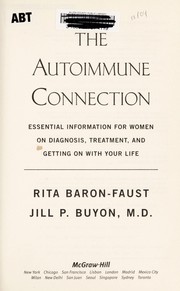
A condition-by-condition guide to autoimmune diseases (lupus, MS, rheumatoid arthritis) that consolidates your understanding of immune dysregulation and prepares you for the clinical and research literature ahead.
Advanced Science — Textbook Immunology
ExpertMaster the molecular and cellular mechanisms of immunity at a level equivalent to an undergraduate or early graduate immunology course, including signal transduction, clonal selection, complement, and immunological memory.
▸ Study plan for this stage
Pace: 14–16 weeks total. Week 1–2: Read "How the Immune System Works" cover-to-cover (~30–40 pages/day) as a conceptual primer — treat it as an active preview, not light reading. Weeks 3–16: Work through "Immunobiology" by Janeway at ~25–35 pages/day, spending roughly one week per major unit (innate immun
- Clonal selection theory and the generation of lymphocyte diversity via V(D)J recombination (Janeway Ch. 3–5; Sompayrac Lecture 5–6)
- Pattern recognition and innate immunity: Toll-like receptors, NLRs, the inflammasome, and cytokine cascades (Janeway Ch. 2; Sompayrac Lecture 2)
- Antigen processing and presentation: MHC class I (cross-presentation) and class II pathways, peptide loading, and the role of professional APCs (Janeway Ch. 6; Sompayrac Lecture 3)
- T-cell activation and signal transduction: TCR complex, ZAP-70, co-stimulation via CD28/B7, NFAT/NF-κB/AP-1 transcription factor activation, and anergy (Janeway Ch. 7–8)
- Helper T-cell subset differentiation: Th1, Th2, Th17, Treg lineages, master transcription factors (T-bet, GATA-3, RORγt, FoxP3), and cytokine environments (Janeway Ch. 9; Sompayrac Lecture 8)
- B-cell activation, germinal center reactions, somatic hypermutation, affinity maturation, and class-switch recombination (Janeway Ch. 10; Sompayrac Lecture 7)
- The complement system: classical, lectin, and alternative pathways; C3 convertase assembly; membrane attack complex; opsonization and inflammation (Janeway Ch. 2; Sompayrac Lecture 4)
- Immunological memory: long-lived plasma cells, memory T and B cells, homeostatic proliferation, and the cellular basis of vaccine-induced protection (Janeway Ch. 11; Sompayrac Lecture 11)
- Trace the complete journey of a naive CD8⁺ T cell from first encounter with a dendritic cell presenting a viral peptide on MHC I through clonal expansion, effector killing, contraction, and establishment of memory — citing the molecular checkpoints at each step as described in Janeway.
- Compare and contrast the three complement activation pathways: what triggers each, where do they converge, and what are the downstream effector outcomes? Use the pathway diagrams in Janeway to reconstruct this from memory.
- Sompayrac uses the analogy of 'players on a team' to simplify immune cell roles. After reading Janeway, how would you extend or correct that analogy to account for the molecular complexity of co-stimulation and T-cell anergy?
- Explain how somatic hypermutation and affinity maturation in the germinal center produce high-affinity antibodies, and describe the signals (T follicular helper cells, CD40L–CD40, cytokines) that drive this process according to Janeway.
- What distinguishes central tolerance from peripheral tolerance? Describe at least two mechanisms of each (e.g., clonal deletion in the thymus, Treg suppression, anergy) and explain why both layers are necessary.
- How does the cytokine milieu during initial antigen presentation determine whether a naive CD4⁺ T cell differentiates into a Th1, Th2, or Th17 cell, and what are the functional consequences of each fate for the type of pathogen being fought?
- Concept-mapping sessions (weekly): After finishing each major Janeway chapter, draw a hand-written molecular pathway map (e.g., TCR signaling → transcription factors → cytokine genes) without looking at the book, then compare it to the figures in Janeway and annotate gaps in red. Repeat until the map is complete from memory.
- Sompayrac-to-Janeway translation drill: For each of Sompayrac's 'big picture' lectures, write a one-page technical expansion using Janeway as the source — forcing you to connect the intuitive narrative to precise molecular vocabulary (e.g., expand 'the innate system sounds the alarm' into a full TLR → MyD88 → NF-κB signaling cascade).
- Self-quizzing with Janeway's review questions: At the end of each Janeway chapter, answer every end-of-chapter question in writing before checking the answers. Keep a running 'error log' of questions missed more than once and review them weekly.
- Pathway reconstruction from scratch: Pick five core pathways (complement cascade, V(D)J recombination, MHC I antigen presentation, germinal center reaction, and NK cell activation) and, using only a blank sheet of paper, reconstruct the full molecular diagram from memory once per week until you can do all five in a single sitting without errors.
- Case-study application: Find 3–5 published clinical case reports of primary immunodeficiency diseases (e.g., SCID, X-linked agammaglobulinemia, C3 deficiency) and use Janeway's mechanistic descriptions to write a one-paragraph explanation of why each specific molecular defect produces the observed clinical phenotype.
- Teach-back sessions: After completing each major Janeway unit, explain the core mechanism out loud (recorded voice memo or to a study partner) at the level of Sompayrac — no jargon without definition. Review the recording to identify any steps you glossed over or explained incorrectly, then return to Janeway to fill the gap.
Next up: Mastering the molecular and cellular framework in Sompayrac and Janeway equips the reader with the mechanistic vocabulary and conceptual scaffolding needed to engage critically with primary research literature, clinical immunology, or specialized topics such as tumor immunology and autoimmunity in any subsequent advanced stage.
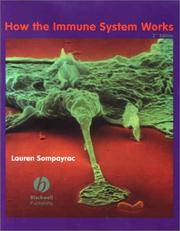
The single best bridge to textbook immunology — short, witty, and ruthlessly clear. Reading this before the full Janeway text prevents the common experience of drowning in detail without a conceptual anchor.
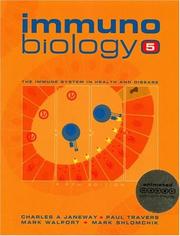
The canonical, comprehensive immunology textbook used in medical and graduate schools worldwide. With the prior stages complete, you now have the vocabulary and intuition to absorb its full mechanistic and molecular depth.
Discussion
Keep reading
Paths that share books, cover the same subject, or open a related topic.