Best Books on the Frankfurt School and Critical Theory, in Reading Order
The Frankfurt School is hard to enter cold because its central texts are deliberately difficult and were written in exile, in response to events the reader is assumed to know. This path therefore builds the history and the institutional story first, adds a clear analytic account of what critical theory is claiming, and only then opens the primary texts — Dialectic of Enlightenment, One-Dimensional Man, Minima Moralia — before following the tradition into its second and third generations.
The history first
IntermediateKnow who was in the Institute for Social Research, what forced them from Frankfurt to Manhattan and back, and what each of them was actually trying to explain.
▸ Study plan for this stage
Pace: Six weeks, but only two of these books are read cover to cover. Jeffries's Grand Hotel Abyss (388 pages) is a group biography and reads in two weeks. Jay's The Dialectical Imagination (382 pages) is scholarly but well organised, and covers 1923 to 1950 — allow three weeks. Wiggershaus's The Frankfur
- The Institute for Social Research as an institution — privately endowed by Felix Weil, formally attached to Frankfurt University, and financially independent enough to pursue Marxism without a party line
- The cast and who did what: Horkheimer as director and programme-setter, Adorno on music and philosophy, Marcuse on Freud and Hegel, Fromm on social psychology, Benjamin as the affiliated outsider, Pollock on political economy, Lowenthal on literature, Neumann and Kirchheimer on law and the state
- Horkheimer's 1931 inaugural address and the original interdisciplinary programme: philosophy setting the questions, empirical social research supplying the answers, in a permanent loop
- Exile as a formative condition — Geneva, then Columbia University in Manhattan, then Los Angeles — and the difference it makes that Dialectic of Enlightenment was written in California and Minima Moralia in the same exile
- The wartime empirical work, including the Studies in Prejudice series and The Authoritarian Personality, which is the School doing conventional social science and is often forgotten by readers who know only the philosophy
- The postwar split: Horkheimer and Adorno return to Frankfurt, Marcuse and Fromm stay in America, and the two branches develop very differently
- Jeffries's title, taken from Lukács's jibe that the School inhabited a grand hotel equipped with every comfort, on the edge of an abyss — the charge of radicalism without practice that follows the tradition throughout
- Jay wrote with the surviving members' cooperation and Jeffries did not. Note where that access helps Jay and where it might soften him
- What did Horkheimer's 1931 programme actually propose, and how far had the Institute drifted from it by the time of Dialectic of Enlightenment?
- Why did the Institute end up in New York rather than Moscow or Paris, and what did the American context do to its work?
- Adorno and Marcuse ended the 1960s on opposite sides of the student movement question. What was the disagreement, and what does each of Jay, Jeffries and Wiggershaus emphasise about it?
- The School was Marxist but had no relationship to any communist party. What made that position possible in Weimar Germany, and what did it cost them?
- Jay had the members' cooperation, Jeffries wrote forty years later with none of them alive. Where do their accounts of the same episode differ, and which difference is a matter of evidence rather than of tone?
- Build a single timeline from 1923 to 1970 with two tracks: institutional events (founding, exile, return) and publications. Every primary text in stages three to five should sit on it, and the geography beside each date matters.
- Draw the cast as a diagram with each member's discipline and their main contribution. Keep it beside you for the rest of the path — the primary texts assume you know who is arguing with whom.
- Write 300 words on the 1931 programme in Horkheimer's own terms, then a paragraph on which parts of it the School abandoned. This is the question the whole tradition circles.
- Look up the same episode — the 1969 lecture-hall confrontation involving Adorno — in all three books and write a page on how the three accounts differ. It is the cleanest available test of how each historian works.
Next up: With the people and the institution in view, the next stage supplies the thing the histories cannot: a precise statement of what a theory has to do to count as critical rather than merely descriptive.
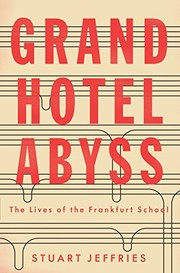
The most enjoyable way in: a group biography that takes the ideas seriously while keeping the people in view. Read it first and the primary texts stop feeling anonymous.
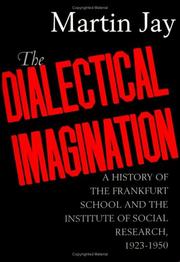
The founding scholarly history of the Institute from 1923 to 1950, written with the surviving members' cooperation. Still the standard reference for what the School's programme was meant to be.
The exhaustive institutional history, running past Jay's endpoint into the postwar decades and the student movement. Use it as the reference work you return to rather than a straight-through read.
What critical theory is claiming
IntermediateBe able to state precisely what makes a theory critical rather than merely descriptive, and why that claim is philosophically contentious.
▸ Study plan for this stage
Pace: Four weeks. Geuss's The Idea of a Critical Theory is 100 pages and should be read twice — once straight through in a sitting, then again slowly with notes. It is analytic philosophy about a continental tradition, which is exactly why it is useful here. Fromm's Escape from Freedom is 305 pages of cle
- The three kinds of theory Geuss distinguishes — scientific, hermeneutic and critical — and the specific claim that a critical theory is both explanatory and emancipatory in a single move
- Ideology in the pejorative sense: beliefs that are false, that serve a dominant interest, and that are held for reasons the holder cannot acknowledge. Geuss separates these three conditions carefully and most casual uses of the word run them together
- Self-reflection as the criterion of confirmation — a critical theory is validated when its addressees recognise themselves in it and are freed by that recognition, which is a very strange standard and Geuss says so
- The problem of standpoint: how a theory produced inside an ideological society claims a vantage point outside it. This objection recurs at every stage of the path and is never fully answered
- Fromm's central thesis: modern freedom from traditional bonds produces an isolation people will trade away, so authoritarianism is chosen rather than merely imposed
- The character-structure concept — sadomasochistic, destructive and automaton-conformist orientations — as Fromm's attempt to make the Freud-Marx fusion do explanatory work on a specific historical event
- Why Fromm was the clearest application of the original programme and also the member Adorno and Horkheimer came to regard as too accommodating to therapy and to America
- State Geuss's three conditions for a belief being ideological in the pejorative sense. Can a true belief be ideological on his account, and if so how?
- How can a critical theory be confirmed? Set out Geuss's answer and the strongest objection to it, and be honest that he does not think the objection is settled.
- What does Fromm claim people are escaping from, and what is the psychological mechanism by which they escape into submission?
- Fromm is explaining Nazism with a theory that also purports to explain modern conformity generally. Is that breadth a strength or a sign the theory is unfalsifiable?
- Geuss writes in an analytic idiom about thinkers who despised it. Does anything essential get lost in that translation, or does it mainly lose obscurity?
- Reduce Geuss's account of ideology critique to a numbered chain of premises and a conclusion. This is the single most useful page of notes you will make in this path — keep it and check every later text against it.
- Take a belief widely held in your own society and test it against Geuss's three conditions in writing. Where you find you cannot establish condition three, you have found the tradition's hardest problem yourself.
- Summarise Escape from Freedom's argument in 250 words with no Freudian vocabulary at all. If it survives the translation, the argument is doing real work; if it collapses, that tells you something too.
- Write a paragraph identifying which of Geuss's three theory types Fromm's book actually is. Arguing the case either way is more instructive than the answer.
Next up: Armed with a precise definition of the critical claim and one clean example of it working, you can now open the texts that are famously impenetrable — and read them as arguments rather than as atmosphere.
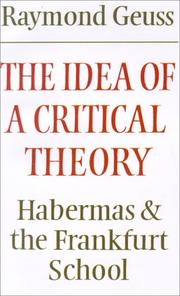
A short analytic reconstruction of the concept of ideology critique and the notion of a self-reflective theory. It is the single most useful hundred pages you can read before opening Adorno.
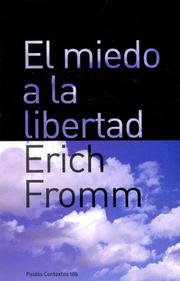
Fromm's 1941 attempt to explain why people submit to authoritarianism, fusing Freud with Marx as the early Institute programme intended. The clearest example of the method actually being applied to a problem.
The core texts
BeginnerRead the School's central works directly and follow the argument that Enlightenment reason turns into domination.
▸ Study plan for this stage
Pace: Ten to twelve weeks. These are 780 pages that cannot be read at reading speed. Dialectic of Enlightenment (258 pages) should take a month: start with the Culture Industry chapter and the Odysseus excursus, then go back to the opening 'Concept of Enlightenment' essay, which is the hardest thing in th
- The central thesis of Dialectic of Enlightenment: that reason aimed at mastering nature turns on human beings and becomes domination, so Enlightenment reverts to myth — argued as a dialectic, not as a simple decline story
- The Odysseus excursus as the argument in miniature: the self is constituted by renunciation, and the mast and the wax are the price of subjectivity
- The culture industry, and the precision of the term — not 'mass culture' arising from below but an industrial production of standardised leisure, in which the promise of pleasure is perpetually deferred
- Pseudo-individuation: the industry supplying difference as a product feature while the underlying form is identical, which is the most durable and most testable claim in the book
- Marcuse's one-dimensionality: a society that satisfies enough material needs to absorb its own opposition, so critique loses the vantage point Geuss required
- Repressive tolerance and false needs — Marcuse's two most contested concepts, and the ones his critics say license paternalism. Read the arguments as he makes them and form your own view rather than taking either side's summary
- Minima Moralia's method: the aphorism as a form chosen because systematic philosophy is itself implicated, and the famous claim that there is no right life in the wrong one
- Adorno and Horkheimer wrote in Los Angeles as refugees from a country that had just industrialised murder. The bleakness is a response to specific events, and reading it as generalised European pessimism misses what the book is about
- Reconstruct the argument that Enlightenment reverts to myth. What is the dialectical step — where exactly does reason turn against itself?
- What does the culture industry chapter claim that a straightforward complaint about bad popular culture does not? Identify the specifically structural part of the claim.
- Marcuse says advanced industrial society produces false needs. What distinguishes a false need from a real one on his account, and who is in a position to make that call? Set out both the case for the distinction and the objection that it is unanswerable.
- Adorno's culture industry essay and Marcuse's One-Dimensional Man make a similar diagnosis in very different prose. What, if anything, does Adorno's difficulty accomplish that Marcuse's clarity does not?
- What is Minima Moralia's form arguing? Take a single aphorism and show how its structure carries part of its claim.
- Recall Geuss's standpoint problem. Where do these three books stand when they make their diagnosis, and does any of them answer the objection?
- Read the Culture Industry chapter, then apply its analysis in writing to one streaming platform's recommendation system. Be specific about which of Adorno and Horkheimer's claims fit and which do not — the failures are as informative as the fits.
- Take the first ten pages of 'The Concept of Enlightenment' and rewrite them as a numbered argument in plain English. It is laborious and it is the only reliable way through that essay.
- Write 200 words on the Odysseus excursus explaining what the sirens episode is doing in a book about the twentieth century.
- Pick five aphorisms from Minima Moralia and for each identify which argument from Dialectic of Enlightenment it is compressing. This is the exercise that turns the aphorisms from mood into content.
- Marcuse was read by a mass audience in 1968 and Adorno was not. Write a page on why, using the prose of each rather than their conclusions.
Next up: The core texts leave mass culture looking like a closed system, which makes the next stage necessary — Benjamin thought it was not closed, and Marcuse's earlier book supplies the utopian half these three withhold.
Written with Adorno in Californian exile, this is the founding text of the mature theory and the source of the culture-industry critique. Difficult by design; take the Odysseus and culture-industry chapters first.
The most readable of the core texts and the one that reached a mass audience in the 1960s, arguing that affluent society absorbs its own opposition. The natural second text because it argues the same thesis in plain prose.
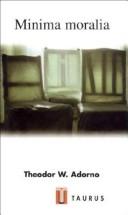
Adorno's aphorisms from exile — the theory as lived experience rather than system. Read it after Dialectic of Enlightenment, when you can recognise the arguments being compressed into single paragraphs.
Culture, art and the aesthetic argument
BeginnerUnderstand the School's most influential and most disputed claim: that mass culture functions as a system of control, and that art is where resistance survives.
▸ Study plan for this stage
Pace: Five to six weeks. Illuminations is an essay collection and should be read selectively rather than cover to cover: take 'The Work of Art in the Age of Mechanical Reproduction' and 'Theses on the Philosophy of History' first, then 'The Storyteller' and 'Unpacking My Library'. Each of the two central
- Aura in Benjamin's sense — the here-and-now of a unique object, its embeddedness in tradition and ritual — and the claim that mechanical reproduction destroys it
- Benjamin's political reversal of that loss: with aura gone, art's basis shifts from ritual to politics, which he treats as an opening rather than a catastrophe. This is exactly where he and Adorno part
- The aestheticisation of politics versus the politicisation of art — the closing move of the artwork essay, written with fascism explicitly in view
- The Theses on the Philosophy of History: the angel of history, the critique of progress, and the refusal of a historical guarantee, written in 1940 shortly before Benjamin's death fleeing France
- The Adorno-Benjamin correspondence behind these essays: Adorno's objection that Benjamin was too optimistic about film and too undialectical about mass reception. Both positions have serious defenders and the dispute is not settled
- Marcuse's surplus repression — the amount of instinctual renunciation over and above what material scarcity actually requires — which is the concept that makes Eros and Civilization a critique rather than a Freudian restatement
- The performance principle as the historically specific form the reality principle takes under industrial capitalism, and therefore something that could change
- Non-repressive sublimation and the aesthetic dimension: art as the place where a different relation to instinct is rehearsed, which is the utopian claim the Adorno texts deliberately refuse to make
- What exactly is aura, and what does Benjamin claim is lost and gained when it goes?
- Benjamin thinks film has revolutionary potential and Adorno thinks it is the culture industry's central product. Set out the strongest version of each position and identify what empirical question, if any, they actually disagree about. Do not adjudicate — the dispute has run for eighty years and both camps have serious readers.
- What is Benjamin arguing against in the Theses, and why does he treat the idea of progress as dangerous rather than merely mistaken?
- Define surplus repression and explain how Marcuse distinguishes it from the repression Freud thought civilisation necessarily requires. Is the distinction operationalisable?
- Eros and Civilization is the most hopeful book in this path and Minima Moralia the least. Are they compatible, or is one of them wrong about what the same diagnosis implies?
- Read the artwork essay, then write 400 words applying the aura concept to a work you have seen both in reproduction and in person. This is the essay's own test and it is worth actually running.
- Set the artwork essay beside the Culture Industry chapter and produce a two-column list: what each says about film, reproduction, distraction and the audience. The columns disagree line by line, which is the point.
- Take the ninth thesis, on the angel of history, and write a page on what Benjamin is refusing. Then note which of the other theses depends on that refusal.
- Diagram Marcuse's argument from the performance principle to surplus repression to the possibility of non-repressive civilisation, marking which steps are Freud's and which are Marcuse's addition.
- Write a paragraph arguing that Benjamin was right about mass media and a paragraph arguing Adorno was, using evidence from the last twenty years. Leave the verdict open and say what would settle it.
Next up: The first generation ends with a diagnosis it cannot ground and a hope it cannot justify, which is precisely the problem the next generation set out to fix.

Contains The Work of Art in the Age of Mechanical Reproduction and the Theses on the Philosophy of History — the essays that make Benjamin the School's dissenting optimist about mass media. Read him against Adorno, not alongside.
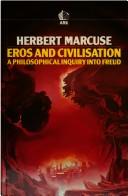
Marcuse's Freudian argument that repression beyond what survival requires is historically contingent and could be undone. It supplies the utopian half of the tradition that the Adorno texts withhold.
Where critical theory went next
BeginnerFollow the tradition past its pessimistic phase into the communicative and recognition-based theories that dominate it today.
▸ Study plan for this stage
Pace: Ten to twelve weeks, and this is the hardest stage in the path. The Theory of Communicative Action, Volume 1 is a systematic treatise that argues through detailed readings of Weber, Lukács and Adorno; read it in sections over two months and expect to reread the chapters on rationality and on Weber.
- Habermas's diagnosis of his teachers: Dialectic of Enlightenment identified reason with instrumental reason, which left the tradition unable to explain what it was criticising in the name of. This is the founding move of second-generation critical theory
- Communicative versus instrumental rationality — action oriented to reaching understanding as against action oriented to success — and the claim that the first is not derivative of the second
- Validity claims raised in every speech act (truth, rightness, truthfulness) and the argument that their presupposition supplies critique with a normative foundation from inside ordinary language
- The ideal speech situation as a counterfactual standard rather than a description, and the standing objection that it is too formal to license substantive criticism
- System and lifeworld, and the colonisation thesis: money and administrative power encroaching on domains that can only be reproduced communicatively. This is the concept most used outside the tradition
- Honneth's turn: social conflict originates not in distorted communication but in experiences of disrespect, and the moral grammar of struggle is the demand for recognition
- The three spheres of recognition — love, rights and solidarity — and the corresponding forms of injury from abuse to denial of rights to denigration of a way of life
- The recognition-versus-redistribution debate that followed, and whether recognition can account for material inequality or displaces it — a live disagreement worth knowing is unresolved
- What exactly does Habermas accuse Horkheimer and Adorno of, and does the charge stick against the texts you read in stage three?
- Reconstruct the argument from validity claims to a normative foundation for critique. Which step would you press on hardest?
- What does the colonisation of the lifeworld actually claim, and what evidence would count against it?
- Honneth locates the source of conflict in disrespect rather than in distorted communication. What does that reframing explain better, and what does it explain worse?
- Return to Geuss's criteria from stage two. Do Habermas and Honneth still satisfy them, or has the tradition become a normative political philosophy that has stopped being critical theory in the original sense?
- Across the whole path, from Horkheimer's 1931 programme to Honneth: has this been one tradition, or a name applied to several distinct projects?
- Write a 500-word summary of Habermas's objection to Dialectic of Enlightenment, then write the reply you think Adorno would have made. Both are available in the texts and setting them against each other is the central exercise of this stage.
- Diagram the system-lifeworld distinction with concrete institutions placed on each side, and mark two boundary cases you find hard to assign. The hard cases are where the concept is doing or failing to do work.
- Apply Honneth's three spheres of recognition to one contemporary social movement, in a page. Then write a paragraph on what the analysis leaves out — the redistribution objection should surface on its own if you have been honest.
- Revisit the timeline from stage one and mark on it where each thinker in this stage sits, and what they were reacting to. The generational structure becomes obvious once it is on the page.
- Write a final 800-word essay stating what you now think critical theory is, citing at least one text from each stage, and ending with the objection to your own position that you cannot yet answer.
Next up: This is the end of the path — from an endowment in 1923 Frankfurt to a live research programme in recognition theory — and the natural next step is Rahel Jaeggi or Nancy Fraser, who are arguing about where the tradition should go from here.
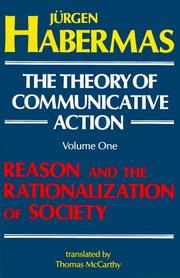
Habermas's break with his teachers: reason is not only instrumental, and the conditions of undistorted communication give critique a normative foundation. The most consequential work of second-generation critical theory.

The third generation's reframing of social conflict around recognition rather than communication or class. Finish here to see the tradition still functioning as a live research programme rather than a period piece.
Discussion
Keep reading
Paths that share books, cover the same subject, or open a related topic.