Understanding Spinoza: Best Books to Read, in Order
This curriculum builds a deep understanding of Spinoza by moving from accessible introductions through his own primary texts and then into advanced scholarly interpretation. Because the learner starts at an intermediate level, the path skips superficial overviews and moves quickly into Spinoza's core ideas—God, nature, freedom, and rationalist metaphysics—before tackling the Ethics itself and finally the most rigorous secondary literature.
Orienting the Landscape
IntermediateGain a clear conceptual map of Spinoza's life, historical context, and central philosophical commitments before engaging his dense primary texts.
▸ Study plan for this stage
Pace: 4–5 weeks, ~40–50 pages/day. Scruton's monograph (150–180 pages) over 3–4 days, then Goldstein's biographical narrative (400+ pages) over 3–4 weeks, with 2–3 days for synthesis and review.
- Spinoza's monism and substance metaphysics: one infinite substance (God/Nature) with infinite attributes, of which we know two (thought and extension)
- The rejection of Cartesian dualism and teleology: how Spinoza dissolves the mind-body problem and eliminates final causes from nature
- Conatus and the striving for self-preservation: the foundational principle that all things endeavor to persist in their being
- Adequate vs. inadequate ideas: the epistemological distinction between passive imagination and active reason/intuitive knowledge
- Spinoza's political and theological radicalism: his critique of religious authority, defense of democracy, and the Tractatus Theologico-Politicus as a weapon against dogmatism
- The historical and biographical context: Spinoza's life in 17th-century Amsterdam, his lens-grinding, his excommunication, and his isolation as a thinker
- Spinoza's ethics as a science of human flourishing: virtue as power, joy as the increase of one's power of acting, and the path from passive emotions to active understanding
- The necessity of all things: Spinoza's determinism and the absence of free will in the libertarian sense, yet the freedom that comes through understanding
- What is Spinoza's substance monism, and how does it differ fundamentally from Descartes' dualism?
- Explain the distinction between adequate and inadequate ideas in Spinoza's epistemology, and why this matters for human freedom and happiness.
- What role does the concept of conatus play in Spinoza's ethics, and how does it ground his account of virtue and self-preservation?
- How did Spinoza's historical context—his life in Amsterdam, his excommunication, his work as a lens-grinder—shape his philosophical commitments and his isolation?
- What is Spinoza's critique of religious and political authority, and what does the Tractatus Theologico-Politicus attempt to accomplish?
- How does Spinoza's determinism coexist with his account of human freedom and the possibility of joy through understanding?
- Create a visual diagram mapping Spinoza's metaphysical system: one substance with infinite attributes, with thought and extension as the two we know, and individual minds and bodies as modes. Label the relationships and explain how this differs from Cartesian dualism.
- Write a 2–3 page comparative essay: 'Descartes vs. Spinoza on Mind and Body.' Use specific examples from Scruton to illustrate how Spinoza's monism solves problems Descartes left unresolved.
- Construct a timeline of Spinoza's life (1632–1677) with key events from Goldstein's narrative: birth in Amsterdam, education, lens-grinding, the Tractatus, excommunication, and philosophical isolation. Annotate each with how it influenced his thought.
- Write a glossary entry (300–400 words each) for three key terms: 'substance,' 'conatus,' and 'adequate idea.' Use examples from both texts to illustrate each concept in action.
- Analyze Goldstein's portrayal of Spinoza's excommunication and isolation: How does she show that his philosophical radicalism was inseparable from his social and religious marginalization? Write 2–3 pages.
- Create a flowchart showing Spinoza's epistemology: the three kinds of knowledge (imagination, reason, intuitive science), what each produces, and why the progression from passive to active understanding is central to human flourishing.
Next up: This stage establishes the conceptual scaffolding and biographical grounding necessary to approach Spinoza's primary texts—the Ethics and Tractatus—with confidence, allowing you to recognize his central arguments and their historical stakes as you engage his dense, systematic prose in the next stage.
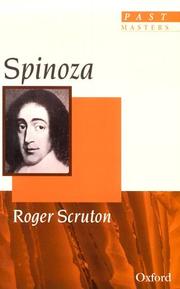
A concise but intellectually serious overview that introduces substance, attributes, modes, and the God-or-Nature equation—giving the intermediate reader the vocabulary needed for everything that follows.

A philosophically informed biography that situates Spinoza's radicalism within his Jewish Amsterdam world, making his motivations vivid and humanizing the abstract system before you enter it.
The Primary Texts
IntermediateRead Spinoza in his own words, starting with the more accessible works before confronting the geometric method of the Ethics.
▸ Study plan for this stage
Pace: 8–10 weeks, ~25–30 pages/day for TTP (weeks 1–3), then ~15–20 pages/day for Ethics (weeks 4–10)
- Spinoza's critique of scriptural authority and the separation of theology from philosophy in the Theological-Political Treatise
- The concept of God as infinite substance with infinite attributes, and the rejection of anthropomorphic theology
- Conatus: the striving of all things to persist in their being, as the foundation of individual essence
- The distinction between imagination, reason, and intuitive knowledge (three kinds of knowledge) as modes of understanding
- Necessity and determinism: how all things follow from the nature of God with logical necessity, eliminating free will as traditionally conceived
- The mind-body relationship and the parallelism between mental and physical ideas
- Affect and emotion as modifications of the body's capacity to act, grounded in the conatus
- The geometric method: how Spinoza uses definitions, axioms, and propositions to construct a deductive system of philosophy
- What is Spinoza's main argument in the Theological-Political Treatise regarding the relationship between theology and philosophy, and why does he believe they should be kept separate?
- How does Spinoza's conception of God differ from traditional theistic conceptions, and what role does the concept of substance play in his metaphysics?
- What is conatus, and how does Spinoza use this concept to explain the behavior and essence of individual things?
- Explain the three kinds of knowledge in Spinoza's system: what are they, how do they differ, and why does he privilege intuitive knowledge?
- How does Spinoza's determinism challenge the traditional notion of human free will, and what does freedom mean in his system?
- What is the relationship between mind and body in Spinoza's philosophy, and how does his account differ from Cartesian dualism?
- Create a detailed outline of Spinoza's main arguments in the Theological-Political Treatise, paying special attention to his critique of scriptural interpretation and his defense of political freedom
- Write a 2–3 page essay comparing Spinoza's conception of God with a traditional theistic conception (e.g., Christian theology), using specific passages from the TTP
- Map out the logical structure of Part I of the Ethics: identify the definitions, axioms, and key propositions, and trace how later propositions follow from earlier ones
- Create a visual diagram or concept map showing the three kinds of knowledge, with concrete examples of each type drawn from everyday experience
- Write a dialogue or short narrative in which a character discovers they are determined yet free in Spinoza's sense—exploring how necessity and freedom coexist
- Annotate a challenging passage from the Ethics (e.g., Part II, Prop. 7 or Part III on affects) by breaking it into smaller logical steps and explaining each term in your own words
Next up: This stage equips you with direct engagement with Spinoza's arguments and his distinctive geometric method, preparing you to move into secondary scholarship and critical interpretation that will deepen your understanding of how his ideas have been received, debated, and applied in subsequent philosophy.

Spinoza's most readable major work; it introduces his views on scripture, reason, freedom of thought, and the relation of religion to the state—essential context for understanding why the Ethics matters.

The masterwork and the ultimate destination of this curriculum; read after the Treatise so that the geometric definitions and propositions land on prepared ground rather than a blank slate.
Reading the Ethics Closely
IntermediateUse the best scholarly guides to unpack the Ethics proposition by proposition, clarifying the arguments on God, mind, emotion, and human freedom.
▸ Study plan for this stage
Pace: 6–8 weeks, ~40–50 pages/day (Bennett first, then Nadler; allow 1–2 weeks per book for careful re-reading and note-taking)
- Spinoza's monism and the doctrine of substance: God as the one infinite substance with infinite attributes, of which we know two (thought and extension)
- The logical structure of the Ethics: how definitions, axioms, and propositions build a deductive system, and why this matters for understanding Spinoza's arguments
- Mind-body parallelism: the idea that mental and physical events are the same event described under different attributes, and its implications for understanding human agency
- Conatus and the striving to persist in being: the fundamental drive of all things, and how it grounds Spinoza's account of emotion and desire
- The three kinds of knowledge: imagination, reason, and intuitive science (scientia intuitiva), and how they relate to freedom and the adequate understanding of God
- Passive vs. active emotions: how passive emotions arise from external causes while active emotions flow from our own nature, and why this distinction is central to human freedom
- Spinoza's rejection of free will and embrace of determinism: how freedom is redefined as acting from one's own nature rather than being determined by external forces
- The intellectual love of God: the highest human achievement, arising from the third kind of knowledge and constituting human blessedness
- What is Spinoza's monism, and how does the doctrine of substance (God as infinite with infinite attributes) differ from Cartesian dualism?
- How does Spinoza's deductive method in the Ethics work, and why is understanding the logical structure of propositions essential to grasping his arguments?
- Explain mind-body parallelism: what does it mean to say that the mental and physical are the same event under different attributes, and what are its consequences for understanding human action?
- What is conatus, and how does Spinoza use it to ground his account of emotion, desire, and human motivation?
- Distinguish between the three kinds of knowledge in Spinoza's system: how do imagination, reason, and intuitive science differ, and how does progression through them lead to freedom?
- What is the difference between passive and active emotions in Spinoza, and why does this distinction matter for his account of human freedom and blessedness?
- How does Spinoza redefine freedom in light of determinism, and what does it mean to act 'from one's own nature'?
- What is the intellectual love of God, and how does it represent the culmination of human flourishing in Spinoza's system?
- Create a visual map of Spinoza's metaphysical hierarchy (substance → attributes → modes) using Bennett's exposition; annotate it with key propositions from each part of the Ethics
- Work through Bennett's reconstruction of 3–4 difficult propositions (e.g., II.P7, III.P6) step-by-step, writing out the logical chain of reasoning and identifying any unstated premises
- After reading Nadler's chapters on mind and body, write a 2–3 page explanation of mind-body parallelism in your own words, then compare it to Nadler's formulation to test your understanding
- Create a detailed chart comparing passive vs. active emotions, listing 5–6 examples of each and explaining how conatus operates differently in each case
- Trace the progression from imagination to reason to intuitive science using a concrete example (e.g., understanding love, hate, or joy); show how each kind of knowledge offers a different perspective on the same phenomenon
- Write a short dialogue between Spinoza and Descartes on the nature of mind, body, and freedom, using specific propositions from the Ethics to support Spinoza's position
- Identify 3–4 propositions in the Ethics that you find most difficult or counterintuitive; for each, write a paragraph explaining the proposition and a paragraph explaining why it challenges your initial assumptions
- Construct a detailed outline of Part III (Emotions) showing how Spinoza derives specific emotions from the basic principle of conatus; use both Bennett and Nadler to fill in gaps
Next up: This stage equips you with a granular understanding of Spinoza's core arguments and system, preparing you to engage with secondary scholarship on specific themes (ethics, politics, aesthetics) and to read the Ethics itself with greater independence and critical depth.

Bennett translates Spinoza's geometric prose into plain analytical argument, making the logical structure of each part transparent—ideal for an intermediate reader who wants rigorous comprehension, not just impressions.

A part-by-part guide by the leading Spinoza scholar of our era; it fills in historical background and explains the philosophical stakes of each major doctrine, complementing Bennett's analytical approach.
God, Nature, and Metaphysics
ExpertEngage the deeper metaphysical questions—what Spinoza's God really is, how substance monism works, and how Spinoza fits into the broader rationalist tradition alongside Descartes and Leibniz.
▸ Study plan for this stage
Pace: 8–10 weeks, ~40–50 pages/day. Begin with Curley's *Spinoza's Metaphysics* (weeks 1–3), move to *Behind the Geometrical Method* (weeks 4–6), then complete *The Rationalists* (weeks 7–10) with periodic review and synthesis sessions.
- Substance monism: why Spinoza argues there is only one infinite substance (God/Nature) and how this differs from Descartes's dualism
- The identity of God and Nature (Deus sive Natura): understanding pantheism vs. atheism accusations and Spinoza's actual position
- Attributes and modes: how infinite attributes express substance, and how thought and extension relate to the one substance
- Necessity and determinism: Spinoza's rejection of free will and contingency in favor of logical necessity flowing from God's nature
- The rationalist tradition: comparing Descartes's substance dualism, Spinoza's monism, and Leibniz's pre-established harmony as responses to the mind-body problem
- Spinoza's geometric method: why he uses Euclidean geometry and how it shapes his metaphysical conclusions
- Infinite intellect and God's knowledge: how God knows all things through necessity rather than will or choice
- What is Spinoza's substance monism, and how does it fundamentally differ from Descartes's two-substance dualism?
- Explain the relationship between God, Nature, and the infinite attributes in Spinoza's system. Why does he identify them?
- How do Spinoza's concepts of attributes and modes work together to explain the unity of reality while accounting for diversity?
- What role does necessity play in Spinoza's metaphysics, and how does this eliminate contingency and libertarian free will?
- Compare and contrast how Descartes, Spinoza, and Leibniz each attempt to solve the mind-body problem. What are the strengths and weaknesses of each approach?
- Why does Spinoza employ the geometric method, and what metaphysical commitments does this method embody or enforce?
- Create a detailed comparison chart mapping Descartes's dualism, Spinoza's monism, and Leibniz's pre-established harmony across key dimensions (substance, causation, mind-body relation, God's role). Refer to specific passages from *The Rationalists*.
- Write a 2–3 page exegesis of Spinoza's definition of substance and the proof that only one substance can exist, drawing on Curley's *Spinoza's Metaphysics*. Then identify where Descartes's reasoning diverges.
- Reconstruct one of Spinoza's geometric proofs (e.g., on God's existence or the identity of thought and extension) in your own words, then explain what metaphysical assumptions the geometric form presupposes, using *Behind the Geometrical Method*.
- Debate the question: 'Is Spinoza a pantheist or an atheist?' using textual evidence from Curley's works and *The Rationalists*. Write both sides, then defend your interpretation.
- Map the logical chain from Spinoza's definition of substance through attributes and modes to the conclusion that individual minds and bodies are finite modes of infinite attributes. Identify where this chain depends on necessity.
- Create a visual diagram (or written model) showing how Spinoza's infinite intellect knows all things through the necessity of God's nature, then contrast this with Descartes's account of God's omniscience in *The Rationalists*. Explain the theological implications of each.
Next up: This stage establishes the metaphysical foundations of Spinoza's system—God, substance, and necessity—which are essential for understanding his ethics, epistemology, and theory of human freedom in subsequent stages.

Curley's landmark study argues for a specific interpretation of Spinoza's substance and attributes that has shaped all subsequent scholarship; essential for anyone who wants to think seriously about the God-or-Nature thesis.

A more accessible companion to Curley's technical work, tracing how Spinoza's method and metaphysics respond to Descartes—perfect for understanding Spinoza's place within rationalism.
Places Spinoza alongside Descartes and Leibniz in a single comparative framework, allowing the reader to see what is distinctively Spinozist about his solutions to shared rationalist problems.
Freedom, Mind, and Spinoza's Legacy
ExpertExplore Spinoza's ethics of freedom, his philosophy of mind, and his lasting influence on modern thought—from the Enlightenment to contemporary philosophy and neuroscience.
▸ Study plan for this stage
Pace: 6–7 weeks, ~40–50 pages/day (Norris: 2–3 weeks; Damasio: 3–4 weeks, with 1 week for integration and review)
- Spinoza's critique of Cartesian dualism and the mind-body problem: how Norris contextualizes this within critical theory
- The ethics of freedom: Spinoza's distinction between passive affects (determined by external causes) and active affects (self-determined)
- Conatus and striving: the fundamental drive toward self-preservation and its role in human motivation and ethics
- Damasio's neuroscientific reinterpretation of Spinoza: emotions as bodily states and their role in reason and decision-making
- The parallelism of mind and body: how thought and extension express the same reality, dissolving Cartesian separation
- Spinoza's influence on Enlightenment thought, German Idealism, and contemporary philosophy of mind and neuroscience
- The political and ethical implications of Spinoza's determinism: freedom as understanding necessity, not escaping it
- Affect theory and its modern applications: how Spinoza's philosophy informs contemporary discussions of emotion, embodiment, and social theory
- How does Norris argue that Spinoza's philosophy challenges Cartesian dualism, and why is this challenge foundational to modern critical theory?
- What is the distinction between passive and active affects in Spinoza's ethics, and how does this distinction relate to human freedom?
- How does Damasio use neuroscience to validate and reinterpret Spinoza's claims about the relationship between emotion, body, and reason?
- What is conatus, and how does it function as the basis for Spinoza's ethics and his account of human motivation?
- How has Spinoza's philosophy influenced contemporary neuroscience, philosophy of mind, and affect theory? Provide specific examples from both texts.
- According to Spinoza (as presented in these texts), what does it mean to be free, and how is freedom compatible with determinism?
- Create a comparative chart mapping Descartes's mind-body dualism against Spinoza's parallelism, using specific passages from Norris to ground each distinction.
- Write a 2–3 page synthesis essay: 'How Damasio's neuroscience confirms (or complicates) Spinoza's philosophy of mind and emotion.' Use evidence from both texts.
- Identify and annotate 5–7 key passages from Norris on Spinoza's critique of Cartesianism; then find corresponding passages in Damasio that echo or validate these ideas.
- Construct a detailed diagram of Spinoza's theory of affects (passive vs. active) and trace how Damasio's discussion of emotion maps onto this framework.
- Develop a case study: select one contemporary issue (e.g., addiction, decision-making, social anxiety) and analyze it using both Spinoza's ethics and Damasio's neuroscientific framework.
- Debate exercise: prepare arguments for and against the claim that 'Spinoza's determinism is compatible with meaningful human freedom,' drawing on both texts.
Next up: This stage establishes Spinoza's philosophy of mind, freedom, and affect as a living intellectual tradition—one that bridges early modern metaphysics, Enlightenment critique, and contemporary neuroscience—preparing you to explore how these ideas manifest in specific domains (ethics, politics, aesthetics, or applied neuroscience) in the next stage.

Examines how Spinoza's rationalism and political philosophy seeded Enlightenment critique and continues to resonate in contemporary thought, broadening the reader's sense of his legacy.
A neuroscientist's argument that Spinoza anticipated key insights about emotion, body, and mind; a rewarding final read that shows how deeply Spinoza's ideas speak to modern science and the question of human freedom.
Discussion
Keep reading
Paths that share books, cover the same subject, or open a related topic.