Soren Kierkegaard is one of the founders of existentialism and one of its trickiest writers, publishing under a shifting cast of pseudonyms who argue with one another. Read at random, he can seem contradictory. Read in order, with a biography and a guide first, he becomes a coherent and deeply serious Christian thinker wrestling with faith and freedom.
The path starts with the interpreters and the life, moves through the great pseudonymous works, and ends with the demanding religious writings and the later reception.
The guide and the life
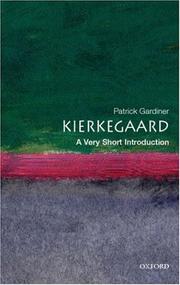
Begin with Kierkegaard by Patrick Gardiner, a compact and reliable introduction to the whole philosophy, and Kierkegaard: A Biography by Joakim Garff, the acclaimed life that explains the odd circumstances, the broken engagement, and the Copenhagen scandals behind the books. Together they give you the map and the man.
The pseudonymous masterpieces
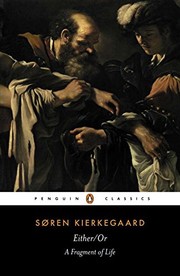
Now the works that made him. Either/Or stages the choice between the aesthetic and ethical ways of living as a dramatic confrontation, and Fear and Trembling and The Sickness Unto Death contains his most famous meditations on faith, on Abraham, and on despair. The concept of anxiety explores dread as the dizziness of freedom, a book that shaped later psychology and philosophy alike. These pseudonymous texts are where his originality is most vivid.
The demanding later works
The path then turns to the harder, more explicitly religious writing. Concluding Unscientific Postscript 1 is his major philosophical statement on subjectivity, truth, and the leap of faith, and Works of love presents his searching Christian ethics of neighbor-love. To see how others received him, Kierkegaard and the existential philosophy by Lev Shestov reads him as a passionate critic of reason, and Kierkegaard by Theodor Adorno offers a challenging critical study from the Frankfurt School.
Read in this order and the pseudonyms stop confusing you and start doing their intended work. Follow the full path to understand Kierkegaard whole.
Follow the full reading path →
Ready to learn something deeply?
Build a reading path — free