Understanding Socrates: a reading path into the father of philosophy
This curriculum takes you from your first encounter with Socrates all the way to advanced scholarly debates about his legacy, building knowledge in careful stages. You begin with accessible introductions and short Platonic dialogues, move through the dramatic narrative of his trial and death, then tackle the full depth of his method and philosophy, and finally engage with how later thinkers have interpreted and argued over his meaning. Each stage equips you with the vocabulary and context needed for the next.
First Encounters
BeginnerGain a clear, engaging overview of who Socrates was, why he matters, and what the Socratic method looks like in practice — before reading any primary source in full.
▸ Study plan for this stage
Pace: 4–5 weeks, ~25–30 pages/day. Week 1–2: Taylor's "Socrates" (approx. 150–180 pages); Week 3–5: Aristophanes' plays, focusing on "The Clouds" (approx. 20–25 pages/day for plays, with re-reading of key scenes).
- Socrates' life, trial, and execution: the historical context and why he was perceived as a threat to Athens
- The Socratic method as a tool for exposing ignorance and pursuing truth through dialogue and questioning
- Socrates' commitment to virtue, wisdom, and the examined life as the foundation of his philosophy
- The distinction between Socrates' actual views (from Plato and Xenophon) and Aristophanes' comic caricature in 'The Clouds'
- How Socrates challenged conventional wisdom and social norms, particularly regarding knowledge and piety
- The role of irony and humility in Socratic inquiry—claiming to know nothing while exposing others' false certainty
- Socrates as a cultural figure: how he was perceived by his contemporaries (comic ridicule vs. philosophical influence)
- What were the main charges against Socrates at his trial, and what does Taylor identify as the deeper reasons for Athenian hostility toward him?
- How does the Socratic method work, and what is its ultimate goal—is it to teach doctrine or to transform the interlocutor's understanding?
- How does Aristophanes' portrayal of Socrates in 'The Clouds' differ from Taylor's historical account, and what does this tell us about Socrates' actual reputation in Athens?
- What does Socrates mean by 'I know that I know nothing,' and how does this claim relate to his mission to examine others?
- Why did Socrates refuse to escape from prison, and what does this reveal about his commitment to his principles?
- What role does virtue play in Socratic philosophy, and how does he connect knowledge to moral goodness?
- After reading Taylor's chapters on Socrates' life, create a timeline of key events (birth, philosophical activity, trial, death) and annotate it with the political and social context of Athens.
- Read 'The Clouds' and identify 5–7 specific scenes where Aristophanes ridicules Socrates; for each, write one sentence explaining what aspect of Socratic practice is being mocked.
- Conduct a mock Socratic dialogue: choose a common belief (e.g., 'courage is standing your ground in battle') and write out a 10–15 exchange dialogue where you play Socrates, using questions to expose contradictions in your partner's initial claim.
- Create a comparison chart: list Taylor's account of Socratic method in one column and Aristophanes' comic version in another; note where they align and where they diverge.
- Write a 500-word reflection: 'Why would Athenians find Socrates both amusing (as in Aristophanes) and dangerous (as at his trial)?' Use specific examples from both texts.
- Select one key passage from Taylor on Socratic irony or the examined life, and one scene from 'The Clouds' that illustrates a similar theme; write a brief comparative analysis (300 words) of how each text conveys the idea.
Next up: This stage establishes who Socrates was as a historical and cultural figure, clarifies the Socratic method as a living practice (not just an abstract concept), and prepares you to engage directly with Plato's dialogues, where you'll encounter Socrates' own voice and witness the method in action across a range of philosophical topics.
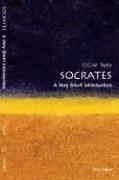
A concise, authoritative primer that maps Socrates's life, sources, and core ideas in under 150 pages — the perfect orientation before touching primary texts.
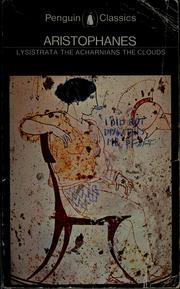
Reading this comic portrait of Socrates as a comic villain gives you the popular Athenian view of him and sharpens your sense of why he was controversial — essential context for everything that follows.
The Dialogues: Trial and Death
BeginnerRead the four short Platonic dialogues that form a continuous narrative of Socrates's trial, imprisonment, and death, grasping his courage, piety, and core ethical commitments firsthand.
▸ Study plan for this stage
Pace: 4–5 weeks, ~15–20 pages/day. Week 1: Euthyphro (complete). Week 2: Apology (complete). Week 3: Crito (complete). Week 4: Phaedo extracts and Xenophon selections. Week 5: Review and synthesis.
- Socratic irony and the claim of ignorance: how Socrates uses feigned ignorance to expose contradictions in others' beliefs
- Piety and justice in Euthyphro: the difficulty of defining abstract virtues and the relationship between divine command and moral goodness
- Socrates's defense at trial: his refusal to compromise his mission, his commitment to philosophy as a way of life, and his rejection of fear as a motive
- Civil disobedience and the rule of law in Crito: the tension between unjust laws and the obligation to obey the state
- Courage in the face of death: Socrates's equanimity and his belief in the immortality of the soul as grounds for fearlessness
- The examined life: Socrates's conviction that unexamined existence is not worth living, and philosophy as care of the soul
- Virtue as knowledge: the Socratic thesis that wrongdoing stems from ignorance, not malice, and that virtue can be taught
- Socratic piety: reverence for the gods and the laws, combined with intellectual independence and moral conscience
- What is Socratic irony, and how does Socrates use it in Euthyphro to expose Euthyphro's contradictions about piety?
- Why does Socrates refuse to escape from prison in Crito, and what does his reasoning reveal about his view of justice and the social contract?
- What is Socrates's defense in the Apology, and why does he claim that the unexamined life is not worth living?
- How does Socrates's attitude toward death in the Phaedo extracts differ from ordinary human fear, and what philosophical grounds does he offer for his courage?
- What is the relationship between virtue and knowledge in Socratic philosophy, and how does this appear in the dialogues?
- How do the four dialogues together form a narrative arc that illustrates Socrates's character and commitments?
- Close-read one passage from Euthyphro (e.g., the definition of piety) and identify where Socratic irony appears; write a one-page analysis of how Socrates's questions expose logical inconsistency.
- Outline Socrates's main arguments in the Apology in your own words, then compare your outline to the text to identify any misreadings.
- Write a dialogue of your own (2–3 pages) in which you apply Socratic method to a contemporary moral question (e.g., 'What is fairness?' or 'What is courage?'); aim to expose hidden contradictions.
- Create a two-column chart: on one side, list Socrates's reasons for refusing to escape in Crito; on the other, list counterarguments a modern reader might raise, then write a paragraph defending Socrates's position.
- Read the Phaedo extracts and the Xenophon selections side by side; note differences in how each author portrays Socrates's final hours, and discuss what these differences reveal about each author's aims.
- Compose a short essay (3–4 pages) arguing whether Socrates is a hero, a martyr, or something else, drawing on evidence from all four dialogues.
Next up: This stage grounds you in Socrates's voice and character through his own (or near-contemporary) words, preparing you to move beyond the trial narrative and explore the deeper philosophical doctrines—such as the theory of Forms, the nature of knowledge, and the immortality of the soul—that emerge in longer, more systematic dialogues like the Phaedo, Republic, and Symposium.

This brief dialogue on the nature of piety is the ideal first Plato to read: it is short, dramatically vivid, and perfectly demonstrates the elenctic (cross-examination) method in action.
Socrates's speech at his own trial is the single most important primary text — it is his self-portrait, his defense of philosophy, and the dramatic heart of the whole story.
The Socratic Method in Action
IntermediateExplore a wider range of Platonic dialogues to see the Socratic method applied to ethics, knowledge, and virtue, and begin to distinguish the historical Socrates from Plato's own developing philosophy.
▸ Study plan for this stage
Pace: 4–5 weeks, ~25–30 pages/day. Allocate 2 weeks to *Meno* (approximately 60–80 pages), then 2–3 weeks to *The Last Days of Socrates* (approximately 120–150 pages, including Euthyphro, Apology, Crito, and Phaedo).
- The Socratic method as a tool for ethical inquiry: how Socrates uses questioning to expose ignorance and guide others toward truth, particularly in *Meno*'s exploration of virtue
- The doctrine of recollection (anamnesis): Plato's theory that learning is remembering, introduced in *Meno*, and its implications for knowledge and the immortal soul
- The distinction between knowledge (episteme) and true opinion (doxa): how *Meno* establishes this crucial epistemological divide and why it matters for virtue
- Socrates' defense of philosophy and his commitment to virtue over life: the historical and philosophical stakes revealed in *Apology* and *Crito*
- The concept of care of the soul (epimeleia tes psyches): Socrates' central ethical concern across both texts, and how it justifies his refusal to compromise
- Tension between historical Socrates and Platonic philosophy: recognizing where Plato may be developing his own metaphysical ideas (immortality, Forms, recollection) beyond the historical figure
- The unity of virtue thesis: the idea that virtue is one and teachable, tested and refined through the dialogues
- Socratic piety and the examined life: how *Euthyphro* and *Apology* define true piety as philosophical inquiry rather than conventional religious practice
- What is the Socratic method, and how does Socrates use it in *Meno* to investigate the nature of virtue? What does he accomplish by questioning Meno about whether virtue can be taught?
- Explain the doctrine of recollection in *Meno*. How does Plato use the slave boy example to support this theory, and what does it suggest about the nature of knowledge and the soul?
- What is the difference between knowledge (episteme) and true opinion (doxa) as presented in *Meno*, and why is this distinction important for understanding virtue?
- In *Apology*, what is Socrates' defense against the charges brought against him, and what does his defense reveal about his conception of philosophy and the examined life?
- Why does Socrates refuse to escape in *Crito*, and what does his reasoning tell us about his ethical commitments and the relationship between justice and the soul?
- How does *Euthyphro* exemplify the Socratic method applied to the question of piety, and what does Socrates' refusal to accept conventional definitions suggest about his philosophical approach?
- Close-read the Meno's slave boy passage (approximately 82b–85b): annotate how Socrates' questions guide the slave to 'recollect' geometric truth. Write a 1–2 page analysis of whether the slave actually learns or merely remembers, and what this implies for your own understanding of learning.
- Conduct a Socratic dialogue with a partner or in writing: choose a virtue (courage, justice, friendship, etc.) and use only questions—no assertions—to explore its nature with someone else. Record or transcribe the dialogue and reflect on where it breaks down and why.
- Create a comparison chart mapping the Socratic method across *Meno*, *Euthyphro*, and *Apology*: identify the stages of each dialogue (aporia, refutation, redirection) and note how the method evolves or remains consistent.
- Write a 2–3 page essay: 'Is Socrates' refusal to escape in *Crito* consistent with his defense in *Apology*?' Use specific passages from both texts to argue whether his actions align with his stated principles.
- Analyze the concept of care of the soul (epimeleia tes psyches) by collecting all instances where Socrates mentions it across the assigned texts. Write a synthesis explaining why this concept is central to his ethics and his willingness to die.
- Debate the historical vs. Platonic Socrates: identify 3–4 claims in *The Last Days of Socrates* (especially about immortality and the Forms) that seem distinctly Platonic rather than historically Socratic. Research or reason about which ideas likely belong to the historical figure.
Next up: This stage equips you with a detailed understanding of Socratic method and ethics grounded in primary texts, preparing you to engage with Plato's more systematic metaphysical works (such as the Republic or Phaedrus) where the Socratic method becomes a vehicle for exploring the theory of Forms and the nature of reality itself.

This dialogue on whether virtue can be taught introduces the famous theory of recollection and is widely considered the bridge between the early, purely Socratic dialogues and Plato's mature thought.
This Penguin Classics volume collects Euthyphro, Apology, Crito, and Phaedo in a single, well-translated edition — ideal for re-reading the core texts with the richer context you now have.
Scholarly Depth and Historical Context
IntermediateUnderstand what modern scholars say about the 'Socratic problem' — separating the historical Socrates from Plato's literary creation — and gain a rigorous account of his philosophy.
▸ Study plan for this stage
Pace: 6–8 weeks, ~40–50 pages/day (with 2–3 days per week for reflection and note-taking)
- The Socratic Problem: how to distinguish the historical Socrates from Plato's literary portrayal and the accounts in Xenophon and Aristophanes
- Vlastos's distinction between Socratic and Platonic doctrines, including the theory of recollection and the theory of forms as Platonic additions
- Socratic irony (elenchus) as a method of moral inquiry: how Socrates uses feigned ignorance to expose contradictions in interlocutors' beliefs
- Socratic intellectualism: the thesis that virtue is knowledge and that no one errs willingly (akrasia problem)
- Gulley's analysis of Socratic epistemology and the limits of Socratic knowledge claims
- The historical and biographical context of Socrates' life, trial, and death as reconstructed from primary sources
- Comparative analysis of Socrates across different ancient sources (Plato, Xenophon, Aristophanes) and what each reveals about his philosophy
- The relationship between Socratic ethics and metaphysics: why Socrates avoids systematic metaphysical claims
- What is the Socratic Problem, and why is it important for understanding Socratic philosophy?
- According to Vlastos, which doctrines belong to the historical Socrates and which are Platonic additions? What is his evidence?
- How does Socratic irony (elenchus) function as a philosophical method, and what does it reveal about Socrates' approach to moral knowledge?
- What is Socratic intellectualism, and what is the akrasia problem? How does Socrates address the question of whether virtue can be taught?
- How do the accounts of Socrates in Plato, Xenophon, and Aristophanes differ, and what can we infer about the historical Socrates from comparing them?
- What are the limits of Socratic knowledge according to Gulley, and how does Socrates' epistemology differ from later Platonic epistemology?
- Create a two-column chart: list doctrines Vlastos attributes to the historical Socrates in one column and Platonic additions in the other. Cite specific passages from both Vlastos and the primary sources he discusses.
- Analyze a Platonic dialogue (e.g., Apology, Euthyphro, or Laches) and map out the elenctic method step-by-step: identify where Socrates feigns ignorance, where contradictions emerge, and what the interlocutor learns (or fails to learn).
- Write a 2–3 page comparative analysis of how Socrates is portrayed in one Platonic dialogue, one passage from Xenophon's Memorabilia, and one reference in Aristophanes' Clouds. What does each source emphasize, and what might this reveal about the historical figure?
- Construct a logical argument for and against the thesis that 'virtue is knowledge' (Socratic intellectualism). Use specific examples from Vlastos and Gulley to support both sides.
- Create a timeline of Socrates' life and philosophical activity, integrating historical context from both books. Include key events (birth, trial, death) and the philosophical developments they coincide with.
- Debate exercise: prepare arguments for two positions—(1) that Vlastos successfully separates the historical Socrates from Plato's literary creation, and (2) that his distinction is ultimately unprovable. Present both sides.
Next up: This stage equips you with a rigorous, evidence-based understanding of what Socrates actually taught and believed, which prepares you to engage with how his ideas were transformed and developed by later philosophers, particularly Plato's own systematic metaphysics and epistemology.
Vlastos is the 20th century's most influential Socrates scholar; this book makes the definitive case for distinguishing the early, historical Socrates from the later Platonic Socrates, and is essential for any serious student.

A careful, systematic examination of Socratic epistemology and ethics that complements Vlastos by focusing on the internal logic of Socrates's arguments rather than the source problem.
Legacy and Enduring Influence
ExpertTrace how Socrates has been interpreted, appropriated, and contested from antiquity to the modern era, and evaluate his lasting significance for philosophy, education, and political thought.
▸ Study plan for this stage
Pace: 4–5 weeks, ~40–50 pages/day (approximately 300 pages total). Allocate 1 week for initial reading, 2–3 weeks for close re-reading of key chapters and note-taking, and 1 week for synthesis and exercises.
- Stone's revisionist thesis: Socrates as a political threat to Athenian democracy rather than a purely philosophical martyr
- The historical context of late 5th-century Athens: democratic instability, the Thirty Tyrants, and anti-democratic movements
- How Socrates' questioning method and association with oligarchic sympathizers made him a target for democratic backlash
- The distinction between Socratic philosophy as portrayed in Plato's dialogues versus the historical Socrates Stone reconstructs
- The trial as a political act: how democratic Athens prosecuted Socrates to protect itself from perceived threats
- Socrates' refusal to compromise or flee as a deliberate political stance, not merely philosophical principle
- The role of Aristophanes, Xenophon, and Plato in shaping subsequent interpretations of Socrates
- How Stone's interpretation challenges the traditional 'noble martyr' narrative and opens questions about philosophy's relationship to politics
- What is Stone's central argument about why Socrates was actually tried and executed, and how does it differ from the traditional philosophical narrative?
- What specific historical and political circumstances in Athens made Socrates a threat to the democratic establishment?
- How does Stone use evidence from Plato, Xenophon, and Aristophanes to reconstruct the historical Socrates, and what are the limitations of relying on these sources?
- What was Socrates' relationship to the oligarchic movement and the Thirty Tyrants, and how did this association affect his trial?
- How did Socrates' method of questioning and his refusal to accept conventional wisdom function as political acts in democratic Athens?
- What does Stone's account reveal about the tension between philosophical inquiry and political power in ancient Athens?
- Create a detailed timeline of Athenian political events (480–399 BCE) alongside key moments in Socrates' life; annotate which events Stone identifies as shaping the climate for his prosecution.
- Analyze one Platonic dialogue (e.g., Apology) and one passage from Xenophon's Memorabilia side-by-side, noting how each portrays Socrates differently; write a 2–3 page reflection on how Stone uses these sources.
- Construct a 'prosecution brief' from Stone's evidence: list the specific charges against Socrates and the political reasons Athens brought them, distinguishing between stated and actual motivations.
- Write a comparative essay (4–5 pages) contrasting the 'Socrates as noble martyr' narrative with Stone's 'Socrates as political threat' interpretation; evaluate which reading is more historically defensible.
- Research and present one modern thinker (e.g., Karl Popper, Gregory Vlastos, or a contemporary scholar) who has engaged with or critiqued Stone's thesis; summarize their position in 1–2 pages.
- Debate exercise: prepare arguments both for and against Stone's revisionist interpretation, then engage in a structured dialogue with a study partner or group to test the strength of his evidence.
Next up: By examining how Stone reinterprets Socrates as a politically contested figure rather than an unambiguous philosophical hero, you are now prepared to explore how subsequent thinkers have selectively appropriated, defended, or rejected different aspects of Socratic legacy—setting the stage for analyzing the competing philosophical, educational, and political traditions that claim Socrates as their
A provocative, deeply researched challenge to the standard heroic narrative — Stone argues Athens had real political reasons to condemn Socrates, forcing you to think critically about the legacy you have built up.
Discussion
Keep reading
Paths that share books, cover the same subject, or open a related topic.