Understanding Hume: best books on the great Scottish empiricist
This curriculum builds from accessible introductions to Hume's life and era, through his own major works, and finally into advanced scholarly interpretation and critique. Each stage equips the reader with the conceptual vocabulary needed for the next, ensuring that Hume's empiricism, skepticism, causation, and moral philosophy are understood both on their own terms and in their broader Enlightenment context.
Foundations: Who Was Hume and Why Does He Matter?
BeginnerGain a clear biographical and historical context for Hume, understand the basic problems he was wrestling with, and build the vocabulary needed to read him directly.
▸ Study plan for this stage
Pace: 4–5 weeks, ~25–30 pages/day (approximately 150 pages from Ayer, 200 pages from Robertson, 40 pages from Hume's autobiography)
- Hume's life trajectory: from Scottish provincial background to European intellectual prominence, and how his personal struggles shaped his philosophy
- The historical context of the Scottish Enlightenment and the broader European Enlightenment project that Hume participated in
- Hume's central philosophical problems: the limits of human knowledge, the nature of causation, the foundations of belief, and skepticism about metaphysics
- The vocabulary and conceptual framework Hume uses: impressions vs. ideas, custom and habit, the problem of induction, and empiricism as a method
- Hume's relationship to his predecessors (Descartes, Locke, Newton) and his departure from rationalist assumptions
- The practical stakes of Hume's philosophy: how it bears on religion, morality, science, and everyday reasoning
- Hume as a public intellectual: his role as essayist, historian, and diplomat, not merely as a technical philosopher
- What were the major events and turning points in Hume's life, and how did his personal experiences (illness, rejection, exile) influence his philosophical outlook?
- What is the historical and intellectual context of the Scottish Enlightenment, and how did Hume both embody and challenge the assumptions of his era?
- What are the core problems Hume identified in human knowledge and belief, and why did he think previous philosophers (especially rationalists) had failed to solve them?
- What is the distinction between impressions and ideas in Hume's framework, and why does this distinction matter for understanding his empiricism?
- How does Hume's concept of custom and habit explain our beliefs about causation and the external world, and what makes this explanation controversial?
- What does Hume mean by skepticism, and how does his skepticism differ from radical doubt—why does he think we cannot and should not abandon common-sense beliefs despite philosophical doubts?
- Create a timeline of Hume's life (using 'My own life' and Ayer's biography) marking key intellectual developments alongside personal events; annotate which philosophical problems emerged from which life experiences
- Write a 2–3 page comparative sketch: How did the Scottish Enlightenment differ from the French and German Enlightenments? Use Robertson's account to identify what made Hume's context distinctive
- Construct a concept map linking Hume's major philosophical problems (causation, induction, skepticism, belief) to the historical and personal pressures that motivated them
- Close-read a passage from 'My own life' (e.g., Hume's account of his illness or his failed academic appointments) and write a 1-page reflection on how it illuminates his later philosophical concerns
- Create a glossary of 15–20 key terms you encounter across all three texts (e.g., 'impression,' 'custom,' 'empiricism,' 'skepticism,' 'causation') with definitions in your own words and one example from each text
- Write a letter from Hume to a contemporary (e.g., Descartes or Locke) explaining what he thinks they got wrong about human knowledge and why his approach is better; ground this in specific passages from Ayer and Robertson
Next up: This stage equips you with biographical context, historical situatedness, and foundational vocabulary so that you can enter Hume's actual philosophical texts (likely the Treatise or Enquiries) with a clear sense of the problems he is solving and the intellectual tradition he is responding to.

A concise, authoritative overview of Hume's core ideas by a major empiricist philosopher. Reading this first gives beginners a reliable map of the terrain before tackling primary texts.

Places Hume squarely within the 18th-century intellectual revolution. Understanding the Enlightenment context makes Hume's motivations and influence far clearer.

Hume's own brief autobiography is short, elegant, and revealing. Reading it here humanizes the philosopher and provides direct acquaintance with his voice before the heavier works.
First Encounter: Hume in His Own Words (Accessible Entry Points)
BeginnerRead Hume's own clearest and most accessible prose, grasping his empiricist method, his skepticism about causation and the self, and his moral sentimentalism.
▸ Study plan for this stage
Pace: 4–5 weeks, ~25–30 pages/day (including re-reading difficult passages)
- Empiricism as method: all knowledge derives from sensory impressions and their copies (ideas); nothing is knowable beyond experience
- The problem of causation: we never observe 'necessary connection' itself, only constant conjunction of events; causation is a mental habit, not an objective feature of reality
- The bundle theory of the self: the 'I' is not a unified substance but a collection of fleeting perceptions with no underlying identity
- Skepticism about miracles: extraordinary claims require extraordinary evidence; testimony alone cannot establish violations of natural laws
- Moral sentimentalism: morality is grounded in human sympathy and emotional response (sentiment), not reason or abstract principles
- The limits of reason: reason is 'slave of the passions'; it cannot motivate action or establish moral truths on its own
- Hume's naturalism: philosophical inquiry must respect how humans actually think and feel, not impose artificial rationalist systems
- What does Hume mean by 'impressions' and 'ideas,' and how does this distinction form the foundation of his empiricist method?
- Why does Hume argue that we cannot observe causation itself, only constant conjunction? What are the implications of this claim?
- How does Hume's bundle theory challenge the traditional notion of a unified, unchanging self or soul?
- What is Hume's argument against the possibility of miracles, and what role does testimony play in his analysis?
- How does Hume ground morality in sentiment rather than reason, and what does he mean by 'sympathy'?
- What does Hume mean when he says reason is the 'slave of the passions,' and how does this relate to his critique of rationalism?
- Map out Hume's distinction between impressions and ideas using 3–4 concrete examples from your own experience (e.g., the impression of tasting coffee vs. the idea of coffee). Write a one-page explanation of why this distinction matters for his empiricism.
- Create a detailed outline of Hume's argument on causation from the Enquiry: identify the three stages (constant conjunction, temporal priority, necessity) and explain why he rejects the idea of 'necessary connection' as observable.
- Analyze the 'missing shade of blue' thought experiment (if mentioned in the Enquiry): does it genuinely refute Hume's empiricism, or does Hume's response hold? Write a 2–3 page dialogue between Hume and a critic.
- Reconstruct Hume's argument against miracles step-by-step: what is the weight of testimony versus the weight of natural law? Apply his logic to a modern miracle claim (e.g., spontaneous healing) and explain whether it would pass his test.
- Trace the concept of 'sympathy' through the Enquiry concerning the Principles of Morals: collect 4–5 passages where Hume invokes sympathy and explain how it explains moral approval or disapproval in each case.
- Compare two moral judgments from your own life (e.g., 'stealing is wrong' vs. 'cruelty is wrong'): analyze whether Hume's sentimentalist account explains your moral response better than a rationalist account would.
Next up: This stage equips you with direct access to Hume's core arguments in his own voice, establishing the empiricist and sentimentalist foundations you'll need to engage with secondary interpretations, objections, and the broader philosophical tradition's response to his skepticism in the next stage.

Hume's polished, reader-friendly distillation of his theory of knowledge, causation, and miracles. Far more accessible than the Treatise, this is the ideal first primary text.
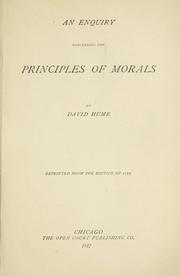
Hume's own favorite work, presenting his moral philosophy — that morality is grounded in sentiment and utility — in clear, elegant prose. Pairs naturally with the first Enquiry.
Going Deeper: The Masterwork
IntermediateEngage with Hume's full, systematic philosophical system — his bundle theory of the self, deeper account of causation, passions, and the is-ought problem — as laid out in his magnum opus.
▸ Study plan for this stage
Pace: 8–10 weeks, ~40–50 pages/day (with 2–3 days per week for review and reflection)
- The bundle theory of the self: the self as a collection of perceptions rather than a unified substance
- Impressions vs. ideas: the distinction between vivid immediate experiences and fainter copies, and how all knowledge derives from impressions
- Causation as constant conjunction: Hume's rejection of necessary connection and his empiricist account of cause and effect
- The passions (pride, humility, love, hatred): their origins in impressions and their role in human motivation and social behavior
- The is-ought problem: the logical gap between descriptive statements (what is) and normative claims (what ought to be)
- Sympathy and moral sentiment: how we extend our concern to others and the basis of moral judgment
- The limits of reason: Hume's skepticism about reason's power and the primacy of custom and habit
- Personal identity and continuity: the puzzle of how we maintain a sense of self over time given the flux of perceptions
- What is Hume's bundle theory of the self, and how does it differ from the rationalist view of the soul as a unified substance?
- How does Hume distinguish between impressions and ideas, and why is this distinction foundational to his entire philosophical system?
- What is Hume's account of causation, and why does he reject the notion of necessary connection between cause and effect?
- How do the passions (pride, humility, love, hatred) arise according to Hume, and what role do they play in human behavior and morality?
- What is the is-ought problem, and why does Hume believe we cannot derive moral conclusions from purely factual premises?
- How does Hume explain moral judgment through sympathy and sentiment rather than reason alone?
- What does Hume mean by saying that reason is 'the slave of the passions,' and what are the implications for human motivation?
- Map out Hume's distinction between impressions and ideas using concrete examples from your own experience (e.g., the vivid impression of touching fire vs. the faint idea of it later)
- Create a visual diagram of the causal chain Hume describes: how constant conjunction leads to the psychological impression of necessity, not metaphysical necessity
- Write a 500-word essay explaining the bundle theory of the self in your own words, using Hume's argument against the unified self and addressing the problem of personal identity over time
- Analyze a contemporary moral debate (e.g., climate policy, wealth redistribution) and identify where the is-ought problem appears—where factual claims are being used to justify normative conclusions
- Trace the origin of a specific passion (pride, love, or hatred) in a relationship or social situation you know, following Hume's causal account of how impressions generate passions
- Construct a dialogue between Hume and a rationalist opponent on whether reason or passion is the primary driver of human action, grounding your arguments in specific passages from the Treatise
Next up: This stage equips you with a comprehensive understanding of Hume's systematic philosophy—his empiricist foundations, his radical skepticism, and his account of human nature—which will prepare you to engage with how later philosophers responded to, refined, or rejected his ideas in subsequent stages of the curriculum.
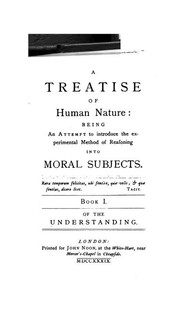
Hume's most ambitious and comprehensive work, written in his twenties. Now that the reader has the Enquiries as a guide, the Treatise's density becomes navigable and richly rewarding.
Broadening: Religion, Politics, and History
IntermediateUnderstand the full scope of Hume's thought beyond epistemology — his devastating critiques of religion, his political essays, and his role as a historian — rounding out the complete Humean worldview.
▸ Study plan for this stage
Pace: 8–10 weeks, ~40–50 pages/day (including re-reading key passages and note-taking)
- The problem of evil and design: Philo's critique of the teleological argument and the limits of natural theology
- Skepticism about causation applied to God: how Hume's epistemology undermines arguments for divine causality
- The role of dialogue form: how Cleanthes, Philo, and Demea represent competing philosophical positions on religion
- Hume's political philosophy: the origins of government, justice, and property as human conventions rather than natural laws
- The utility principle: how Hume grounds morality and politics in human sentiment and social benefit
- Hume as historian: his approach to evidence, causation, and narrative in understanding the past
- Religion and society: Hume's analysis of superstition, enthusiasm, and the social effects of religious belief
- The relationship between theory and practice: how Hume's abstract philosophy applies to concrete political and religious questions
- What are Philo's main objections to the design argument in the Dialogues, and how do they reflect Hume's epistemological principles?
- How does Hume account for the origin of government and justice without appealing to natural law or divine command?
- What is the distinction between superstition and true religion in Hume's essays, and what social consequences does he attribute to each?
- How does Hume's treatment of causation in the Enquiry apply to theological arguments about God as first cause?
- What role does sentiment (rather than reason) play in Hume's account of morality, politics, and religious belief?
- How does Hume's historical method differ from earlier approaches, and what does it reveal about his empiricist commitments?
- Map the three speakers in the Dialogues (Cleanthes, Philo, Demea) to their philosophical positions; identify which arguments Hume himself likely endorses by tracking which positions are left standing at the end
- Write a 500-word essay applying Hume's critique of causation to one theological argument from the Dialogues (e.g., the cosmological argument)
- Analyze one political essay (e.g., 'Of the Original Contract' or 'Of Commerce') by identifying: (a) the conventional origin Hume proposes, (b) the role of utility, (c) how this differs from natural law theories
- Create a comparison table of Hume's account of superstition vs. true religion using specific passages from the essays; note the social and psychological mechanisms he identifies
- Read a passage from Hume's History of England alongside a corresponding essay or Dialogues passage; identify how his historical narrative reflects his philosophical principles
- Debate exercise: defend one position from the Dialogues (Cleanthes, Philo, or Demea) using only Hume's own arguments; have a partner challenge you with counterarguments from the text
Next up: This stage completes the architecture of Hume's mature philosophy—from mind and knowledge to ethics, politics, religion, and history—preparing you to engage with how later philosophers (Kant, the Scottish Enlightenment thinkers, and modern empiricists) responded to and built upon his radical skepticism and naturalism.

Hume's masterpiece on the philosophy of religion, published posthumously. It applies his skeptical method to arguments for God's existence and is among the greatest works in the field.
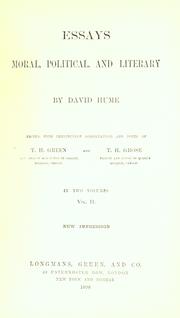
Showcases Hume as a public intellectual engaging with economics, politics, and aesthetics. Reading these essays reveals the breadth of his Enlightenment vision beyond academic philosophy.
Advanced Interpretation: Scholarly Perspectives
ExpertCritically evaluate Hume's philosophy through the lens of leading scholars, understand ongoing debates about his legacy, and situate him in the longer history of Western philosophy.
▸ Study plan for this stage
Pace: 8–10 weeks, ~40–50 pages/day, with 1–2 weeks per major section to allow for deeper engagement with scholarly arguments and cross-referencing between the two texts
- Dicker's reconstruction of Hume's epistemological framework: the role of impressions, ideas, and the limits of human knowledge
- Kemp Smith's 'naturalistic' interpretation: Hume as a proto-pragmatist focused on human nature rather than abstract metaphysics
- The problem of causation and induction in Hume's philosophy and competing scholarly interpretations of his solution
- Hume's treatment of the self and personal identity: the bundle theory and its philosophical implications
- Metaphysical skepticism vs. practical naturalism: reconciling Hume's apparent contradictions
- Hume's influence on subsequent philosophical traditions (empiricism, logical positivism, contemporary epistemology)
- The debate over Hume's consistency: whether his philosophy is internally coherent or fundamentally self-undermining
- Hume's account of belief, custom, and the non-rational foundations of human reasoning
- How do Dicker and Kemp Smith differ in their interpretation of Hume's epistemological project, and what textual evidence does each cite?
- What is Kemp Smith's 'naturalistic' reading of Hume, and how does it resolve apparent tensions between Hume's skepticism and his practical commitments?
- How does Hume's account of causation and induction challenge traditional empiricist and rationalist approaches, and what solutions do the scholars propose?
- What is the 'bundle theory' of the self, and what philosophical problems does it create for Hume's broader system?
- How has Hume's philosophy influenced later philosophical movements, and which aspects of his work remain most contested among scholars?
- Is Hume's philosophy fundamentally self-consistent, or does it contain unresolvable contradictions? What evidence supports each position?
- Create a detailed comparison chart mapping how Dicker and Kemp Smith interpret three key Humean concepts (e.g., causation, the self, belief). Include direct quotations from both scholars and Hume's original texts.
- Write a 2,000-word critical essay evaluating whether Kemp Smith's naturalistic interpretation successfully resolves the tension between Hume's skepticism and his practical philosophy. Use specific passages from both books.
- Reconstruct Hume's argument on causation using Dicker's framework, then reinterpret it using Kemp Smith's naturalistic lens. Identify which interpretation better accounts for Hume's broader philosophical commitments.
- Conduct a close reading of Hume's Treatise passages on personal identity (Book I, Part IV, Section 6), annotating them with marginal notes explaining how Dicker and Kemp Smith each interpret the key claims.
- Debate exercise: Prepare arguments for and against the proposition that 'Hume's philosophy is fundamentally self-undermining.' Use evidence from both scholarly texts to support each position.
- Create an annotated timeline showing how Hume's ideas influenced subsequent philosophers (empiricists, logical positivists, contemporary epistemologists). Reference specific claims from Kemp Smith and Dicker about Hume's legacy.
Next up: This stage equips you with sophisticated scholarly frameworks for interpreting Hume's thought and understanding the philosophical stakes of competing interpretations, preparing you to either engage with specialized monographs on particular Humean problems or to apply Humean insights to contemporary philosophical debates.

A rigorous, chapter-by-chapter philosophical analysis of Hume's core arguments on knowledge and reality. Ideal for readers who want to stress-test and debate Hume's claims at an advanced level.

A landmark scholarly work that revolutionized Hume studies by arguing that sentiment, not reason, is the true foundation of his system. Essential reading for anyone seeking deep mastery of Hume scholarship.
Discussion
Keep reading
Paths that share books, cover the same subject, or open a related topic.