The problem with reading about Nelson Mandela is that the secular-saint version arrived early and crowded out the rest. What it leaves out is a lawyer who helped found an armed wing, a prisoner who spent twenty-seven years running an internal political education programme, and a negotiator who made concessions that some of his own movement never forgave — particularly on the economy.
Reading in order restores the strategist. Begin with his own account, move to the raw record of the prison years, then to the South African context that no biography of one man can carry alone, and finish with the biographies and the reckoning that followed 1994.
His own account
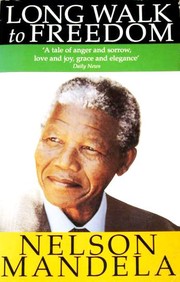
Long Walk to Freedom is the necessary first book, drafted in secret on Robben Island and completed after release. It runs from a Thembu childhood through the Rivonia Trial to the presidency, and its restraint is part of its argument — Mandela had a political purpose in how he presented himself, and it is worth reading with that in view.
Conversations with Myself is the unguarded counterpart: notebooks, letters and taped interviews assembled with far less shaping. Reading it after the autobiography shows how much the public text smoothed.
The prison years and the country
Robben Island prison dossier by Neville Alexander is the documentary record — the conditions, the classifications, the daily administration of political imprisonment, from a fellow prisoner and scholar. It is the least literary book on the path and one of the most valuable.
Fatima Meer's Higher Than Hope was the first substantial biography, written with the cooperation of the family while Mandela was still imprisoned, and it carries an intimacy later scholarly works cannot.
Then widen the lens. Allister Sparks's The mind of South Africa explains how apartheid was built and justified, tracing the ideology back through Afrikaner nationalism and the frontier. Its sequel, Tomorrow is another country, reports the secret negotiations of the late 1980s and early 1990s — the meetings that took place while both sides publicly denied they were talking.
The biographies, and after
Tom Lodge's Mandela is the sharp scholarly treatment, explicitly interested in how the myth was constructed and how Mandela himself participated in constructing it. Anthony Sampson's Mandela is the authorised full-length life, written with access and with the sympathy that access brings — a more generous account and a very good one. David James Smith's Young Mandela concentrates on the pre-prison decades, including the parts of the personal life that the official story handles gently.
Patti Waldmeir's Anatomy of a miracle reports the transition itself, and is clear-eyed about how close it came to failing and what was traded to prevent that. Antjie Krog's Country of my skull, on the Truth and Reconciliation Commission, is the hardest book here and the right closing note: a poet's account of testimony, amnesty and what reconciliation actually cost the people who had to perform it.
The evaluation of the settlement — whether the political victory came at too high an economic price, and how much of that is fairly laid at Mandela's door — is still argued in South Africa and in the scholarship. Sparks, Waldmeir and Krog give you three different vantage points on that question rather than one verdict. Follow the full reading path to keep the order.
Follow the full ordered path here: Nelson Mandela: The Best Books, in Order.