Understanding Freud: the best books on psychoanalysis and the mind
This curriculum takes a beginner from zero familiarity with Freud all the way to critical, culturally-informed mastery. It begins with accessible introductions and Freud's own most readable works, moves through his dense theoretical core, and closes with scholarly assessments of his legacy — so each stage builds the vocabulary, concepts, and confidence needed for the next.
First Encounters — Who Was Freud?
BeginnerGain a clear biographical and conceptual map of Freud's life, era, and core ideas before reading a single word of his dense theory.
▸ Study plan for this stage
Pace: 4–5 weeks, ~40–50 pages/day. Start with Storr's "Freud" (approx. 150–200 pages) over 4–5 days, then move to Kramer's "Freud" (approx. 200–250 pages) over 5–6 days. Allocate remaining time for review, note-synthesis, and reflection exercises.
- Freud's biographical arc: his Viennese Jewish identity, medical training, and the cultural/scientific context of late 19th-century Europe that shaped his thinking
- The development of psychoanalysis as both a clinical method and a revolutionary theory of mind, emerging from his work with hysterical patients
- Core Freudian concepts: the unconscious mind, repression, the talking cure, transference, and the structure of personality (id, ego, superego)
- Freud's major theoretical phases and how his ideas evolved (early cathartic method → free association → structural theory)
- The relationship between Freud's personal life, neuroses, and his theoretical innovations (self-analysis, dreams, symbolism)
- Freud's influence on 20th-century thought and the historical reception of psychoanalysis in his lifetime
- Key distinctions between Freud's actual theories and popular misconceptions or oversimplifications
- The intellectual and scientific debates Freud engaged with (neurology, hypnosis, sexuality, religion, art)
- Who was Sigmund Freud, and what were the major biographical events and cultural contexts that shaped his intellectual development?
- How did Freud's work with hysterical patients lead to the discovery of the unconscious mind and the development of psychoanalysis?
- What are the core mechanisms of the unconscious according to Freud (e.g., repression, symbolism, wish-fulfillment), and how do they operate?
- How did Freud's theory of personality structure (id, ego, superego) develop, and what role does conflict play in his model?
- What is transference, and why did Freud consider it central to both the therapeutic process and human psychology?
- How did Freud's ideas evolve over his lifetime, and what were the major shifts in his thinking?
- Create a detailed timeline of Freud's life (birth to death) with key personal events, professional milestones, and theoretical breakthroughs marked. Annotate each entry with how it may have influenced his ideas.
- Write a 2–3 page biographical sketch of Freud that captures his era, personality, and the 'why' behind his theories—as if introducing him to an intelligent friend unfamiliar with psychoanalysis.
- Construct a concept map showing how Freud's major ideas (unconscious, repression, transference, id/ego/superego) relate to and build upon each other.
- Identify 5–7 key misconceptions about Freud that are common in popular culture, then use the two books to explain what Freud actually said versus the caricature.
- Compare Storr's and Kramer's presentations of Freud: note differences in emphasis, tone, and which aspects each author prioritizes. Reflect on how these different lenses shape your understanding.
- Select one of Freud's case studies mentioned in the books (e.g., Anna O., Little Hans, the Rat Man) and write a brief analysis of how it illustrates a core Freudian concept.
Next up: This stage establishes the historical person, his formative influences, and the foundational architecture of psychoanalytic theory, equipping you with essential context and vocabulary so that subsequent stages can dive into Freud's primary texts and specific theoretical domains without requiring constant biographical or conceptual backfilling.
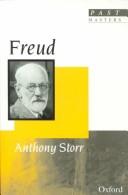
A compact, jargon-free overview of Freud's major ideas by a respected psychiatrist — the ideal first orientation before tackling primary texts.
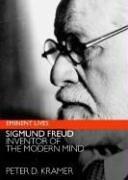
A lively intellectual biography that places Freud in his historical moment, making his motivations and breakthroughs feel human and understandable.
Freud in His Own Words — The Readable Classics
BeginnerRead Freud's own most accessible writings to hear his voice directly and grasp the unconscious, dreams, slips, and the structure of the mind firsthand.
▸ Study plan for this stage
Pace: 6–8 weeks, ~25–30 pages/day (approximately 3–4 weeks per book, accounting for re-reading difficult passages and note-taking)
- The dream as a window into unconscious wishes and the mechanisms of dream-work (condensation, displacement, symbolism)
- Parapraxes (Freudian slips) as revealing unconscious thoughts and desires in everyday speech and action
- The topography of the mind: the distinction between conscious, preconscious, and unconscious mental processes
- Repression and the dynamic unconscious: how forbidden impulses and traumatic memories are pushed out of awareness
- The interpretation of dreams and everyday errors as a method for accessing unconscious material
- Psychoanalysis as a talking cure: how free association and analysis of resistance unlock unconscious content
- The role of sexuality and infantile experiences in shaping the unconscious mind
- Transference and the therapeutic relationship as central to psychoanalytic work
- What are the four main mechanisms of dream-work that Freud identifies, and how do they transform latent dream-thoughts into the manifest dream?
- How does Freud explain Freudian slips (parapraxes), and what do they reveal about the unconscious mind?
- What is the difference between the conscious, preconscious, and unconscious in Freud's model of the mind, and how do they interact?
- Why does Freud argue that dreams and everyday errors are not random but meaningful expressions of unconscious desires?
- What is the talking cure, and how does free association help bring unconscious material into consciousness?
- How does repression work, and why does Freud believe it is central to understanding neurosis and psychological conflict?
- Keep a dream journal for 2–3 weeks: record your dreams immediately upon waking, then apply Freud's dream-work mechanisms (condensation, displacement, symbolism) to identify possible latent meanings and unconscious wishes.
- Document your own Freudian slips over one week: write down verbal mistakes, memory lapses, and misreadings you make or observe, then analyze what unconscious thought or desire might be revealed by each slip.
- Perform a close reading exercise: select one dream passage from 'On Dreams' and one parapraxis example from 'The Psychopathology of Everyday Life,' then write a 1–2 page analysis showing how Freud's interpretive method works step-by-step.
- Practice free association: choose a word, image, or memory from your own life and write continuously for 10 minutes without censoring, then reflect on what unconscious themes or connections emerged.
- Create a visual map of Freud's tripartite mind (conscious/preconscious/unconscious) and annotate it with specific examples from the three books showing how material moves between these layers.
- Role-play a mini-analysis: with a partner or alone, practice the analyst's listening stance—notice resistance, contradictions, and emotional reactions—as you or they recount a personal anecdote or dream, then hypothesize what unconscious conflict might be at play.
Next up: This stage grounds you in Freud's core discoveries and interpretive method through his own voice, preparing you to engage critically with his theoretical frameworks and to understand how later psychoanalytic thinkers built upon, challenged, or refined his ideas about the unconscious, development, and the structure of personality.
Freud's own short condensation of his dream theory — far more approachable than the full Interpretation of Dreams and the perfect entry point to his primary texts.

Freud at his most entertaining: full of vivid examples of slips, forgetting, and errors that make the unconscious feel immediately real and personally relevant.
Delivered to a general American audience, these lectures are Freud's clearest self-summary of psychoanalysis — an ideal bridge to his harder theoretical works.
The Theoretical Core — Dreams, Sexuality, and the Psyche
IntermediateEngage with Freud's landmark theoretical texts on dream interpretation, infantile sexuality, and the architecture of the mind (id, ego, superego).
▸ Study plan for this stage
Pace: 12–14 weeks, ~40–50 pages/day (accounting for Freud's dense prose and the need for re-reading key passages)
- The dream as the royal road to the unconscious: manifest content vs. latent content, and the mechanisms of condensation, displacement, and symbolism
- Infantile sexuality and psychosexual development: the oral, anal, phallic, latency, and genital stages, and how fixations shape adult personality
- The Oedipus complex as the central organizing principle of psychosexual development and neurosis
- The tripartite structure of the psyche: id (pleasure principle), ego (reality principle), and superego (moral conscience), and their dynamic conflicts
- Defense mechanisms, particularly repression, as the ego's strategy for managing unconscious drives and anxiety
- The concept of libido as psychic energy and its distribution across the psyche and developmental stages
- Transference and the therapeutic relationship as a window into unconscious dynamics
- What is the distinction between manifest and latent dream content, and what mechanisms does Freud identify as responsible for the transformation between them?
- How does Freud conceptualize infantile sexuality, and what are the key characteristics and potential outcomes of fixation at each psychosexual stage?
- What is the Oedipus complex, why does Freud consider it universal, and how does its resolution (or failure to resolve) shape neurotic symptoms?
- How do the id, ego, and superego interact dynamically, and what role does anxiety play in triggering defense mechanisms?
- What is repression, and how does it differ from other defense mechanisms Freud discusses?
- How does Freud use dream analysis and free association as clinical tools to access unconscious material?
- Record and analyze your own dreams over 2–3 weeks using Freud's framework: identify manifest content, hypothesize latent content, and trace possible condensations, displacements, and symbols
- Create a detailed timeline of your own psychosexual development (oral, anal, phallic, latency, genital stages) and identify potential fixations or conflicts; reflect on how these may manifest in current behaviors or relationships
- Write a 3–4 page reflective essay on your relationship with a parent or authority figure, examining it through the lens of the Oedipus complex and transference
- Map out the id, ego, and superego in a specific personal conflict or decision you've faced; identify the competing drives, reality constraints, and moral pressures, and trace how defense mechanisms resolved the tension
- Conduct a close textual analysis of one dream passage from 'The Interpretation of Dreams' (e.g., Freud's own dream of Irma's injection), breaking down the mechanisms at work and evaluating the plausibility of Freud's interpretation
- Practice free association on a single word or image for 10 minutes, then analyze the chain of associations for patterns, repressions, or symbolic content
Next up: This stage establishes Freud's foundational model of the unconscious mind and its clinical manifestations; the next stage will build on this architecture to explore how these dynamics operate in pathology, therapeutic technique, and later psychoanalytic schools that critique or extend Freud's theories.

Freud's masterwork and the foundation of psychoanalysis — now readable because earlier stages have built the vocabulary and conceptual scaffolding it demands.

Freud's revolutionary account of infantile sexuality, libido, and psychosexual development — essential for understanding the engine driving his entire system.
Introduces the structural model (id, ego, superego) that revised and completed his earlier topographic theory — the capstone of his theoretical architecture.
Freud on Culture, Religion, and Civilization
IntermediateSee how Freud extended psychoanalytic ideas beyond the clinic to explain art, religion, war, and the discontents of modern society.
▸ Study plan for this stage
Pace: 6–8 weeks, ~25–30 pages/day. *Totem and Taboo* (4 weeks, dense; ~20 pages/day) followed by *Civilization and Its Discontents* (2–3 weeks, more accessible; ~30 pages/day). Build in 1 week for review and synthesis.
- The primal horde theory and the origins of social organization through patricide and collective guilt (*Totem and Taboo*)
- Totemism as a psychological and social phenomenon rooted in ambivalence toward the father figure
- The repression of instincts and the formation of civilization as a necessary but costly trade-off
- Eros and Thanatos as fundamental drives shaping cultural and individual life (*Civilization and Its Discontents*)
- The superego as internalized social authority that enforces renunciation of instinctual satisfaction
- Sublimation as the mechanism by which repressed drives are redirected into cultural achievements (art, science, religion)
- Religion as a neurotic symptom of civilization—a collective obsessional neurosis that serves psychological needs
- The inherent conflict between individual desire and social necessity, and the resulting discontent in modern civilization
- How does Freud explain the origins of social organization and morality through the primal horde myth in *Totem and Taboo*? What psychological mechanisms does he invoke?
- What is the relationship between totemism and the Oedipal complex? How does Freud use this connection to explain religious and social taboos?
- According to *Civilization and Its Discontents*, what is the fundamental conflict between civilization and human instinctual life, and why is this conflict inevitable?
- How does Freud distinguish between Eros and Thanatos, and what role do these drives play in the formation of culture and the capacity for aggression?
- What is sublimation, and how does Freud argue it enables both individual psychological survival and cultural achievement?
- Why does Freud characterize religion as a neurotic symptom or obsessional neurosis? What psychological functions does it serve despite being illusory?
- Create a detailed diagram or outline of Freud's primal horde theory from *Totem and Taboo*, mapping the sequence from patricide → guilt → totemism → social law. Annotate with psychological mechanisms (repression, identification, ambivalence).
- Write a 2–3 page comparative analysis: How does Freud's explanation of totemism in *Totem and Taboo* parallel his account of the Oedipal complex in individual development? What are the strengths and weaknesses of this analogy?
- Select a specific cultural practice or institution (e.g., a religious ritual, a legal prohibition, a social taboo). Analyze it through Freud's framework from *Totem and Taboo*—what repressed conflicts might it express or contain?
- Chart the key tensions Freud identifies in *Civilization and Its Discontents* (e.g., individual vs. society, Eros vs. Thanatos, satisfaction vs. renunciation). For each, note concrete examples from modern life and explain how Freud would interpret them.
- Identify three examples of sublimation in your own life or in culture (e.g., art, work, relationships). Explain how repressed instincts are redirected and what psychological benefit results.
- Debate Freud's claim that religion is a neurotic symptom. Prepare arguments both for and against this thesis, drawing on specific passages from *Civilization and Its Discontents*. What would a critic say? What would Freud's response be?
Next up: This stage establishes Freud's grand narrative of how civilization emerges from and perpetually conflicts with human instinct, setting the foundation for examining how psychoanalytic theory applies to specific domains—whether that be art, literature, history, or clinical practice in subsequent stages.

Freud's bold application of psychoanalysis to anthropology and the origins of religion — shows the ambition and reach of his thinking beyond individual psychology.

His most celebrated cultural essay, arguing that civilization itself generates neurosis — a profound and still-debated meditation on human happiness and society.
Critical Legacy — Assessing Freud's Influence
ExpertEvaluate Freud's ideas through the eyes of leading scholars and critics, understanding what has endured, what has been revised, and how he shaped modern culture and thought.
▸ Study plan for this stage
Pace: 5–6 weeks, ~40–50 pages/day (approximately 280–300 pages total across both books)
- Orientalism and cultural imperialism in Freud's work: how Freud's theories reflect and reinforce Western dominance over non-European cultures
- The relationship between psychoanalysis and colonialism: Freud's blind spots regarding non-Western subjectivity and agency
- Post-Freudian revisions: how Mitchell and others moved beyond classical drive theory toward relational and interpersonal models
- The concept of the 'object relations' school: understanding others as separate subjects rather than projections of internal fantasy
- Ego psychology and the expansion of psychoanalytic technique beyond the unconscious to adaptive functioning
- Attachment theory, self-psychology, and intersubjectivity as alternatives to Freud's instinctual model
- Freud's enduring contributions to culture, literature, and the humanities despite theoretical limitations
- The politics of psychoanalysis: how theory reflects and shapes power relations, identity, and social structures
- How does Said argue that Freud's theories about sexuality, the unconscious, and 'primitive' psychology reflect and reinforce Western colonial attitudes toward non-European peoples?
- What are the key limitations of classical Freudian theory when applied to non-Western contexts, and what does Said suggest about the universality of psychoanalytic concepts?
- How do Mitchell and the post-Freudian schools (object relations, ego psychology, self-psychology) fundamentally revise Freud's model of human motivation and development?
- What is the shift from drive-based to relational models of psychoanalysis, and why does this matter for understanding human connection and therapeutic practice?
- Which aspects of Freud's legacy have proven most durable and influential in contemporary psychology, culture, and the humanities, and which have been largely abandoned?
- How can psychoanalytic theory be decolonized or made more culturally sensitive, and what role do post-Freudian thinkers play in this project?
- Close-read Said's introduction and key chapters on Freud's Orientalism; annotate passages where Freud makes claims about 'primitive' or non-European psychology and trace how these reflect colonial assumptions
- Create a comparative chart mapping classical Freudian concepts (id/ego/superego, Oedipus complex, repression) against post-Freudian revisions presented in Mitchell; note what is retained, revised, and rejected
- Write a 2–3 page critical essay: 'How would a post-Freudian, culturally-informed psychoanalysis address one of Freud's case studies?' (e.g., the Wolf Man, Dora)
- Debate exercise: argue both sides—'Freud's theories are universal psychological truths' vs. 'Freud's theories are products of Western culture and cannot be universalized'—using evidence from Said and Mitchell
- Identify and analyze one contemporary cultural artifact (film, novel, advertisement, social media trend) and explain how it reflects either classical Freudian assumptions or post-Freudian revisions
- Create a genealogical diagram showing how Freud's ideas branched into different schools (object relations, ego psychology, self-psychology, relational psychoanalysis); note key figures and their departures from Freud
Next up: This stage equips you to recognize both the power and the parochialism of psychoanalytic thought, preparing you to engage with contemporary applications—whether in clinical practice, cultural criticism, or social justice work—with both appreciation for psychoanalysis's insights and critical awareness of its limitations.
A short, sharp postcolonial reading of Freud that opens up questions of identity and cultural belonging — a thought-provoking critical counterpoint after deep immersion in the texts.
A masterful survey of how post-Freudian thinkers — Klein, Winnicott, Kohut, Lacan — built on and transformed his legacy, giving the reader a panoramic view of the whole psychoanalytic tradition.
Discussion
Keep reading
Paths that share books, cover the same subject, or open a related topic.