Understanding Christianity: essential books on its beliefs and history
This curriculum takes a beginner from zero background all the way to a sophisticated understanding of Christianity — its scriptures, theology, history, and living traditions. Each stage builds on the last: first establishing narrative and cultural familiarity, then engaging the primary texts, then unpacking two millennia of theological development, and finally exploring the rich diversity of Christian thought and practice today.
Foundations: Story, Context & Overview
BeginnerGain a clear, accessible orientation to what Christianity is — its origins in Judaism, the life of Jesus, and its basic shape as a world religion — before touching primary sources.
▸ Study plan for this stage
Pace: 6–7 weeks, ~25–30 pages/day (González first 3–4 weeks, then Wright 2–3 weeks)
- Christianity's roots in first-century Judaism and the historical context of Jesus's life and ministry
- The narrative arc of Christianity from Jesus through the early church, medieval period, Reformation, and into modernity
- Core Christian convictions: incarnation, resurrection, redemption, and the role of the church as the body of Christ
- How Christianity spread geographically and culturally, adapting to different contexts while maintaining central claims
- The relationship between Christian belief and Christian practice—how doctrine shapes discipleship and community
- Key turning points and figures that shaped Christian development (Paul, Constantine, Augustine, Luther, Wesley, etc.)
- Christianity as a lived religion, not merely a set of doctrines, with implications for ethics, worship, and mission
- The diversity within Christianity (denominational differences) and the underlying unity of core convictions
- How did Jesus's Jewish context shape his message, and why is understanding first-century Judaism essential to understanding Christianity?
- What are the major historical periods González identifies in Christianity's development, and what characterized each one?
- According to Wright, what are the 'marks of the Christian' and how do they reflect Jesus's own priorities and teachings?
- How did the early church understand and live out the resurrection of Jesus, and what difference did it make to their community and mission?
- What role did cultural adaptation play in Christianity's spread, and how did this create both unity and diversity within the faith?
- How do the core Christian convictions (incarnation, redemption, resurrection) connect to the way Christians are called to live and act in the world?
- Create a visual timeline of Christianity's major periods (using González's framework) with 3–4 key events, figures, or developments per era; annotate how each shaped Christian identity
- Read one Gospel passage (e.g., Mark 1:1–15 or John 1:1–18) alongside González's chapters on Jesus to identify how the historical and theological contexts illuminate the text
- Write a 1–2 page personal reflection: 'What surprised me about Christianity's origins and early development?' and 'How does this change my understanding of what Christianity is?'
- Map Wright's 'marks of the Christian' (justice, spirituality, holiness, love) onto a specific Christian community, historical figure, or contemporary example; assess how well they embody these marks
- Create a comparison chart of 2–3 major Christian traditions (e.g., Catholic, Orthodox, Protestant) based on González's historical account; note where they diverged and what they share
- Interview a Christian from a different tradition or cultural background (if possible) about how their faith is lived and practiced; reflect on how this illustrates the themes from both books
Next up: This stage equips you with the historical narrative, theological foundations, and lived texture of Christianity so that you can now engage primary sources—Scripture, creeds, and early Christian writings—with genuine comprehension of their context, stakes, and ongoing significance.
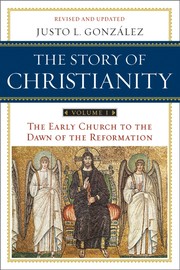
A masterful, readable two-volume history condensed into one narrative arc — ideal as a first map of the entire Christian story from the first century to the present. Reading it first gives the learner a skeleton on which everything else hangs.

A leading New Testament scholar explains what Christians actually believe and why, in plain language. It bridges the gap between cultural curiosity and theological substance without assuming any prior knowledge.
Primary Texts: Scripture & Its World
BeginnerRead and understand the Bible as Christianity's foundational document — knowing how to approach it, what each major section does, and how it was formed and interpreted.
▸ Study plan for this stage
Pace: 8–10 weeks, ~25–30 pages/day (5–6 days per week). Week 1–3: "How to Read the Bible for All Its Worth" (~300 pages); Week 4–8: "The Bible of Cock" (~200–250 pages); Week 9–10: review and integration exercises.
- Hermeneutical principles: how to interpret Scripture responsibly by understanding genre, historical context, and authorial intent
- The structure and major sections of the Bible: Law, History, Poetry, Prophecy, Gospels, Epistles, and Apocalyptic literature
- How the Bible was formed: canonization, textual transmission, and the relationship between Old and New Testaments
- Genre-specific reading strategies: how to read narrative, poetry, epistles, and apocalyptic differently
- The role of cultural and historical context in understanding biblical meaning
- How the Bible has been interpreted across Christian traditions and what that reveals about the text itself
- What are the main hermeneutical principles Fee outlines, and why does historical-grammatical interpretation matter for reading Scripture?
- How do you approach reading different genres in the Bible (narrative, poetry, epistles, apocalyptic), and what mistakes do readers commonly make with each?
- What is the canon of Scripture, how was it formed, and why do different Christian traditions have different canons?
- How does understanding the historical and cultural world of the biblical authors change your interpretation of specific passages?
- What does 'The Bible of Cock' reveal about how Scripture has been understood, interpreted, or misinterpreted across different contexts?
- How do the principles from 'How to Read the Bible for All Its Worth' help you evaluate competing interpretations of a biblical text?
- Close reading exercise: Select one passage from each major biblical genre (e.g., Genesis 1–2, Psalm 23, Matthew 5–7, Romans 3, Revelation 4–5) and apply Fee's hermeneutical framework to each, noting how genre shapes interpretation.
- Comparative interpretation: Choose a single biblical passage and research 2–3 different historical or theological interpretations of it (from 'The Bible of Cock' or other sources); analyze what assumptions and contexts shaped each interpretation.
- Genre study: Deep-dive into one biblical genre (e.g., wisdom literature, parables, epistles) by reading 3–4 examples and identifying the conventions, purposes, and common pitfalls in reading that genre.
- Historical context mapping: Select a passage from a biblical book and research its historical, cultural, and literary context; write a 1–2 page analysis of how this context illuminates the text's meaning.
- Canonization timeline: Create a visual timeline or written summary of how the biblical canon was formed, noting key councils, debates, and why certain texts were included or excluded.
- Hermeneutical self-audit: Identify a biblical passage you've previously misinterpreted or misunderstood; explain what went wrong (genre confusion? historical ignorance? cultural assumption?) and reinterpret it using Fee's principles.
Next up: By mastering how to read Scripture responsibly and understanding its formation and diverse interpretations, you're now equipped to move into deeper theological study—exploring what the Bible *teaches* about God, humanity, salvation, and the Christian life.

Before reading the Bible itself, this widely-used guide teaches the learner how different genres (Gospel, epistle, prophecy, poetry) work and how to avoid common misreadings. It is the essential 'user manual.'

The primary source itself — read at minimum the Gospel of Mark (the earliest Gospel), the Gospel of John, Paul's letter to the Romans, and Genesis. Having the overview from Stage 1 makes these texts immediately meaningful rather than bewildering.
Core Theology: Beliefs, Creeds & Doctrine
IntermediateUnderstand the central doctrines of Christianity — the Trinity, Incarnation, atonement, salvation, and the creeds — and how they were hammered out in the early centuries.
▸ Study plan for this stage
Pace: 12–14 weeks, ~25–30 pages/day (with reflection breaks). Mere Christianity (8 weeks, ~20 pages/day); Apostolic Fathers (2–3 weeks, ~15 pages/day); On the Incarnation (2–3 weeks, ~20 pages/day).
- The Trilemma and the logical necessity of Christ's divinity (Lewis's argument that Jesus must be Lord, liar, or lunatic)
- The Trinity as three-in-one: how the early church reconciled monotheism with Father, Son, and Holy Spirit
- The Incarnation: God becoming human in Christ and why this matters for salvation and human dignity
- Atonement theories: how Christ's death and resurrection accomplish redemption (substitution, ransom, moral influence)
- The creeds (Apostles', Nicene, Chalcedon) as crystallizations of apostolic faith and defenses against heresy
- The role of the Apostolic Fathers in transmitting and interpreting apostolic doctrine in the post-New Testament era
- Theosis (deification): the Eastern understanding that salvation means becoming partakers of the divine nature
- The relationship between reason and faith: how doctrine develops through both Scripture and rational reflection
- What is Lewis's Trilemma, and how does it function as an argument for Christ's divinity?
- How do the Apostolic Fathers (Ignatius, Polycarp, Clement) defend and clarify apostolic doctrine in their letters, and what heresies were they combating?
- What does Athanasius mean by theosis (deification), and how does his understanding of the Incarnation differ from Western substitutionary atonement?
- What are the key differences between the Apostles' Creed, the Nicene Creed, and the Chalcedonian Definition, and what theological problems was each designed to solve?
- How does Lewis explain the Trinity in Mere Christianity, and how does this compare to the conciliar definitions in the early creeds?
- Why did the early church insist on both Christ's full divinity and full humanity, and what was at stake theologically?
- Map Lewis's four arguments for Christianity (Book II) against the core doctrines: write one paragraph per argument showing how it supports the Trinity, Incarnation, or atonement.
- Create a timeline of the Apostolic Fathers with key theological contributions: for each (Ignatius, Polycarp, Clement, Barnabas), note one doctrine they clarified and one heresy they opposed.
- Outline Athanasius's argument in On the Incarnation: why did God become human? Trace his logic from the problem (human corruption) through the solution (theosis).
- Comparative creed analysis: place the Apostles' Creed, Nicene Creed, and Chalcedonian Definition side-by-side; highlight additions and note what theological controversy prompted each.
- Write a 2–3 page synthesis: explain how Lewis's accessible language in Mere Christianity conveys the same core truths that the Apostolic Fathers and Athanasius defended with more technical precision.
- Debate exercise: argue both sides of a patristic controversy (e.g., Arianism vs. Nicene orthodoxy, or Nestorianism vs. Chalcedon) using evidence from the Apostolic Fathers and Athanasius.
Next up: This stage equips you with the classical doctrinal foundations and the theological reasoning behind them, preparing you to explore how these creeds were lived out, defended, and sometimes contested in the early church's practice, worship, and encounters with heresy and empire.
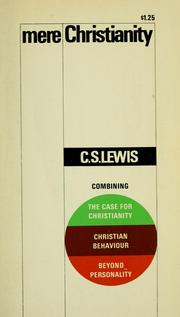
The most widely-read introduction to Christian doctrine in the modern era. Lewis distills the core beliefs shared across traditions with extraordinary clarity, making it the perfect bridge from narrative history to systematic theology.
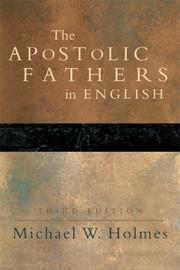
A collection of the earliest Christian writings outside the New Testament (Clement, Ignatius, the Didache). Reading these voices from the 1st–2nd centuries shows how doctrine and practice began to crystallize immediately after the apostolic age.

The single most important early theological treatise — Athanasius's 4th-century defense of the doctrine that God became human. It is short, profound, and central to understanding every major creed and council that followed.
History of Thought: From the Councils to the Reformation
IntermediateTrace how Christianity developed intellectually and institutionally across fifteen centuries — through Augustine, the medieval synthesis, the Great Schism, and the Protestant Reformation.
▸ Study plan for this stage
Pace: 8–10 weeks, ~40–50 pages/day (with reflection days built in)
- Augustine's integration of Neoplatonic philosophy with Christian theology, especially his concepts of grace, free will, and the divided self
- The role of church councils (Nicaea, Chalcedon, etc.) in standardizing doctrine and the political dimensions of theological disputes
- The medieval synthesis: how scholasticism (Aquinas, Anselm) attempted to reconcile faith and reason
- The institutional development of the papacy and the feudal church, including corruption and reform movements
- The Great Schism (1054) and the theological and political fractures between East and West
- Late medieval crises: conciliarism, the Avignon papacy, and growing lay piety versus clerical authority
- The theological, political, and economic causes of the Protestant Reformation, not just its religious grievances
- How Reformation figures (Luther, Calvin, Zwingli) drew on medieval and patristic sources while breaking with Rome
- How does Augustine's theology of grace and predestination shape later Christian thought, and what tensions does he identify between human free will and divine sovereignty?
- What role did the early ecumenical councils play in defining Christian orthodoxy, and how were theological disputes entangled with political power?
- How did medieval scholasticism attempt to reconcile faith and reason, and what were its limitations?
- What institutional and theological factors led to the Great Schism, and how did it reshape Christianity?
- What were the major abuses and crises in the late medieval church that created conditions for the Reformation?
- How did the Protestant Reformation challenge both medieval theology and church authority, and what were its diverse regional expressions?
- Read Augustine's *Confessions* Book VIII (on conversion) and Book X (on memory) closely; write a 2–3 page reflection on how Augustine's personal struggle with will and grace illuminates his theology
- Create a timeline of the seven ecumenical councils (Nicaea through Chalcedon) with key doctrinal decisions and the political context; annotate which decisions still shape Christian denominations today
- Compare Augustine's view of grace (from *Confessions*) with Aquinas's synthesis in Shelley's summary; write a short dialogue between the two figures on free will
- Map the institutional corruption Shelley describes (simony, clerical celibacy conflicts, papal politics) and identify which abuses each Reformation figure explicitly targeted
- Read MacCulloch's chapters on the Great Schism and the late medieval church; create a visual diagram showing how theological disagreements (filioque, papal authority) connected to political divisions
- Select one Reformation figure (Luther, Calvin, or Zwingli) and trace how MacCulloch shows their ideas emerging from medieval sources; write a 3–4 page essay on continuity and rupture
Next up: This stage establishes the intellectual and institutional foundations of Christianity's major divisions, preparing you to examine how these Reformation-era conflicts crystallized into distinct denominations and shaped the modern Christian landscape.
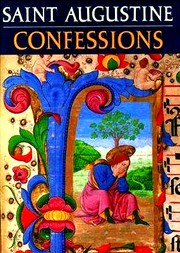
The most influential autobiography in Western history and the foundational text of Western Christian theology. Augustine's wrestling with sin, grace, and God shaped Catholic, Protestant, and Orthodox thought alike — reading him is non-negotiable.

A clear, chronological narrative of how the Church developed from the apostles through the 20th century. It fills in the historical connective tissue between the primary sources and makes the Reformation and its aftermath fully intelligible.
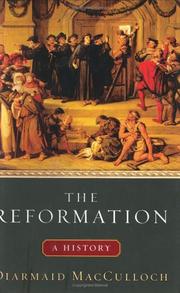
The definitive modern account of the 16th-century rupture that produced Lutheranism, Calvinism, Anglicanism, and the Catholic Counter-Reformation. MacCulloch's scholarship is authoritative yet accessible, and this period is impossible to understand Christianity without.
Traditions & Modern Thought: Depth & Diversity
ExpertEngage with the major living traditions (Catholic, Orthodox, Protestant) and with serious modern theological reflection, arriving at a nuanced, adult understanding of Christianity's intellectual richness.
▸ Study plan for this stage
Pace: 12–14 weeks, ~40–50 pages/day (with reflection time). Allocate roughly 4–5 weeks per book, allowing for re-reading difficult passages and theological digestion between texts.
- Theosis (deification) as the Orthodox understanding of salvation and spiritual transformation, central to Eastern Christian anthropology
- The role of Tradition, Scripture, and the Magisterium in Catholic theology, and how Catholic systematic theology integrates reason with faith
- The doctrine of grace and justification in Protestant thought, particularly Bonhoeffer's critique of 'cheap grace' and the radical demands of discipleship
- Christological and Trinitarian foundations across traditions: how each emphasizes different aspects (Christ as Pantocrator in Orthodoxy, Christ as sacramental presence in Catholicism, Christ as costly Lord in Protestantism)
- The relationship between mysticism and dogma: how Orthodox apophatic theology, Catholic sacramental theology, and Protestant existential faith address the ineffable nature of God differently
- Modern theological method: how Bonhoeffer's contextual, prophetic theology models engagement with contemporary culture and ethical crisis
- Ecclesiology across traditions: the nature of the Church, authority structures, and the communion of saints
- The integration of intellectual rigor with lived spirituality: how each tradition models the unity of doctrine and devotion
- What is theosis, and how does the Orthodox understanding of salvation as deification differ fundamentally from Western juridical models of justification?
- How does the Catholic tradition integrate Scripture, Tradition, and the teaching Magisterium, and what is the theological rationale for papal authority and development of doctrine?
- What does Bonhoeffer mean by 'cheap grace' versus 'costly grace,' and how does this distinction reshape Protestant understanding of discipleship and Christian ethics?
- How do the three traditions differ in their Christology and Trinitarian theology, and what does each emphasize about the person and work of Christ?
- What is the relationship between apophatic (negative) theology in Orthodoxy and the sacramental theology of Catholicism? How do they both preserve mystery while making God knowable?
- How does Bonhoeffer's theology emerge from and respond to the specific historical crisis of Nazi Germany, and what does this teach about the contextual nature of Christian thought?
- After reading Ware's chapters on theosis, write a 2–3 page reflection comparing theosis to the Protestant concept of justification by faith. What is gained and lost in each framework?
- Create a detailed chart mapping Catholic sources of authority (Scripture, Tradition, Magisterium) with specific examples from McBrien. How do these interact in practice?
- Read and annotate one of Bonhoeffer's key passages on grace (e.g., the opening of *The Cost of Discipleship*). Write a modern-day parable illustrating 'cheap grace' in contemporary Christian life.
- Attend or watch a liturgical service from a tradition unfamiliar to you (Orthodox Divine Liturgy, Catholic Mass, or Protestant worship). Reflect in writing on how the theology you've studied manifests in worship and practice.
- Construct a comparative table of salvation theology across the three traditions, noting how each answers: What is the human problem? What is God's solution? What is the Christian's response?
- Write a dialogue between an Orthodox theologian (drawing on Ware), a Catholic theologian (drawing on McBrien), and Bonhoeffer debating the relationship between faith and reason, tradition and Scripture, grace and human responsibility.
Next up: This stage equips you with deep, tradition-specific theological literacy and models of rigorous Christian thought, preparing you to engage with contemporary Christian voices, global expressions of faith, and the practical application of theology to ethics, justice, and mission in the next stage.

The most accessible introduction to Eastern Orthodox Christianity — its mystical theology, liturgy, and spirituality. It corrects the Western bias of most introductory reading and reveals a whole dimension of the tradition often overlooked.
A comprehensive, scholarly yet readable account of Catholic belief, practice, and history. Placed here, it allows the learner to compare the Catholic synthesis with the Orthodox and Protestant perspectives already encountered.

Bonhoeffer's classic Protestant theological work — written under Nazi Germany — confronts what it actually means to follow Christ. It is one of the most serious and searching works of 20th-century Christian thought and a fitting capstone to the entire curriculum.
Discussion
Keep reading
Paths that share books, cover the same subject, or open a related topic.