Best Books to Understand Judith Butler, in Order
This curriculum is designed for an expert reader who wants to move from Butler's foundational theoretical framework through her mature political writings and into the critical debates surrounding her work. Because the starting level is expert, the path skips introductory theory primers and opens directly with the intellectual context that shaped Butler, then moves through her canonical texts, her later ethical and political turn, and finally the scholarly controversies and responses her work has generated.
Philosophical Roots & Context
ExpertGrasp the Hegelian, Foucauldian, and psychoanalytic lineages Butler draws on, so that her own arguments feel like deliberate interventions rather than isolated claims.
▸ Study plan for this stage
Pace: 6–7 weeks, ~25–30 pages/day. Foucault's *History of Sexuality* (approx. 150 pages) in weeks 1–2; Butler's *Subjects of Desire* (approx. 250–280 pages) in weeks 3–6, with week 7 reserved for synthesis and review.
- Foucault's repressive hypothesis and the productive nature of power: sexuality is not repressed but produced through discourse and institutional practices
- The genealogical method: tracing how modern sexuality emerged through historical ruptures rather than linear progress
- Biopower and the regulation of life: how power operates not through prohibition alone but through normalization and the management of populations
- Desire as a philosophical problem in Hegelian thought: recognition, self-consciousness, and the master-slave dialectic as Butler inherits it
- Butler's reading of Hegel through psychoanalysis: how subjective formation depends on impossible identifications and the role of the Other
- The connection between Foucault's genealogy and Butler's later project: understanding how subjects are constituted through historical, discursive, and psychic processes rather than pre-existing
- Psychoanalytic concepts (lack, foreclosure, melancholia) as tools for understanding subjectivity beyond rational choice or intentionality
- What does Foucault mean by the 'repressive hypothesis,' and why does he argue that sexuality is produced rather than repressed?
- How does Foucault's genealogical method differ from a conventional history of sexuality, and what does this method reveal about the emergence of modern sexuality?
- What is biopower, and how does it function as a form of regulation that goes beyond simple prohibition?
- In Butler's reading of Hegel in *Subjects of Desire*, what role does the Other play in the formation of self-consciousness and desire?
- How does Butler use psychoanalytic concepts (particularly around identification and loss) to complicate Hegelian dialectics?
- What connections can you draw between Foucault's account of how sexuality is historically produced and Butler's later argument about how subjects are constituted through discourse and repetition?
- Create a timeline mapping Foucault's key historical ruptures in the emergence of modern sexuality (confessional practices, medical discourse, psychiatry). Annotate each with a specific passage from *History of Sexuality* that illustrates the shift.
- Write a 500-word genealogical analysis of a contemporary identity category (e.g., 'the anxious professional,' 'the wellness enthusiast') using Foucault's method: trace its emergence through discourse, institutions, and power relations rather than treating it as natural.
- Diagram the master-slave dialectic as Butler presents it in *Subjects of Desire*, showing how recognition, desire, and self-consciousness intertwine. Then annotate where psychoanalytic concepts (foreclosure, melancholia) complicate the Hegelian logic.
- Compare two passages—one from Foucault on how sexuality is produced through discourse, one from Butler on how subjects are constituted through identification—and write a 400-word reflection on their methodological kinship.
- Identify three moments in *Subjects of Desire* where Butler explicitly engages with Foucault (or genealogical thinking more broadly). For each, explain what Butler is adopting, modifying, or rejecting from Foucault's framework.
- Create a concept map showing how biopower, desire, identification, and subjective constitution relate to one another across both texts. Use color-coding to distinguish Foucault's contributions from Butler's psychoanalytic interventions.
Next up: By grasping how subjects are historically produced through discourse, power, and psychic processes—rather than pre-existing as autonomous agents—you'll be prepared to understand Butler's central claim in *Gender Trouble* that gender identity itself is performatively constituted, not an inner essence expressed outwardly.
Butler's entire account of the productive power of discourse is built on Foucault's critique of the repressive hypothesis; reading this first makes Butler's moves in Gender Trouble immediately legible.

Butler's own 1987 doctoral study of Hegelian desire in twentieth-century French thought reveals the philosophical scaffolding she will later dismantle and repurpose; it is the essential backstory to her mature voice.
The Canonical Texts — Gender Trouble & Its Companion
ExpertAchieve a rigorous, close reading of Butler's theory of gender performativity, citationality, and the heterosexual matrix, aided by a scholarly guide that unpacks the dense argumentation.
▸ Study plan for this stage
Pace: 12–14 weeks, ~40–50 pages/day (with intensive re-reading and note-taking cycles)
- Gender performativity: the iterative citational process through which gender is constituted through repeated acts, not an expression of an inner essence
- The heterosexual matrix: the regulatory framework that naturalizes the coherence of sex, gender, and desire, and enforces compulsory heterosexuality
- Citationality and iterability: how performative utterances and gendered acts gain force through citation of prior norms, and how this creates both constraint and possibility for subversion
- The sex/gender distinction and its deconstruction: Butler's critique of the assumption that sex is natural and gender is cultural, and the political stakes of this distinction
- Drag, parody, and subversive repetition: how repetition with a difference can denaturalize gender norms and expose their contingency
- Abjection and the constitutive outside: how certain bodies and identifications are excluded or abjectified to stabilize the heterosexual matrix
- Materiality and performativity: the relationship between discourse, performativity, and bodily matter—how matter is not pre-discursive but iteratively constituted
- Agency and constraint: how subjects are simultaneously produced by norms and capable of resignifying or troubling those norms from within
- What does Butler mean by gender performativity, and how does this differ from the idea that gender is simply a social role one plays?
- How does the concept of the heterosexual matrix function in Butler's analysis, and what role does compulsory heterosexuality play in naturalizing gender?
- Explain the relationship between citationality, iterability, and the constitution of gender norms. How does repetition both constrain and enable subversion?
- What is Butler's critique of the sex/gender distinction, and why does she argue that sex itself is already gendered?
- How do drag and other forms of subversive repetition work to denaturalize gender according to Butler? What are the limits and possibilities of such subversion?
- What does Butler mean by the 'constitutive outside,' and how does abjection relate to the stability of the heterosexual matrix?
- How does Butler's account of performativity in Bodies That Matter differ from or develop her earlier arguments in Gender Trouble regarding the relationship between discourse and materiality?
- Close-read and annotate one chapter of Gender Trouble (e.g., Chapter 1 or 2) sentence by sentence, identifying Butler's main argument, key definitions, and the logical structure of her reasoning.
- Create a visual concept map or diagram showing the relationships between performativity, citationality, the heterosexual matrix, and abjection, with specific textual citations from Gender Trouble.
- Write a 2–3 page exegetical essay on a single dense passage from Gender Trouble (e.g., the opening pages on the 'interior essence' of gender) that clarifies Butler's argument for a reader unfamiliar with her work.
- Use Lloyd's guide to trace how a specific concept (e.g., performativity or the heterosexual matrix) develops across Gender Trouble and Bodies That Matter; note where Butler refines, complicates, or shifts her position.
- Analyze a contemporary example (a film scene, advertisement, social media trend, or news story) through the lens of Butler's theory: identify how gender is performatively constituted, where the heterosexual matrix operates, and what possibilities for subversion or resistance exist.
- Engage in a structured debate or dialogue exercise: articulate Butler's position on sex/gender and performativity, then articulate a major critique (e.g., from feminist, materialist, or trans perspectives), and work through how Butler's later work or Lloyd's interpretation addresses such critiques.
Next up: This stage establishes the theoretical foundations and textual mastery needed to engage with Butler's later work on precarity, vulnerability, and ethics, and to apply Butlerian frameworks to specific domains (queer theory, trans studies, disability studies, political theory) in subsequent stages.
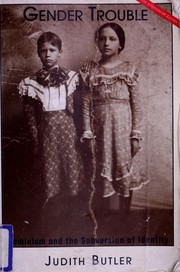
The foundational text: read it first on its own terms, tracking Butler's critique of identity categories, her reading of Foucault and Lacan, and the performativity thesis in its original, most concentrated form.

A rigorous scholarly guide that reconstructs Butler's arguments chapter by chapter and situates Gender Trouble within her broader project; read immediately after to consolidate and challenge your initial reading.

Butler's own response to misreadings of Gender Trouble; she refines performativity through the concept of materialization and the Lacanian symbolic, making this the necessary sequel before moving to her later work.
The Psychic Life & Ethical Turn
ExpertFollow Butler's pivot from gender theory toward questions of subjection, psychic power, vulnerability, and the ethics of recognition — the intellectual arc that connects her early and late work.
▸ Study plan for this stage
Pace: 8–10 weeks, ~25–30 pages/day (with 2–3 days per week for reflection and note-taking). *The Psychic Life of Power* (~200 pages, weeks 1–4); *Giving an Account of Oneself* (~130 pages, weeks 5–8); final 2 weeks for synthesis and integration.
- Subjection as simultaneous constraint and formation: how power doesn't merely repress but actively constitutes the subject through psychic mechanisms
- Psychic power and iterative citationality: the way subjects internalize and repeat normative demands, making them feel like internal drives rather than external impositions
- Vulnerability and precariousness as foundational to human existence: the recognition that all subjects are fundamentally dependent and exposed to social forces
- The ethical demand of recognition: how acknowledging another's opacity and unknowability becomes central to ethics, replacing the fantasy of full intelligibility
- Accountability and narrative: the impossibility of giving a complete account of oneself, and how this impossibility opens ethical space rather than closing it
- The psychic life of norms: how regulatory norms become sedimented in the psyche, producing attachment to the very structures that constrain us
- Ambivalence and the subject's complicity: moving beyond victim/perpetrator binaries to understand how subjects are both formed by and implicated in power relations
- Relationality and interdependence: the shift from autonomous agency to understanding the self as fundamentally constituted through relations with others
- How does Butler distinguish between repressive power and productive power in *The Psychic Life of Power*, and why is this distinction crucial for understanding subjection?
- What does Butler mean by 'psychic power,' and how does the process of iterative citation create attachment to the norms that constrain us?
- How does vulnerability function as an ethical and political concept in Butler's work, and what does it mean to say that precariousness is shared across all subjects?
- In *Giving an Account of Oneself*, why is the impossibility of complete self-narration ethically significant rather than a failure or limitation?
- What is the relationship between recognition and opacity in Butler's ethics? Why can't full intelligibility of the other be the goal of ethical encounter?
- How does Butler's analysis of subjection in *The Psychic Life of Power* set up the ethical questions about accountability and narrative in *Giving an Account of Oneself*?
- Close-read and annotate Butler's discussion of Althusser's 'interpellation' in *The Psychic Life of Power* (Chapter 1), then write a 2–3 page reflection on a moment when you felt 'hailed' by a norm and how it became internalized as desire
- Create a concept map tracing how 'psychic power' operates across Butler's examples (Freud, Foucault, Lacan) in *The Psychic Life of Power*, showing the feedback loop between external norms and internal psychic life
- Practice the 'opacity exercise': choose a person in your life and write a 1–2 page account of what you *cannot* know about them, then reflect on how this unknowability might be ethically important rather than frustrating
- Analyze a personal narrative (memoir excerpt, interview, or your own account) using Butler's framework from *Giving an Account of Oneself*: identify where the narrative breaks down, where the speaker cannot fully account for themselves, and what this reveals about the limits of self-knowledge
- Comparative close reading: select one passage from *The Psychic Life of Power* on subjection and one from *Giving an Account of Oneself* on accountability, then write a 3–4 page essay showing how the second text extends or complicates the first
- Vulnerability mapping exercise: identify three social spheres (family, work, digital) and document moments of your own precariousness and interdependence, then discuss how recognizing this shared vulnerability might reshape ethical obligations
Next up: This stage establishes Butler's turn toward ethics and relationality—moving from *how power constitutes subjects* to *what we owe to others in light of that constitution*—preparing readers to engage her later work on frames of war, grievability, and the politics of precarious life.

Butler fuses Foucault with Freud and Althusser to theorize how power produces the very subject it subordinates; this is the bridge between the gender texts and her later political ethics.

Her most sustained engagement with moral philosophy (Adorno, Foucault, Levinas), arguing that ethical responsibility must begin from an acknowledgment of opacity and vulnerability in the self.
Later Political Work — Precarity, War & Alliance
ExpertEngage Butler's mature political philosophy: the concept of precarious life, grievability, and the performative politics of bodily assembly that extends performativity beyond gender into democratic theory.
▸ Study plan for this stage
Pace: 8–10 weeks, ~25–30 pages/day, with 1–2 weeks per book for close reading and integration
- Precarious life as a shared human condition and basis for ethical obligation
- Grievability and the differential distribution of whose deaths count as losses
- The frame as a mechanism that determines what can be seen, recognized, and mourned
- Performativity extended from gender to political assembly and bodily resistance
- Vulnerability as a starting point for interdependence and alliance-building
- The role of affect and emotion in political recognition and solidarity
- Bodily assembly as a performative assertion of political existence and precarity
- How does Butler define precarious life, and why does she argue it is a universal human condition rather than a characteristic of specific populations?
- What is the relationship between frames and grievability? How do frames determine whose deaths are recognized as losses?
- How does Butler extend the concept of performativity from gender (as discussed in Gender Trouble) to political assembly and democratic action?
- What role does vulnerability and interdependence play in Butler's theory of alliance and solidarity?
- How do bodily assemblies function as performative political acts, and what do they communicate about precarity and existence?
- What is the difference between recognizing precarity as universal versus understanding how precarity is distributed unequally across populations?
- Close-read one chapter from Precarious Life and write a 2–3 page analysis identifying Butler's definition of precarity and how it differs from poverty or marginalization
- Create a visual map or diagram showing how frames operate in Frames of War—select one war or conflict and trace how different frames make certain deaths visible/invisible
- Write a comparative essay (4–5 pages) on how Butler uses performativity in Gender Trouble versus Notes Toward a Performative Theory of Assembly
- Analyze a contemporary political assembly or protest movement (e.g., Black Lives Matter, climate strikes, disability justice actions) through Butler's framework of bodily assembly and precarity
- Develop a glossary of 15–20 key terms from all three books with definitions in your own words and one textual example for each
- Engage in a structured debate or dialogue: argue both for and against the claim that 'recognizing universal precarity is sufficient for building political solidarity'
Next up: This stage establishes Butler's mature political philosophy grounded in precarity, grievability, and performative assembly—providing the conceptual foundation for understanding how recognition, vulnerability, and bodily politics intersect with ethics, justice, and resistance in her later work on war, violence, and the conditions for livable life.
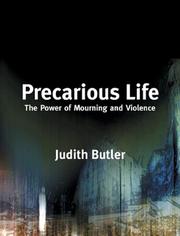
Written in the wake of 9/11, this book extends Butler's framework to questions of war, mourning, and whose lives count as grievable — the opening move of her political turn.

Deepens the precarity framework by analyzing how media and perception selectively render lives as grievable or expendable; read after Precarious Life to see the argument fully elaborated.

Butler's most explicit political theory text, rethinking popular sovereignty and democratic resistance through the lens of bodily assembly and precarity — the culmination of her political arc.
Critical Debates & Scholarly Responses
ExpertSituate Butler within the broader field of feminist and queer theory by engaging the most significant critiques — from materialist feminism, from within queer theory, and from political philosophy — to form an independent, critical assessment.
▸ Study plan for this stage
Pace: 8–10 weeks, ~40–50 pages/day (with intensive annotation and re-reading of dense sections)
- Grosz's materialist feminist critique of Butler: the body as more than discourse, the limits of performativity in accounting for embodied difference and vulnerability
- The relationship between Butler's performativity and Grosz's concept of corporeal feminism—where bodies have their own materiality and affective forces
- Butler's evolving positions on agency, responsibility, and ethics as presented in the Reader—moving beyond early performativity toward vulnerability and precarity
- The tension between social constructionism and materialist realism in feminist theory, and how Butler responds to this critique
- Butler's engagement with psychoanalysis, Lacanian theory, and Freud as a framework for understanding subjectivity beyond pure discourse
- The political stakes of Butler's work: how performativity and iterativity relate to resistance, subversion, and social change
- Grosz's alternative genealogy of feminist thought (Irigaray, Spinoza, Deleuze) and its implications for rethinking gender and embodiment
- Butler's concept of precarity and grievability as a turn toward ethics and interdependence—how this addresses earlier critiques of performativity
- What is Grosz's central critique of Butler's performativity theory, and how does she argue that bodies exceed discourse?
- How does Grosz's concept of corporeal feminism differ from Butler's approach to gender, and what does she propose as an alternative?
- Trace Butler's intellectual evolution in the Reader: how do her positions on agency, ethics, and vulnerability shift from her earlier work?
- What is the relationship between Butler's iterativity and Grosz's emphasis on embodied difference and affective intensity?
- How do Butler's engagements with psychoanalysis and Lacanian theory in the Reader complicate or refine her account of performative subjectivity?
- What are the political implications of the Grosz-Butler debate for feminist activism and queer resistance strategies?
- Create a detailed comparison chart: map Grosz's key critiques of Butler point-by-point, noting where Butler responds (or doesn't) in the Reader selections
- Close-read one chapter from Volatile Bodies and one essay from the Reader on the same topic (e.g., gender, embodiment, or performativity); annotate points of agreement and irreconcilable difference
- Write a 2,000-word position paper: 'Does Butler adequately respond to Grosz's materialist critique?' Use specific textual evidence from both books
- Trace the concept of 'precarity' through the Reader: how does Butler's later work on vulnerability and interdependence address earlier critiques about performativity's political limits?
- Create a genealogical diagram showing how Grosz traces feminist theory (Irigaray, Spinoza, Deleuze) as an alternative to Butler's Foucauldian-Lacanian framework
- Conduct a mock debate: prepare arguments for both Grosz and Butler on a specific issue (e.g., 'Can gender be subverted through performance alone?'), using direct quotes from both texts
Next up: By grappling with how Butler's work has been critiqued and how she has evolved in response, you are now equipped to evaluate her contributions and limitations independently, preparing you to engage her influence on contemporary queer theory, trans theory, and political philosophy in the next stage.

The most rigorous materialist-feminist alternative to Butler's account of the body; Grosz's Deleuzian corporeal feminism sharpens exactly where Butler's discursive approach is contested.

Edited by Sara Salih, this reader collects key essays across Butler's career alongside critical commentary, making it the ideal capstone for mapping the full arc and the scholarly conversation around it.
Discussion
Keep reading
Paths that share books, cover the same subject, or open a related topic.