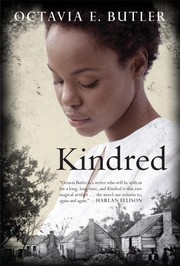
Start with Kindred. It is a standalone, it is under 300 pages, and it commits you to nothing. A Black woman in 1976 California is pulled repeatedly back to a Maryland plantation to keep a white ancestor alive, and has to survive there long enough to be sent home. Butler herself resisted calling it science fiction — there is no explanation for the time travel and she was not interested in providing one — which tells you something important about how she works: the speculative element is a mechanism for putting people under pressure, not a subject in itself.
The alternative entry that many people recommend is Parable of the Sower, and it is a defensible choice, especially given how much attention its near-future collapse has drawn. But it is book one of an unfinished sequence and it is considerably bleaker. Kindred is the better first meeting.
The Patternist series, and a real ordering argument
This is the one place in Butler where publication and chronological order genuinely conflict, and here the chronological case is strong.
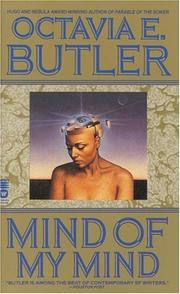
Published order puts Patternmaster first, in 1976. Written first, published first, and — most readers agree — the weakest of the group, a comparatively thin far-future novel. Chronological order runs Wild seed, Mind of my mind, Clay's ark, Patternmaster, and it is much better reading: Wild seed is a superb novel about two immortals, one who can shapeshift and one who body-hops, negotiating with each other across two centuries. It is the best book in the series and it works as a first encounter.
Read chronologically. The usual argument for publication order — preserving the reveals — barely applies here, because Butler wrote the later books as prequels that fill in a history the first book merely gestured at.
One honest gap: there is a fifth Patternist novel, Survivor, which Butler disliked, withdrew and refused to have reprinted. It is not in this collection and she did not want it read. Skipping it costs you nothing.
Lilith's Brood
Dawn, Adulthood Rites and Imago, in that order, no controversy. Humanity survives a nuclear war only because an alien species rescues the remnant, and the price is genetic merger. This is Butler at her most uncomfortable and most rigorous: the aliens are neither villains nor saviours, consent is the central problem, and the trilogy refuses to let anyone be simply right. Read all three — the arc genuinely completes.
The Parables
Parable of the Sower, then Parable of the Talents. A young woman with a condition that makes her feel others' pain builds a new belief system while California disintegrates around her.
This is the hardest recommendation to make honestly. Parable of the Talents is a better-constructed novel than its predecessor and considerably more brutal, and it includes a religious-nationalist political movement that many readers now find uncomfortably close to the news. Butler planned a third book, Parable of the Trickster, and never finished it; drafts exist in her archive but there is no completed novel. So the sequence stops without resolution, which some readers find unbearable.
Where to stop
Three defensible endpoints. Stop after Kindred if you wanted one great novel. Stop after Lilith's Brood if you want a complete, closed argument — it is the most finished thing she wrote. Stop after Parable of the Sower if the second Parable sounds like more than you want; it is a complete story on its own terms, and there is no third book waiting.
If you read only three Butler novels: Kindred, Wild seed and Dawn.
Readers coming to Butler often follow her into the American literary tradition she is increasingly read alongside — see Toni Morrison.
Follow the full ordered path here: Octavia Butler Reading Order: Where to Start.