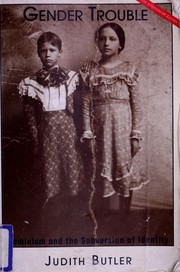
Judith Butler's most famous book is also the most misquoted. Gender performativity is routinely summarised as the idea that gender is a costume you choose each morning, which is close to the opposite of the argument — Butler's claim is that the repetition producing gender is compelled, largely unchosen, and prior to the subject who performs it. Butler wrote a preface to Bodies that matter partly to correct this reading, which tells you how early the misunderstanding set in.
The other thing to know before starting is that Butler writes as a philosopher trained in Hegel and continental theory, and the early prose is dense in a way that rewards patience rather than speed. The good news is that the later work is markedly clearer, so the reading order below gets steadily easier rather than harder.
Read the sources first
Begin with Michel Foucault's The History of Sexuality, Vol. 1: An Introduction. Butler's account of how power produces the subjects it governs, and of sexuality as a dense transfer point for power rather than a natural fact awaiting liberation, comes directly from this book. It is short and the argument is stated openly.
Then take Butler's own first book, Subjects of desire, on the reception of Hegel in twentieth-century France. It is not where general readers usually start, but it shows the Hegelian machinery — recognition, desire, the constitution of the subject through another — that runs under everything afterwards.
The gender books
Gender Trouble is the 1990 text that reorganised the field. Read it slowly and read the preface to the anniversary edition first; Butler wrote it with a decade of misreadings in view. Bodies that matter is the necessary follow-up and answers the most common objection to the first book, that performativity dissolves material bodies into discourse. Butler's response — that materiality is itself produced and regulated over time — is where the argument actually gets worked out.
Moya Lloyd's Judith Butler: From Norms to Politics is the clearest secondary book on the path. Read it after both gender titles, when you have enough of the argument for a critical account to be useful rather than a substitute.
Power, the self, and the political turn
The Psychic Life of Power asks how domination gets inside us — how a subject comes to be attached to the very norms that subordinate it. It is the most psychoanalytic book here and pairs naturally with the Foucault. Giving an account of oneself shifts to ethics and is the most readable of the early-middle work: if we are opaque to ourselves, what can moral responsibility mean?
The post-2001 books make Butler's political voice explicit. Precarious Life was written in the aftermath of September 11 about grievability — whose deaths count publicly as losses. Frames of war extends the argument to how media framing decides which lives are recognisable as lives. Notes Toward a Performative Theory of Assembly brings performativity back to bodies gathered in public space, from Tahrir Square to Occupy.
Two closers. Elizabeth Grosz's Volatile Bodies is a distinct position rather than a commentary — a corporeal feminism that takes the body's materiality as primary and is often read against Butler. The Judith Butler Reader is the compact anthology to keep afterwards for the essays not collected elsewhere. If you are short on time, it can stand in for the middle-period books, though not for Gender Trouble itself.
Butler's work sits inside live and often heated disagreements about gender, and this path is arranged to let you follow the arguments and the objections rather than settle them. Follow the full reading path to keep the order.
Follow the full ordered path here: Judith Butler: The Books to Read, in Order.
Ready to learn something deeply?
Build a reading path — free