The Best Books to Understand John Locke
This curriculum builds a deep understanding of John Locke by moving from accessible intellectual biography and historical context, through his core primary texts, and finally into advanced scholarly analysis and critical debate. Starting at an intermediate level, each stage equips the reader with the conceptual vocabulary needed to tackle the next, ensuring Locke's empiricism and political philosophy are understood both on their own terms and in their lasting influence.
Context & Entry Points
IntermediateGain a clear biographical, historical, and philosophical orientation to Locke before reading him directly — understanding the intellectual world he inhabited and the problems he was trying to solve.
▸ Study plan for this stage
Pace: 6–7 weeks, ~40–50 pages/day. Dunn's "Locke" (roughly 150–180 pages) over 4–5 days; Gay's "The Enlightenment: an interpretation" (dense, ~500+ pages) over 5–6 weeks at a measured pace, with overlap and review days built in.
- Locke's biographical arc: his political involvement, exile, and return as shaping his philosophical commitments
- The intellectual inheritance Locke drew from: Descartes, Hobbes, the Cambridge Platonists, and empiricist predecessors
- The specific historical crises Locke was addressing: religious conflict, political authority, and the limits of human knowledge
- Locke's epistemological break: the rejection of innate ideas and the turn toward sensory experience as the foundation of knowledge
- The connection between Locke's empiricism and his political philosophy: how his theory of knowledge underwrites his theory of rights and consent
- The Enlightenment as a movement: its emphasis on reason, criticism, and the authority of experience over tradition and revelation
- Locke's role as a transitional figure: bridging 17th-century natural philosophy and 18th-century Enlightenment thought
- What major historical and political events shaped Locke's thinking, and how do they appear in his philosophical positions?
- How did Locke's theory of knowledge (empiricism) differ from the rationalist and nativist views he was opposing, and why did this matter?
- What is the relationship between Locke's epistemology and his political theory—how does his account of how we know things connect to his account of legitimate government?
- How does Gay characterize the Enlightenment as a movement, and what role does Locke play in Gay's interpretation of its origins and development?
- What intellectual debts did Locke owe to earlier thinkers (Hobbes, Descartes, etc.), and where did he depart from them?
- How did Locke's work address the religious and political conflicts of his era, and what solutions was he proposing?
- Create a detailed timeline of Locke's life (using Dunn) marking key biographical events alongside major intellectual developments and historical crises; annotate which philosophical positions likely emerged in response to which events.
- Construct a concept map showing Locke's intellectual debts: identify the thinkers Dunn discusses (Hobbes, Descartes, etc.) and map how Locke either adopted or rejected their key ideas.
- Write a 2–3 page analytical essay: 'How does Locke's empiricism solve the problem of religious conflict?' Use Dunn's account of Locke's historical context and his epistemology.
- Read and annotate one key passage from Locke's *Essay Concerning Human Understanding* (Dunn will point you to relevant excerpts) and one from his *Two Treatises of Government*; write a short reflection on how the epistemological and political arguments connect.
- Create a comparative chart: list the defining features of the Enlightenment as Gay describes them, then identify which features are already present in Locke's work (via Dunn) and which emerge after him.
- Engage in a structured debate exercise: argue both sides of 'Was Locke primarily a political philosopher or an epistemologist?' using evidence from both Dunn and Gay to support each position.
Next up: This stage establishes the biographical, historical, and conceptual scaffolding needed to read Locke's primary texts with understanding—you will now be equipped to recognize what problems he was solving, what intellectual traditions he was engaging, and how his arguments fit into the larger Enlightenment project, allowing you to approach his actual writings with informed comprehension rather than
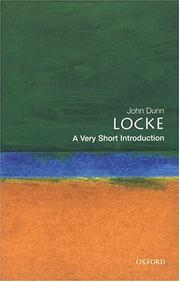
A concise, authoritative overview of Locke's life, times, and core ideas by one of the foremost Locke scholars. It builds the mental map needed to navigate his primary texts without getting lost.

Places Locke squarely within the broader Enlightenment project, showing how his empiricism and politics fed into a revolution in Western thought — essential context before diving into the texts themselves.
Locke's Political Philosophy — Primary Texts
IntermediateRead and understand Locke's foundational arguments on natural rights, the social contract, property, and legitimate government directly from his own words.
▸ Study plan for this stage
Pace: 8–10 weeks, ~40–50 pages/day. Start with "A Letter Concerning Toleration" (2 weeks, ~15 pages/day), then move to "Two Treatises of Government" (6–8 weeks, ~50 pages/day, with slower pace for dense sections like the state of nature and property arguments).
- Natural rights as pre-political and inalienable: life, liberty, and property exist before government and cannot be surrendered entirely
- The state of nature as a condition of freedom and equality where natural law governs human conduct
- The social contract as a voluntary agreement where individuals consent to government to better protect their natural rights
- Property rights as arising from labor and mixing one's effort with natural resources, not merely from government grant
- Legitimate government as limited and bound by law, existing only to preserve the rights it was created to protect
- Separation of powers and the rule of law as safeguards against tyranny and arbitrary rule
- Religious toleration as a natural right that civil government has no authority to violate
- The right to revolution when government systematically violates the trust placed in it
- What is Locke's argument for why civil government should tolerate religious diversity, and what limits does he place on toleration?
- How does Locke distinguish between the state of nature and civil society, and what problem does civil society solve?
- What is Locke's labor theory of property, and how does it justify private ownership of land and resources?
- What does Locke mean by 'consent of the governed,' and how is this consent given in practice according to his theory?
- What are the conditions under which Locke believes people have the right to alter or abolish their government?
- How does Locke's concept of natural law function in both the state of nature and in civil society?
- Create a two-column chart comparing Locke's state of nature with civil society: list the characteristics, freedoms, dangers, and protections in each
- Write a 2–3 page dialogue between two characters debating whether Locke's labor theory of property justifies unlimited land acquisition or whether it has built-in limits
- Annotate key passages from 'Two Treatises' (Preface, I.1–10, II.1–15, II.123–142) marking where Locke defines natural rights, the social contract, and property; note how these concepts interconnect
- Construct a flowchart showing Locke's logical chain: state of nature → why government forms → what government must do → when revolution is justified
- Apply Locke's toleration argument from the 'Letter' to a modern religious or ideological dispute; write a 1–2 page analysis of whether his principles support or limit toleration in that case
- Compare Locke's account of consent in 'Two Treatises' II.95–122 with a real historical social contract (e.g., a constitution or founding document); identify where Locke's theory matches or diverges from practice
Next up: This stage equips you with direct access to Locke's core arguments, preparing you to engage critically with secondary scholarship, historical critiques, and applications of his ideas to contemporary political problems in the next stage.
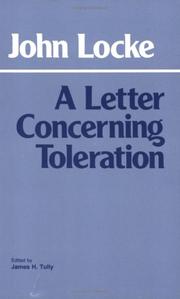
A shorter, focused primary text — the ideal entry into Locke's own prose. It introduces his reasoning about the limits of government authority and individual conscience, warming up the reader for the Two Treatises.

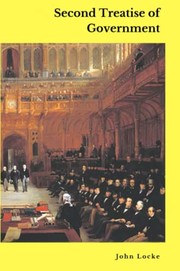
Locke's masterwork of political philosophy. The Second Treatise in particular lays out natural rights, property, consent, and the right of revolution — the core of everything this curriculum is built around.
Locke's Empiricism — Primary Text
IntermediateUnderstand Locke's theory of knowledge, the rejection of innate ideas, and the empiricist foundation that underpins his entire philosophical system.
▸ Study plan for this stage
Pace: 8–10 weeks, ~25–30 pages/day (focus on Books I–II; skim Books III–IV for context)
- The rejection of innate ideas: Locke's argument that the mind begins as a 'blank slate' (tabula rasa) with no pre-existing knowledge or principles
- Sensation and reflection as the two sources of all ideas: how external experience and internal mental operations generate knowledge
- Simple vs. complex ideas: the distinction between atomic units of experience and how the mind combines them into more elaborate concepts
- The origin of knowledge in sensory experience: how perception of the external world provides the raw material for all human understanding
- The limits of empirical knowledge: what we can and cannot know through experience alone, and the role of probability and judgment
- The distinction between nominal and real essences: why we know the names and properties of things but not their underlying nature
- The primary vs. secondary quality distinction: how some properties (size, shape, motion) belong to objects themselves, while others (color, taste, smell) are mind-dependent
- The mind as an active agent: how the understanding does not passively receive ideas but actively combines, compares, and reflects upon them
- What is Locke's main argument against the doctrine of innate ideas, and what evidence does he offer from human experience and cultural variation?
- How do sensation and reflection work together as the two sources of all human ideas, and why does Locke insist both are necessary?
- Explain the difference between simple and complex ideas, and give examples of how the mind constructs complex ideas from simple ones.
- What does Locke mean by the distinction between nominal and real essences, and why is this distinction important for understanding the limits of human knowledge?
- How does Locke's account of primary and secondary qualities support his broader empiricist theory of knowledge?
- What are the implications of Locke's empiricism for what we can and cannot know with certainty about the world?
- Map out Locke's anti-nativism argument: list the objections he raises against innate ideas (e.g., the argument from universal consent, the argument from children and idiots) and evaluate each one with a modern example.
- Create a detailed chart distinguishing simple ideas, complex ideas, sensation, and reflection. For each category, provide 5–7 concrete examples from your own experience.
- Trace a single complex idea (e.g., 'justice,' 'beauty,' or 'gold') backward to its simple sensory components. What simple ideas combine to form it? What role does reflection play?
- Analyze Locke's primary/secondary quality distinction by selecting three objects (e.g., a lemon, a musical note, a painting). For each, separate the properties into primary and secondary qualities and explain why Locke makes this distinction.
- Write a 2–3 page dialogue between Locke and a defender of innate ideas (e.g., Descartes). Have them debate whether mathematical truths or moral principles could be innate.
- Identify a belief you hold (scientific, moral, or personal) and trace its origins according to Locke's framework: Did it come from sensation, reflection, or both? What simple ideas underlie it? How certain can you be of it?
Next up: This stage establishes the epistemological foundation—how we acquire knowledge through experience—which prepares you to examine how Locke applies this empiricist framework to specific domains like language, personal identity, and political authority in subsequent stages.

Locke's great epistemological work, establishing that all knowledge derives from experience and sensation. Reading the Two Treatises first gives the reader a feel for Locke's style, making this longer and denser work more approachable.
Scholarly Interpretation & Deep Analysis
ExpertEngage with leading scholarly interpretations of Locke's thought, understand contested debates, and situate his ideas within the longer tradition of liberal political philosophy.
▸ Study plan for this stage
Pace: 8–10 weeks, ~40–50 pages/day with weekly synthesis sessions. Macpherson (weeks 1–3), Laslett (weeks 4–5), Sandel (weeks 6–8), with weeks 9–10 dedicated to comparative analysis and integration.
- Possessive individualism as a framework for understanding Locke's labor theory of property and its relationship to capitalist accumulation
- The historical and textual significance of the 1690 edition of Two Treatises—its preface, marginalia, and editorial choices as windows into Locke's original intent
- The tension between Lockean natural rights theory and the communal/relational foundations of justice that Sandel identifies
- How Locke's conception of the self as property-owner shapes liberal political philosophy and its limitations
- The debate over whether Locke's theory justifies unlimited accumulation or contains internal constraints on property rights
- Sandel's critique of rights-based liberalism and its inability to account for the constitutive role of community in human flourishing
- The genealogy of modern liberalism: how Locke's ideas were interpreted, transformed, and challenged across three centuries
- The relationship between Locke's epistemology (from his empiricism) and his political theory of individual consent and natural rights
- What does Macpherson mean by 'possessive individualism,' and how does he argue it emerges from and shapes Locke's theory of property and labor?
- How does Laslett's editorial work on the 1690 Two Treatises challenge or refine earlier interpretations of Locke's political intentions?
- What are the key textual and historical insights Laslett provides about the composition, dating, and original context of the Two Treatises?
- What is Sandel's central critique of Lockean liberalism, and how does he argue that rights-based theory fails to account for justice?
- How do Macpherson, Laslett, and Sandel differ in their assessment of whether Locke's theory contains internal limits on property accumulation?
- In what ways does Sandel's communitarian critique challenge the possessive individualist reading that Macpherson develops?
- Create a detailed outline of Macpherson's argument: map the logic from Locke's state of nature → labor theory → property rights → capitalist accumulation. Identify where you agree and disagree with his interpretation.
- Conduct a close reading of Locke's labor chapters (Two Treatises, II.5) using both Laslett's edition and another standard edition; note textual variants, Laslett's annotations, and how editorial choices affect meaning.
- Write a 2,000-word comparative essay: 'Does Macpherson's possessive individualism hold up against Laslett's textual evidence?' Use specific passages from both works.
- Trace Sandel's genealogy of liberalism backward from Locke: identify which Lockean premises Sandel targets, and construct a defense of Locke against Sandel's critique.
- Create a three-column chart comparing how Macpherson, Laslett, and Sandel each answer: (1) What is Locke's theory of property? (2) Does it justify unlimited accumulation? (3) What are its political implications?
- Debate exercise: Assign yourself one author's position (Macpherson, Laslett, or Sandel) and argue it against the other two in a written dialogue (~1,500 words), using textual evidence from all three books.
Next up: This stage equips you to recognize that Locke's thought is not monolithic but contested—his texts can support multiple, even contradictory readings—preparing you to evaluate how later thinkers (from Marx to Rawls to contemporary liberals) have selectively appropriated, critiqued, or reconstructed Lockean ideas for their own philosophical projects.

A landmark critical reading of Locke that argues his theory of property and rights reflects a nascent capitalist ideology. Essential for understanding the most influential — and contested — critique of Locke's political philosophy.
The definitive scholarly edition and analysis of the Two Treatises. Laslett's introduction reconstructs the historical context and composition of the work, resolving interpretive puzzles that arise from reading Locke alone.
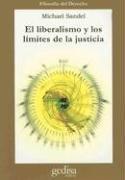
Engages critically with the Lockean liberal tradition from a communitarian perspective, showing how Locke's legacy shapes — and is challenged within — contemporary political philosophy. A fitting capstone that connects Locke to live debates.
Discussion
Keep reading
Paths that share books, cover the same subject, or open a related topic.