Conservatism is easy to reduce to a set of policy positions, but as an intellectual tradition it is a distinct way of thinking about human nature, change, and inherited institutions. Reading in order helps because the modern debates only make sense once you have the founding argument and the mid-century thinkers who carried it into new terrain. This is an exploration of the tradition on its own terms, presented fairly.
Start with the source, follow the tradition into the twentieth century, then meet the current arguments.
The founding argument
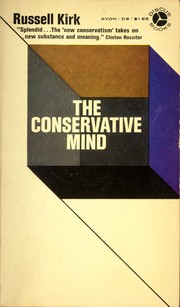
Begin with Reflections on the revolution in France, Edmund Burke's response to the French Revolution and the founding text of modern conservatism, with its case for prudence, tradition, and gradual reform. Then read The conservative mind, from Burke to Santayana, Russell Kirk's influential intellectual history that traced a coherent conservative canon and gave the postwar movement its self-understanding.
The twentieth-century tradition
Conservatism in the modern era braided together several strands. The Road to Serfdom, Friedrich Hayek's warning about central planning, supplied the case for markets and limited government. Up from liberalism, William F. Buckley's manifesto, and The Conscience of a Conservative, Barry Goldwater's concise statement of principles, defined American conservatism's postwar voice. The neoconservative persuasion, Irving Kristol's essays, adds the strand that reshaped foreign and social policy.
The contemporary debates
The tradition is still arguing with itself. The Closing of the American Mind, Allan Bloom's critique of relativism in higher education, opened a long cultural front. More recently, The Fractured Republic, Yuval Levin's diagnosis of modern institutional decay, Why Liberalism Failed, Patrick Deneen's provocative challenge to liberal foundations, and The Virtue of Nationalism, Yoram Hazony's defense of the nation-state, show a tradition wrestling with the present.
Read in order, you can follow a single conversation across two centuries and judge it on its merits. Follow the full path to take the books in sequence.
Follow the full reading path →
Ready to learn something deeply?
Build a reading path — free