The Best Books to Understand Saint Augustine
This curriculum is designed for expert-level readers who want a rigorous, comprehensive understanding of Augustine — moving from authoritative biography through close engagement with his two masterworks, and culminating in the scholarly debates about his lasting theological and philosophical influence. Each stage presupposes serious prior engagement with patristics or classical philosophy, so the pace is demanding and the texts are primary or near-primary from the outset.
The Man and His World
ExpertEstablish a precise historical and intellectual portrait of Augustine — his North African context, his Manichaean and Neoplatonist formation, his conversion, and his episcopal career — so that his writings are never read in a vacuum.
▸ Study plan for this stage
Pace: 8–10 weeks, ~40–50 pages/day (Brown's biography first: 4–5 weeks; O'Donnell's biography second: 4–5 weeks). Allocate 2–3 days per week for reflection and note-synthesis.
- Augustine's North African context: the religious pluralism, economic structures, and social hierarchies of late-antique Numidia and the Mediterranean world that shaped his worldview
- Manichaean formation and its intellectual appeal: dualism, cosmology, and the problem of evil as Augustine encountered it, and why it captivated him for nine years
- Neoplatonist philosophy as the bridge to Christian conversion: how Plotinian metaphysics provided Augustine with a non-materialist framework and the concept of immaterial reality
- The conversion narrative (386 CE) and its multiple layers: psychological, intellectual, and spiritual dimensions; the role of Monica, Ambrose, and the Hortensius
- Augustine's episcopal career and pastoral theology: how his role as bishop of Hippo (395–430) shaped his theological output and his engagement with Donatism, Pelagianism, and heresy
- The relationship between Augustine's personal psychology and his theology: how his confessions of sin, sexual struggle, and intellectual pride illuminate his doctrinal positions
- Chronological literacy: the ability to situate Augustine's life within the fall of Rome, the rise of Christianity, and the barbarian invasions
- Brown vs. O'Donnell: understanding how modern biographers construct Augustine differently and what interpretive choices reveal about reading Augustine
- What were the major religious and intellectual options available to an educated North African in the 4th century, and why did Augustine move through Manichaism and Neoplatonism before Christianity?
- How did Augustine's encounter with Neoplatonic philosophy prepare him for Christian conversion, and what did he retain from Plotinus even after becoming Christian?
- Describe the conversion of 386 CE in detail: What were the psychological, intellectual, and spiritual components? What role did Monica, Ambrose, and the reading of Paul play?
- How did Augustine's experience as a Manichaean shape his later theological positions, particularly on the nature of evil, the body, and sexuality?
- What were the major challenges Augustine faced as bishop of Hippo, and how did his pastoral responsibilities influence his theological writing?
- How do Brown and O'Donnell differ in their interpretation of Augustine's psychology, his conversion, and his legacy, and what does each biography emphasize?
- Create a detailed timeline of Augustine's life (354–430) with key events, intellectual turning points, and major works. Cross-reference dates between Brown and O'Donnell to note any discrepancies in interpretation.
- Map Augustine's intellectual journey as a series of 'conversions': Manichaism → Skepticism → Neoplatonism → Christianity. For each stage, write a one-page summary of what he believed, what problems he faced, and why he moved on.
- Read selections from Augustine's *Confessions* (Books I–X) alongside the biographical accounts in Brown and O'Donnell. Annotate passages where Augustine's own narrative aligns with, contradicts, or complicates the biographers' interpretations.
- Write a comparative character sketch of Monica, Ambrose, and Alypius based on how Brown and O'Donnell portray them. What role does each play in Augustine's conversion, and how reliable are these portrayals?
- Construct a 'Manichaean worldview chart': dualism, cosmology, ethics, the problem of evil, and the role of the elect. Then annotate how Augustine's later theology responds to or rejects each element.
- Create a 'bishop's calendar' for Augustine: list the major controversies he faced (Donatism, Pelagianism, barbarian invasions) and the theological writings they prompted. How do his personal struggles (sexuality, pride, doubt) appear in these polemics?
Next up: By establishing Augustine as a historically embedded, psychologically complex figure shaped by specific intellectual currents and pastoral crises, this stage equips you to read his major theological works—*Confessions*, *City of God*, *On the Trinity*—not as abstract doctrine but as responses to real problems in a real life, making his arguments intelligible and his innovations visible.
The definitive scholarly biography; Brown situates Augustine within late-antique Roman Africa with unmatched depth, making every subsequent primary text richer. Read this first to anchor all that follows.

A provocative revisionist counterweight to Brown, stressing the political and rhetorical Augustine; reading it immediately after Brown sharpens critical perspective on how biography shapes interpretation.
The Confessions — Text and Depth
ExpertRead the Confessions as both autobiography and philosophical-theological argument, understanding its Neoplatonist structure, its theory of memory and time, and its rhetorical address to God.
▸ Study plan for this stage
Pace: 8–10 weeks, ~40–50 pages/day (Confessions), then ~25–30 pages/day (Wetzel)
- The Confessions as both autobiographical narrative and philosophical-theological argument—how Augustine uses his life story to demonstrate divine truth
- Neoplatonist structure and influence: the soul's ascent toward God, the role of intelligible forms, and Augustine's critique and adaptation of Plotinian thought
- Augustine's theory of memory (Book X): memory as the vast palace of the mind, the paradox of remembering what we have forgotten, and memory's role in self-knowledge and knowledge of God
- Time and temporality (Book XI): the problem of measuring time, the present as the only 'real' moment, and how God exists outside temporal succession
- Rhetorical address to God: the Confessions as prayer and dialogue, the performative dimension of confession, and how Augustine speaks to God while addressing the reader
- The limits of virtue in Augustine's thought (via Wetzel): how virtue depends on grace, the inadequacy of pagan virtue, and the transformation of the will through divine love
- The will, desire, and conversion: the binding of the will to sin, the role of habit, and the paradox of willing one's own liberation
- Reading Augustine's self-critique: his retrospective judgment of his earlier self, the tension between narrative voice and narrated events, and the role of hindsight in confession
- How does Augustine use his personal narrative in the Confessions to construct a philosophical and theological argument? What is he trying to prove through his life story?
- Explain Augustine's theory of memory as presented in Book X. How does the vastness and paradoxicality of memory relate to his understanding of the self and knowledge of God?
- What is Augustine's critique of Neoplatonism, and how does he adapt Neoplatonist ideas (especially the ascent of the soul) to Christian theology? Where do they align and where do they diverge?
- Analyze Augustine's treatment of time in Book XI. Why is the problem of measuring time philosophically significant for him, and how does his solution relate to God's eternity?
- How does the Confessions function as a rhetorical address to God? What is the relationship between Augustine's prayer to God and his implicit address to the reader?
- According to Wetzel, what are the limits of virtue in Augustine's thought? How does Augustine's understanding of virtue differ from pagan philosophy, and what role does grace play?
- Discuss the paradox of the will in Augustine's conversion narrative. How can the will be bound to sin yet also capable of choosing liberation? What is the role of divine grace in this paradox?
- Close-read Book X (Memory) in the Confessions. Create a detailed map of Augustine's description of memory as a 'palace' or 'vast fields.' Annotate passages where he describes the paradoxes of remembering and forgetting, and write a 500-word reflection on how this theory of memory differs from modern psychological accounts.
- Trace the Neoplatonist ascent motif through Books VII–IX of the Confessions. Identify specific passages where Augustine echoes Plotinian language (intelligible forms, the One, the soul's return). Then write a comparative analysis (800 words) of how Augustine transforms this Neoplatonist structure to serve Christian conversion.
- Analyze Book XI on time in isolation. Create a timeline or diagram showing Augustine's argument about past, present, and future. Write a philosophical summary (600 words) explaining why Augustine believes only the present truly exists and how this relates to God's eternity.
- Select three key passages from the Confessions where Augustine addresses God directly in prayer. Examine the rhetorical strategies he uses (apostrophe, confession, petition, praise). Write an analysis (700 words) of how these moments function both as genuine prayer and as implicit instruction to the reader.
- Read Wetzel's argument about the limits of virtue carefully. Create a detailed outline of her main claims about Augustine's critique of pagan virtue and the role of grace. Then write a dialogue (500–700 words) between Augustine and a Stoic philosopher, using Wetzel's analysis to show where they would disagree.
- Examine Augustine's retrospective self-judgment throughout the Confessions. Select 3–4 moments where the narrating Augustine judges his younger self harshly (e.g., his theft of pears, his sexual desires, his intellectual pride). Write a 600-word essay on how this double perspective (narrator vs. narrated self) shapes the Confessions' philosophical argument about sin, grace, and conversion.
Next up: By mastering Augustine's integration of autobiography with philosophical theology, his Neoplatonist inheritance, and his theories of memory and time, you will be prepared to examine how these ideas develop in Augustine's later systematic works and how they influenced medieval and early modern thought.
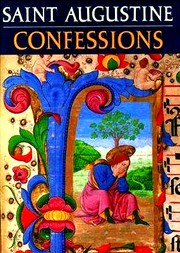
The primary text itself — read in the Maria Boulding or Henry Chadwick translation for scholarly precision. Nothing in the curriculum substitutes for direct engagement with Augustine's own voice.
Wetzel's philosophical study of will, virtue, and grace in Augustine is best read alongside the Confessions to understand the theological anthropology embedded in the narrative.
The City of God — Text and Context
ExpertMaster the City of God as a work of political theology, philosophy of history, and anti-pagan polemic, understanding its internal architecture and its response to the sack of Rome.
▸ Study plan for this stage
Pace: 8–10 weeks, ~40–50 pages/day (Augustine's City of God is dense; Bruno's work is more analytical and faster-paced)
- The two cities (earthly vs. heavenly) as the organizing principle of history and theology
- Augustine's response to the pagan charge that Christianity caused Rome's decline
- The philosophy of history embedded in City of God: divine providence, human free will, and the arc of civilization
- Political theology: how Augustine redefines the relationship between church and state, rejecting Ciceronian republicanism
- The role of anti-pagan polemic in City of God's rhetorical strategy and argumentative structure
- Bruno's framework for understanding Political Augustinianism as a distinct tradition of Christian political thought
- The internal architecture of City of God: its division into thematic sections and how they build Augustine's case
- Augustine's critique of pagan virtue, pagan religion, and pagan philosophy as inadequate foundations for a just society
- How does Augustine's doctrine of the two cities function as both a theological and political response to the sack of Rome in 410 CE?
- What is Augustine's central argument against the pagan claim that Christianity weakened Rome and caused its military defeat?
- How does Augustine redefine justice, the state, and legitimate political authority in contrast to Cicero's classical definitions?
- What role does divine providence play in Augustine's philosophy of history, and how does it differ from pagan cyclical or progressive models?
- How does Augustine's critique of pagan virtue and pagan religion support his broader theological and political project in City of God?
- What does Bruno mean by 'Political Augustinianism,' and how does it represent a distinct tradition separate from other forms of Christian political thought?
- Close reading exercise: Select three key passages from City of God (e.g., Book I on the sack of Rome, Book II on pagan virtue, Book XIX on the two cities) and write 2–3 page analyses identifying Augustine's rhetorical strategy and theological argument in each.
- Comparative outline: Create a detailed side-by-side comparison of Augustine's and Cicero's definitions of the state, justice, and virtue. Use specific citations from City of God and note where Augustine explicitly engages Cicero.
- Thematic mapping: Diagram the internal architecture of City of God by identifying the main argumentative sections and how they build toward Augustine's conclusion about the two cities and Christian political theology.
- Polemic analysis: Identify and catalog Augustine's major anti-pagan arguments (e.g., pagan gods are demons, pagan virtue is false, pagan religion caused moral decay). For each, write a one-paragraph summary of his evidence and reasoning.
- Bruno synthesis: After reading Political Augustinianism, write a 4–5 page essay explaining how Bruno's framework illuminates the political theology of City of God and how Augustine's thought became a tradition.
- Debate preparation: Prepare to argue both sides of a historical debate—'Did Augustine successfully refute the pagan charge that Christianity weakened Rome?'—using evidence from both Augustine and Bruno's analysis.
Next up: This stage grounds you in Augustine's masterwork and establishes Political Augustinianism as a coherent tradition, preparing you to trace how Augustine's ideas were received, reinterpreted, and applied by medieval and early modern thinkers in subsequent stages.

The primary text — read in the R. W. Dyson Cambridge edition for its superior scholarly introduction and notes. The sheer scale of the work rewards reading in full at this expert level.

Traces how Augustine's two-cities framework has been interpreted and contested across centuries of political thought, providing the conceptual map needed to read City of God as a living argument rather than a historical artifact.
Lasting Influence — Theology, Philosophy, and Modernity
ExpertAssess Augustine's profound and contested legacy across Western theology (grace, original sin, predestination), philosophy (time, will, selfhood), and political thought, engaging the major scholarly debates head-on.
▸ Study plan for this stage
Pace: 8–10 weeks, ~40–50 pages/day (with 2–3 days/week for reflection and note-taking). Meconi's Companion (~450 pages) over weeks 1–5; Bonner's Augustine and his Critics (~400 pages) over weeks 6–10.
- Augustine's doctrine of grace and its theological reception: how medieval and Reformation thinkers adopted, adapted, or rejected his framework on divine predestination and human free will
- The problem of time and temporality in Augustine's metaphysics: how his analysis of past, present, and future in Confessions shaped Western philosophy of time and consciousness
- Augustine's theory of the will and its pathologies: the distinction between willing the good and being able to do it, and its influence on later psychology and ethics
- Original sin and human nature: Augustine's formulation and the major patristic and medieval critiques (especially Pelagian and semi-Pelagian objections)
- Political theology and the Two Cities: how Augustine's vision of the earthly and heavenly cities influenced medieval Christendom and modern political thought
- Scholarly debates on Augustine's consistency and development: tensions between early and late works, and how modern interpreters resolve (or highlight) them
- Augustine's epistemology and the role of illumination: how knowledge of God and self-knowledge intertwine, and competing modern readings of this doctrine
- What is Augustine's doctrine of grace, and how did medieval theologians (especially Aquinas) and Reformation figures (Luther, Calvin) interpret or challenge it?
- How does Augustine's analysis of time in the Confessions differ from classical philosophy, and what philosophical problems does it solve or create?
- What is the relationship between Augustine's account of the will and his doctrine of original sin? How do critics (ancient and modern) object to this framework?
- How do Pelagian and semi-Pelagian critics challenge Augustine's views on predestination and human nature, and what are the strongest points of their objections according to Bonner?
- What role does Augustine's political theology (the Two Cities) play in shaping medieval and early modern political thought?
- Where do modern scholars identify tensions or developments in Augustine's thought across his works, and how do they account for apparent contradictions?
- Create a comparative chart mapping Augustine's doctrine of grace against three major interpretations (medieval Thomism, Lutheran, Calvinist) using Meconi's chapters on theology; note points of fidelity and divergence.
- Write a 1,500-word analytical essay on Augustine's theory of time (using Meconi's philosophy section) and its implications for modern phenomenology or cognitive science; engage one contemporary philosopher's response.
- Construct a detailed outline of the Pelagian controversy using Bonner's chapters, identifying Augustine's core claims, Pelagian objections, and Augustine's counter-arguments; assess which side has the stronger logical position.
- Read a primary text excerpt (e.g., Augustine on the will in Romans 7, or on time in Confessions XI) alongside Meconi's and Bonner's interpretations; write a 1,000-word reflection on how each scholar frames the passage differently.
- Debate exercise: prepare arguments for and against Augustine's doctrine of predestination using Bonner's critical chapters; present both sides to a study partner or group.
- Create a genealogical diagram tracing Augustine's influence on three thinkers across different domains (e.g., Aquinas on grace, Descartes on the cogito, Hobbes on political order); cite specific passages from Meconi.
Next up: This stage equips you to recognize Augustine's contested legacy and the major fault lines in his thought, preparing you to either pursue specialized study of a particular Augustinian theme (grace, time, politics) or to situate Augustine within broader intellectual history—understanding not just what he said, but why his ideas remain generative and disputed.

A collection of authoritative essays by leading scholars covering every major dimension of Augustine's thought; best read at this stage when the primary texts are already internalized, allowing critical evaluation of competing interpretations.
A collection of essays engaging the fiercest scholarly controversies about Augustine — on grace, Pelagianism, sexuality, and politics — providing the adversarial perspective essential for expert-level mastery.
Discussion
Keep reading
Paths that share books, cover the same subject, or open a related topic.