Understanding Machiavelli: The Best Books to Read, in Order
This curriculum moves from Machiavelli's own essential texts to the best modern interpretations, then into the deeper republican tradition and Renaissance context, and finally to advanced scholarly debates about his true legacy. Starting at an intermediate level, each stage builds the conceptual vocabulary — realism, virtù, fortuna, the republic — needed to fully appreciate the next, turning a surface familiarity into a genuinely deep understanding of the real thinker behind the myth.
Machiavelli in His Own Words
IntermediateRead Machiavelli's two masterworks directly, in the order he intended them to be understood, grasping his core concepts of power, virtù, fortuna, and republican liberty from the source.
▸ Study plan for this stage
Pace: 8–10 weeks, ~40–50 pages/day (The Prince: 3 weeks; Discourses on Livy: 5–7 weeks). Read with annotated editions; pause after major sections to review and reflect.
- Virtù as the active, adaptive capacity to seize and maintain power—distinct from moral virtue
- Fortuna as the unpredictable force of circumstance that virtù must navigate and exploit
- The Prince's focus on individual power acquisition versus the Discourses' emphasis on republican institutions and collective liberty
- The role of necessity, deception, and the appearance of virtue in political action
- How republics sustain themselves through internal conflict, rotation of power, and citizen participation
- The relationship between a leader's character, public perception, and political survival
- Historical examples as the primary method for deriving political principles
- What does Machiavelli mean by virtù, and how does it differ from conventional moral virtue? Provide examples from The Prince.
- How does Machiavelli's treatment of fortuna in The Prince differ from his analysis in the Discourses, and what does this reveal about his two different political projects?
- According to The Prince, why is it sometimes necessary for a ruler to act against moral principles, and what does he mean by 'the appearance of virtue'?
- In the Discourses, what role does internal conflict and faction play in maintaining a healthy republic, and how does this contradict conventional political wisdom?
- How do The Prince and Discourses represent two different solutions to the problem of political instability—one centered on the individual, one on institutions?
- What historical examples does Machiavelli use to support his arguments, and why does he privilege history over abstract philosophy?
- Create a detailed character study of a prince from The Prince (e.g., Cesare Borgia, Ferdinand of Spain) by extracting Machiavelli's judgments and analyzing what virtù he possessed or lacked.
- Trace one concept (virtù, fortuna, or necessity) through both texts, noting how Machiavelli's treatment evolves or differs between The Prince and the Discourses.
- Write a comparative analysis of a specific historical example cited in both works (e.g., Rome, Florence) and explain how Machiavelli uses it differently in each text.
- Identify three moments in The Prince where Machiavelli advises deception or moral compromise, and explain his reasoning in each case—then reflect on whether his logic is internally consistent.
- Outline the structure of an ideal republic according to the Discourses (checks, balances, rotation of power) and contrast it with the structure of principality in The Prince.
- Annotate a challenging chapter from each text (e.g., The Prince Ch. 15–18 on virtue and vice; Discourses Book I on founding) and write a one-page synthesis of the main argument in your own words.
Next up: This stage grounds you in Machiavelli's own voice and core concepts, preparing you to examine how later thinkers—from Hobbes to modern political theorists—interpreted, critiqued, or built upon his ideas about power, liberty, and human nature.

The unavoidable starting point — read it first to absorb his raw political realism, his vocabulary, and the shock of his candor. Every later book in this curriculum is in dialogue with it.
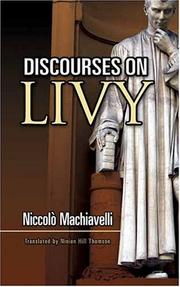
Machiavelli's longer, deeper masterpiece on republics, civic virtue, and popular government — essential for correcting the one-sided 'tyrant's handbook' myth The Prince alone creates.
The Best Modern Guides to Machiavelli
IntermediateUse the two finest accessible scholarly introductions to build a reliable interpretive framework — understanding what Machiavelli actually meant, the debates around him, and his place in history.
▸ Study plan for this stage
Pace: 6–7 weeks, ~40–50 pages/day (Skinner: ~2 weeks; De Grazia: ~4–5 weeks). Allocate extra time for De Grazia's denser biographical-analytical approach.
- Machiavelli's historical context: Renaissance Florence, republican politics, and the threat of foreign invasion—why these shaped his thinking
- The humanist tradition and Machiavelli's break from medieval moral philosophy—his empirical, amoral approach to power
- The concept of virtù (skill, prowess, adaptability) and fortuna (chance, circumstance) as the core of Machiavelli's political realism
- The Prince as a pragmatic manual for acquiring and maintaining power, not a moral treatise—the distinction between appearance and reality
- Machiavelli's republicanism: his deeper commitment to republican liberty in the Discourses, often obscured by The Prince's notoriety
- The myth of Machiavelli: how later thinkers (especially anti-Machiavellians) distorted his ideas; separating the real Machiavelli from the caricature
- De Grazia's biographical method: how Machiavelli's personal struggles, exile, and letters illuminate his intellectual development and true intentions
- The relationship between The Prince and the Discourses: apparent contradictions resolved through understanding audience, genre, and historical moment
- What were the specific political and military circumstances of Renaissance Florence that prompted Machiavelli to write The Prince, and how do they differ from the context of the Discourses?
- How does Skinner explain Machiavelli's break from medieval Christian political thought, and what does he mean by Machiavelli's 'amoral' approach?
- What is virtù in Machiavelli's vocabulary, and how does it differ from virtue in the classical or Christian sense?
- According to De Grazia, what do Machiavelli's personal letters and biographical circumstances reveal about his true political commitments that The Prince alone might obscure?
- How do Skinner and De Grazia each address the apparent tension between The Prince (advice to a prince) and the Discourses (praise of republics)?
- What is 'the myth of Machiavelli,' and how did later anti-Machiavellian thinkers misrepresent his ideas?
- Create a timeline of Machiavelli's life (using De Grazia's biographical narrative) alongside key events in Florence and Italy; annotate how each life event correlates with his writings.
- Read a key passage from The Prince (e.g., Chapter 15 on virtues princes need not possess, or Chapter 18 on keeping faith) alongside Skinner's or De Grazia's interpretation; write a 300-word analysis of how the scholarly reading changes your understanding.
- Construct a comparison chart: list the advice Machiavelli gives in The Prince versus the republican values he champions in the Discourses; identify apparent contradictions and propose resolutions based on context and audience.
- Write a short essay (500–700 words) titled 'Machiavelli's Virtù and Fortuna': explain these concepts using specific examples from the texts and show why they are central to his political realism.
- Identify three moments in De Grazia's biography where Machiavelli's personal circumstances (exile, poverty, political disappointment) seem to have shaped his intellectual positions; discuss how biographical context enriches textual interpretation.
- Debate exercise: argue both sides—'Machiavelli was fundamentally a republican' vs. 'Machiavelli was a pragmatist willing to serve any ruler.' Use evidence from both Skinner and De Grazia to support each position.
Next up: This stage establishes a rigorous, historically grounded understanding of what Machiavelli actually wrote and meant, dismantling myths and clarifying his core ideas—preparing you to engage critically with how his thought has been received, misused, and reinterpreted across centuries of political theory and practice.
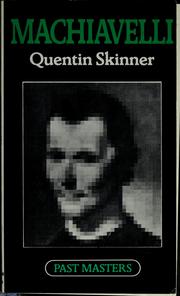
The ideal bridge from the primary texts: Skinner is the world's leading Machiavelli scholar and distills decades of research into a lucid, compact guide that situates the man in his political moment.
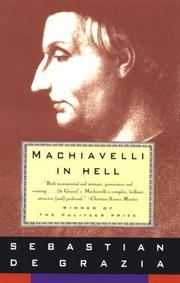
A Pulitzer Prize-winning deep biography that reconstructs Machiavelli's inner life, beliefs, and contradictions — essential for understanding the man, not just the texts.
The Republican Tradition and Renaissance Context
IntermediateUnderstand the broader intellectual world Machiavelli inhabited — classical republicanism, Renaissance Florence, and the humanist tradition he was both inheriting and radically transforming.
▸ Study plan for this stage
Pace: 6–7 weeks, ~40–50 pages/day. Skinner's Vol. 1 (approximately 300–350 pages) over 3–4 weeks, then Bock's monograph (approximately 200–250 pages) over 2–3 weeks, with 1 week for review and synthesis.
- Classical republicanism as a living intellectual tradition: how Roman and Greek republican thought shaped Renaissance political discourse
- The humanist movement and its recovery of classical texts: how Renaissance scholars rediscovered and reinterpreted ancient sources
- Civic virtue and the active life: the Renaissance ideal of the engaged citizen-statesman versus medieval contemplative ideals
- The Florentine context: how Florence's republican institutions, factional conflicts, and commercial power created the specific conditions for Machiavelli's thought
- Machiavelli's relationship to republicanism: how he both drew from and radically departed from the republican tradition
- The concept of virtu and fortuna in Renaissance thought: how Machiavelli inherited and transformed these classical ideas
- The tension between classical republican values and the realities of power: how Machiavelli exposed gaps between ideals and practice
- What were the main sources and texts of classical republicanism that Renaissance thinkers drew upon, and how did humanist scholarship make these available?
- How did the humanist movement's approach to classical texts differ from medieval scholasticism, and what made this shift significant for political thought?
- What is civic virtue in the Renaissance republican tradition, and how did this ideal shape expectations about political participation?
- How did Florence's specific political structure, history, and social composition influence the development of republican thought in the city?
- In what ways did Machiavelli both inherit from and break with the classical republican tradition, particularly regarding virtu, the common good, and the role of the prince?
- How does Bock argue that Machiavelli's republicanism differs from conventional interpretations that emphasize his realism or amoralism?
- Create a timeline mapping the recovery of classical republican texts during the Renaissance (based on Skinner's account), noting which texts became available when and which thinkers championed them.
- Write a comparative chart: classical republican ideals (virtue, the common good, mixed government) versus how Machiavelli treats these same concepts in his works—identify where he aligns and where he departs.
- Read primary excerpts from at least two classical sources Skinner discusses (e.g., Cicero, Livy) alongside Machiavelli passages on the same theme; annotate the echoes and divergences.
- Map Florence's factional and institutional history (Medici, Savonarola, the Republic) and explain how each moment shaped republican discourse—connect this to Machiavelli's own political experience.
- Outline Bock's central argument about Machiavelli and republicanism in 2–3 pages: What does she claim previous scholars missed? How does she reframe his relationship to the tradition?
- Identify 3–4 key concepts (virtu, fortuna, liberty, the common good) and trace how Skinner shows them evolving from classical sources through Renaissance thinkers to Machiavelli; write a brief genealogy for each.
Next up: This stage establishes the intellectual scaffolding and historical context necessary to read Machiavelli's own texts with precision—you now understand the republican tradition he was responding to, the humanist tools he wielded, and the Florentine pressures he faced, preparing you to engage directly with *The Prince* and *Discourses* in the next stage and recognize exactly where and why he innovat
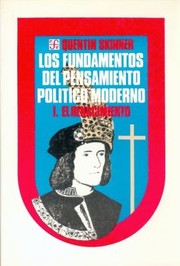
Places Machiavelli within the full sweep of Renaissance political thought, showing exactly what was revolutionary about his break from the 'mirror for princes' tradition.

A landmark essay collection by leading historians that examines Machiavelli's republican ideas in depth — the essential companion for anyone who has read the Discourses and wants serious scholarly analysis.
Power, Realism, and the Machiavellian Legacy
ExpertTrace how Machiavelli's ideas shaped modern political philosophy, realism, and statecraft — from Hobbes to Gramsci — and engage with the most important interpretive controversies.
▸ Study plan for this stage
Pace: 8–10 weeks, ~40–50 pages/day (accounting for Pocock's dense prose and extensive historical apparatus)
- The concept of 'the Machiavellian moment' as a recurring historical crisis when republics confront the tension between virtue and fortune, stability and change
- Pocock's intellectual history method: tracing vocabularies and languages of political discourse across centuries rather than isolated ideas
- Civic humanism and the republican tradition as the primary context for understanding Machiavelli, not liberalism or absolutism
- The problem of corruption and renewal in republican theory—how societies maintain virtue and avoid decay
- Machiavelli's innovation: the separation of political necessity from moral theology, creating space for amoral statecraft
- The transmission of Machiavellian thought through Guicciardini, Harrington, and Anglo-American republican theory
- Fortune (fortuna) as a central category in Renaissance political thought—the unpredictable force that virtue must master
- How Pocock's reading challenges both the 'evil Machiavelli' myth and anachronistic liberal interpretations
- What does Pocock mean by 'the Machiavellian moment,' and why is it a recurring rather than singular historical phenomenon?
- How does Pocock's intellectual history approach differ from treating Machiavelli's ideas as timeless principles, and what does this method reveal?
- What is civic humanism, and how does understanding it reshape our interpretation of Machiavelli's political theory?
- How did Machiavelli's concept of virtue (virtù) differ from Christian virtue, and what made this distinction revolutionary?
- Trace the transmission of Machiavellian ideas through at least two major figures Pocock discusses—what changed and what persisted?
- What role does fortune (fortuna) play in Machiavellian and republican political thought, and how do statesmen respond to it?
- Create a timeline mapping Pocock's 'Machiavellian moments' across the centuries he covers—identify the common structural features of each crisis
- Write a 2–3 page analytical essay comparing Machiavelli's concept of virtù with the Christian virtue tradition Pocock describes—use specific textual evidence
- Construct a 'vocabulary map' tracking how key terms (virtue, corruption, fortune, republic, arms) shift meaning across Machiavelli, Guicciardini, Harrington, and the American founders
- Read a primary source passage from one of Pocock's subjects (e.g., Harrington's 'Oceana' or Federalist papers) and annotate it using Pocock's interpretive framework
- Debate exercise: argue both for and against the claim that 'Machiavelli is fundamentally a republican theorist, not a theorist of tyranny'—use Pocock's evidence
- Write a short historiographical reflection: how does Pocock's method of tracing political languages challenge the way Machiavelli is typically taught in introductory political science?
Next up: Having traced how Machiavellian thought shaped the republican and realist traditions through Pocock's lens, you are now prepared to examine how later thinkers—from Hobbes's absolutism to Gramsci's Marxist revision—explicitly engaged with, rejected, or transformed Machiavelli's legacy in response to new historical crises.

A landmark of intellectual history arguing that Machiavelli's republican thought shaped Anglo-American political culture — challenging, but the single most important book on his long-term legacy.
Discussion
Keep reading
Paths that share books, cover the same subject, or open a related topic.