Understanding Mormonism: Best Books to Read, in Order
This curriculum takes a beginner from a clear, accessible introduction to Mormonism all the way through its complex history, theology, and lived practice. Each stage builds on the last: first establishing the basic story and beliefs, then examining the historical record critically, and finally engaging with the deeper theological and cultural dimensions that scholars and insiders debate today.
Foundations: The Basic Story & Beliefs
BeginnerUnderstand who Joseph Smith was, what Latter-day Saints believe, and how the Church was founded — told in a fair, accessible way.
▸ Study plan for this stage
Pace: 8–10 weeks, ~40–50 pages/day (with breaks for reflection and note-taking)
- Joseph Smith's early life, family background, and the cultural/religious environment of 1820s upstate New York
- The First Vision and Smith's claim to divine revelation as the foundation of Mormonism
- The Book of Mormon: its origins, Smith's account of its discovery, and its role in establishing the faith
- The founding and early organization of the Church of Jesus Christ of Latter-day Saints (1830) and its core doctrines
- Smith's evolving theology, including concepts of God, priesthood, and the nature of revelation
- The role of scribes, witnesses, and early followers in shaping Mormon belief and practice
- Brodie's biographical method: how historians reconstruct Smith's life from available evidence and conflicting accounts
- The tension between Smith's public claims and private actions, and how this shapes historical interpretation
- Who was Joseph Smith before his religious claims, and what were the social, economic, and religious conditions of his youth?
- What is the First Vision, and why is it central to Mormon theology and identity?
- How did Joseph Smith account for the origin of the Book of Mormon, and what evidence does Brodie present about its actual composition?
- What were the core beliefs and practices of the early Church as it was founded in 1830?
- How did Smith's theological understanding evolve over time, particularly regarding God, priesthood, and temple practices?
- What role did Brodie's historical method play in her interpretation of Smith's life, and where might her conclusions differ from faithful Mormon accounts?
- Create a detailed timeline of Joseph Smith's life from birth to the founding of the Church (1805–1830), noting key events, revelations, and theological shifts
- Read and annotate Brodie's introduction and opening chapters, identifying her stated historical methodology and how she distinguishes between Smith's claims and historical evidence
- Write a 2–3 page character sketch of Joseph Smith based on Brodie's portrayal, noting contradictions and complexities in his personality and behavior
- Compare Smith's account of the First Vision (as Brodie presents it) with the Book of Mormon's core message; identify theological connections and tensions
- Create a map or diagram showing the geographic movements of Smith and early Mormons (Pennsylvania, Ohio, Missouri, Illinois) and the reasons for each relocation
- Compile a list of the major doctrines and practices introduced during Smith's lifetime (priesthood, temple work, polygamy, etc.) with the approximate dates and Brodie's account of how they emerged
- Write a reflection essay: 'What does Brodie's biography reveal about the relationship between historical evidence and religious belief?' Use specific examples from the text
Next up: This foundation in Smith's life, the Book of Mormon's origins, and early Mormon theology prepares you to examine how these beliefs were tested, transformed, and defended as the Church faced persecution, schism, and expansion in subsequent generations.
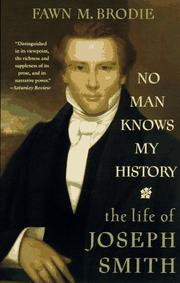
The landmark biography of Joseph Smith that introduced millions of readers to the founding story. Reading it first gives you the full narrative arc of Mormonism's origins before diving into doctrine or debate.
History: From Nauvoo to Salt Lake
BeginnerTrace the full arc of LDS history — the exodus west, polygamy, statehood, and the Church's transformation into a global institution.
▸ Study plan for this stage
Pace: 8–10 weeks, ~40–50 pages/day (approximately 2–3 weeks per book with time for reflection and exercises)
- The westward migration from Nauvoo to Utah: causes, logistics, and the role of Brigham Young's leadership in establishing a new religious community
- Polygamy as a theological doctrine and its social, political, and legal consequences for the early LDS Church
- The tension between theocratic governance and American federalism: how the Church navigated statehood and federal pressure
- The transformation of the LDS Church from a persecuted sect to an institutionalized global religion, including the 1890 Manifesto's renunciation of polygamy
- How internal theological disagreements (exemplified in Krakauer's account) led to schisms and fundamentalist offshoots that rejected Church modernization
- The role of violence, revelation, and charismatic leadership in shaping early Mormon identity and community cohesion
- Utah's path to statehood and the Church's gradual accommodation to American legal and social norms
- What were the primary reasons the LDS Church migrated west from Nauvoo, and what role did Brigham Young play in organizing and leading this exodus?
- How did the practice of polygamy function theologically and socially in early Mormon society, and what external pressures eventually forced the Church to renounce it?
- How did the LDS Church balance its theocratic aspirations with the demands of American federalism as Utah moved toward statehood?
- What does Krakauer's account of the Lafferty brothers reveal about the dangers of fundamentalist interpretations of early Mormon doctrine, and how did the mainstream Church distance itself from such groups?
- How did the 1890 Manifesto represent a turning point in the Church's transformation from a countercultural movement to an institutionalized religion?
- What were the key differences between Bowman's institutional history and Krakauer's narrative approach, and how do these two perspectives together provide a fuller picture of Mormon history?
- Create a timeline of major events from Nauvoo (1839) to Utah statehood (1896), marking key migrations, theological shifts, and political turning points based on both books
- Write a 2–3 page comparative analysis: How does Bowman's institutional framing of polygamy differ from Krakauer's narrative focus on the Lafferty case? What does each approach reveal and obscure?
- Map the geographic journey of the LDS migration westward using historical sources mentioned in Bowman; annotate with quotes from both books explaining the spiritual and practical motivations
- Debate exercise: Prepare arguments for both 'the Church's accommodation to American law was necessary for survival' and 'the Church compromised its core revelations.' Use specific evidence from both texts
- Research and write a 1–2 page profile of Brigham Young based on Bowman's portrayal, then compare it to how Krakauer's book implicitly characterizes Young's legacy through the lens of fundamentalist belief
- Create a visual chart showing the theological and organizational differences between the mainstream LDS Church post-1890 and the fundamentalist groups that rejected the Manifesto, citing specific examples from Krakauer
Next up: This stage establishes the historical foundations and internal tensions of Mormonism—its migration, doctrinal evolution, and institutional compromises—preparing you to explore how these historical forces shaped the Church's theology, culture, and contemporary identity in the next stage.
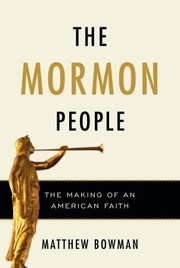
A concise, balanced one-volume history of the entire LDS movement written for a general audience — the ideal bridge from the founding era to the modern Church.

A gripping narrative that weaves LDS history with the story of fundamentalist offshoots, making the history of polygamy and religious violence viscerally understandable for newcomers.
Doctrine & Scripture: What Latter-day Saints Actually Believe
IntermediateEngage directly with LDS scripture and theology — understanding the Book of Mormon, the Doctrine & Covenants, and the distinctive theological claims that set Mormonism apart from other Christian traditions.
▸ Study plan for this stage
Pace: 12–14 weeks, ~40–50 pages/day (Book of Mormon: 6–7 weeks; Mormon Doctrine: 3–4 weeks; The Miracle of Forgiveness: 2–3 weeks)
- The Book of Mormon as foundational scripture: its narrative arc, key theological claims (Restoration, Christ's American ministry, the plan of salvation), and how Latter-day Saints view its historicity and spiritual authority
- Distinctive LDS doctrines from McConkie: the nature of God (pre-mortal existence, eternal progression, exaltation), the role of Jesus Christ, priesthood authority, temple ordinances, and how these differ from mainstream Christianity
- The doctrine of repentance and personal transformation: understanding sin, accountability, and the path to forgiveness as presented in Kimball's theology
- The relationship between scripture and modern revelation: how the Book of Mormon, Doctrine & Covenants, and Pearl of Great Price function together in LDS theology
- The concept of eternal families and celestial marriage: how Mormonism frames salvation as familial and relational, not just individual
- Priesthood as central organizing principle: its role in ordinances, authority, and the structure of the Church
- The LDS understanding of the Atonement: Christ's sacrifice as enabling personal progression and exaltation, not just forgiveness of sins
- What are the major theological claims of the Book of Mormon, and how do they establish the foundation for distinctive LDS doctrine?
- How does McConkie define exaltation, and what role do priesthood, temple ordinances, and eternal marriage play in achieving it?
- What is the LDS understanding of repentance as outlined in Kimball's work, and how does it differ from evangelical Christian concepts of forgiveness?
- How do the three books work together to present a coherent LDS worldview? Where do they align, and where do they emphasize different aspects?
- What does Mormonism teach about the nature of God, and how is this reflected in the concept of eternal progression?
- How does the Book of Mormon establish the authority of the Restoration, and what role does this play in McConkie's theological framework?
- Read and annotate 5–7 key chapters from the Book of Mormon (e.g., 1 Nephi 1–2, 2 Nephi 25–33, Alma 36–42, Moroni 10) and write a 2–3 page synthesis of their central theological messages
- Create a comparison chart of LDS vs. mainstream Christian doctrine using McConkie's definitions of: God's nature, the Atonement, priesthood, and exaltation. Cite specific passages from Mormon Doctrine
- Trace the concept of repentance through Kimball's The Miracle of Forgiveness by identifying 3–4 case studies or examples he uses, and write a reflection on how his framework differs from other Christian traditions
- Write a detailed outline of the LDS plan of salvation (pre-mortal existence, mortality, post-mortal spirit world, judgment, exaltation) using evidence from all three books
- Select one distinctive LDS doctrine (e.g., eternal marriage, pre-mortal existence, or priesthood authority) and write a 3–4 page essay explaining how it is supported across the three texts
- Engage in a structured dialogue or debate with someone from a different Christian tradition, using the Book of Mormon and McConkie to articulate why Mormonism claims to restore truths lost from early Christianity
Next up: This stage equips you with direct knowledge of LDS scripture and core doctrines, preparing you to critically examine how these beliefs developed historically, how they compare to other religious traditions, and how they function in contemporary Mormon culture and practice.
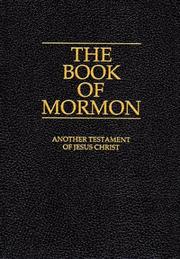
No curriculum on Mormonism is complete without reading the central scripture itself. Even a partial reading gives irreplaceable insight into LDS theology, narrative style, and the faith's self-understanding.
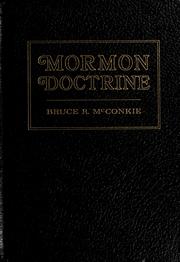
The most influential doctrinal reference work produced inside the Church, written by an Apostle. Reading it reveals how official LDS theology was systematized and taught throughout the 20th century.
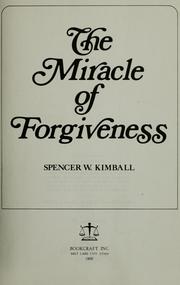
A hugely influential book on LDS ethics, repentance, and moral theology by a Church President. It illuminates the lived moral framework that shaped generations of Latter-day Saints.
Critical History & Insider Tensions
IntermediateUnderstand the difficult historical questions — plural marriage, race and the priesthood, truth claims, and the experience of doubt — that believing members and critics grapple with today.
▸ Study plan for this stage
Pace: 6–8 weeks, ~25–30 pages/day, with 2–3 days per week for reflection and note-taking. Start with Palmer (3–4 weeks), then move to Howe (2–3 weeks), leaving 1 week for synthesis.
- Palmer's insider critique of Joseph Smith's historical claims and the documentary evidence that complicates the traditional narrative of Mormon origins
- The role of folk magic, money-digging, and the cultural context of early 19th-century treasure-seeking in Smith's background and the Book of Mormon's emergence
- Howe's 1834 contemporary account as a primary source: how early critics documented plural marriage, financial schemes, and claims of supernatural power
- The tension between faith-promoting narratives and historical documentation—how believers and scholars reconcile or reject competing accounts
- Specific historical problems: the Book of Abraham papyri, the Kinderhook plates, and the evolution of Mormon doctrine on race and priesthood
- The experience of doubt and cognitive dissonance when encountering historical evidence that contradicts official church teachings
- How institutional responses to historical criticism have shaped Mormon identity and insider/outsider dynamics
- What does Palmer identify as the primary documentary evidence that challenges the traditional account of the Book of Mormon's origins, and what alternative explanations does he propose?
- How does Howe's 1834 account characterize Joseph Smith's activities before the founding of the church, and what does this reveal about early Mormon claims?
- What is the significance of the folk magic and money-digging context in understanding the cultural milieu from which Mormonism emerged?
- How do Palmer and Howe differ in their approach to documenting Mormon origins—what are the strengths and limitations of each as a historical source?
- What specific historical problems (e.g., Book of Abraham, Kinderhook plates) does Palmer raise, and why have these become flashpoints for believers and critics?
- How does the experience of encountering historical evidence that contradicts official narratives affect the faith journey of believing members, according to Palmer?
- Create a timeline of Joseph Smith's life (1805–1844) using both Palmer and Howe, marking where their accounts agree, diverge, and where documentary evidence is sparse or contested.
- Read and annotate Howe's descriptions of plural marriage and financial practices; compare them to Palmer's analysis of the same topics, noting how each author frames the evidence.
- Write a 2–3 page reflection: 'If I encountered Palmer's evidence before joining the church, how would it have affected my decision?' Then reverse it: 'If I were a believer, how would I respond to his claims?'
- Identify 3–5 specific historical claims in Palmer that he says are not adequately addressed by official LDS sources; research the official LDS response to each and document the gap.
- Create a chart mapping the evolution of Mormon doctrine on race and priesthood using Palmer's historical analysis; note the dates of policy changes and the stated justifications versus the historical context.
- Conduct a close reading of one chapter from Howe (e.g., on treasure-seeking or early converts); write a 1–2 page analysis of Howe's rhetorical strategy and potential biases as a 19th-century critic.
Next up: This stage equips you with the historical evidence and insider perspectives needed to understand how Mormons today navigate faith in light of difficult history—preparing you to explore contemporary Mormon responses, apologetics, and the lived experience of doubt and faith reconstruction in the next stage.
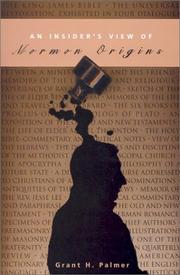
Written by a lifelong Church educator, this book examines the historical and textual origins of LDS scripture with scholarly rigor, representing the perspective of a faithful insider wrestling with evidence.
![Mormonism unvailed [sic]](https://covers.openlibrary.org/b/isbn/9780404107307-M.jpg)
The first major anti-Mormon work (1834), included here not as a reliable source but as a primary document — understanding early criticism is essential for grasping how the Church has always defined itself against opposition.
Discussion
Keep reading
Paths that share books, cover the same subject, or open a related topic.