Jean-Jacques Rousseau argued that people are born free and good and are corrupted by society, and then spent his life exploring what follows from that claim across political theory, education, and confessional autobiography. He is full of tensions, and reading a single work can leave you with only half the thinker. A good order lets his ideas illuminate one another.
The path moves from the diagnostic Discourses to the political and educational answers and finally to the self-portrait and the scholarship.
The diagnosis
Start where Rousseau starts, with the problem. Discourse On The Origin Of Inequality is his powerful account of how private property and social comparison created inequality and unhappiness; it is the seed of everything else. Reading it first frames the constructive works that follow as attempts to answer the crisis it describes.
The answers
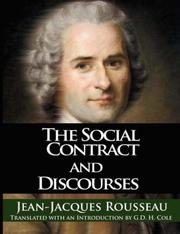
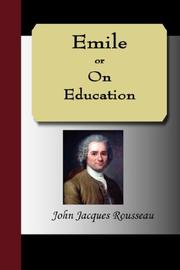
Rousseau proposed two great remedies. The Social Contract and Discourses contains his famous political solution, the idea that legitimate authority rests on the general will of a free people, one of the most influential and debated ideas in modern politics. Emile, or, On education is its educational counterpart, imagining how a child might be raised to preserve natural goodness within society. Read together, they show politics and pedagogy as two sides of one project.
The self and the scholarship
Then comes the man himself. Les confessions is Rousseau's astonishingly candid autobiography, a founding work of modern self-revelation that explains the emotional roots of his thought. For guidance, Rousseau by Robert Wokler is a compact, authoritative introduction. To go deeper on the hardest idea, The general will by Andrew Levine analyzes that slippery concept, Men and Citizens by Judith Shklar is a classic study of the tension between the two ideals in his work, and Rousseau's Critique of Inequality by Frederick Neuhouser gives a rigorous modern reconstruction.
Read in this order and Rousseau's contradictions resolve into a coherent, restless vision. Follow the full path to read him whole.
Follow the full reading path →
Ready to learn something deeply?
Build a reading path — free