Best Books to Understand bell hooks, in Reading Order
This curriculum moves from bell hooks' most accessible and personal writing into her foundational feminist theory, then outward into her interconnected work on race, class, and love, before arriving at her most challenging and synthesizing texts. Each stage builds the conceptual vocabulary — from self, to system, to transformation — so that later books feel earned rather than overwhelming.
Where to Begin: Voice, Self & Story
BeginnerGet comfortable with hooks' voice, style, and core concerns — who she is, how she thinks, and why her work matters — before encountering her heavier theory.
▸ Study plan for this stage
Pace: 4–5 weeks, ~25–30 pages/day. Week 1: "Bone Black" (memoir, ~150 pages). Weeks 2–5: "Teaching to Transgress" (essays, ~200 pages, ~40 pages/week with reflection time).
- Hooks' autobiographical method: how personal narrative and memory shape intellectual work (from 'Bone Black')
- The concept of 'voice' as a tool for liberation and resistance, especially for marginalized people
- Education as a practice of freedom: teaching and learning as acts of self-discovery and transformation
- The intersection of race, class, gender, and sexuality in shaping identity and consciousness
- Engaged pedagogy: the teacher's whole self (emotional, spiritual, intellectual) in the classroom
- Love and community as foundational to learning and social change
- The role of critical thinking and consciousness-raising in personal and collective liberation
- How does hooks use her own life story in 'Bone Black' to illustrate her later theoretical ideas in 'Teaching to Transgress'?
- What does hooks mean by 'voice' and why does she argue it is essential to liberation?
- How does hooks define 'engaged pedagogy' and what role does the teacher's whole self play in this approach?
- What connections does hooks draw between education, love, and freedom across these two books?
- How do race, class, gender, and sexuality intersect in hooks' analysis of her own development and in her vision of transformative education?
- Why does hooks argue that teaching is a spiritual and emotional practice, not just an intellectual one?
- Close-read 2–3 key passages from 'Bone Black' (e.g., scenes about her grandmother, school, or family conflict) and annotate how hooks uses sensory detail and emotion to convey intellectual insight.
- Write a 2–3 page personal narrative connecting one memory from your own life to a concept from hooks (voice, resistance, consciousness, love) — practice her autobiographical method.
- Create a visual map or concept web showing how hooks' childhood experiences (race, class, family dynamics, education) connect to her adult theories in 'Teaching to Transgress'.
- Identify and discuss 3 essays from 'Teaching to Transgress' that most resonate with you; write a paragraph on each explaining why and what they teach you about education and freedom.
- Teach or facilitate a 15–20 minute discussion or workshop with peers using one idea from 'Teaching to Transgress' (e.g., engaged pedagogy, critical thinking, love in the classroom) — practice hooks' philosophy in action.
- Reflect in a journal: How has reading hooks' voice and story changed the way you think about your own voice, education, or relationships? What questions or resistances came up?
Next up: This stage grounds you in hooks' voice, lived experience, and foundational ideas about freedom, voice, and education, preparing you to engage with her more rigorous theoretical frameworks and intersectional analysis in subsequent stages.
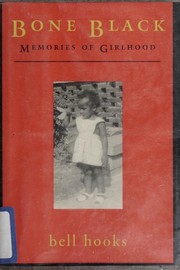
This memoir of hooks' girlhood in the American South is her most intimate and readable book — a perfect first encounter with her voice, her experience of race and gender, and the wounds that later became theory.
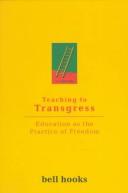
Written in an accessible essay format, this book introduces her vision of education as the practice of freedom and establishes key ideas — engaged pedagogy, community, and the classroom as a site of liberation — that recur throughout all her work.
Foundations: Feminist Theory & Race
BeginnerUnderstand hooks' foundational arguments about feminism, race, and gender — the intellectual core that everything else builds on.
▸ Study plan for this stage
Pace: 8–10 weeks, ~25–30 pages/day with 2–3 reflection days per week. Week 1–4: "Ain't I a Woman" (approximately 180 pages); Week 5–8: "Feminist Theory" (approximately 150 pages); Week 9–10: synthesis and review.
- Intersectionality: how race, gender, and class oppressions simultaneously shape Black women's experiences, not as separate but interlocking systems
- The critique of white-centered feminism: how mainstream feminism has historically excluded and marginalized Black women and women of color
- Patriarchy and its specific manifestations in Black communities: how slavery, colonialism, and systemic racism have shaped gender relations differently than in white communities
- Consciousness-raising and self-recovery: the necessity of Black women naming their own experiences and rejecting imposed definitions of womanhood
- Feminist theory as practice, not abstraction: hooks' insistence that theory must be grounded in lived experience and serve liberation
- The historical erasure of Black women from feminist discourse: examining how Black women's intellectual and activist contributions have been overlooked
- Love, community, and collective struggle: feminism as a movement for everyone, rooted in care and solidarity rather than individual advancement
- What does hooks mean by intersectionality, and how does she argue that race, gender, and class cannot be separated in understanding Black women's oppression?
- How does hooks critique white-centered feminism in 'Ain't I a Woman,' and what specific historical examples does she use to show how Black women were excluded from the women's movement?
- What is the significance of the title 'Ain't I a Woman?' and how does hooks use Sojourner Truth's speech to frame her argument about Black women's humanity and womanhood?
- According to hooks, what is the relationship between patriarchy, slavery, and the current conditions of Black women? How does this differ from the patriarchy experienced by white women?
- What does hooks mean when she says feminist theory must be grounded in lived experience? How does she distinguish between theory and practice?
- How does hooks define feminism in 'Feminist Theory,' and why does she argue it must be a movement for everyone, not just women?
- Create a timeline mapping the historical moments hooks discusses in 'Ain't I a Woman'—slavery, Reconstruction, the women's suffrage movement, the civil rights era—and annotate how each shaped Black women's relationship to feminism.
- Write a 2–3 page personal reflection: identify an area of your own life where race, gender, and class intersect (or where you've witnessed this intersection). How does hooks' framework help you understand it differently?
- Conduct a 'feminist theory audit' of a text you encounter (news article, social media post, book, film): Does it center only certain women's experiences? Whose voices are missing? Apply hooks' critique of white-centered feminism.
- Engage in a close reading exercise: select one chapter from each book and create a two-column chart—one side lists hooks' main argument, the other lists the evidence/examples she provides. What patterns emerge?
- Facilitate or participate in a discussion group using hooks' work: prepare 3–4 discussion questions from the readings and engage others in dialogue about how her ideas apply to current events or personal experience.
- Write a letter to hooks responding to one of her arguments: Do you agree? Disagree? How would you extend or challenge her thinking based on your own context?
Next up: This stage establishes hooks' core intellectual framework—the diagnosis of how race, gender, and class intersect—which the next stage will apply to specific domains like education, sexuality, labor, and relationships.
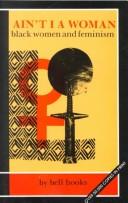
Her debut and one of her most important works, this book examines the intersection of race and gender in American history and challenges mainstream feminism's erasure of Black women — read it first among her theory books to understand her central critique.
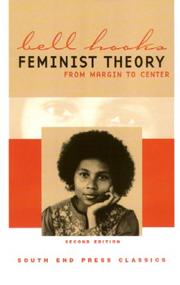
Building directly on 'Ain't I a Woman,' this book offers hooks' most systematic vision of feminism — one that centers the marginalized rather than the privileged — and gives you the theoretical framework for all her later work.
Going Deeper: Race, Class & Capitalism
IntermediateGrasp how hooks weaves race and class together with gender, and understand her critique of capitalism and white supremacy as interlocking systems of domination.
▸ Study plan for this stage
Pace: 8–10 weeks, ~40–50 pages/day (accounting for dense theoretical passages requiring re-reading)
- Killing rage as a response to white supremacy: hooks's distinction between destructive rage and transformative rage as a tool for liberation
- Interlocking systems of domination: how race, class, gender, and capitalism function together rather than as separate oppressions
- White supremacy as a foundational system: how it operates through capitalism, consumerism, and cultural domination beyond individual racism
- Class consciousness and economic exploitation: the role of class struggle in understanding Black liberation and the limits of identity politics alone
- Materialism and consumption under capitalism: how consumer culture reinforces white supremacy and prevents revolutionary consciousness
- Love and community as resistance: hooks's argument that love, spiritual practice, and beloved community are necessary for dismantling systems of domination
- The role of intellectuals and education: how Black intellectuals must engage in public discourse and serve the community rather than remain isolated in academia
- How does hooks distinguish between destructive rage and transformative rage in 'killing rage'? What role does she argue rage should play in liberation struggles?
- Explain hooks's critique of capitalism as a system that reinforces white supremacy. How does consumerism specifically function in this analysis?
- What does hooks mean by 'interlocking systems of domination'? How do race, class, and gender operate together in her framework?
- In 'Where We Stand,' how does hooks address the limitations of identity politics and single-issue activism? What does she propose as an alternative?
- What is the relationship between materialism (economic conditions) and consciousness in hooks's analysis? Why does she argue class analysis is essential to Black liberation?
- How does hooks position love, spirituality, and beloved community as political tools? What is their role in resistance and transformation?
- Create a concept map showing how race, class, gender, and capitalism intersect in hooks's analysis—use specific examples from both books to illustrate each connection
- Write a 2–3 page reflection: identify a moment in your own life where you've witnessed or participated in consumer culture. Analyze it through hooks's lens of how capitalism reinforces white supremacy
- Annotate 3–4 key passages from 'killing rage' that define her concept of transformative rage, then write a short essay on how this differs from mainstream narratives about anger and activism
- Conduct a 'systems analysis' exercise: choose one social institution (school, workplace, media, etc.) and trace how race, class, and capitalism operate within it using hooks's framework
- Engage in a structured debate or dialogue: argue both for and against the proposition 'Identity politics alone cannot achieve liberation' using evidence from 'Where We Stand'
- Create a visual timeline or infographic mapping hooks's key arguments about white supremacy, capitalism, and resistance across both books—show how ideas build and interconnect
Next up: This stage establishes hooks's systemic critique of interlocking oppressions and her vision of love-centered resistance, preparing you to explore how these principles apply to specific domains like education, spirituality, and intimate relationships in the next stage.
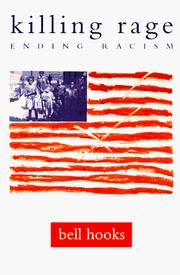
This essay collection confronts Black rage and the ongoing violence of white supremacy with unflinching honesty — a necessary bridge between her feminist theory and her later, more expansive social criticism.
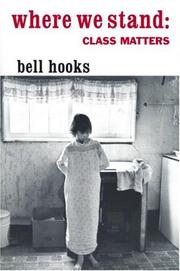
hooks turns her full attention to class — often the most neglected axis in her earlier work — and argues that progressive movements cannot succeed without confronting economic inequality alongside race and gender.
Love as Politics: Community & Belonging
IntermediateExplore hooks' radical philosophy of love — not as sentiment but as a transformative ethical and political practice — and see how it connects self-healing to collective liberation.
▸ Study plan for this stage
Pace: 6–8 weeks, ~40–50 pages/day (approximately 2–3 weeks per book, accounting for reflection and note-taking)
- Love as a political practice and ethical choice, not merely emotion or sentiment
- The connection between personal healing and collective liberation through love
- Beloved community as a vision of radical togetherness and mutual accountability
- The role of vulnerability, risk, and courage in building authentic relationships
- Love as resistance to systems of domination, capitalism, and white supremacy
- The practice of mindfulness and spiritual discipline as foundations for loving action
- Interdependence and the rejection of individualism as pathways to freedom
- How does bell hooks distinguish love as a practice or choice from love as a fleeting emotion, and why does this distinction matter politically?
- What is 'beloved community' and how does hooks argue it serves as both a personal and collective healing tool?
- How does hooks connect self-love and personal healing to the broader project of social liberation and resistance to oppression?
- What role does vulnerability play in hooks' vision of love as a political act, and what risks does she identify in being vulnerable?
- How does hooks critique individualism and consumerism, and what alternative relational ethics does she propose through the concept of love?
- What spiritual or contemplative practices does hooks recommend for cultivating love as a sustainable political and ethical stance?
- Create a personal 'love manifesto' that articulates your own definition of love as a practice (not a feeling) and identify 3–5 ways you can enact it daily in your relationships and community
- Read and annotate one chapter from 'All About Love' focusing on hooks' use of personal anecdotes; write a 1–2 page reflection on how her stories illuminate her theoretical arguments
- Practice a weekly 'beloved community' conversation: have a structured dialogue with a friend or community member using hooks' framework—discuss how you can build mutual accountability and interdependence
- Map your own 'healing journey' by identifying a personal wound or relational pattern; trace how hooks' ideas about love as healing might apply to your situation
- Engage in a contemplative practice (meditation, journaling, or prayer) for 10–15 minutes daily for one week, then reflect on how stillness and presence connect to hooks' vision of loving action
- Write a critical response essay (3–4 pages) comparing hooks' vision of love in 'All About Love' with how love is portrayed in mainstream culture, media, or your own upbringing
Next up: This stage establishes love as a foundational ethical and political framework, preparing you to examine how hooks applies this vision to specific domains—such as education, spirituality, work, or intimate relationships—in subsequent stages.
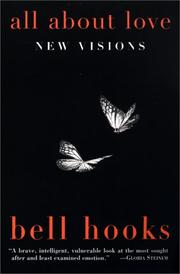
Perhaps her most beloved book, this is hooks' definitive statement on love as a social and political force — read after the theory so you understand why she insists love is inseparable from justice.

A companion to 'All About Love' focused specifically on women's relationship to love and self-worth, this book deepens the argument and shows how patriarchy distorts women's capacity for genuine connection.
Synthesis: Culture, Representation & the Examined Life
ExpertBring everything together by engaging hooks' most wide-ranging cultural criticism — on media, art, masculinity, and spiritual life — seeing how all her threads converge into a unified vision of liberation.
▸ Study plan for this stage
Pace: 8–10 weeks, ~40–50 pages/day with 2–3 days per week for reflection and exercises
- The politics of representation: how images, media, and visual culture shape consciousness and perpetuate or resist domination
- The male gaze and white supremacist capitalist patriarchy: how systems of power operate through desire, consumption, and the objectification of Black bodies
- Oppositional gaze as resistance: how Black women viewers can reclaim agency by refusing complicity with dominant visual narratives
- Masculinity as a site of transformation: how patriarchal conditioning damages all genders and why men must engage in emotional labor and vulnerability to achieve liberation
- Eros, love, and spiritual practice as revolutionary acts: the connection between intimate life, cultural production, and collective freedom
- The examined life: using critical consciousness to interrogate our own complicity in systems of domination and to practice freedom in daily choices
- Convergence of oppressions: how racism, sexism, classism, and heteronormativity intersect in culture and require integrated resistance
- Art and culture as sites of healing and transformation: how creative work can model and practice the liberated consciousness hooks envisions
- How does hooks define the 'oppositional gaze' in *Black Looks*, and why is it a form of resistance for Black women viewers?
- What is the relationship between white supremacist capitalist patriarchy and the consumption of images in popular culture, according to hooks?
- In *The Will to Change*, what does hooks identify as the core problem with patriarchal masculinity, and what does she propose as an alternative?
- How does hooks connect emotional vulnerability and the capacity to love with the larger project of liberation and social transformation?
- What role does spiritual practice and eros play in hooks' vision of the examined life across both texts?
- How do the arguments about representation in *Black Looks* and the arguments about masculinity in *The Will to Change* work together to form a unified vision of liberation?
- Visual analysis exercise: Select 3–5 images from advertising, film, or social media and analyze them using hooks' framework of the male gaze, white supremacy, and the oppositional gaze. Write a 2–3 page critical response identifying whose gaze is centered and how a viewer might resist it.
- Media consumption journal: Over 2 weeks, keep a daily log of films, TV shows, music videos, or advertisements you consume. Annotate each entry with hooks' concepts—what narratives are being sold? Whose bodies are being objectified? What gaze is being invited? Reflect on your own position as viewer.
- Personal inventory of patriarchal conditioning: Write a reflective essay (4–5 pages) on how patriarchal masculinity has shaped your own life, relationships, or emotional capacity. Use hooks' language from *The Will to Change* to identify specific patterns and imagine alternatives.
- Dialogue or letter-writing exercise: Write a dialogue or letter between yourself and a male figure in your life (real or imagined) about emotional vulnerability, love, and freedom. Ground it in hooks' arguments about why men must change and what liberation could look like.
- Curate a cultural artifact collection: Gather 5–7 films, artworks, songs, or written pieces that you believe practice or model the kind of liberated consciousness hooks describes. Write a 1–2 page statement explaining how each one embodies her vision of freedom, eros, or the examined life.
- Teach-back exercise: Prepare a 15–20 minute presentation or written explanation of one major concept from each book (e.g., oppositional gaze from *Black Looks* and the will to change from *The Will to Change*) as if explaining it to someone unfamiliar with hooks. Include a concrete example.
Next up: This stage synthesizes hooks' cultural criticism into a coherent liberatory vision, preparing you to apply her integrated framework to your own life and communities—whether through activism, creative work, teaching, or the daily practice of the examined life.
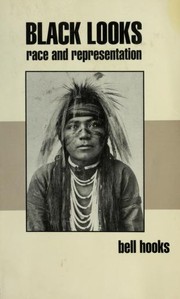
This sharp collection of cultural criticism examines race and representation in film, art, and popular culture — it demands the theoretical fluency you've built and rewards it with hooks at her most incisive.
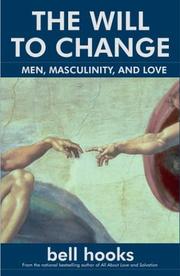
hooks turns her gaze on men and masculinity, arguing that patriarchy wounds men as well as women — a fitting capstone that shows the full scope of her feminist vision as one of universal human liberation.
Discussion
Keep reading
Paths that share books, cover the same subject, or open a related topic.