bell hooks published more than thirty books across memoir, cultural criticism, feminist theory, pedagogy and the trilogy on love, and the popular route into her work now runs almost entirely through the last of those. That is not a bad place to end up, but it produces a distorted picture: the books on love are the application of an analysis she built over the preceding twenty years, and they are much stronger when you can see the analysis underneath.
She also wrote deliberately without academic apparatus — few footnotes, plain sentences, direct address — because she believed theory that could not be read outside a university had failed at its job. That makes the reading order below unusually forgiving. Almost any of these books can be read in a few sittings; the sequence is about accumulating an argument, not clearing hurdles.
Where she came from, and what she wanted from teaching
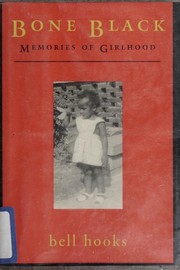
Bone Black is the memoir of a girlhood in segregated Kentucky, written in short lyric fragments rather than continuous narrative. It supplies the material that the criticism keeps returning to — the church, the family, the specific texture of a Black girl's education in the rural South.
Teaching to transgress is the book to read next and, for many readers, the best single introduction to how she thought. It argues for education as the practice of freedom, draws on Paulo Freire and on Thich Nhat Hanh, and it is where her method is most visible: theory made accountable to the classroom she actually stood in.
The feminist theory
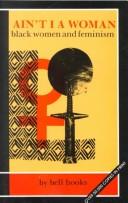
Ain't I a Woman was her first major book, written largely while she was an undergraduate, and it is the foundational text — an argument that both the feminist movement and Black liberation politics had failed Black women by treating race and sex as separable, traced back through slavery and Reconstruction. It predates the term intersectionality and covers much of the same ground.
Feminist theory — subtitled from margin to center — is the systematic follow-up and states the positive programme: feminism defined as a movement to end sexist oppression rather than to secure equality with men within existing arrangements. killing rage collects the essays on race and anger, including the title piece on the political usefulness of rage that white liberalism prefers to pathologise. Where We Stand is the book on class, and it is the least read of the group and among the most pointed — she argues that the feminist and anti-racist movements largely stopped talking about economic class at precisely the moment inequality began to widen.
Love, culture, and the last word
All About Love is the book most people meet first, and it belongs here rather than at the start. Its central move is to treat love as an action and an ethic rather than a feeling, and to argue that a culture organised around domination cannot teach it. Communion continues the trilogy, addressed to women and to the question of what love looks like after the search for a partner stops organising a life.
Black looks is the cultural criticism — race and representation, the essay on eating the other, the readings of film and advertising — and it shows the analytic edge that the love books apply gently. Close with The will to change, on men and masculinity, which argues that patriarchy damages the men it privileges and that no feminist project succeeds without addressing that. It is the most surprising book on the path and the right one to end on.
If you want more paths in this area, Discover has the full set. Follow the full reading path to keep the order.
Follow the full ordered path here: bell hooks: The Books to Read, in Order.
Ready to learn something deeply?
Build a reading path — free