Understanding Aristotle: essential books on his philosophy and legacy
This curriculum takes a beginner from zero familiarity with Aristotle to a sophisticated understanding of his core works and lasting influence. It begins with accessible modern introductions to build vocabulary and context, moves into Aristotle's own most readable texts, then tackles his harder philosophical works, and finally explores his towering legacy across science, theology, and Western thought.
Foundations: Who Was Aristotle?
BeginnerGain a clear biographical, historical, and philosophical orientation to Aristotle — who he was, what he cared about, and why he still matters — before touching any primary text.
▸ Study plan for this stage
Pace: 4–5 weeks, ~25–30 pages/day. Start with Barnes' concise introduction (120 pages, ~1 week), then move to Durant's chapter on Aristotle from "The Story of Philosophy" (40–50 pages, ~2–3 weeks with reflection time). Build in 1 week for review, synthesis, and exercises.
- Aristotle's life trajectory: from Macedonian outsider to Athenian teacher to exile, and how biography shaped his philosophy
- The historical and intellectual context: Plato's Academy, the pre-Socratics, and Aristotle's break from Platonism
- Aristotle's core philosophical ambitions: logic, metaphysics, ethics, politics, and natural science as an integrated system
- The concept of teleology and 'final cause': why things exist for a purpose, and how this shapes Aristotelian thought
- Virtue ethics and eudaimonia (flourishing): the practical focus on how humans should live, not just abstract truth
- Aristotle as systematizer and empiricist: his method of collecting observations and organizing knowledge into categories
- Why Aristotle matters today: his influence on Western thought, science, and ethics, and his continued relevance to contemporary problems
- What were the major events in Aristotle's life, and how did his outsider status (Macedonian, not Athenian) influence his philosophical outlook?
- How did Aristotle's relationship with Plato and the Academy shape his own philosophical project? Where did he agree and disagree with Plato?
- What is teleology, and why is the concept of 'final cause' central to understanding Aristotle's entire system of thought?
- What is eudaimonia, and how does Aristotle's virtue ethics differ from other approaches to morality and human flourishing?
- How did Aristotle's method—observation, categorization, and systematic organization—differ from his predecessors, and why was this revolutionary?
- What are the main branches of Aristotelian philosophy (logic, metaphysics, ethics, politics, natural science), and how do they relate to each other?
- Create a timeline of Aristotle's life (birth to death) with 8–10 key events, and for each, note how it might have influenced his philosophical interests or methods.
- Write a one-page comparison chart: Plato vs. Aristotle on three key issues (e.g., the nature of reality, the role of observation, the goal of philosophy). Use specific examples from Barnes and Durant.
- Choose one of Aristotle's four causes (material, formal, efficient, final) and find three modern examples (from science, ethics, or everyday life) where this cause is relevant. Explain why.
- Read Durant's account of Aristotle's ethics and write a 500-word reflection: How does Aristotle's idea of virtue as a 'mean between extremes' apply to a contemporary ethical dilemma you care about?
- Create a concept map showing how Aristotle's major philosophical branches (logic, metaphysics, ethics, politics, natural science) connect and support each other. Include at least 10 nodes and explain the relationships.
- Interview someone (or reflect in writing) on what 'flourishing' or 'living well' means to them. Then analyze their answer using Aristotelian concepts of eudaimonia and virtue—where would Aristotle agree or challenge them?
Next up: This stage provides the biographical, historical, and conceptual scaffolding needed to approach Aristotle's actual texts with confidence—you'll understand who he was, what he cared about, and why his ideas are structured the way they are, preparing you to engage directly with primary sources like the Nicomachean Ethics or Metaphysics in the next stage.

The ideal first book: a compact, authoritative overview of Aristotle's life, methods, and major fields by one of the world's leading Aristotle scholars. It maps the entire terrain in under 150 pages.
Durant's celebrated chapter on Aristotle places him vividly in the sweep of Western philosophy, giving the beginner narrative momentum and cultural context before diving into primary sources.
First Encounter: Aristotle's Most Accessible Works
BeginnerRead Aristotle's own words for the first time in his most approachable texts — ethics and politics — building the habit of reading primary sources and grasping his practical philosophy.
▸ Study plan for this stage
Pace: 8–10 weeks, ~20–25 pages/day (alternating between Nicomachean Ethics and Politics in 2–3 week blocks)
- Eudaimonia (flourishing/happiness) as the highest human good and the telos (end/purpose) of all action
- Virtue (arete) as a mean between extremes, developed through habit and practice
- The role of practical wisdom (phronesis) in making ethical decisions in particular situations
- The function argument: human excellence derives from fulfilling our distinctive rational function
- The polis (city-state) as a natural community necessary for human flourishing
- Natural slavery and the hierarchy of rule in household and state governance
- Justice as both a virtue and the binding principle of political community
- The relationship between individual virtue and the common good in political life
- What is eudaimonia, and why does Aristotle argue it is the ultimate human good rather than pleasure or honor?
- How does Aristotle define virtue, and what role does habit play in becoming a virtuous person?
- What is practical wisdom (phronesis), and how does it differ from theoretical knowledge?
- Why does Aristotle argue that humans are naturally political animals, and what does this mean for understanding the polis?
- What are the different forms of justice Aristotle identifies, and how do they function in the state?
- How does Aristotle's account of virtue in the Nicomachean Ethics connect to his vision of the ideal state in the Politics?
- Close-read one passage from the Nicomachean Ethics (e.g., Book II on virtue as a mean) and paraphrase it in your own words, identifying the main argument and supporting examples
- Create a virtue map: list 5–6 virtues Aristotle discusses (courage, temperance, generosity) and identify the deficiency and excess for each
- Apply the doctrine of the mean to a modern ethical dilemma (e.g., honesty, ambition, anger) and explain how practical wisdom would guide the decision
- Outline the structure of the polis as Aristotle describes it in Politics Books I–III, showing how household, village, and state relate hierarchically
- Compare two forms of government from Politics (e.g., monarchy vs. democracy) using Aristotle's criteria: which serves the common good, and why?
- Write a 1–2 page reflection: identify one virtue or political principle from these texts that challenges or resonates with your own worldview, and explain why
Next up: This stage establishes Aristotle's foundational framework—that human excellence is achieved through virtue and that politics exists to enable human flourishing—preparing you to engage his more technical metaphysical and logical works that explain *why* this framework holds true.
Aristotle's masterpiece on the good life, virtue, and happiness is his most readable major work and the natural entry point into his thought. Start with the Ross or Irwin translation for clarity.

Read immediately after the Ethics, as Aristotle himself intended — the good life of the individual extends into the good life of the city. This text grounds his moral philosophy in concrete social reality.
Going Deeper: Logic, Nature, and the Soul
IntermediateEngage Aristotle's scientific and logical frameworks — the tools he used to understand the natural world — and develop the analytical vocabulary needed for his hardest metaphysical work.
▸ Study plan for this stage
Pace: 12–14 weeks, ~25–30 pages/day. Allocate 4–5 weeks to Prior Analytics (dense logical material), 3–4 weeks to On the Soul (conceptually challenging), and 4–5 weeks to Physics (foundational to metaphysics). Include weekly review sessions.
- The syllogism as the fundamental unit of logical reasoning: structure, validity, and the three figures
- The distinction between potentiality (dynamis) and actuality (energeia) as the key to understanding change and causation
- The four causes (material, formal, efficient, final) and how they explain natural phenomena
- The concept of the soul (psyche) as the form and organizing principle of a living body, not a separate substance
- The three levels of soul: nutritive, sensitive, and rational, and their hierarchical relationship
- Nature as an internal principle of motion and rest; the natural vs. the artificial
- Substance (ousia) as primary reality: how form and matter compose individual things
- The role of teleology (purpose/end) in natural processes and living things
- What is a syllogism, and why does Aristotle consider it the basic unit of logical proof? Can you construct a valid syllogism in each of the three figures?
- How do potentiality and actuality explain change, and why is this distinction central to Aristotle's entire philosophical system?
- What are the four causes, and how do they work together to give a complete explanation of a natural object or process?
- What is the soul according to Aristotle, and how does his definition differ from the idea of the soul as a separate, immaterial substance?
- How do the nutritive, sensitive, and rational souls relate to each other, and what does each one do?
- What makes something 'natural' in Aristotle's sense, and how does nature differ from art or chance?
- Why does Aristotle argue that form is more fundamental than matter, and what role does substance play in his metaphysics?
- Construct 10 syllogisms on different topics (e.g., 'All humans are mortal; Socrates is human; therefore Socrates is mortal'), identify their figure and mood, and test their validity using the rules from Prior Analytics.
- Create a chart mapping potentiality and actuality across five natural processes (e.g., an acorn becoming an oak, learning a skill, digestion). Explain how the transition from potential to actual occurs in each case.
- Select three natural objects or processes (e.g., a seed germinating, an eye seeing, a hammer driving a nail) and provide a complete four-cause explanation for each, citing relevant passages from Physics.
- Write a detailed analysis of a single organism (plant, animal, or human) explaining how its nutritive, sensitive, and rational souls (if applicable) work together to sustain and direct its life.
- Diagram the relationship between form and matter in three different substances (e.g., a bronze statue, a human body, a plant), explaining why form is prior in definition and actuality.
- Identify and analyze five examples of natural teleology from Physics (e.g., the growth of teeth, the structure of an eye, animal behavior) and explain why Aristotle rejects the idea that these arise by chance.
Next up: Mastery of Aristotle's logic, his account of causation and nature, and his hylomorphic theory of the soul provides the conceptual scaffolding and analytical vocabulary essential for engaging Metaphysics, where these frameworks are applied to the most abstract questions about being, substance, and the unmoved mover.
Aristotle invented formal logic here. Even a selective reading of Book I reveals the syllogistic structure underlying all his arguments, making every other text easier to follow.
A pivotal middle-difficulty text bridging biology and metaphysics, exploring what it means to be alive and to think. It is essential for understanding both his science and his theology.
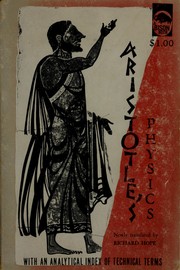
Aristotle's account of nature, causation (the famous four causes), motion, and time. Reading this after the Ethics and Soul reveals the unified system behind his thought.
The Summit: Metaphysics and the Hardest Texts
ExpertTackle Aristotle's most demanding and celebrated philosophical work — his account of being, substance, form, and the Unmoved Mover — and consolidate a full picture of his philosophical system.
▸ Study plan for this stage
Pace: 8–10 weeks, ~40–50 pages/day (Metaphysics is dense; expect 2–3 hours of active reading/study per day)
- Substance (ousia) as the primary category of being and its three candidates: matter, form, and the composite
- Form (morphe) as the actualizing principle and the source of unity and intelligibility in individual things
- Actuality (energeia) vs. potentiality (dynamis) and how this distinction explains change, causation, and being
- The four causes (material, formal, efficient, final) as the complete explanation of why anything is what it is
- The Unmoved Mover as the ultimate principle of motion and the culmination of Aristotle's theology and metaphysics
- Being qua being (to on hei on) as the subject matter of first philosophy and the unity of metaphysical inquiry
- The doctrine of categories as the fundamental structure of reality and language
- Essence (ti en einai) and definition as the means of grasping what a thing truly is
- What is substance (ousia) and why does Aristotle argue it is the primary category of being?
- How do form and matter relate to each other, and why does Aristotle ultimately privilege form as the true substance?
- Explain the distinction between actuality and potentiality and show how it resolves key problems in earlier philosophy.
- What are the four causes and how do they together provide a complete explanation of a natural thing?
- What is the Unmoved Mover and what role does it play in Aristotle's account of motion and the cosmos?
- How does Aristotle's doctrine of being qua being establish metaphysics as a unified science distinct from physics?
- Close reading exercise: Select one book of the Metaphysics (e.g., Book VII or XII) and produce a detailed outline showing Aristotle's argument structure, main claims, and how they connect to the overall work.
- Comparative analysis: Using both the Moerbeke translation and the standard English translation, identify 3–5 key passages where translation choices significantly affect philosophical meaning; write a 2–3 page analysis of why these differences matter.
- Concept mapping: Create a visual diagram showing how substance, form, matter, actuality, potentiality, and the four causes interrelate in Aristotle's system; use concrete examples (e.g., a bronze statue, a human being) to illustrate each relationship.
- Argumentative reconstruction: Choose a major argument from the Metaphysics (e.g., the argument that form is substance, or the argument for the Unmoved Mover) and reconstruct it in modern logical form, identifying premises, inferences, and potential objections.
- Synthesis essay: Write a 4,000–5,000 word essay explaining how Aristotle's account of being, substance, and the Unmoved Mover form a coherent philosophical system; show how each part depends on and supports the others.
- Dialogue exercise: Write a Platonic-style dialogue between Aristotle and a predecessor (Plato, Parmenides, or Heraclitus) in which they debate a core metaphysical issue (e.g., the nature of substance or the source of motion); demonstrate mastery of both positions.
Next up: This stage completes the core philosophical system and positions the reader to explore how Aristotle's metaphysics grounds his ethics, politics, and natural philosophy in subsequent stages.

The crown of Aristotle's philosophy and one of the most influential books ever written. All prior stages have been building toward this: substance, essence, actuality, potentiality, and God as pure thought thinking itself.

Ross's two-volume commentary (often read alongside the text) is the gold-standard scholarly guide to the Metaphysics. It clarifies every difficult passage and is indispensable for serious study at this stage.
Legacy: Aristotle's Influence on Science and Western Thought
ExpertUnderstand how Aristotle shaped medieval theology, the Scientific Revolution, and modern philosophy — seeing his ideas not as museum pieces but as living forces that defined Western civilization.
▸ Study plan for this stage
Pace: 6–7 weeks, ~40–50 pages/day. "Aristotle's Children" (400 pages) takes 2–2.5 weeks; "The Lagoon" (400 pages) takes 2.5–3 weeks; final week for synthesis and review.
- How Aristotle's logic, metaphysics, and natural philosophy became the intellectual foundation of medieval Islamic and Christian theology
- The role of Arab scholars (Al-Ghazali, Averroes, Avicenna) in preserving and transmitting Aristotelian thought through the Middle Ages
- The conflict between Aristotelian science and emerging empirical observation during the Scientific Revolution (Galileo, Harvey, Newton)
- Aristotle's biological methodology—observation, classification, and teleology—and its lasting impact on how we study living systems
- The tension between Aristotelian essentialism and modern evolutionary theory, genetics, and mechanistic biology
- How Aristotle's ideas about causation, substance, and form persist in contemporary metaphysics and philosophy of science
- The process of intellectual revolution: how paradigm shifts required both rejecting and building upon Aristotelian frameworks
- Why was Aristotle's work so dangerous to medieval Christian and Islamic authorities, and how did scholars like Aquinas and Averroes reconcile his philosophy with religious doctrine?
- What specific Aristotelian ideas about the natural world (e.g., the four elements, the perfection of celestial spheres, the fixity of species) did early modern scientists have to overturn, and what evidence forced them to do so?
- How did Aristotle's method of observation and classification in biology differ from later experimental science, and what did modern biology gain and lose in the transition?
- Trace the journey of one major Aristotelian concept (e.g., causation, form, essence) from ancient Greece through medieval theology to modern philosophy—how did its meaning change?
- According to Leroi, what aspects of Aristotle's biological thinking were actually correct or prescient, and which were fundamentally wrong? What does this tell us about the nature of scientific progress?
- How does understanding Aristotle's influence on Western thought change the way you view the Scientific Revolution—was it a clean break or a complex negotiation with the past?
- Create a timeline mapping the transmission of Aristotle's works from ancient Greece → Islamic scholars → medieval Europe → Renaissance recovery. Mark key figures (Averroes, Aquinas, Petrarch) and note which texts were recovered when.
- Read one passage from Aristotle's biological writings (e.g., on animal generation or classification) and one from a medieval commentary (e.g., Albertus Magnus) side-by-side. Write a 1-page analysis of how the medieval scholar interpreted, modified, or defended Aristotle's claims.
- Select one scientific 'error' Aristotle made (e.g., spontaneous generation, the immobility of Earth, the four elements). Research how it was disproven and write a 2-page essay on what evidence and methods were needed to overturn it.
- Construct a comparison table: Aristotelian biology vs. Darwinian evolution. For each major concept (species, causation, adaptation, essence), note the key difference and explain why the shift mattered.
- Interview or survey 3–5 people outside your field: ask them to name one thing Aristotle said about nature or knowledge. Compile their answers and compare them to what you've learned—what misconceptions or persistent ideas emerge?
- Write a fictional dialogue between Aristotle, a medieval theologian (e.g., Aquinas), and a 17th-century scientist (e.g., Harvey or Galileo) debating a specific natural phenomenon (e.g., how the heart works, the nature of motion). Use historically accurate positions from the books.
Next up: This stage establishes Aristotle as a living intellectual force whose ideas shaped centuries of thought and whose errors reveal how science progresses; the next stage will likely deepen engagement with specific Aristotelian texts or explore how particular modern disciplines (biology, logic, ethics) continue to grapple with his legacy.
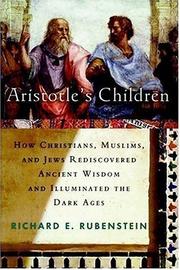
A gripping narrative of how Aristotle's lost works were rediscovered in the 12th century and transformed Christian and Islamic thought — the perfect bridge between Aristotle himself and his long aftermath.

A biologist's stunning reassessment of Aristotle as the founder of empirical science, focusing on his biological works. It closes the curriculum by showing that Aristotle's influence on how we observe the world is as great as his influence on how we think.
Discussion
Keep reading
Paths that share books, cover the same subject, or open a related topic.