Best Books on Ultralight Backpacking, in Order
Ultralight backpacking is less a gear list than a way of reasoning about risk, comfort, and weight, and the literature reflects that: the good books argue you into a mindset before they sell you a tarp. This path starts with the two short, illustrated manifestos that reframe what you think you need, moves into rigorous gear-system analysis and the big three, then handles food and resupply — the weight most beginners never audit — before finishing with the long-distance technique books written by people who walked thousands of miles under the loads they recommend.
The ultralight mindset
BeginnerUnderstand why base weight is the number that matters, how to weigh and audit everything you own, and which comforts are genuinely worth carrying
▸ Study plan for this stage
Pace: 1–2 weeks. Both books are short and illustrated — Lighten Up! is 112 pages and reads in one evening, Clelland's 144 pages of tips in two or three. The real time cost here is the gear audit, so budget a weekend afternoon with a kitchen scale alongside the reading.
- Base weight as the number that matters — everything on your back minus food, water, and fuel — and why it, not total pack weight, is the figure you can actually control
- Ladigin's central claim that most of the savings come from leaving things behind and rethinking what you already own, not from buying lighter versions
- The compounding effect: a lighter load lets you drop to a lighter pack, lighter boots, and shorter days' worth of food, so early cuts unlock later ones
- Weighing everything individually and keeping a written gear spreadsheet, which is the discipline both books assume before any decision
- Multi-use items and the honest test for them — an item earns its place only if it genuinely replaces another, not if it theoretically could
- Clelland's spectrum from sensible to deliberately extreme, and the judgment needed to place yourself on it rather than copying the far end
- The difference between comfort in camp and comfort on the trail, and why ultralight trades the first for the second
- Where the safety floor sits — the items neither book argues you should cut, regardless of weight
- What is your current base weight, and which five items account for the largest share of it?
- What does Ladigin argue you can cut before spending any money at all, and how much did that come to for your own kit?
- Which of Clelland's tips would you refuse to adopt, and can you state the risk you are declining rather than just calling it uncomfortable?
- Why does cutting weight from the big items enable further cuts elsewhere, and what is the first thing that becomes possible once your load drops?
- How do you distinguish a genuine multi-use item from a rationalisation for carrying something you like?
- Weigh every item you own to the gram and build a gear spreadsheet with a base-weight total — this is the baseline every later stage is measured against
- Do a Ladigin-style audit: remove everything you did not use on your last three trips and record the weight saved without buying anything
- Pick ten of Clelland's tips, rate each as adopt / test / reject with a written reason, and take the 'test' pile on a single overnight
- Pack for an overnight twice — once as you normally would, once after the audit — and carry both packs up the same hill to feel the difference rather than read about it
Next up: With a real base-weight number and an audited kit, you now have the baseline against which Skurka's condition-driven gear analysis can be judged.
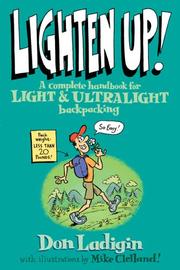
A sixty-page illustrated argument that you can cut your pack weight in half without buying anything. The fastest possible introduction and the right first read because it changes how you look at your existing kit.
153 concrete, testable tips from the illustrator of the previous book, ranging from the sensible to the deliberately extreme. Read second so you can judge each tip against the principles you just absorbed.
Gear systems and the big three
BeginnerChoose a shelter, sleep system, and pack that work together, and know how each piece performs in cold, wet, and buggy conditions rather than just what it weighs
▸ Study plan for this stage
Pace: 4–5 weeks. Skurka (240 pages) is the analytical core — take about two weeks and read with your gear spreadsheet open. Lichter's Trail Tested (288 pages) runs a week and a half. Curtis's Field Manual is 448 pages of reference; read the skills chapters straight through over a week and keep the rest fo
- Skurka's organising principle — gear chosen for conditions and trip type rather than by brand or by weight alone — and the environmental and route variables he uses to define them
- The big three (shelter, sleep system, pack) as the place where weight is genuinely won, and the order in which to replace them
- Shelter families: tarps, pyramids, single-wall and double-wall tents, and how each handles wind, condensation, and insects differently
- Sleep system as a system — bag or quilt, pad R-value, and the fact that the pad usually determines your real temperature limit
- Pack fit and load-carriage limits: a frameless pack works only below a weight threshold, which links your pack choice back to the audit from the previous stage
- Lichter's field-failure perspective — what breaks, wears through, or proves useless over thousands of miles, and how a shakedown catches it
- The traditional skill floor from Curtis: water treatment, weather reading, first aid, and Leave No Trace, all of which the ultralight books assume rather than teach
- Deciding what you are cutting before you cut it — Curtis defines the baseline competence that makes a lighter kit safe rather than reckless
- For a three-season trip in your own region, which shelter type does Skurka's condition-based framework point to, and what specifically would change that answer?
- Why does pad R-value often set your real temperature limit rather than the bag's rating, and how would you test that claim on a cold night?
- At what base weight does a frameless pack stop being comfortable for you, and how does that constrain the rest of your kit?
- What does Lichter identify as the gear that most often fails in the field, and how would a shakedown hike have caught it?
- Which of Curtis's skills does a lighter kit make more important rather than less, and why?
- What is the difference between Skurka's approach and a gear list copied from someone else's thru-hike?
- Run Skurka's condition analysis on your next three planned trips and write a separate kit list for each rather than one universal list
- Do a full shakedown in Lichter's style before a trip: lay everything out, justify each item aloud, and remove what you cannot defend
- Test your sleep system at its claimed limit close to home — car camp or backyard — and record the actual temperature at which you were cold
- Pitch your shelter in wind and rain before you need to, timing yourself, and note where condensation collected
- Work through Curtis's water-treatment and weather chapters and write your own one-page trip protocol for both
- Recalculate your base weight after the big-three decisions and compare it against the baseline from the previous stage
Next up: Gear is now a solved system with a fixed weight, which exposes food and water as the largest remaining variable and the one that changes every day of a trip.

The most rigorous gear book in the genre, organized around conditions and trip type rather than brands, from a hiker with tens of thousands of trail miles. This is the analytical core of the path.

A triple-crowner's practical companion to Skurka, heavier on shakedown technique and what actually fails in the field. Read it after Skurka to pressure-test the choices you just made.
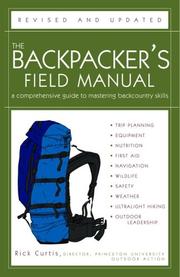
The traditional-backpacking reference that ultralight books assume you already know — first aid, weather, water treatment, Leave No Trace. Placed here so you know what you are cutting before you cut it.
Food, water, and resupply
IntermediatePlan calories per ounce for multi-day trips, build a resupply strategy for a long trail, and cook or cold-soak food you will actually want to eat on day nine
▸ Study plan for this stage
Pace: 2–3 weeks. Lipsmackin' Backpackin' (287 pages) is a recipe book to browse and cook from rather than read cover to cover — a week of trying recipes. Kesselheim's Trail Food is only 97 pages and reads in an evening, but the drying and ration-planning work behind it takes another week of practice.
- Calories per ounce as the governing metric, and the typical daily calorie target that rises sharply after the first week on trail
- Trail-tested versus theoretical recipes — the Conners collection comes from long-distance hikers, so preparation time and packability are already accounted for
- Cold soaking versus cooking, and what each choice does to your stove, fuel, and pot weight back in the gear list
- Kesselheim's ration planning: calculating food by day and by person so a two-week trip is arithmetic rather than guesswork
- Home dehydration — what dries well, what does not, and how drying changes weight versus rehydration time in the field
- Resupply box strategy: what to mail ahead, what to buy in town, and the failure modes of each on a long trail
- Appetite fatigue as a real planning problem — food you like on day one and cannot face on day nine
- Water carry as a weight decision: how far between sources, and when carrying more is cheaper than a detour
- What is your daily calorie target for a strenuous multi-day trip, and how many ounces does that come to at your current calories-per-ounce ratio?
- How does Kesselheim have you calculate rations for a fourteen-day trip for two people, and what buffer does the method leave?
- Which foods dry well and which are not worth the effort, and what does that mean for which Conners recipes you can prepare at home?
- What changes in your gear list if you go cold-soak only, and what do you give up on a cold, wet evening?
- How would you structure resupply for a two-week section — mail drops, town buys, or a mix — and what breaks if a box is late?
- Cook and eat three Lipsmackin' Backpackin' recipes at home before trusting any of them to a trip, and note preparation time and actual portion size
- Dehydrate one meal following Kesselheim's method, then rehydrate it in the field and record how long it really took
- Build a full ration plan for a seven-day trip with per-day weights and a calories-per-ounce column, and weigh the finished food bag against your calculation
- Test one day of cold-soaking on a trip where a stove is still in your pack, so you can back out if you hate it
- Map the water sources on your next route, decide your carry between each, and record where you carried too much
Next up: Weekend food planning is arithmetic; over weeks it becomes attrition, which is the terrain the long-distance books cover.

Trail-tested recipes from long-distance hikers, with the weight and preparation realities built in. The practical half of food planning.

The systems half — drying your own food, calculating rations by day and by person, and packing for resupply boxes. Read after the recipe book so you can turn individual meals into a whole-trip plan.
Long-distance technique
IntermediateUnderstand how ultralight practice changes over weeks rather than weekends: pacing, foot care, mental attrition, and the trade-offs the thru-hiking community argues about
▸ Study plan for this stage
Pace: 5–6 weeks. Jardine's Beyond Backpacking is 511 pages and argumentative — read it slowly over two weeks with the earlier books in mind. Fletcher's The Complete Walker IV is 845 pages and is best read as an extended pleasure over two to three weeks. Davis's Appalachian Trials (174 pages) closes the st
- Jardine's founding argument — that weight, not toughness, determines how far and how comfortably you can walk, and that almost everything conventional backpacking teaches follows from carrying too much
- Jardine's specific technique claims: high daily mileage, shorter sleep-to-walk transitions, footwear over boots, and the quilt-and-tarp system he popularised
- Where Jardine goes further than the evidence and where he was simply first — reading him critically is the point of placing him this late
- Fletcher's counterargument that not every ounce is worth the discomfort of losing it, and his case for gear that makes the walking pleasant rather than merely possible
- Fletcher's depth on the mechanics of walking itself — pacing, rhythm, rest, and foot care over long days
- Foot care and injury management as the practical crux of a thru-hike, treated seriously by both Jardine and Fletcher from opposite ends
- Davis's core claim that thru-hikes end for psychological reasons far more often than physical ones, and the goal-setting and expectation-management work he prescribes before the start
- The attrition curve of a long trail — the early enthusiasm, the mid-trail slump, and where in the timeline most people quit
- Which of Jardine's specific recommendations would you adopt, which would you reject, and what experience of your own justifies each call?
- Where does Fletcher's position genuinely conflict with Jardine's rather than merely differing in tone, and which is right for the trips you actually take?
- What does Fletcher say about pacing and rest that you cannot get from any gear book?
- According to Davis, what should you write down before you start a long trail, and what is it supposed to do for you at week six?
- What is your own foot-care protocol — prevention, early treatment, and the point at which you stop walking — and which book shaped each part of it?
- If your gear problems are solved and your head is the variable, what specifically would make you quit, and what is your plan for that day?
- Write a one-page rebuttal of the Jardine recommendation you disagree with most, citing your own trip experience rather than opinion
- Take a Fletcher-influenced comfort item and a Jardine-influenced cut on the same trip, and record afterwards which you would repeat
- Do Davis's pre-hike exercise: write your reasons for walking, what you will miss, and what would make quitting acceptable — then seal it and reread it mid-trip
- Walk a multi-day section at deliberately higher mileage than usual and log foot condition, sleep, and mood each night to find your own sustainable pace
- Run one shakedown week that puts the whole path together — audited kit, Skurka-chosen big three, a Kesselheim ration plan, and a Jardine-style daily mileage — and produce a final base-weight number
Next up: You now have the mindset, the gear system, the food plan, and both sides of the long-distance argument — the remaining learning happens on trail, not on the page.
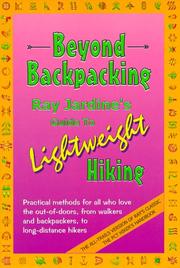
The book that started the modern ultralight movement, opinionated and occasionally extreme, and best read once you have enough experience to argue with it. Everything in the earlier stages is downstream of this.
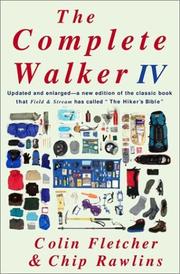
The traditionalist counterweight to Jardine, and the most beautifully written book about walking with a pack. Read it for the perspective that not every ounce is worth the discomfort of losing it.

The psychological side of long-distance hiking, which is what actually ends most thru-hikes. A fitting last read because by this point your gear problems are solved and your head is the variable.
Discussion
Keep reading
Paths that share books, cover the same subject, or open a related topic.