Track and field: essential books for running, jumping, and throwing
This curriculum takes a beginner from the basic joy and history of running and athletics all the way through the biomechanics, event-specific technique, and advanced training science behind sprinting, distance, jumps, and throws. Each stage builds on the last — starting with inspiration and foundational movement, moving into event-specific coaching knowledge, and finally reaching the performance science and periodization used by elite athletes and coaches.
Foundations: The Spirit & Science of Athletics
BeginnerUnderstand why track and field matters, develop a feel for human movement and running mechanics, and build the vocabulary needed to talk about training and competition across all events.
▸ Study plan for this stage
Pace: 8–10 weeks, ~40–50 pages/day. Start with "Once a Runner" (2–3 weeks), move to "Story of the Human Body" (3–4 weeks), finish with "Run Fast" (2–3 weeks).
- The philosophical and emotional dimensions of running as explored in Parker's narrative—why runners are drawn to the sport and what it demands mentally
- Human evolutionary adaptations for endurance running: bipedalism, loss of body hair, sweat glands, and the development of the Achilles tendon (from Lieberman)
- Biomechanics of efficient running: stride mechanics, cadence, ground contact time, and how the body's elastic recoil systems work (from Lieberman and Higdon)
- The relationship between aerobic capacity, lactate threshold, and training zones—foundational concepts for structuring workouts (from Higdon)
- Vocabulary of track and field training: tempo runs, intervals, easy runs, long runs, recovery, and periodization (from Higdon)
- How different energy systems (aerobic vs. anaerobic) fuel different distances and event types
- Why does Parker's protagonist in 'Once a Runner' pursue running despite its physical and social costs, and what does this reveal about the sport's deeper appeal?
- What evolutionary advantages did humans develop for distance running, and how do these adaptations appear in modern human anatomy?
- Explain the biomechanical principles of efficient running form as described in 'Run Fast'—what makes a stride economical?
- What is lactate threshold and why is it central to training prescription in Higdon's approach?
- Define and distinguish between easy runs, tempo runs, and interval workouts—when and why would a runner use each?
- How do the concepts from 'Story of the Human Body' (evolutionary design for endurance) connect to the practical training methods in 'Run Fast'?
- Read 'Once a Runner' and write a 1–2 page reflection on what drives the protagonist's commitment to running; connect it to your own reasons for studying track and field
- Create an annotated diagram of human skeletal and muscular adaptations for running (from Lieberman), labeling the Achilles tendon, arches of the feet, glutes, and hip stabilizers
- Film yourself running 400–800 meters at an easy pace, then analyze your own stride using Higdon's biomechanical principles—identify one strength and one area for improvement
- Build a glossary of 20–30 training terms from 'Run Fast' (e.g., VO2 max, cadence, split, negative split, fartlek) with definitions and example workouts
- Design a simple 4-week training block for a beginner 5K runner using Higdon's principles: include easy runs, one tempo run, one interval session, and a long run each week
- Interview an experienced runner or coach about why they were drawn to the sport (echoing Parker's themes) and how they structure their training (echoing Higdon's methods)
Next up: This stage establishes the *why* (Parker's passion), the *how* (Lieberman's biomechanics and evolution), and the *what* (Higdon's training vocabulary and methods), preparing you to dive into event-specific training, race strategy, and advanced periodization in the next stage.

A beloved novel that captures the culture, obsession, and inner life of a competitive runner — the perfect emotional entry point that makes the reader care deeply about the sport before diving into technique.

An evolutionary biologist explains how the human body was shaped for running and movement, giving beginners essential anatomical and biomechanical intuition that underpins every track and field event.
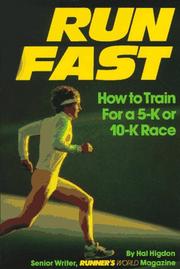
A practical, accessible introduction to running faster from one of the sport's most trusted coaches — introduces training concepts like intervals, tempo runs, and periodization in plain language.
Event Fundamentals: Sprints, Hurdles & Relays
BeginnerLearn the specific technique, drills, and training principles behind the speed events — sprints, hurdles, and relays — and understand what separates elite sprinting from recreational running.
▸ Study plan for this stage
Pace: 4–5 weeks, ~25–30 pages/day, with 2–3 days per week dedicated to practical drills and video analysis
- The biomechanics of sprinting: stride length, stride frequency, and ground contact time as the foundation of speed
- Acceleration phase vs. maximum velocity phase: how elite sprinters transition from drive phase to top-end speed
- Hurdle technique: the importance of rhythm, trail leg mechanics, and maintaining horizontal velocity over barriers
- Relay baton exchange: the non-visual handoff, acceleration zones, and synchronization between runners
- Periodization and training cycles: how to structure sprint training from general preparation through competition phases
- Special endurance and lactate tolerance: training the energy systems specific to 200m and 400m events
- The role of strength and power development: plyometrics, weights, and explosive movements in sprint training
- Individual variation and technical adjustment: recognizing that elite sprinters have different body types and stride patterns
- What are the three main phases of sprint acceleration, and what biomechanical changes occur in each?
- How do stride length and stride frequency interact to produce maximum velocity, and why can't both be maximized equally?
- What is the critical difference between hurdle technique for the 110m/100m hurdles versus the 400m hurdles, and why does rhythm matter?
- Describe the mechanics of a non-visual relay baton exchange and explain why it is superior to a visual handoff.
- How should a sprint training cycle be periodized, and what are the key differences between general preparation, specific preparation, and competition phases?
- What role does lactate tolerance training play in 400m performance, and how does it differ from 100m/200m training?
- Film analysis: Watch 3–5 elite sprinters (100m and 200m) in slow motion, identifying their stride length, frequency, and acceleration patterns; compare two runners with different body types.
- Hurdle rhythm drill: Practice 3–5 hurdles at 60–70% intensity, focusing on maintaining a consistent number of steps between barriers and smooth trail leg mechanics.
- Relay exchange practice: Perform 10–15 non-visual baton handoffs with a partner, starting at 50% speed and progressing to 80–90% speed, recording video to analyze timing and acceleration zones.
- Acceleration mechanics session: Perform 4–6 × 30m accelerations from a standing start, focusing on forward lean, knee drive, and ground contact time; use video or coach feedback to self-assess.
- Strength and power circuit: Complete 2–3 sessions per week of plyometrics (bounds, hops, single-leg work) and explosive weight training (squats, deadlifts, cleans) as described in the book.
- 400m pacing and lactate tolerance: Run 3–4 × 300m repeats at 90–95% effort with 3–4 minute recovery, noting how pace changes in the final 100m and relating this to the book's discussion of energy systems.
Next up: Mastery of sprint and hurdle biomechanics, relay coordination, and periodized training principles establishes the technical and physiological foundation needed to progress to intermediate event-specific training, where you will learn how to refine technique under fatigue, manage injury prevention, and integrate these fundamentals into competition-ready programs.
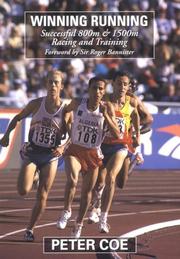
Written by Seb Coe's father and coach, this book bridges sprint and middle-distance training philosophy, introducing the concept of structured coaching and event-specific preparation.
Distance & Middle Distance: Endurance Science
IntermediateMaster the physiology and training methods behind middle-distance and long-distance events, understanding concepts like VO2 max, lactate threshold, and periodization at a meaningful depth.
▸ Study plan for this stage
Pace: 6–8 weeks, ~40–50 pages/day (mix of Daniels' technical chapters and Lear's narrative sections; allocate ~3 weeks for Daniels, ~3 weeks for Lear, ~1 week for synthesis and application)
- VO2 max as the gold standard metric: how it's measured, its role in distance running performance, and why it's trainable but genetically capped
- Lactate threshold (VDOT and threshold pace): the physiological boundary between aerobic and anaerobic work, how Daniels quantifies it, and its direct application to race pacing
- Training intensity zones and their purpose: easy runs, threshold runs, interval work, and recovery—why each serves a distinct physiological adaptation
- Periodization and macrocycle planning: how elite programs (like Colorado's in Lear's narrative) structure training blocks to peak for major competitions
- Individual variability and talent identification: how genetic factors, training response, and environmental conditions shape distance runner development, illustrated through Lear's athlete profiles
- The aerobic base as foundation: why high-volume, low-intensity training underpins all distance running success, and how Daniels quantifies this
- Race-specific pacing strategy: using VDOT tables and physiological thresholds to predict realistic race times and execute optimal pacing
- Training load management and injury prevention: balancing hard workouts with adequate recovery to sustain long-term development
- What is VO2 max, how is it measured, and why does Daniels use it as the foundation for his training system?
- Explain the relationship between lactate threshold and race performance. How does Daniels' VDOT system quantify this, and how would you use it to set training paces?
- Describe the five training intensity zones Daniels outlines. What physiological adaptation does each zone target, and why is the distribution of training time across zones critical?
- How does the Colorado program (as depicted in Running with the Buffaloes) structure its annual periodization? What phases does it use, and how do they build toward peak performance?
- Using Daniels' tables, how would you predict a 5K race time from a known 10K time, and what training plan would you prescribe for someone targeting a half-marathon PR?
- What role does individual variability play in distance running success? Cite specific athlete examples from Lear's book to illustrate how genetics, training response, and environment interact.
- Calculate your own VO2 max using a recent race result and Daniels' tables; then use that VDOT to generate your personalized training paces for easy, threshold, and interval work
- Design a 12-week training block for a half-marathon goal using Daniels' periodization framework: specify the weekly structure, intensity distribution, and how you'd progress volume and intensity
- Analyze one athlete's training journey from Running with the Buffaloes (e.g., Adam Goucher or Carrie Tollefson) and map their workouts to Daniels' intensity zones; identify the periodization phases they went through
- Conduct a mock race-pacing session: given a goal 5K time, use Daniels' VDOT tables to calculate splits and design a pacing strategy; then reflect on how lactate threshold knowledge would inform your execution
- Compare two different training philosophies or athletes from Lear's narrative (e.g., high-mileage vs. quality-focused approaches) and evaluate them against Daniels' scientific framework—which aligns better with VO2 max and threshold principles?
- Create a personal injury-prevention and recovery protocol based on Daniels' guidance on training load and Lear's observations of how elite programs manage athlete health across a season
Next up: This stage equips you with the physiological science and systematic training methods to understand distance running at an elite level; the next stage will likely apply these principles to race-specific tactics, advanced periodization (e.g., double periodization, altitude training), and the mental/psychological dimensions of competitive distance running.
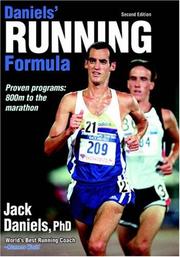
The definitive scientific training manual for distance runners by one of the world's foremost exercise physiologists — introduces VDOT, training paces, and structured periodization with rigor and clarity.
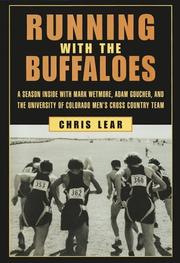
A season-long narrative inside a Division I cross country program that shows how elite distance training actually looks day-to-day, making Daniels' abstract principles come alive in practice.
Jumps & Throws: Technical Events
IntermediateUnderstand the biomechanics, approach mechanics, and strength-speed training behind the horizontal jumps, vertical jumps, and throwing events that complete the full athletics program.
▸ Study plan for this stage
Pace: 4–5 weeks, ~40–50 pages/day (approximately 280–350 pages total across both books)
- Biomechanical principles of horizontal jumps (long jump, triple jump): approach speed, takeoff angle, flight mechanics, and landing technique
- Biomechanical principles of vertical jumps (high jump, pole vault): center of gravity management, bar clearance techniques, and energy conservation
- Throwing event mechanics (shot put, discus, hammer, javelin): rotational vs. linear drives, release angles, and force application sequences
- Strength-speed training methodology: the stretch-shortening cycle and plyometric progressions for explosive power development
- Periodization and programming for technical events: integrating technique work, strength development, and power expression across training phases
- Common technical faults in jumps and throws: identification, correction strategies, and cueing methods for athletes
- Transition from general athletic preparation to event-specific technical refinement in intermediate-level training
- What are the key biomechanical differences between long jump and triple jump approach and takeoff mechanics, and how do these differences affect training emphasis?
- Explain the role of the stretch-shortening cycle in plyometric training and how it applies to both jumping and throwing events.
- How do high jump and pole vault differ in their approaches to clearing the bar, and what are the strength-speed demands of each?
- Describe the technical sequence and force application pattern for a rotational throwing event (discus or hammer) versus a linear throwing event (shot put).
- What are 3–4 common technical faults in either jumps or throws, and what corrective cues or drills would you use to address them?
- How would you structure a 4-week training block for an intermediate jumper or thrower that balances technique refinement, strength work, and power development?
- Video analysis: Record yourself or a peer performing a long jump or triple jump approach and takeoff; identify 2–3 biomechanical deviations from ideal technique and propose corrections.
- Plyometric progression sequence: Design a 2-week plyometric training plan for a jumper, starting with basic double-leg bounds and progressing to single-leg or sport-specific variations; document load, volume, and recovery.
- Throwing mechanics drill: Practice 5–10 repetitions each of shot put, discus, or hammer with focus on one technical element (e.g., hip-shoulder separation, release angle); video record and compare to coaching manual cues.
- Strength-speed assessment: Test your standing broad jump, vertical jump, or medicine ball throw before and after a 2-week plyometric block to quantify power gains.
- Technical fault identification: Watch 3–5 videos of intermediate-level jumpers or throwers (online or from coaching resources); identify 2–3 common faults and propose drill-based corrections using Chu's progressions.
- Periodization planning: Create a 12-week training plan for a jumper or thrower that integrates the technical and strength-speed principles from both books, with clear phases and objectives.
Next up: This stage equips you with the biomechanical and training foundations for jumps and throws, preparing you to advance to event-specific periodization, competition preparation, and coaching strategies for elite-level technical athletes.

The official USATF coaching reference covers every field event — long jump, triple jump, high jump, pole vault, shot put, discus, hammer, and javelin — making it the essential technical reference for this stage.
The canonical text on plyometric training, which is the foundational physical preparation method for all jumpers and throwers; reading this after the USATF manual connects technique to athletic development.
Advanced Performance: Strength, Speed & Periodization
ExpertSynthesize everything into an advanced understanding of athletic performance — how elite track and field athletes structure multi-year training, develop explosive power, and peak for competition.
▸ Study plan for this stage
Pace: 8–10 weeks, ~40–50 pages/day (with 2–3 review days per week). "Supertraining" is dense and technical; plan for slower, deliberate reading with frequent note-taking and re-reading of complex sections on periodization, power development, and biomechanics.
- Periodization models (linear, undulating, block) and their application to multi-year training cycles for track and field athletes
- The science of strength development: neural adaptation, muscle hypertrophy, and power expression in explosive movements
- Biomechanical principles underlying sprinting, jumping, and throwing—how force production translates to athletic performance
- Recovery, adaptation, and supercompensation: the physiological basis for peaking and avoiding overtraining
- Individualization and testing protocols: how to assess athlete readiness, identify weaknesses, and tailor training to specific event demands
- Integration of strength, speed, and power training within a coherent annual and multi-year plan
- Advanced programming techniques: contrast training, complex training, and concurrent training of different energy systems
- What are the key differences between linear, undulating, and block periodization models, and when is each most appropriate for track and field athletes?
- How do neural adaptation and muscle hypertrophy contribute differently to strength and power development, and what training methods target each mechanism?
- Explain the biomechanical principles that determine force production in sprinting and jumping—how do these inform training exercise selection?
- What is supercompensation, and how does understanding this principle help prevent overtraining while optimizing peaking for competition?
- How would you design a testing battery to assess an elite 400m runner's readiness and identify specific weaknesses in strength, speed, or power?
- Describe how you would integrate strength, speed, and power training within a 4-year Olympic cycle for a track and field athlete in your chosen event.
- Map out a complete 4-year periodized training plan for a specific track and field event (e.g., 100m sprinter, long jumper, shot putter), clearly delineating macrocycles, mesocycles, and microcycles with specific training emphases for each phase.
- Conduct a biomechanical analysis of a key movement in your chosen event (e.g., the drive phase in sprinting, takeoff in long jump): identify the primary force producers, explain the neural and muscular mechanisms, and propose 3–4 exercises that directly develop the required strength and power.
- Design a comprehensive testing protocol for an elite athlete in your event: specify 6–8 tests that assess strength, speed, power, and sport-specific performance; explain what each test reveals and how results would inform training adjustments.
- Create a detailed 12-week mesocycle (e.g., a competition preparation phase) that integrates strength, speed, and power training while managing recovery and avoiding overtraining; include daily/weekly structure and rationale for exercise sequencing.
- Analyze a case study of an athlete's training response: given data on performance metrics, recovery markers, and training load, diagnose whether the athlete is in a supercompensation phase, overreached, or overtraining, and prescribe adjustments.
- Compare and contrast two periodization approaches (e.g., block periodization vs. undulating periodization) for a 400m runner; argue which is superior for this event based on biomechanical and physiological principles from Supertraining.
Next up: This stage synthesizes the scientific foundations of elite athletic performance and provides the framework for designing championship-level training; the next stage will likely focus on sport-specific application, competition strategy, and the practical coaching and management of elite athletes across multiple events and team contexts.

The most comprehensive text on strength and speed-strength training in sport science; essential for understanding how throwers, jumpers, and sprinters build the force production that underlies elite performance.
Discussion
Keep reading
Paths that share books, cover the same subject, or open a related topic.