Formula 1 and motorsport: the best books to understand racing
This curriculum takes a beginner from the colourful human drama of Formula 1 all the way through to the engineering science and strategic chess-match that defines modern motorsport. Each stage builds on the last — first you absorb the stories and culture, then you understand the machines, and finally you think like a team principal or race engineer.
The Story & the Drama
BeginnerBuild an emotional and historical foundation — understand who the key figures are, why F1 matters, and what makes it uniquely dangerous and compelling.
▸ Study plan for this stage
Pace: 4–5 weeks, ~40–50 pages/day. "No Angel" (~400 pages) takes 2–3 weeks; "The Death of Ayrton Senna" (~200 pages) takes 1–2 weeks. Include 3–4 days for reflection and note-synthesis between books.
- Ayrton Senna's rise from Brazilian prodigy to global icon: ambition, talent, and the personal cost of dominance
- The Prost–Senna rivalry as the defining narrative of 1980s F1: competitive intensity, on-track collisions, and psychological warfare
- F1 as a high-stakes arena where driver personality, team politics, and technological innovation collide
- The culture of danger in motorsport: how drivers rationalized and accepted life-threatening risk
- Senna's spiritual and philosophical evolution: how he processed fame, mortality, and meaning beyond racing
- The 1994 season as a turning point: technological change, safety debates, and the tragic consequences of complacency
- How media narratives and public emotion shape a driver's legacy and the sport's identity
- What were the key turning points in Ayrton Senna's career, and how did his personality shape his approach to racing and rivalry?
- How did the Prost–Senna relationship evolve from respect to antagonism, and what role did on-track incidents play in defining their legacies?
- Why was the 1994 season significant for F1, and what factors contributed to the tragic events at Imola?
- How did Senna's view of danger, mortality, and spirituality change over his career, and what does this reveal about the psychological toll of elite motorsport?
- What made Senna's death culturally significant beyond motorsport, and how did it reshape conversations about safety in F1?
- How do the narratives in these two books complement each other to build a complete picture of Senna's life and impact?
- Create a detailed timeline of Senna's career milestones from 'No Angel,' marking key wins, rivalries, and personal turning points. Annotate each with one sentence on how it shaped his public image.
- Write a character analysis of Prost based on Bower's portrayal: How does Senna's rival emerge as a fully realized person, not just a foil? What are Prost's vulnerabilities and strengths?
- Track Senna's relationship with danger across both books. Collect 4–5 quotes or anecdotes that show his evolving attitude toward risk, and write a short reflection (300 words) on what changed and why.
- Create a visual comparison chart: List the key events of the 1994 season from 'The Death of Ayrton Senna,' then cross-reference them with context from 'No Angel' about Senna's state of mind and the sport's trajectory.
- Write two contrasting 500-word essays: (1) Senna as Bower presents him in 'No Angel' (flawed, ambitious, complex), and (2) Senna as Williams memorializes him in 'The Death of Ayrton Senna' (spiritual, tragic, transcendent). What does each book emphasize?
- Conduct a close reading: Select one pivotal scene from each book (e.g., a collision with Prost from 'No Angel' and a moment from Imola in 'The Death of Ayrton Senna'). Write a 400-word analysis of how each author uses narrative technique to convey emotion and meaning.
Next up: This stage establishes the human drama, emotional stakes, and historical context of F1 through its most iconic figure; the next stage will shift focus to the technical, mechanical, and strategic dimensions of the sport—how cars are built, races are won, and systems evolve.

Ecclestone shaped modern F1 into a global business empire; reading this first gives you the political and commercial skeleton on which everything else hangs.
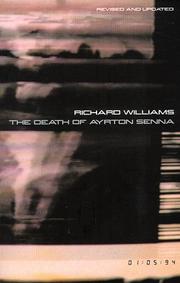
Ayrton Senna is F1's most mythologised figure; this biography introduces the spiritual intensity, genius, and tragedy that define how fans relate to the sport.
The Drivers & the Rivalries
BeginnerDevelop a richer understanding of driver psychology, the championship battles that defined eras, and what separates great drivers from legends.
▸ Study plan for this stage
Pace: 8–10 weeks, ~40–50 pages/day. Start with "Michael Schumacher" (4–5 weeks, ~350 pages), then "How to Build a Car" (4–5 weeks, ~400 pages). Allocate 1 week for reflection and synthesis between books.
- Driver psychology and mental resilience: How Schumacher's competitive obsession, focus under pressure, and ability to extract maximum performance shaped his dominance
- Championship-defining rivalries: The Senna-Prost era, Schumacher's battles with Hill and Villeneuve, and how personal dynamics influence on-track performance
- The relationship between driver and machine: How Newey's engineering philosophy and Schumacher's feedback loop created competitive advantage at Ferrari and Benetton
- Precision, feedback, and continuous improvement: Schumacher's meticulous approach to data analysis and Newey's iterative design process as hallmarks of greatness
- Team dynamics and leadership: How Schumacher elevated teammates and influenced team culture versus how Newey navigated relationships with drivers and technical teams
- The technical demands drivers face: Understanding aerodynamics, tire management, and setup through Newey's lens to appreciate what separates elite drivers
- Era-defining moments and decision-making: How Schumacher's controversial moments (Jerez 1994, 1997) and Newey's design breakthroughs reveal character and innovation under pressure
- Legacy and influence: How both figures redefined their respective domains and what made them legendary rather than merely successful
- What were the key psychological traits that made Michael Schumacher dominant, and how did they manifest in his approach to rivals like Hill and Villeneuve?
- How did Schumacher's relationship with his team and engineers differ from his predecessors, and what role did this play in his success at Benetton and Ferrari?
- What is Adrian Newey's design philosophy, and how does it reflect his understanding of what drivers need from a car to perform at the highest level?
- How does Newey's account of working with different drivers (Senna, Prost, Villeneuve, Häkkinen) illuminate what separates great drivers from legends?
- What role did technical innovation and engineering breakthroughs play in Schumacher's dominance, and how does Newey's perspective deepen your understanding of this?
- How do the concepts of precision, feedback loops, and continuous improvement appear in both Schumacher's driving approach and Newey's design process?
- Create a comparative timeline of Schumacher's major rivalries (Senna-Prost, Hill, Villeneuve, Häkkinen) with annotations on psychological turning points and on-track incidents; cross-reference with Newey's observations about these drivers.
- Write a 500-word character study analyzing one of Schumacher's controversial moments (Jerez 1994 or 1997) using both Allen's narrative and your own assessment of driver psychology under extreme pressure.
- Diagram the feedback loop between driver and engineer using specific examples from both books: identify how Schumacher communicated car problems and how Newey translated driver feedback into design solutions.
- Select one championship season from Schumacher's career and create a 'technical vs. psychological' breakdown: what technical advantages did his car have, and how did his mental approach amplify or overcome those advantages?
- Interview exercise: Write 5–7 interview questions you would ask Adrian Newey about designing cars for Schumacher, then answer them using evidence from both books to synthesize their partnership.
- Comparative analysis: Choose one design innovation Newey describes (e.g., traction control, aerodynamic breakthrough) and explain how it gave drivers like Schumacher a psychological edge over rivals—did it change how they approached racing?
Next up: This stage establishes how individual driver psychology and technical mastery interact to create dominance; the next stage will expand outward to explore team structures, organizational culture, and how entire systems—not just brilliant individuals—sustain competitive advantage across multiple seasons and eras.
Written by a McLaren mechanic, this ground-level view humanises the paddock and shows how championships are won and lost by the people behind the scenes — essential context before studying strategy.

Schumacher's dominance with Ferrari in the 2000s represents the modern template for a championship-winning operation; Allen's analysis bridges biography and tactical thinking.
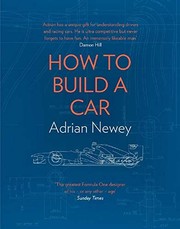
The greatest F1 designer alive tells his own story — this is the perfect bridge book, blending personal narrative with your first real taste of engineering thinking, setting up the next stage.
The Machines & the Science
IntermediateUnderstand the physics, aerodynamics, and engineering principles that make an F1 car the most sophisticated racing machine on earth.
▸ Study plan for this stage
Pace: 6–8 weeks, ~25–30 pages/day (alternating between both books; start with Tremayne's design overview, then deepen with Smith's engineering principles)
- Aerodynamic principles in F1: downforce, drag, and how wings and bodywork generate grip at speed
- Suspension geometry and setup: how camber, toe, anti-roll bars, and ride height affect handling and tire performance
- Tire dynamics and thermal management: why tire temperature, pressure, and compound choice are critical to lap time
- Engine and powertrain efficiency: turbocharging, fuel consumption, and how power delivery affects acceleration and cornering
- Weight distribution and center of gravity: how chassis balance and mass placement influence car behavior
- Brake system design and modulation: stopping power, brake balance, and how drivers manage deceleration
- Data-driven tuning philosophy: using telemetry and systematic testing to optimize car performance incrementally
- How do F1 teams use aerodynamic principles (downforce vs. drag trade-offs) to optimize performance on different track types?
- What is the relationship between suspension geometry, tire contact patch, and cornering grip?
- Why is tire temperature management so critical to F1 performance, and how do teams control it?
- How does brake balance adjustment affect both stopping distance and tire wear during a race?
- What is the tuning pyramid approach, and why does Carroll Smith advocate for systematic, data-driven setup changes?
- How do modern F1 power units (hybrid systems) balance fuel efficiency with maximum power output?
- Create a visual diagram mapping how a single suspension adjustment (e.g., increasing front wing angle by 2°) cascades through aerodynamics, tire load, and cornering speed—use real F1 examples from the books
- Analyze a lap telemetry trace (simulated or real): identify where the driver is managing brake balance, throttle application, and steering input, and correlate it to the physics principles from the books
- Design a hypothetical setup change for a specific F1 circuit (e.g., Monaco vs. Monza): justify each adjustment (wing angle, suspension stiffness, brake bias) using the engineering principles from Smith and Tremayne
- Build or simulate a simple suspension model (even with paper/pencil or free software like Suspension Analyzer): experiment with camber and ride height changes to understand how geometry affects tire loading
- Compare two contrasting F1 car designs (e.g., 2022 vs. 2023 regulations, or Ferrari vs. Red Bull): identify the aerodynamic and mechanical philosophies each team prioritized and explain the trade-offs
- Write a 500-word technical brief explaining how a specific F1 innovation (DRS, active suspension, or hybrid power) works and why it provides a performance advantage—ground it in the physics from both books
Next up: This stage equips you with the scientific and engineering foundation to understand *why* drivers make the choices they do and *how* teams extract performance; the next stage will apply this knowledge to driver technique, race strategy, and the human factors that turn engineering excellence into championship wins.

A clear, accessible breakdown of F1 technology — aerodynamics, tyres, engines, and electronics — written for enthusiasts rather than engineers, making it the ideal first technical read.

A foundational text on chassis setup and vehicle dynamics used by racing engineers worldwide; it builds the vocabulary needed to understand why cars handle the way they do.
Strategy, Data & the Modern Game
IntermediateThink like a race strategist and data engineer — understand tyre management, pit-stop windows, simulation, and how data analytics now drives decision-making at every level.
▸ Study plan for this stage
Pace: 4–5 weeks, ~40–50 pages/day (approximately 280–350 pages total)
- Tyre management as a strategic lever—understanding degradation curves, compound selection, and how tyre choice shapes race outcomes
- Pit-stop strategy and timing windows—calculating when to stop, how long to stay out, and the risk/reward calculus of track position vs. fresh rubber
- Simulation and modelling in modern F1—how teams use data to predict performance, test scenarios, and make real-time decisions without being on track
- Data-driven decision-making culture—how Brawn transformed teams by embedding analytics into every strategic choice, from setup to fuel consumption to driver coaching
- Competitive advantage through systems thinking—how marginal gains in strategy, logistics, and information flow compound into championship wins
- The human element in data interpretation—why raw numbers require contextual judgment, experience, and understanding of driver psychology and track conditions
- How does tyre degradation influence pit-stop timing, and what trade-offs must a strategist weigh when deciding to pit early vs. late?
- What role does simulation play in modern F1 strategy, and how does it reduce uncertainty in real-time decision-making during a race?
- How did Brawn's approach to data analytics and systems thinking change the culture of the teams he led, and what specific competitive advantages did this create?
- Explain the concept of a pit-stop window: what determines when it opens and closes, and how do fuel load and tyre condition interact with this timing?
- What is the relationship between qualifying performance, race strategy, and championship outcomes in Brawn's strategic framework?
- How do teams use data to manage driver performance and psychology, and why is this as important as optimizing car setup?
- Create a race strategy simulation: pick a real F1 race (e.g., Monaco, Silverstone) and work through a two-stop vs. one-stop scenario, accounting for tyre degradation, fuel consumption, and traffic. Justify your pit-stop windows.
- Analyse a recent F1 race (from onboard footage or race reports) and identify the critical strategic moments—where did the winning strategy diverge from the runner-up's, and why?
- Build a simple tyre degradation model using data from a race weekend (available from official F1 sources or fan databases). Plot lap times against tyre age and predict when grip loss becomes critical.
- Interview or shadow a local motorsport strategist or engineer (even in lower-level racing) and document how they approach pit-stop timing, fuel management, and real-time decisions. Compare their methods to Brawn's principles.
- Conduct a case study on one of Brawn's championship-winning seasons (e.g., 2009 with Brawn GP, or his Ferrari years). Map out 3–4 key strategic decisions that shifted the championship balance and explain the data/thinking behind them.
- Design a data dashboard for a race strategist: what metrics would you track in real-time (lap times, tyre temps, fuel consumption, competitor positions) and how would you visualize them to support pit-stop and strategy calls?
Next up: This stage equips you with the strategic and analytical mindset needed to understand how modern F1 teams operate at the highest level; the next stage will likely deepen your knowledge of specific technical domains (aerodynamics, power units, vehicle dynamics) or explore the organizational and leadership structures that enable these data-driven decisions to succeed at scale.

Written by the most successful strategist in F1 history, this is the definitive text on race strategy, team management, and competitive thinking — it reframes everything you've learned so far.
Discussion
Keep reading
Paths that share books, cover the same subject, or open a related topic.