Toxicology looks like one subject and functions like four. The clinician treating an overdose, the analyst testifying about a blood sample, the ecologist modelling pesticide effects in a watershed, and the regulator setting an exposure limit all use the same underlying science and almost none of the same books. Beginners usually pick up whichever branch they encountered first and end up with a lopsided picture.
The fix is to read the shared core early and the branches afterward, in whatever order matches your work. The core is dose-response, absorption and distribution, metabolism and biotransformation, mechanisms of cellular injury, and target-organ effects. Everything downstream is an application of it.
A plain note first: these are professional texts, and toxicology is practised under licensure and institutional oversight. Reading them builds real understanding; it does not qualify anyone to diagnose a poisoning, run an analytical laboratory, or testify as an expert.
An easy way in
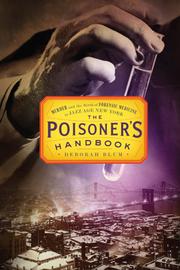
Before the textbook, read The poisoner's handbook. Deborah Blum tells the story of Charles Norris and Alexander Gettler building New York's medical examiner's office in the 1920s, chapter by chapter through individual poisons: chloroform, methanol, radium, carbon monoxide, thallium. It is narrative history, not instruction, and it does something a textbook cannot: it shows why analytical rigour and chain of custody exist, through the cases where their absence let killers go free.
The core textbook
Then the spine. Casarett and Doull's toxicology : the basic science of poisons - 8. ed. is the standard graduate text, organised from general principles through disposition and mechanisms to systems toxicology and then applications. It is long and it is the book the whole field references. Work through the general principles and target-organ sections properly; treat the applied chapters as an orientation to the branches you will read about next.
The branches
For clinical practice, Goldfrank's toxicologic emergencies is the reference for acute poisoning and overdose management in emergency medicine, structured around antidotes, case studies, and specific agents. It is a working reference more than a cover-to-cover read.
For the environmental branch, Ecotoxicology by Michael Newman moves the level of analysis from the organism to populations, communities, and ecosystems, covering bioaccumulation, biomarkers, and how effects propagate through food webs. It is the branch most often neglected by people who came in through medicine.
For the forensic branch, Principles of Forensic Toxicology, edited by Barry Levine, covers specimen collection, analytical methods, and interpretation for postmortem and human-performance cases. Read it after Blum and the contrast is instructive: the same questions, now with modern instrumentation and courtroom standards.
The regulatory frame
Finish with Risk Assessment in the Federal Government, the 1983 National Research Council report generally known as the Red Book. It is short, it is a committee document, and it established the four-step framework of hazard identification, dose-response assessment, exposure assessment, and risk characterisation that still structures regulatory toxicology worldwide. Reading it explains why agency documents are shaped the way they are, and where scientific judgement ends and policy begins.
That is the arc: story, science, then the four applications. A practical way to use it is to read Blum in a week, work through the general-principles half of Casarett and Doull over a couple of months, and then treat Goldfrank, Newman, and Levine as the reference you keep open while doing actual work, returning to the core text whenever a mechanism stops making sense.
Follow the full path and the branch you work in will make sense as one expression of a shared discipline rather than a separate trade, which is the difference between someone who can look up an antidote and someone who can reason about an unfamiliar compound.
Follow the full ordered path here: Best Books to Learn Toxicology, in Order.