Tiananmen Square 1989: books to read, in order
Seven weeks of protest in Beijing in the spring of 1989 ended with the army clearing the streets by force, and with an official silence that has held for more than three decades. This path starts with the reform decade that produced the grievances, moves into the movement as participants and reporters experienced it, then reconstructs the crackdown and the leadership split behind it, and ends with the erasure — who was imprisoned, who was exiled, and what a generation inside China has been permitted to know. The casualty record is disputed and one central source's provenance is disputed; both facts are flagged where they arise rather than smoothed over.
Where the Movement Came From
BeginnerUnderstand the reform era of the 1980s — the economic opening, inflation, official corruption and the intellectual ferment — and the leadership that presided over it
▸ Study plan for this stage
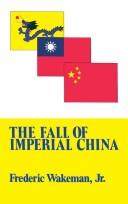
Pace: 6 weeks. Spence's The Search for Modern China is 876 pages — read the chapters from 1949 forward closely over two weeks and treat the earlier material as reference. Vogel's Deng Xiaoping and the Transformation of China is even longer; give it two weeks, concentrating on the reform decade and the 198
- The reform era's actual mechanics: the household responsibility system, the dual-track price structure, and the way partial marketisation produced the specific grievance of guandao — officials profiting from arbitrage between planned and market prices
- Inflation in 1988-89 as the immediate economic grievance, and why urban wage earners experienced the reforms differently from rural producers
- The split inside the leadership between reformers around Hu Yaobang and Zhao Ziyang and the conservatives around Li Peng and Chen Yun, and Deng's position as arbiter rather than partisan
- Vogel's willingness to make Deng's own case, and what that framing does — you are reading the most sympathetic serious account of the man who authorised the crackdown
- The 1986-87 student demonstrations and Hu Yaobang's removal as the direct precedent, which is why his death in April 1989 was the trigger it was
- Spence's long intellectual line in The Gate of Heavenly Peace: Chinese intellectuals arguing about reform, the state and their own role from 1895 onward, which gives the 1989 students a lineage rather than a spontaneous origin
- The distinction between demands for reform within the system and demands for its replacement, and where the 1989 movement actually sat
- What was guandao, and why did a policy of partial price liberalisation make official corruption both more profitable and more visible?
- Vogel argues Deng's decisions are defensible. State his strongest argument on the reform period and identify what it depends on being true
- Spence's Gate of Heavenly Peace runs from 1895. What continuity is he claiming between the intellectuals of the early republic and the students of 1989, and how well does the evidence support it?
- Why did Hu Yaobang's death in April 1989 become the occasion for a mass movement, and what would have been different had he not been removed in 1987?
- What were the movement's actual demands as of late April 1989, before the hunger strike? Be specific, and note where each came from
- Build a timeline of the reform decade from Vogel, marking each economic policy change and each political tightening or loosening. The alternation is the pattern, and the students of 1989 had lived through several cycles of it
- Vogel and Spence write about Deng from different distances. Find their accounts of the 1986-87 student demonstrations and Hu's removal, and write each author's explanation of Deng's role in one sentence
- Find the inflation figures for 1988 and early 1989 in Spence and Vogel. Note whether either author sources them to Chinese official statistics, and write one sentence on what that means for how confidently you can use them
- Write down what you expect the movement's internal organisation to have looked like, based on these three books. Stage two and Calhoun in stage three will both test it
Next up: With the reform decade and the leadership split in view, the seven weeks of spring 1989 stop looking spontaneous and start looking like a movement with a history.
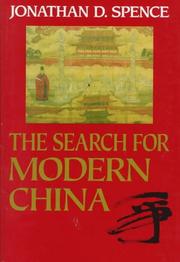
The standard one-volume modern history, running from the late Ming to the late twentieth century. Start here so 1989 sits inside a long Chinese argument about reform and authority rather than appearing as an isolated democratic moment.

The major biography of the man who launched the reforms and authorised the crackdown, and unusually willing to make Deng's own case. Read second: understanding why Deng thought he had no alternative is the hardest and most necessary part of this subject.

Spence's history of Chinese intellectuals and revolutionaries from 1895 onward, taking its title from the same gate. It gives the protesters an intellectual lineage stretching back to the May Fourth movement they consciously invoked.
The Spring of 1989
IntermediateFollow the movement week by week — Hu Yaobang's death, the hunger strike, the visit of Gorbachev, the declaration of martial law — through participants, reporters and the movement's own words
▸ Study plan for this stage
Pace: 4 weeks. Zhang, Gombeaud and Améziane's Tiananmen 1989 is a graphic account and can be read in an evening — do that first. Cunningham's Tiananmen Moon takes a week. Wong's Red China Blues takes ten days. Han Minzhu's Cries for Democracy is a documents collection and should be read last, over a week,
- The chronology: Hu Yaobang's death on 15 April, the 26 April People's Daily editorial that called the movement turmoil, the 4 May demonstrations, the hunger strike beginning 13 May, Gorbachev's visit on 15-18 May, and martial law declared on 20 May
- The 26 April editorial as the hinge — an official characterisation the students then organised around demanding be retracted, which narrowed the space for compromise on both sides
- The Gorbachev visit as a structural fact: the world's press was already in Beijing for the first Sino-Soviet summit in thirty years, which changed what the movement could do and what the leadership could do about it
- Zhang Lun's position as both a participant organiser and, later, a sociologist — the account is inside the movement and knows it
- Cunningham's memoir as a source whose value is exactly its limitation: an American close to specific student leaders, so you get access and a partial view of a movement he saw one faction of
- Wong's arc from Maoist believer studying at Beijing University to journalist watching the shooting from a balcony, and what a long personal relationship with the country adds to and subtracts from the reporting
- What the movement actually said, in its own posters, speeches and open letters, and how far that language stayed inside the vocabulary of the Party it was petitioning
- Reconstruct the movement week by week from 15 April to 20 May. At which point did the demands change, and what changed them?
- The 26 April editorial made retraction a central demand. Was that a strategic error by the students, a trap, or simply the only demand a leaderless movement could agree on?
- Cunningham was close to particular student leaders. Name two things his account can establish that a journalist outside the movement could not, and two claims his position makes unreliable
- Read the documents in Cries for Democracy against the narratives you have just read. Where does the movement's own language differ from how the participants later described their aims?
- Wong watched from a hotel balcony as a foreign correspondent with a personal history in China. How does her account handle the difference between what she saw and what she was told?
- Take three documents from Cries for Democracy — a big-character poster, a hunger strike declaration, and an open letter to the leadership — and mark every phrase drawn from official Party vocabulary. The proportion is an argument about what kind of movement this was
- Zhang's graphic account, Cunningham's memoir and Wong's reporting all narrate the hunger strike. Write each author's account of who decided on it in one sentence, then note which of the three was in a position to know
- Build a table of the movement's demands as stated on 22 April, 13 May and 30 May, sourcing each from Cries for Democracy rather than from a narrative. Then check whether the narratives you read describe the same trajectory
- Cunningham helped arrange interviews with student leaders. Find one such interview described in the book and write two sentences on what a journalist's access to a faction does to their account of a movement's internal politics
Next up: You now know what the movement said and did; the next stage is the leadership's side of the same weeks, and the evidence problem that comes with it.

A graphic account co-written by a sociologist who helped organise the protests, with Adrien Gombeaud and the artist Ameziane. The fastest and most humane entry into the sequence of events, which is why it goes first.

A close eyewitness memoir by an American who was inside the student movement and helped arrange interviews with its leaders. Its value is exactly its limitation: one person's vantage, reported honestly as such.
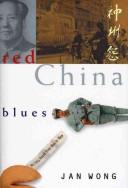
A Canadian journalist who had studied at Beijing University as a Maoist believer and watched the shooting from a hotel balcony in 1989. The long personal arc from enthusiasm to disillusion is the book's real subject.

The movement's own posters, speeches, leaflets and open letters, collected and translated. Read after the narratives so you can hear what the protesters were actually demanding, which was not uniformly what Western coverage reported.
The Crackdown and the Split at the Top
IntermediateReconstruct the military operation of 3-4 June, the argument inside the Politburo that preceded it, and the state of the evidence on how many people died
▸ Study plan for this stage
Pace: 5 weeks. Brook's Quelling the People is the most careful reconstruction of the military operation and takes ten days. Zhao Ziyang's Prisoner of the State a week. The Tiananmen Papers a week and a half. Calhoun's Neither Gods nor Emperors closes the stage in ten days. Read the two document-based book
- Brook's reconstruction of the military operation of 3-4 June: which units were ordered where, along which approach routes, what they did, and where the killing actually took place — much of it on the western approaches along Chang'an Avenue rather than in the square itself
- The state of the evidence on the death toll: why no defensible precise figure exists, what the plausible range is, and what would have to become available to narrow it
- The distinction between 'the massacre in the square' and 'the massacre in Beijing' — a distinction that has been used both to establish accuracy and to minimise, so it needs handling carefully
- Zhao Ziyang's account of the leadership argument: his opposition to martial law, the meeting at which he lost, and the fifteen years of house arrest that followed
- The provenance question in The Tiananmen Papers as a live methodological problem, not a footnote — what a historian is entitled to conclude from a document whose chain of custody cannot be inspected
- Calhoun's sociological account of the movement's own organisation: factional competition among student groups, the absence of a mechanism for ending the occupation, and strategic errors that were structural rather than personal
- Why the workers' organisations, particularly the Beijing Workers' Autonomous Federation, alarmed the leadership more than the students did
- Brook establishes where the killing happened. Summarise his findings on the approach routes and the square, and say what evidence each part of the reconstruction rests on
- How should a reader weigh The Tiananmen Papers, given that its provenance cannot be confirmed? Work out an actual procedure: which of its claims are corroborated by Zhao, by Brook, or by other sources, which are uncorroborated but consistent, and which are unique to it and therefore load-bearing on its authenticity alone. Then say what you would be willing to assert on the strength of the uncorrob
- Zhao's memoir is authenticated, but he was a participant with an interest in his own record. Where in the book is he most obviously arguing his case, and does that affect its reliability on matters of fact?
- Calhoun argues the movement made strategic errors. Name two, and say whether he treats them as failures of judgement or as consequences of the movement's structure
- Why did the leadership treat the workers' federation as a greater threat than the student occupation, and what does that priority tell you about what the crackdown was actually protecting?
- What is the honest state of the evidence on the death toll, and what specific sources would have to become available to improve it?
- Take one decision described in The Tiananmen Papers — the imposition of martial law is the obvious one — and check it against Zhao's memoir and Brook's reconstruction. Write down what all three agree on, what only two support, and what rests on the Papers alone. That third list is where the provenance dispute actually bites
- Map Brook's military approach routes onto a map of Beijing, marking unit movements and the locations where killing is documented. Then compare that map with the phrase 'the Tiananmen Square massacre' and write two sentences on what the popular name gets right and wrong
- Collect every death toll figure given across all four books, with the source each author cites. Note which are official Chinese figures, which are Red Cross or hospital estimates, and which are inferences. Then write one sentence stating the range you would defend
- Calhoun was in Beijing throughout and is analysing organisation rather than narrating events. Take his account of student factionalism and check it against the participant accounts from stage two. Where the participants and the sociologist disagree about how decisions were made, decide which you find more credible and write down why
- Write the case, in a paragraph, that The Tiananmen Papers should be excluded from a serious account of 1989 until its originals are produced. Then write the case that excluding it discards genuine evidence because of a standard no leaked material from a closed system could ever meet
Next up: The event is now reconstructed as far as the evidence permits; the last stage is about what happened to the memory of it.
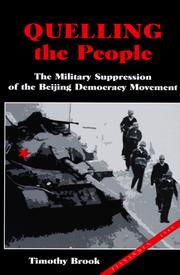
The most careful reconstruction of the military operation itself — which units moved where, what they did, and what can and cannot be established about the death toll. The book to read before forming any view on casualty figures.

The secret memoir of the Party General Secretary who opposed martial law, recorded on cassette tapes under house arrest and smuggled out after his death. The highest-level insider account that exists, and a primary source.
A compilation of purported leadership documents on the decision to use force, edited by Nathan and Perry Link. Its provenance is genuinely disputed — the compiler is pseudonymous and specialists differ on authenticity — so read it as contested evidence, not settled record.
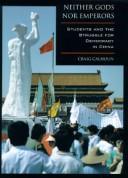
A sociologist who was in Beijing throughout, analysing the movement's internal organisation, factionalism and strategic errors. The corrective to reading the students as a single unified actor.
Erasure and Afterlife
IntermediateUnderstand how the event was removed from public memory inside China, who paid the longest price, and what happened to those who left
▸ Study plan for this stage
Pace: 3 weeks. Lim's The People's Republic of Amnesia is the anchor and takes ten days. Liao Yiwu's Bullets and Opium is interviews with people who served long prison sentences and describes torture and abuse in detention directly; a week. He and Link's Tiananmen Exiles closes the path in under a week.
- The mechanics of erasure: not only censorship of the event but the removal of the vocabulary for discussing it, and the annual pre-emptive detentions and internet controls that maintain the silence
- Lim's finding on the killings in Chengdu, which happened in the same days and were almost entirely absent from the record until she reconstructed them — an erasure that succeeded more completely than Beijing's
- The generational effect: what it does to political life when a large majority of a country's young adults cannot recognise the most famous photograph taken in their capital
- Liao's subjects — workers and ordinary Beijing residents, called thugs in the official account, who received far longer sentences than the student leaders and had no foreign advocates
- The class asymmetry in the punishment and in the memory: the student leaders became internationally known and mostly left, the workers served decades and stayed
- He and Link on exile as a permanent condition, and on the relationship between a movement's participants and the country they can no longer enter
- He's own memory as a schoolgirl in Guangzhou as evidence: how the event was experienced far from Beijing, and how the official account was absorbed
- How is the silence around 1989 actually maintained inside China? List the specific mechanisms Lim documents, and say which are state action and which are self-censorship
- Lim reconstructs the Chengdu killings. Why did that erasure work so much more completely, and what does the difference tell you about which events can be removed from the record?
- Liao's interviewees received longer sentences than the student leaders. What explains the disparity — legal category, class, or the absence of foreign attention?
- He and Link write about exile. What does the book establish about what the exiles' continued advocacy has and has not achieved in thirty years?
- Having read the whole path: what do you now think 1989 was — a democracy movement, a protest against corruption and inflation, an elite factional struggle that spilled into the street, or something that changed character over seven weeks? Defend the answer with evidence from at least two stages
- Lim tested recognition of the tank man photograph among Beijing university students. Find her figures and her method, and write two sentences on what a small sample of that kind can and cannot establish
- Take one of Liao's interviewees and trace their case against Brook's reconstruction from the previous stage: where were they, on what day, and does the account fit what Brook establishes about that location? Corroborating an oral history against an operational reconstruction is the exercise
- Compare what Lim says about the workers' fate with what Liao's interviews show. Write a paragraph on where a journalist's synthesis and a set of first-person accounts diverge in emphasis
- He was a schoolgirl in Guangzhou in 1989. Set her account of how the event was presented locally against the documents in Cries for Democracy from stage two, and write two sentences on the distance between a movement's self-description and its reception a thousand miles away
- Write down what you would need — documents, testimony, access — to write a definitive account of June 1989, and mark which of those items exist but are inaccessible, which are disputed, and which no longer exist. That list is the honest state of the field
Next up: This is the final stage: the path ends with the event's disappearance, which is the part of the story still in progress.
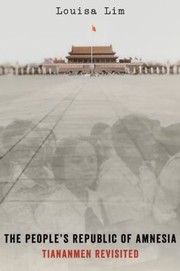
The anchor of the path: how the crackdown was erased and what that erasure did to the generation raised after it, including the killings in Chengdu that almost no one outside China knows about. Read it once you know the events being forgotten.

Interviews with the workers and ordinary Beijing residents — the 'thugs' of the official account — who received the longest sentences while the student leaders escaped abroad. The most uncomfortable book here and the necessary one.

Written with Perry Link, following participants who left China and never returned, and reflecting on the author's own memory as a schoolgirl in Guangzhou. A quiet last book about what an unfinished event does to a life.
Discussion
Keep reading
Paths that share books, cover the same subject, or open a related topic.