The evidence on 1989 is uneven in a way that most historical subjects are not. Some of it is first-rate scholarship built on public record and interviews. Some is eyewitness memoir, valuable and partial. And some of it consists of documents that cannot be independently authenticated, circulating in a field where the archives are closed and the state actively suppresses the subject.
That is why order matters more here than usual. If you build the context and the well-sourced narrative first, you can then read the contested material for what it adds without letting it set your baseline. Do it the other way round and you have no way to tell a corroborated fact from a plausible claim.
Context before the crisis
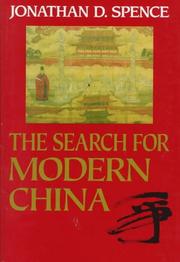
The search for modern China is the standard survey and gives you the century that 1989 sits at the end of — the reform era did not begin in a vacuum, and the movement's vocabulary came from a long argument about how China should modernise. Deng Xiaoping and the transformation of China is the major biography of the man who made the decision, sympathetic to his reform record and criticised by some reviewers for being too gentle on June 1989; read it knowing that. The Gate of Heavenly Peace covers Chinese intellectuals and revolutionaries from 1895 to 1980 and is the deep background to why students in the square kept invoking May Fourth.
The six weeks, from people who were there
Tiananmen 1989 is a short illustrated account co-authored by a participant, and it is the fastest way into the sequence of events. Tiananmen moon is a participant-observer memoir by a foreign student fluent in Chinese who was inside the movement rather than reporting on it from a hotel. Red China blues is Jan Wong's memoir of two decades in China, from Maoist true believer to correspondent watching the crackdown from a balcony above Chang'an Avenue, and it is the most readable book on this path.
Cries for Democracy collects the movement's own speeches, posters and declarations — primary documents from the students themselves, which is a useful corrective to accounts that treat the protesters as a single voice. Quelling the people is the essential book on the crackdown itself: a careful reconstruction of the military operation, where the killing happened, and who died. It is also the book that lets you handle the government's narrow claim that no one died within the square boundaries, by establishing what did happen on the approach roads and how the death toll estimates were built.
Inside the Party, and one disputed collection
Prisoner of the state is the memoir of the Party general secretary who was purged for opposing martial law, assembled from tapes he recorded secretly under house arrest. Its provenance is unusually well established: the recordings are in his own voice and were authenticated by people who had worked closely with him. It is the strongest inside source available.
The Tiananmen papers requires an explicit warning, and it belongs here rather than earlier. It presents itself as a compilation of internal leadership documents from the crisis, brought out by a compiler using a pseudonym. The original materials were never produced for independent examination, and serious specialists remain divided on the collection: some judge substantial parts of it consistent with what is known and probably genuine, others argue it has been edited, reconstructed from memory, or shaped to serve a factional purpose inside the Party. That disagreement has not been resolved and may never be. Practically, that means you should treat it as a claim rather than a source. Never let it be the only support for a fact you carry away, read it after Quelling the people and Prisoner of the state so you can see what it adds and what it merely restates, and be alert that a document collection which cannot be corroborated is most persuasive precisely where it is least checkable — in the private words it attributes to individual leaders.
Aftermath and memory
Neither gods nor emperors is a sociologist's analysis of the movement's internal politics and why it fractured. The People's Republic of Amnesia is about the erasure since — reported, painful and the best account of what a generation was taught not to know. Bullets and Opium collects the testimony of the workers and ordinary Beijing residents who were imprisoned longest and remembered least, and it corrects the student-centred version of the story. Tiananmen Exiles follows participants who could not return.
Where the record is genuinely contested, this path describes the dispute rather than settling it.
Follow the full ordered path here: Tiananmen Square 1989: The Best Books to Read, in Order.