Best Books on the Attack on Pearl Harbor, in Reading Order
Almost everything interesting about Pearl Harbor happened before the first bomb fell, so this path spends more time on the decision-making than on the ninety minutes of the raid. It opens with the classic narrative accounts, turns to the Japanese calculations that made the attack seem rational in Tokyo, then works through the long argument about which warnings were missed and by whom, and finishes with the Pacific war the attack started. Each stage widens the frame, so the conspiracy literature in stage three arrives after you already know what the evidence was.
The raid itself
BeginnerKnow the sequence of 7 December 1941 hour by hour — the two waves, the ships lost, the aircraft caught on the ground — and the shape of the American response.
▸ Study plan for this stage
Pace: 10-12 weeks for about 1,150 pages, dominated entirely by the second book. Day of Infamy is 245 pages and reads in a week — Lord wrote it almost in real time and it is designed to be read fast. At Dawn We Slept is 912 pages of scholarship and needs nine to eleven weeks at roughly 90 pages a week; its
- The timeline of the morning: the Opana radar contact at about 0702 and its dismissal, the first wave striking at 0748, the second wave from around 0854, and the whole action over before 1000
- The target list and what was hit — Battleship Row, Hickam, Wheeler and Ford Island, the aircraft destroyed on the ground while parked wingtip to wingtip against sabotage
- What was not hit and why it mattered — the three American carriers were at sea, and the fuel tank farm, submarine base and repair facilities were left intact, which shortened the war by an amount historians still argue about
- Nagumo's decision not to launch a third wave, and the arguments for and against it that have run ever since
- The two methods side by side: Lord built the morning from hundreds of survivor interviews into a mosaic of individual moments, which is journalism and is why the book endures; Prange spent decades in American and Japanese archives, interviewing Japanese participants, and produced the reference every
- Yamamoto's authorship of the plan and his own stated doubts about what it could achieve strategically
- Genda's operational design and the technical problems solved to make it possible — shallow-water torpedo modifications, converted armour-piercing shells as bombs, and the refuelling of a fleet across the northern Pacific
- The caution that Prange leaned heavily on Mitsuo Fuchida's testimony, which later scholarship has found unreliable in places — worth carrying forward into the final stage of this path
- Reconstruct the morning hour by hour. What was the first indication of attack, when, and why was it discounted?
- What did the Japanese fail to destroy, and what would the Pacific war have looked like if the fuel farm and repair facilities had been hit?
- Why did Nagumo not launch a third wave? State his reasoning as he gave it, then state the case against it.
- Yamamoto planned the attack and doubted the strategy. What did he think it would buy, and for how long?
- Lord and Prange are doing completely different jobs. What does the survivor mosaic capture that the archival history cannot, and vice versa?
- Which technical problems had to be solved before the raid was even possible? Name three, with the solution to each.
- Draw Pearl Harbor from memory with Battleship Row, Ford Island, Hickam and Wheeler marked, and plot the two waves' approach. Every later book assumes this map.
- Build an hour-by-hour timeline of 7 December from 0342, when a submarine periscope was first sighted, to 1000.
- Make a table of American ships present, damage sustained, and eventual fate. Six of the eight battleships returned to service, which surprises most readers.
- Write 300 words on the shallow-water torpedo problem and how the Japanese solved it.
- Pick three of Lord's individual accounts and check the events they describe against Prange. Note where they agree and where memory has reshaped the record.
Next up: You know what happened and how it was planned; the next stage explains why anyone in Tokyo thought it was a good idea.
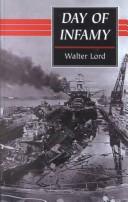
Lord built the attack out of hundreds of survivor interviews into ninety minutes told almost in real time. The fastest and most vivid way in.
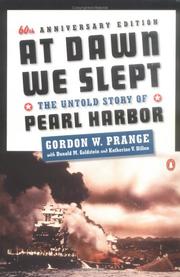
The standard scholarly account, drawing on both American and Japanese sources over decades of research. Long, but everything else on this path is in conversation with it.
Why Japan attacked
BeginnerUnderstand the oil embargo, the China war and the internal Japanese politics that produced a decision most of its makers expected to end badly.
▸ Study plan for this stage
Pace: 10-11 weeks for about 1,240 pages. Japan 1941 is 344 pages and is the most important book in this stage; three weeks, read carefully. Countdown to Pearl Harbor is 365 pages covering just twelve days across three capitals; three weeks. Nelson's Pearl Harbor is 532 pages of synthesis; four to five wee
- The China war as the origin of everything: four years of a conflict Japan could not win or end, consuming the resources that made the southern advance seem necessary
- The American oil embargo and asset freeze of mid-1941 and the trap it created: Japan imported the overwhelming majority of its oil from the United States, and naval planners' calculation that reserves would run out in about two years converted the question from whether to fight into whether to fight
- Hotta's central finding, which is what makes her book indispensable: the men who made the decision largely did not believe they would win, and each deferred to the presumed conviction of the others
- The structural features of Japanese decision-making that produced this — the independence of the army and navy from civilian control, the liaison conferences, the emperor's constrained role, and a consensus culture in which nobody could be the one to say no
- The Hull note of 26 November and how it was read in Tokyo, and the genuine question of whether it was an ultimatum or was received as one
- Twomey's twelve-day frame, which shows the intelligence failure as an accumulation of individually reasonable decisions across Washington, Tokyo and Hawaii rather than as a single blunder
- The specific American assumptions that misdirected attention: that the fleet's presence deterred rather than tempted, that Pearl Harbor was too shallow for aerial torpedoes, and that a Japanese move would come in Southeast Asia
- Nelson's attention to Japanese pilots and planners as individuals, which restores agency to the people who flew the mission
- Set out the causal chain from the China war to the decision for war with the United States. Which link was the last point at which a different decision was realistically available?
- Hotta says the decision-makers did not expect to win. How does a government arrive at a war it does not believe in? Name the mechanisms rather than the personalities.
- Was the Hull note an ultimatum? Argue it from both the American drafting intent and the Japanese reception.
- Twomey shows individually reasonable decisions summing to catastrophe. Pick three and say what would have had to change for each to go the other way.
- The Americans believed Pearl Harbor was too shallow for torpedo attack. What was that belief based on, and who knew otherwise?
- Japan's leaders faced a real trap after the embargo. Was there a course available that was neither war nor capitulation, and what would it have cost?
- Build a 1941 timeline with three parallel tracks — Tokyo, Washington, Hawaii — from January to 7 December.
- Write 400 words on the oil embargo: what was embargoed, when, by whom, and what Japan's reserves and consumption actually were.
- Diagram the Japanese decision-making structure from Hotta — army, navy, cabinet, liaison conference, throne — with lines of authority. The absence of a single decision point is the finding.
- For each of Hotta's principal figures, write one line on what they privately believed and one on what they said in conference. The gap is the book's argument.
- Take Twomey's twelve days and mark, day by day, what each of the three capitals knew that the others did not.
Next up: With the Japanese calculation understood, you can take on the American question — what was known, when, and whether the surprise was avoidable.

Hotta reconstructs the year's decision-making from Japanese sources and shows leaders drifting into a war few of them believed they could win. The single most clarifying book here.

The twelve days before the attack, tracking Washington, Tokyo and Hawaii simultaneously. It makes the intelligence failure feel like a process rather than a blunder.

A recent synthesis that gives real weight to the Japanese pilots and planners as well as the American side. Useful as a modern consolidation of the previous two.
Warnings, blame and conspiracy
IntermediateEvaluate the surprise-attack question seriously: what was intercepted, what was inferred, what Kimmel and Short were told, and why the conspiracy theories persist.
▸ Study plan for this stage
Pace: 10-12 weeks for about 1,150 pages, and this is the stage that requires the most discipline. Wohlstetter's Pearl Harbor: Warning and Decision is 426 pages of analytical prose and is not easy reading; four to five weeks, and read the methodological sections properly because they are the book's lasting
- Wohlstetter's signal-and-noise framework and her central finding: warnings look obvious in retrospect only because hindsight strips out the thousands of competing signals around them, and the relevant information did exist but was scattered across agencies, over-classified, and buried in contradicto
- MAGIC and the decryption of the Japanese diplomatic code Purple, and the crucial distinction between diplomatic traffic and naval operational traffic, which was not being read
- The bomb plot message requesting berthing locations in Pearl Harbor, which is the single most cited missed indicator, and the honest question of how it looked among the traffic it arrived with
- The war warning of 27 November, its ambiguous wording, and what Kimmel and Short each did in response — Short's anti-sabotage alert, which is why the aircraft were parked in rows
- Gannon's case: that Washington had information Hawaii needed and did not send it, and that Kimmel was made to carry blame that belonged further up the chain
- That the Kimmel and Short question is a genuinely live dispute among serious historians, and that reading Gannon against Wohlstetter is the point of including him
- Toland's revisionist claim of greater Roosevelt foreknowledge, its principal evidentiary supports, and the reason it is included — you should meet the strongest version of the argument rather than a caricature of it
- How to test a conspiracy claim in practice: identify the specific documents cited, check whether they say what is claimed, ask how many people the theory requires to have kept silent, and ask whether the alleged motive required this particular action
- State Wohlstetter's thesis precisely. What is the difference between information existing and information being available as a warning?
- What was MAGIC reading and what was it not? Getting this distinction right dissolves a large share of the conspiracy literature.
- Gannon argues Washington withheld what Hawaii needed. Identify the specific items he says were withheld and check each against Wohlstetter's account of what was known and when.
- Where do Gannon and Wohlstetter genuinely disagree about facts, and where do they agree on facts and differ on where responsibility should fall?
- Take Toland's central evidentiary claim and trace it to its source. What does the source actually establish?
- How many people would have had to stay silent for the foreknowledge thesis to hold, for how long, and is that plausible? Apply the same test to any conspiracy claim you meet later.
- Build a table of every intelligence indicator available before 7 December: what it was, who held it, who else was told, and what other interpretations it supported at the time.
- Write 400 words on the bomb plot message — its text, its date, its routing, and the argument about it.
- For three of Toland's claims, locate the underlying document or testimony and write a paragraph each on whether it supports the weight placed on it.
- Write the strongest 300-word case for Kimmel, then the strongest 300-word case against him, using only Wohlstetter and Gannon.
- Apply Wohlstetter's signal-and-noise framework to any more recent intelligence failure you know something about, in one page. Doing this once is what makes her book stick.
- List the questions about 7 December that remain genuinely open in the scholarship, as distinct from those that only look open.
Next up: Having settled what could and could not have been known, you can see the attack as what it actually was — the opening move of a campaign that inverted within six months.
The classic study of signal and noise in intelligence, and still the most rigorous answer to why the warnings were not read as warnings. It has shaped how every subsequent intelligence failure is analysed.
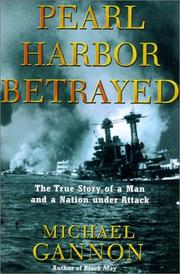
A pointed argument that Washington withheld what Hawaii needed, aimed squarely at the case against Kimmel. Read as advocacy, tested against Wohlstetter.
The best-known revisionist account, arguing Roosevelt had more foreknowledge than admitted. Included because you should meet the strongest version of the argument and be able to say why it is not persuasive.
The war the attack started
IntermediateSee Pearl Harbor as the opening of a campaign rather than an isolated event, and understand how quickly the strategic picture inverted.
▸ Study plan for this stage
Pace: 26-30 weeks for about 2,800 pages, and this stage is a course rather than a coda. Toll's Pacific Crucible is 656 pages and takes six to seven weeks. Parshall and Tully's Shattered Sword is 613 pages of technical operational history; six weeks, and it is worth the effort. Toland's The Rising Sun is 9
- Toll's account of the six months after the raid: the Philippines, the Dutch East Indies, the loss of Force Z, Doolittle, Coral Sea and Midway, with Japanese decision-making given equal narrative weight
- The strategic inversion — Japan's initial run of victories through May 1942 followed by the loss of four fleet carriers in a single morning in June
- Midway as Toll tells it: Station Hypo's codebreaking, Nimitz's decision to accept the risk, and an outcome turning on scouting, timing and chance rather than on inevitability
- Parshall and Tully's demolition of the five fateful minutes story, reconstructed from Japanese action reports and the official Senshi Sosho history — and the broader source critique that bears directly on stage one, since Mitsuo Fuchida's postwar testimony shaped the English-language literature on b
- Toland's Rising Sun as the long Japanese arc from 1936, built on extensive interviews with participants, which shows the militarisation that made 1941 possible
- The caution to carry into Toland: he is a compelling narrator working largely from interview testimony, the same methodological weakness Parshall and Tully identify, so read him for the arc and check specifics elsewhere
- Spector's wide-angle view — logistics, submarines, inter-service politics, the China-Burma-India theatre — which places the raid in proportion
- The final proportion: Pearl Harbor cost 2,403 American lives in ninety minutes, and the war it opened cost millions across four years, which is the perspective this stage exists to deliver
- Why did Japan's initial offensive succeed so completely and then stop? Name the material and the strategic limits.
- What actually decided Midway? List the contingencies, and say which one, reversed, most plausibly changes the outcome.
- Parshall and Tully show that Fuchida's testimony shaped the literature. Which claims in the Pearl Harbor books you read in stage one might rest on it?
- Toland's method is interview-based. What are the strengths and the specific risks of that method for events twenty years past?
- Spector covers theatres most Pacific war books ignore. What does including China and Burma do to the picture of the war?
- Having finished the path: was Pearl Harbor a strategic success, a strategic failure, or a tactical success that guaranteed strategic defeat? Argue it from the evidence across all four stages.
- Build a timeline from 7 December 1941 to 7 June 1942 marking every major operation. The compression of that six months is the stage's central fact.
- Diagram the Midway carrier action hour by hour from Toll, then redo it from Parshall and Tully. Compare the two and identify every point of difference and the source behind each.
- Write 300 words on Japanese carrier deck operations and why they made the fleet vulnerable at that particular moment.
- Return to your stage-one notes and mark every claim that traces back to Fuchida. Write half a page on what survives without him.
- Chart fleet carrier strength for both navies month by month from December 1941 to the end of 1942. The curve is the war's material argument.
- Write a final two-page essay on what Pearl Harbor accomplished for Japan, citing at least one book from each of the four stages and being explicit about where the historians you have read disagree.
Next up: You finish able to see 7 December from the cockpit, from the Tokyo liaison conference, from the intelligence desk, and from the four years that followed.
The first six months of the Pacific war, from the raid to Midway, written with the narrative command the subject deserves. The natural continuation.
Midway reconstructed from Japanese records, dismantling several myths that had stood for fifty years. It shows how much the earlier Pearl Harbor literature relied on the same flawed sources.

The Japanese empire's war from inside, 1936 to 1945, based on extensive interviews with participants. Read for the Japanese arc that began well before 1941.
The best single-volume American history of the Pacific war, and the right place to end because it makes the attack look small against what followed.
Discussion
Keep reading
Paths that share books, cover the same subject, or open a related topic.